 Follow Us on Google News
 Follow Us on Google Discover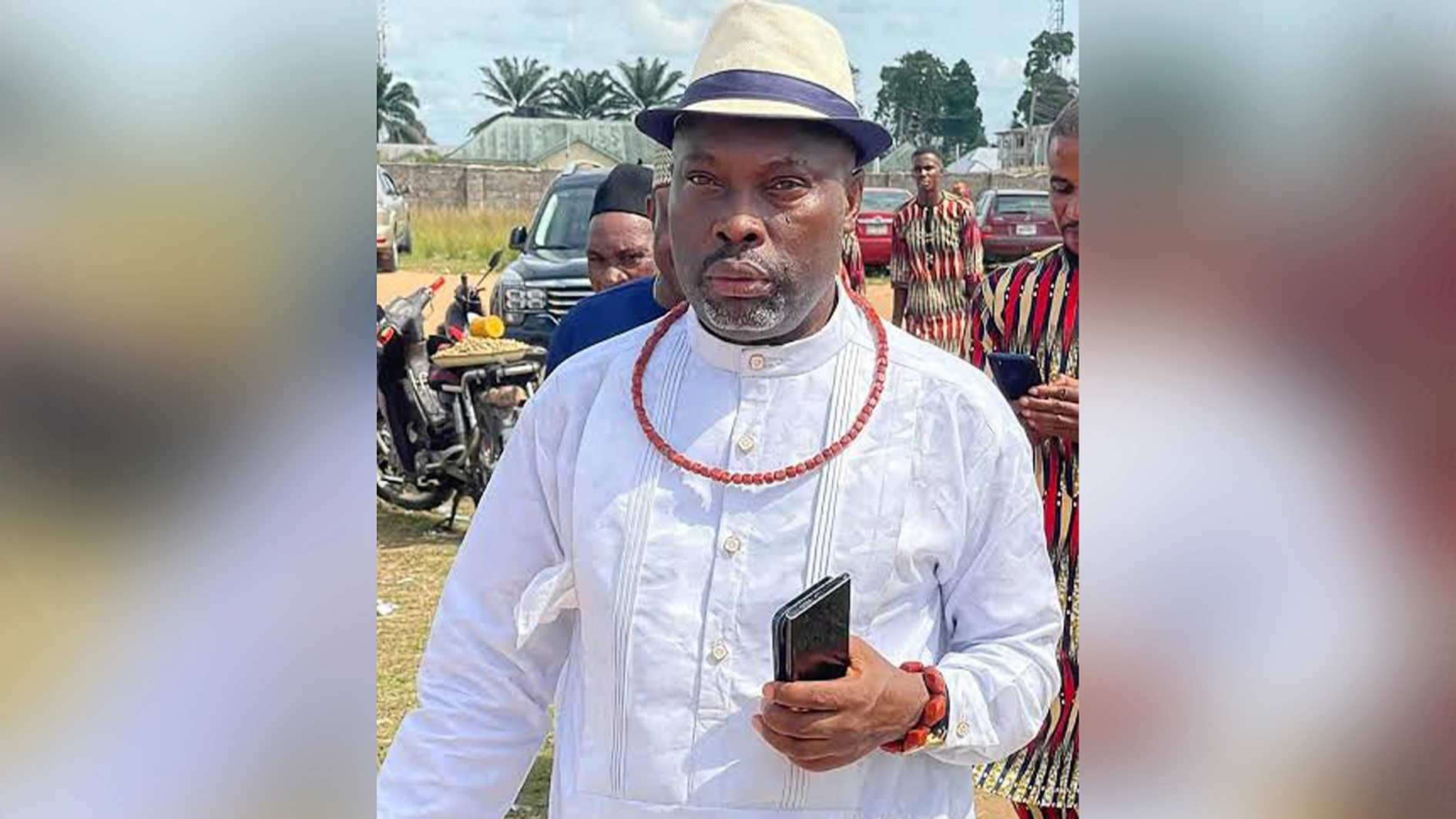
By Onome Amawhe
In Nigeria, the story of wealth is often told through accumulation: the size of the company, the number of properties, the value of investments, the fleet of cars, the places travelled and the influence acquired.
The story of Chief Dr. Daniel Elozino Omoyibo, better known across Delta State as Danmotech, offers another way of looking at prosperity. It is a story in which the more interesting question is not simply how much a man has built for himself, but how much of that success eventually finds its way back into the community that produced him.
Omoyibo, Managing Director of DANMOTECH Nigeria Limited, has over the years emerged as one of the better-known indigenous businessmen from Isoko country. His business interests have ranged across oil and gas and hospitality, while other accounts of the Danmotech Group describe interests spanning engineering, construction and real estate. Delta State Governor Sheriff Oborevwori has publicly credited his investments in oil and gas and hospitality with creating jobs and economic opportunities for people in the state.
But it is outside the conventional boundaries of the boardroom that the Danmotech story becomes particularly revealing.
For Omoyibo, Oleh — headquarters of Isoko South Local Government Area — has not merely been a hometown to which a prosperous businessman occasionally returns for ceremonies. It has remained an important theatre of his investment, philanthropy and identity.
That distinction matters.
Nigeria has produced generations of successful men and women whose prosperity required a physical and economic departure from their hometowns. Headquarters migrate to Lagos. Investments travel to Abuja. Families settle abroad. Capital moves towards established commercial centres, while the communities that produced the entrepreneurs frequently remain little more than sentimental references in biographies.
Omoyibo has followed a somewhat different path.

Building Where He Comes From
Perhaps one of the clearest symbols of that philosophy is Dantinajo Gold Resort in Oleh.
When the resort opened, Punch reported it as a 118-room hospitality facility commissioned by former Nigerian President Olusegun Obasanjo. Rather than locating such an ambitious hospitality investment in Lagos, Abuja or another established tourism market, Omoyibo placed it in his native Isoko environment.
That decision carries an economic significance beyond hotel rooms.
A sizeable hospitality operation creates employment for receptionists, cooks, cleaners, security personnel, administrators, maintenance workers and suppliers. It creates demand for food, transport and other services around it. Visitors who might ordinarily have had little reason to spend significant time in a smaller Delta community suddenly have accommodation capable of hosting major gatherings.
Punch also reported that Dantinajo became a gathering point for figures from Nigeria’s film industry, with Omoyibo becoming a patron of the Directors Guild of Nigeria.
In that sense, the investment represented more than hospitality. It demonstrated what becomes possible when successful indigenous entrepreneurs begin treating their hometowns not merely as places to visit, but as places worthy of serious capital.
The wider Danmotech enterprise reflects the same indigenous entrepreneurial instinct. Oborevwori, while marking Omoyibo’s 57th birthday in January 2026, described him as an accomplished industrialist whose investments in oil and gas and hospitality had contributed to job creation, economic growth and wealth generation.
For a region historically associated with crude-oil extraction, that indigenous ownership question is important.
The Niger Delta’s great paradox has always been that enormous value has been extracted from beneath its soil while many communities above that soil continue to struggle with unemployment, inadequate infrastructure and poverty. Against that history, the rise of locally rooted entrepreneurs carries significance beyond individual success. It is part of a larger argument about whether communities can move from simply hosting economic activity to producing people who own businesses, employ others and recycle part of their prosperity locally.
When Philanthropy Becomes Economic Intervention
Omoyibo’s reputation, however, rests as heavily on philanthropy as it does on enterprise.
And some of his most revealing interventions have been remarkably practical.
In 2017, Vanguard reported that the Danmotech boss built an ultra-modern community hall for Iyeide Street in Oleh. At the same event, he provided 110 indigent women with ₦100,000 each to start small businesses. That amounted to ₦11 million placed directly into the hands of women at the bottom of the local economic ladder.
The distinction is important.
There is philanthropy that relieves suffering for one day, and there is philanthropy designed to give a person the means of generating tomorrow’s income.
Small sums of business capital can be transformative in communities where access to formal credit remains difficult. A market trader who receives working capital does not merely receive money; she potentially acquires inventory, turnover, income and a greater ability to support a household.
Omoyibo himself used the 2017 occasion to argue that people who prosper should contribute to the development of their communities. Then President-General of the Isoko Development Union, Chief Iduh Amadhe, interpreted the gesture as a challenge to younger Isoko people to remember their roots after achieving success.
That principle — remembering where one came from — appears repeatedly in the Danmotech story.
Health, Dignity and the Vulnerable
Three years later, during one of the most difficult periods in recent Nigerian history, Omoyibo’s giving extended into healthcare.
In November 2020, The Guardian reported that he donated ₦5 million to Isoko South Local Government Area for the procurement of drugs across primary healthcare centres, specifically to assist vulnerable people unable to afford treatment. He separately supported the council’s legislative arm with ₦1 million.
Healthcare philanthropy occupies a particularly important place in rural and semi-urban Nigeria because illness frequently becomes an economic emergency.
For families living on fragile incomes, the cost of medicine can mean choosing between treatment and food, school fees or rent. Putting essential drugs into primary healthcare centres therefore reaches beyond medicine: it protects household finances from shocks that can deepen poverty.
These are not spectacular interventions in the manner of constructing giant monuments bearing a donor’s name. But precisely because they touch ordinary life — medicines, small businesses, community infrastructure — they reveal a particular philosophy of giving.
The ₦5 Million Haircut
Then there are the interventions that happen almost spontaneously.
One such encounter turned Omoyibo into a national social-media story in July 2026.
According to Punch, Omoyibo walked into a barbing salon and, following an unsuccessful negotiation with one barber, was attended to by another young man, identified as Suleyman, originally from Kogi State. During their conversation, Omoyibo discovered that the barber was an employee rather than the owner of the shop.
He asked how much it would cost the young man to establish his own salon.
The estimate was between ₦2 million and ₦3 million.
Omoyibo offered him ₦5 million.
On the surface it was a generous viral moment.
Look more closely, however, and it contains something fundamental about economic mobility.
The difference between a worker and an entrepreneur is sometimes not competence. It is capital.
The barber already possessed the skill. He already understood the trade. He was already working. What he lacked was sufficient financial capacity to own the means through which his skill produced wealth.
A ₦5 million intervention potentially changed that equation instantly.
It is this form of philanthropy — not simply consumption assistance but productive empowerment — that distinguishes some of Omoyibo’s most notable public gestures.
A Growing Record of Giving
His more recent philanthropy has sometimes involved substantially larger sums.
In July 2026, Isoko Nation reported that Omoyibo donated an additional ₦50 million towards completing the house of Chief Godday Excellence Igorigo, taking his reported contribution to the project to ₦70 million.
The United Christian Musicians Association of Nigeria also publicly acknowledged his financial support for residential projects involving Igorigo and Evangelist Emmanuel Eruoghene Ofano.
His giving has increasingly attracted formal recognition. Independent Newspapers named him its 2022 Philanthropist of the Year for Community Empowerment, while the Delta State Council of the Nigeria Union of Journalists selected him for its 2025 Icon of Enterprise and Humanitarian Service Award. In 2026, Democracy Newsline also announced him for its Philanthropist of the Year honour.
Awards, of course, are not the ultimate measurement of philanthropy.
Impact is.
And the more compelling way to understand Omoyibo may be to consider the pattern visible across nearly a decade of publicly documented interventions: a community hall, seed capital for women, medicine for primary healthcare centres, hospitality investment, jobs, individual business empowerment and direct assistance to people facing personal challenges.
The amounts differ. The recipients differ.
The underlying instinct appears consistent.
The Meaning of Indigenous Capital
There is a larger Nigerian story here.
For decades, conversations about developing the Niger Delta have revolved around government allocations, intervention agencies, oil companies and political representation. All are important.
But development cannot permanently depend on government.
Strong societies also require a class of indigenous entrepreneurs who create businesses, retain capital locally, support institutions, create jobs and ultimately develop a personal stake in the stability of their communities.
This is where the Danmotech story acquires significance beyond one businessman.
It raises a useful question: What happens when successful people begin regarding the development of their communities as part of the meaning of their success?
One entrepreneur cannot construct every road, equip every hospital or employ every young person.
Nor should philanthropy become an excuse for government to surrender its responsibilities. A wealthy citizen giving money to healthcare or community infrastructure is commendable; it does not absolve elected authorities from providing public services.
Yet private capital can accelerate development in ways government alone often cannot.
A businessman who builds a serious enterprise in his hometown creates economic gravity. A philanthropist who gives a trader capital can create another employer. A hotel can create an ecosystem of suppliers. An educational intervention can produce a professional who returns decades later to contribute something larger.
Development compounds.
So does generosity when it is intelligently deployed.
Oleh at the Centre
Perhaps the most distinctive element of Omoyibo’s public identity is therefore geographical.
He remains deeply associated with Oleh and Isoko.
It would have been easier for a businessman operating in oil and gas to allow Lagos, Port Harcourt or Abuja to become the sole centre of his economic life. Yet his hospitality investment and much of his philanthropy have maintained a strong Isoko anchor.
His traditional standing reflects that connection. Omoyibo is widely identified with the title Omoghagha 1, and civic groups, journalists and political leaders across Delta have repeatedly spoken of him in the context of Isoko development.
His public role has recently extended into discussions about political unity and development. In August 2026, during a visit by Senator Joel-Onowakpo Thomas, Omoyibo argued that Isoko people should avoid political fragmentation and organise in ways that could attract development to the area.
One may agree or disagree with his political preferences. But the recurring subject — Isoko’s ability to advance its interests — fits a much older pattern in his public life.
Beyond the Cheques
The easiest way to write about a philanthropist is to add up the cheques.
₦5 million here.
₦50 million there.
₦100,000 for each of 110 women.
Millions for healthcare.
But numbers alone can obscure what makes the Danmotech story worth examining.
Its strongest element is the relationship between enterprise, place and responsibility.
Chief Dr. Daniel Omoyibo represents a generation of Niger Delta entrepreneurs who have moved from communities historically known largely as sources of raw materials into ownership, enterprise and capital formation.
His most important legacy may ultimately not be any single donation.
It may be the example embodied in the idea that success need not require emotional or economic abandonment of one’s roots.
That a businessman can build beyond his community without leaving the community behind.
That wealth, at its most useful, can become a bridge between personal achievement and collective possibility.
And that in places where government cannot meet every need, the entrepreneur can become more than an employer or investor. He can become part of the social infrastructure itself.
For Danmotech, that may be the more enduring measure of success.
Not merely what Daniel Omoyibo has accumulated.
But what, from that accumulation, Oleh, Isoko and people far beyond them have been able to build.
Onome Amawhe is the Lead Consultant at Africa Executive, a media consultancy specializing in editorial strategy, executive content, corporate publishing, and special reports. He can be reached at +234 802 639 9705

