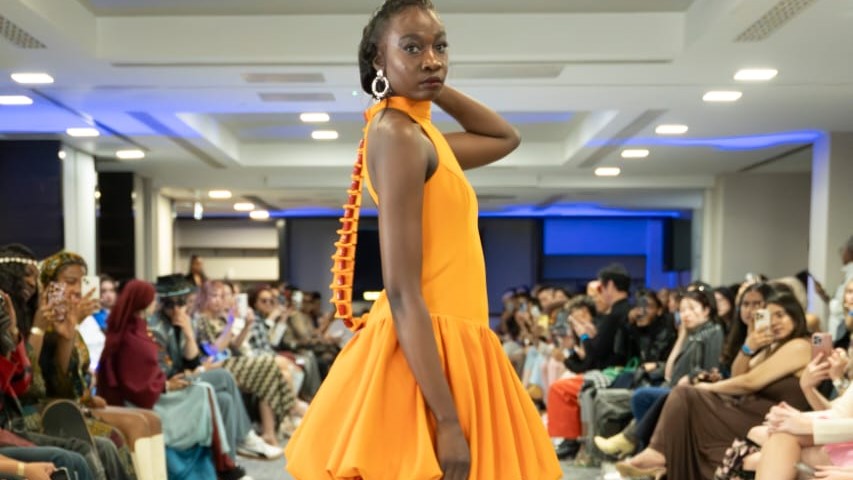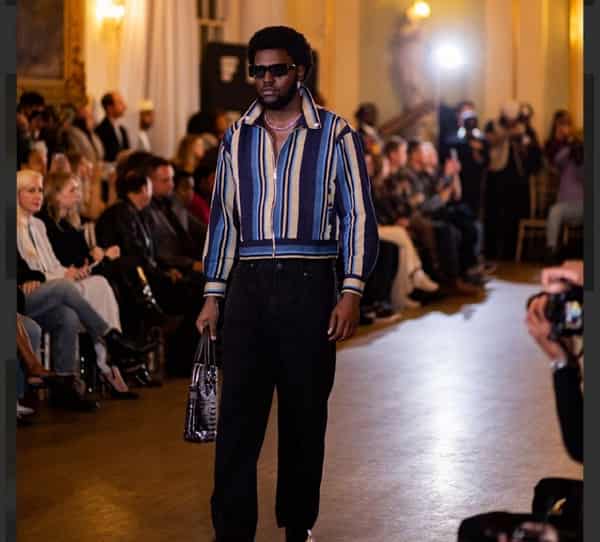
What Midetush achieved with Afrocentrism isn’t just visual. It’s structural. The collection may seem like Afrocentric streetwear, but it’s built with the precision of a tailor who understands both the rigidity and rhythm of indigenous textiles.
Take Aso-Oke — a notoriously stiff fabric to work with. Most designers either back away or lean into tradition to avoid the technical headache. Midetush does neither. Instead, he bends it; literally.. We see bomber jackets with fluid sleeve heads, cropped tops with structured drape, and carefully panelled pieces where the stripes align almost mathematically. This isn’t freestyle fashion. It’s calculated.
Even the netting — clearly inspired by fishing gear — is more than just aesthetic. It becomes a second skin in some looks, a floating layer in others. There’s craft in the placement. A lightness that offsets the visual weight of the heavier Aso-Oke beneath. That balance? It’s not easy.
Then there’s his treatment of finishes: sharp lapels with invisible closures, subtle contrast stitching, raw hem moments that still feel deliberate. Midetush isn’t trying to shout; he’s simply showing us that Afrocentric fashion can be technically immaculate.
In Afrocentrism, the body is respected, and so is the fabric. It’s a dialogue between designer and textile, and neither one compromises.