 Follow Us on Google News
 Follow Us on Google Discover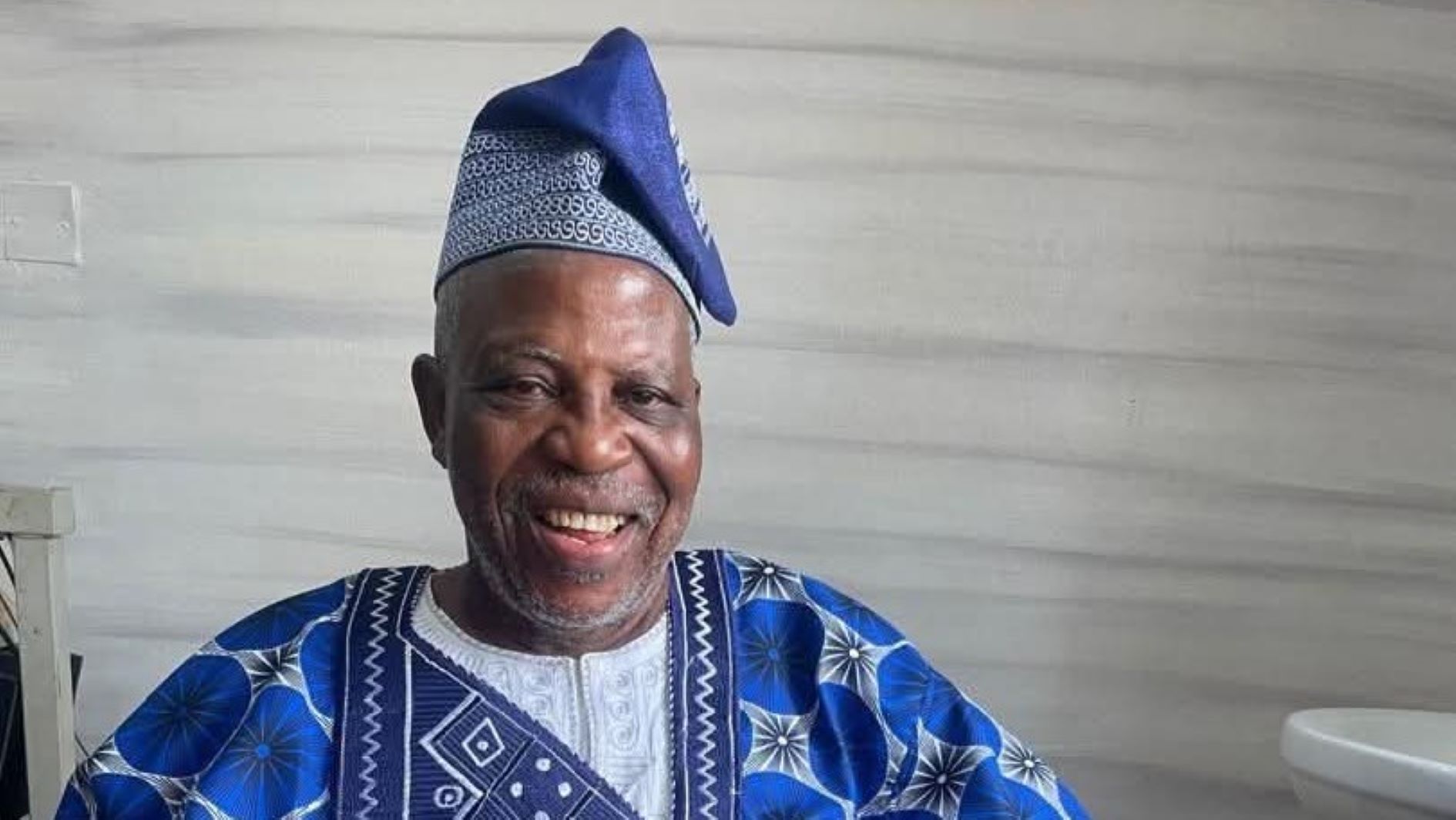
Long before digital technology disrupted the operations of the newsroom, Alhaji Najeem Jimoh was part of a generation of journalists who learnt to chase stories, question authority and hold themselves to the demands of the profession.
His years at The PUNCH Newspaper placed him at the center of an important period in Nigerian journalism.
As editor between 1986 and 1988, Jimoh earned a reputation for being hands-on, demanding and deeply involved in the development of young journalists. Decades later, many of those who passed through his newsroom still remember the opportunities he gave them and the lessons they learnt from him.
Now 74, Jimoh’s career gives a record of positions held and newspapers edited. It is also a story about mentorship and the influence one journalist can have on generations that follow.
His path into journalism was shaped partly by activism. As a Mass Communication student at the University of Lagos, Jimoh was involved in student union activities and was suspended from the university for a year. He returned to complete his studies, graduating in 1978 with a second-class upper degree. He later obtained a master’s degree in Political Science from the same university.
The experience appears to have strengthened the questioning spirit that would become part of his professional identity. Journalism gave him another avenue to engage with society, interrogate those in power and draw attention to issues affecting ordinary Nigerians.

He started his professional career at Daily Times before joining The PUNCH. There, he rose through the ranks and eventually became editor.
The newsroom under Jimoh was not one where the editor just sat in an office waiting for copies to arrive. He was known to move among reporters, discuss stories and take an active interest in the newspaper’s daily production.
Former colleagues have recalled his ability to combine authority with informality. He could sit with reporters eating groundnuts, maize or roasted plantain, joke with them and still expect them to produce work that met his standards.
Jimoh demanded hard work, enterprise and a strong sense of news. For young reporters, the newsroom became a place where they were expected to learn quickly and prove themselves.
Some of the profession’s notable names did just that.
Azu Ishiekwene was still a Mass Communication student at the University of Lagos when he first encountered Jimoh. In 1986, he approached The PUNCH seeking a vacation job, carrying a note from Professor Olatunji Dare.
Jimoh, in his characteristic manner, reportedly nicknamed the young student Aparutu, a Yoruba expression for a joker or clown. But behind the teasing was an opportunity. He found a place for Ishiekwene in the newsroom.
That vacation job became the beginning of a journalism career that would eventually take Ishiekwene to the editorship of The PUNCH.
Ishiekwene has since spoken and written about Jimoh’s influence on his life, describing him as a mentor and life coach.
Lekan Otufodunrin is another journalist whose career was given an early push by Jimoh. He has recalled how the former editor employed him at The PUNCH in 1987, giving him an opportunity to begin his newspaper career.
These stories are important to understanding Jimoh’s legacy because they show that his influence was not limited to the pages of the newspaper.
The ability to recognise talent is one thing; giving that talent an opportunity is another. Jimoh appears to have done both.
His former deputy, Demola Osinubi, was among the journalists he trusted during his time as editor.
Accounts of the period also show an editor who was deliberate about assembling people he believed could strengthen the newsroom.
For Jimoh, journalism was a collective enterprise. A strong newspaper required reporters who could find stories, writers who could tell them well and editors who could recognise what mattered.
His own approach was informed by his activist background. Colleagues have described him as a crusader who brought a strong sense of social responsibility to journalism. During his time at The PUNCH, the newspaper continued to develop the direct, people-centred voice for which it became known.
His career later expanded beyond newspaper editing.
Jimoh ventured into broadcasting and served as Executive Vice-Chairman of FM93.7. He also published Hammer between 1990 and 1992, demonstrating an ability to navigate different sides of the media industry.
The changes in the media landscape did not diminish his relevance. Rather, they gave him more opportunities to remain involved in journalism and public communication.
His experience has also taken him into media consultancy, including work with the Joint Admissions and Matriculation Board.
Recognition has followed him through the years. In 2025, the Diamond Awards for Media Excellence conferred Honorary Fellowship on Jimoh alongside veteran journalists Dare Babarinsa and Owei Lakemfa.
The honour recognised a career that has stretched across generations of Nigerian journalism, but the tributes from people who worked with him offer perhaps a more personal measure of his contribution.
The journalists he mentored remember the opportunities, friends remember the counsel, and those close to him speak of his warmth and loyalty.
Ambassador Sarafa Tunji Isola, Nigeria’s former High Commissioner to the United Kingdom, describes Jimoh as an elder brother and confidant. In a tribute to mark his 74th birthday, Isola highlighted his wisdom, humility, integrity and willingness to guide others.
According to Isola, being an Egbon comes with responsibility. It means providing direction, offering encouragement, correcting when necessary and speaking honestly, even when the truth is uncomfortable.
That description is not far removed from the professional image of Jimoh.
The Sultan of Sokoto and President-General of the Nigerian Supreme Council for Islamic Affairs, Alhaji Muhammad Sa’ad Abubakar, also reflected on Jimoh’s professional legacy in his birthday message.
The Sultan described him as an accomplished journalist and distinguished media professional whose decades of service contributed to the development of Nigerian journalism and public discourse.
He urged young and aspiring journalists to study and emulate Jimoh’s professionalism, courage, discipline and commitment to responsible journalism.
The message is particularly relevant at a time when journalism has changed dramatically.
Jimoh’s generation worked in newsrooms before smartphones, social media and the constant pressure of digital publishing. Stories were chased physically. Newspapers were produced under tight deadlines, and editors had to make decisions that could shape the following day’s national conversation.
Today’s journalists work in a very different environment, but the fundamentals remain.
News still requires curiosity. Reporting still demands accuracy. Good journalism still requires courage and judgement. And young journalists still need experienced professionals willing to teach them the craft. Jimoh’s career embodies that last part particularly well.
His greatest legacy may not be the years he spent occupying the editor’s chair. It may be the journalists who sat across from him, received an assignment, got their copies corrected, learnt from their mistakes and eventually went on to lead newsrooms themselves. That is a different kind of influence.
It does not always appear on a résumé or in an award citation. It is seen in the careers of people who remember that someone gave them a chance when they were still finding their feet.
His 74th birthday, therefore, is an opportunity to look beyond longevity and consider legacy.
There is the student activist who found his way into journalism. There is the reporter who rose through the ranks to become an editor. There is the media professional who moved between print and broadcasting.
There is the mentor whose former protégés continue to work in the industry.
And there is the Egbon remembered by friends for his counsel, discretion and affection.
The newsroom has changed since Jimoh’s years at The PUNCH. The tools are different, the deadlines are faster and the audience is no longer waiting for tomorrow’s newspaper to know what happened today.
But the need for good journalists has not changed. Neither has the need for people who are willing to build them. Jimoh did not only participate in the profession; he helped shape the people who would carry it forward.
At 74, that remains a legacy worth celebrating.

