
 Get Guardian on Google
• Suggest e-tagging, manifest control, others
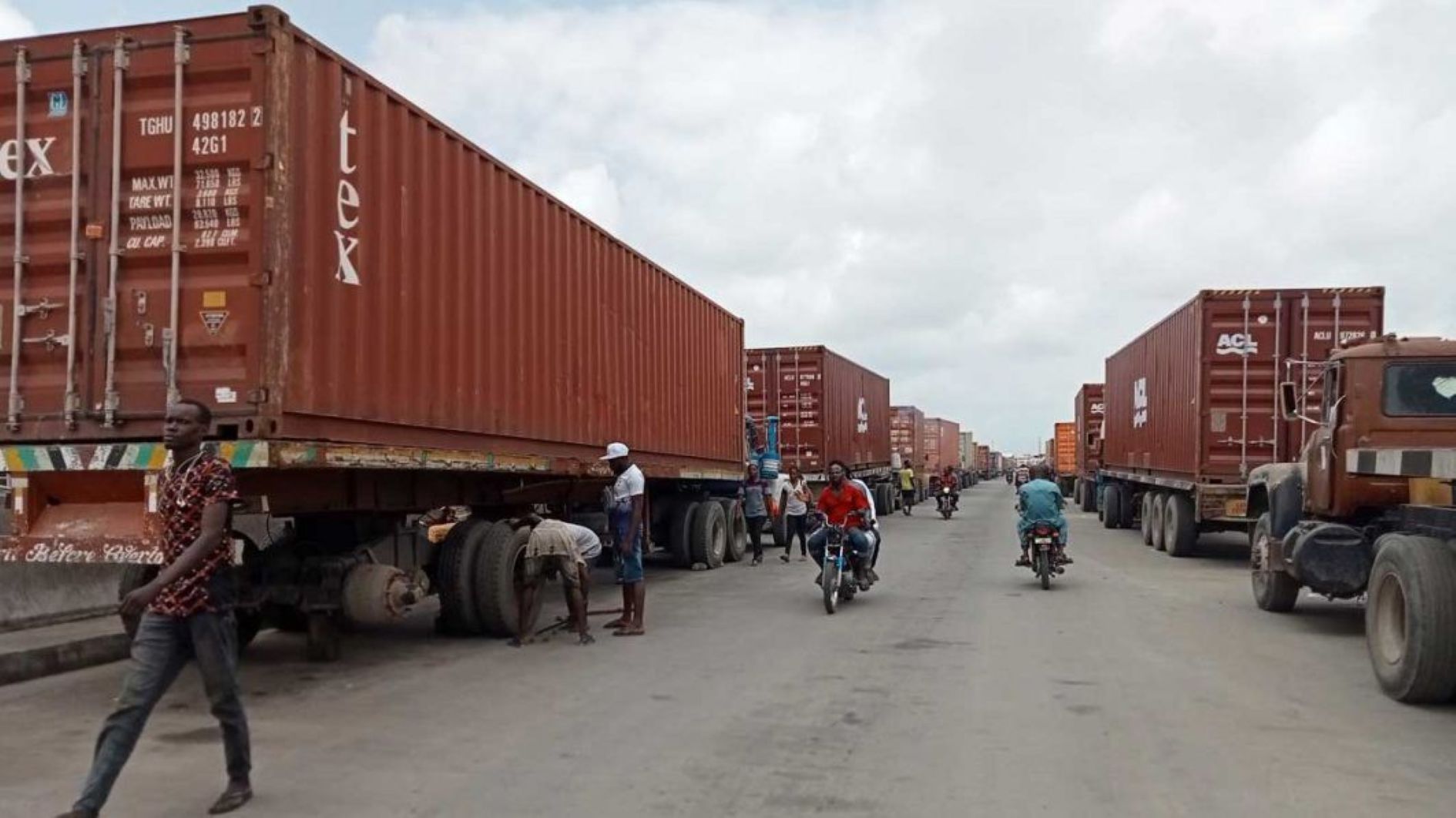
Truckers have stressed that improving the Apapa and Tin Can Island Ports requires coordination among cargo readiness, truck staging, call-up authorisation, terminal capacity, empty-container returns, and port gate operations, rather than just controlling the number of trucks.
The truckers, under the aegis of the Association of Maritime Truck Owners (AMATO), said the responsibilities of all parties involved were clear, with the Nigerian Ports Authority (NPA) coordinating and supervising operations, the Truck Transit Park (TTP) operator maintaining an accountable call-up platform, terminal operators providing accurate receiving information, government agencies enforcing the rules consistently, shipping companies and freight forwarders supporting proper scheduling, and truck owners complying with approved procedures.
Recall that the Managing Director of NPA, Dr Abubakar Dantsoho, had highlighted the cause of port congestion, noting that cargo previously remained at Lagos ports for as long as three weeks, while the Apapa access road, designed to accommodate approximately 2,400 trucks daily, carried more than 7,000 trucks.
Speaking at the Lagos Chamber of Commerce and Industry (LCCI) Freight Forwarders Trade Group Strategic Stakeholders’ Engagement, the National President of AMATO, Remi Ogungbemi, said port congestion is not merely a problem of inadequate road space or excessive truck numbers, but a reflection of challenges with truck staging, terminal scheduling, empty-container returns and enforcement of port access requirements.
Ogungbemi, who was represented by the National Secretary General, Mohammed Sani, also raised concerns about trucks approaching port access roads without proper call-up authorisation, complete documentation or the required NPA Minimum Safety Standard sticker, which require proper investigation and verification.

Ogungbemi stressed that the call-up system must do more than issue tickets by verifying the actual truck, confirming its presence at an approved park or pre-gate, establishing its queue position and authorising movement in line with terminal readiness.
He said every truck must satisfy identity, destination, safety and movement-authorisation requirements before entry, noting that any exception, including emergency movement, must be justified, authorised and electronically recorded.
Ogungbemi also raised concerns on the release of trucks without regard to terminal receiving capacity, noting that this activity merely transfers congestion from parks to port access roads, bridges and adjoining corridors.
AMATO chief recommended a batch-release system based on verified terminal capacity, with truck movements scheduled according to the number of vehicles each terminal can reasonably receive within a given period.
“We also advocate the adoption of electronic truck e-tags and integrated movement manifests to strengthen truck identification, call-up verification and movement control. These measures will improve accountability and reduce opportunities for unauthorised access,” he stated.
Ogungbemi also stressed that delays in empty-container returns increase truck operating costs, reduce vehicle availability and contribute to congestion.
He said TTP, shipping companies, terminal operators and bonded terminals must establish a coordinated electronic process that identifies the designated receiving location, confirms available capacity and communicates applicable return arrangements before a truck is dispatched.
He argued that an ineffective call-up system unfairly penalises operators who follow the rules, stressing that prolonged delays can result in idle vehicles, additional driver expenses, lost contracts and reputational damage.
According to him, it is unacceptable for operators who circumvented approved procedures to gain an advantage over those who complied, calling for no preferential treatment for truck owners but fairness, transparency and consistent enforcement for every operator.
He said truck owners and operators bear the direct financial and operational consequences of port delays, while these challenges also affect the entire maritime value chain, the national economy and Nigeria’s competitiveness in international trade.
AMATO, however, proposed a joint Port Traffic and Terminal Efficiency Working Group, coordinated by the NPA and involving relevant government agencies, TTP, terminal operators, shipping companies, bonded terminals, freight forwarders and recognised transport associations.