 Follow Us on Google News
 Follow Us on Google Discover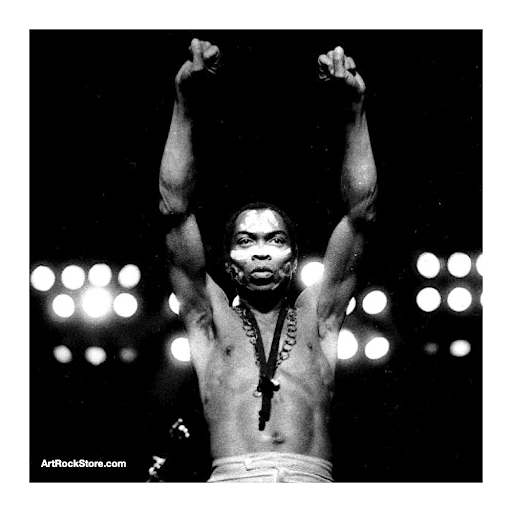
Twenty nine years after his death, Afrobeat progenitor, Olufela Oludotun Ransome Kuti, better known as Fela Anikulapo Kuti, will today be honoured with a Lifetime Achievement award by the Recording Academy, producers of the global music award, Grammy.
The Abami Eda (weird one) is being honoured with the awards ahead of his 88th posthumous birthday later this year (October 15) at this year’s edition (the 68th) of the highly coveted global music awards, which takes place today at the Crypto.Com Arena, Los Angeles, USA. The award will be received by his children — Yeni, Femi and Kunle, representing the family and the wider Afrobeat community.
Established in 1962, the Grammy Lifetime Achievement Award, honours performers with outstanding creative contributions to recording, and who, during their lifetimes, made creative contributions of outstanding artistic significance to the field of recording. The first recipient of the award was Bing Crosby in 1963.
For Fela, the Academy credits him with shaping modern Nigerian Afrobeat, influencing global artistes such as Beyoncé, Paul McCartney and Thom Yorke, and leaving a legacy that lives on through his family, the Kalakuta Museum and the New Afrika Shrine. As the creator of Afrobeat, he composed, recorded and performed over 200 songs.
In 2025, Fela’s 1976 album, Zombie, was inducted into the Grammy Hall of Fame. The honour was accepted by his sons Femi and Seun Kuti. Although Fela never received a Grammy nomination while alive, he has now been rewarded for his inestimable contributions to the world of music with the posthumous honour and Lifetime Achievement Awards.
His sons and grandson have earned multiple Grammy nominations. Between the sons and grandson, the Kuti family has a total of eight Grammy nominations with Femi Kuti receiving six across the “World Music” and “Global Music” categories; Seun Kuti received one nomination in the “Best World Music Album” category and Made Kuti receiving a nomination.

As a Nigerian musician, bandleader and activist who pioneered Afrobeat, Fela lived between October 15, 1938 and August 2, 1997. He became one of the most influential cultural figures in modern African history. He studied classical music at Trinity College of Music, London – now known as Trinity Laban Conservatoire of Music and Dance – from 1959, playing in jazz and rock bands and experimenting with styles that later shaped Afrobeat.
Fela developed and created an uncommon sound by fusing highlife, jazz, funk, and traditional Yoruba music with extended grooves, horn arrangements and politically charged lyrics. He christened it Afrobeat. The genre became the sonic foundation for modern Nigerian and African popular music widely known as Afrobeats.
Many Nigerian and African artistes draw their influences from Fela’s sounds and songs. Fela on Broadway, Fela and the Kalakuta Queens, Felabration art exhibitions and more are all part of Fela’s ever lasting legacy.
His activism saw him attacking military rule, corruption and social injustice in Nigeria, which led to repeated harassment, raids and imprisonment by successive military regimes through his reign as a musician.
Although Fela died two years before the current democratic dispensation in Nigeria, his children have preserved and grown his legacy. Yeni, Femi and Seun Kuti have become custodians of their father’s work while also extending and adapting his vision to contemporary African struggles and global platforms.
Yeni Kuti conceived Felabration, a festival in honour of the life of the musician and activist; The New Afrika Shrine, a living cultural hub that presents live Afrobeat performances, debates, and art rooted in Fela’s ethos is run by Femi and Yeni Kuti; and the Kalakuta Museum, Fela’s former residence in Ikeja, which functions as an archive and tourist site that keeps his story accessible to new audiences is managed by Kunle Kuti.
In the same vein, Yeni, Femi and Kunle Kuti have been formally recognised by courts as the administrators of Fela’s Estate, to which they collectively make key decisions about the use of Fela’s name, image, likeness and other intellectual property, ensuring that projects align with his values and the family’s long-term vision.

