 Follow Us on Google News


 Follow Us on Google Discover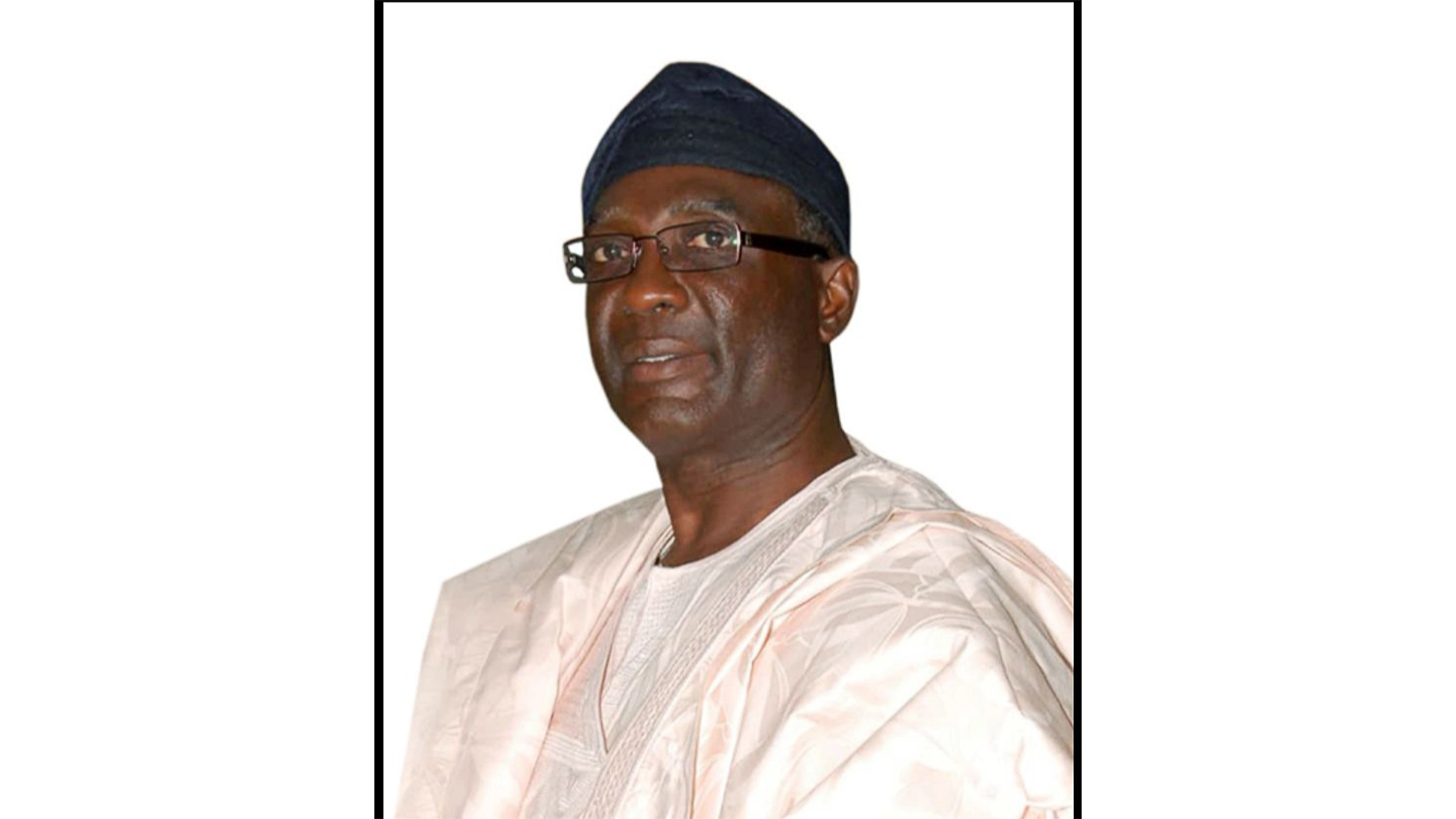
In a sector worn down by years of neglect, collapsing infrastructure and a thin bench of qualified teachers, Dr Oladega Adebogun has chosen to build forward. As Founder and Chief Executive Officer of Caleb Group of Schools, he has translated a lifelong conviction about learning into institutions that actually deliver. Across decades of work, he has fused academic discipline with inventive teaching methods and a deliberate focus on character, so that students leave not only with certificates but with judgement, grit and purpose.
At Caleb, excellence is not an aspiration on a wall. It is the daily standard, and it has produced young Nigerians equipped to compete, to lead and to contribute far beyond the classroom. In doing so, the visionary educationist stands as a noble Nigerian whose professional achievements and strength of character have become a roadmap for many.
His path began early, with a clear sense that education could alter the trajectory of a child and, by extension, a nation. That conviction pushed him through a rigorous course of study and into school leadership guided by principle rather than expedience. Hard work, professionalism and integrity are not slogans in his practice; they are how timetables are kept, how teachers are supported and how standards are held when it is easier to lower them. He reads the shifts in modern education closely and adjusts, introducing new approaches where they serve students and holding firm to values where they matter most. The reputation he has earned rests on this consistency: creating environments where potential is identified early, nurtured carefully and released confidently into the wider community.
Dr Adebogun’s intellectual grounding mirrors the discipline he demands in the classroom. He earned a Bachelor’s degree in Educational Administration from the University of Port Harcourt, followed by a Master’s in Educational Management from Lagos State University. He completed the arc with a Ph.D. in Educational Administration and Planning from Bayero University, Kano. Each qualification sharpened a different edge: administration, management, and strategic planning. Together they forged a leader who understands policy as well as practice, and who approaches school building as both a craft and a science.
Beyond Nigeria, he sought perspectives that would stretch his thinking. He attended international seminars and executive management programmes in the United States, Germany and the United Kingdom, absorbing models he later adapted to local realities. As a registered member of the Nigerian Institute of Management, he has stayed tethered to professional standards at home. He also studied at Harvard Business School, completing the Owner/President Management programme. That exposure refined his capacity to lead complex institutions, balance growth with sustainability and run Caleb Group with the rigour of a global enterprise while keeping its mission rooted in Nigerian children.
Building on that academic foundation, Dr Adebogun stepped into the classroom with a resolve to change what he could from within. He began as a class teacher and moved through public service in the Mushin Local Educational District and later the Lagos State Ministry of Education. The work was unglamorous and demanding, but it gave him a close view of systemic gaps. That grounding earned him promotion to Principal Inspector of Education in 1991, a post that placed responsibility for standards and supervision squarely in his hands and deepened his conviction that leadership in education must be hands-on.

In 1986 he made a decisive turn toward institution building by founding Caleb International School. What started as a single venture has grown into a reference point for academic rigour and moral formation. Under his stewardship, thousands of students have passed through Caleb’s doors equipped not only with knowledge but with habits of diligence, responsibility and service. His influence extends beyond his own schools. As a former top executive of the Lagos State Association of Proprietors of Private Schools, he has helped shape policy conversations and set benchmarks for private education across the state, pressing consistently for quality without compromise.
When asked what drives his pursuit of quality, Dr Adebogun is direct. “Having worked as a teacher and Inspector of Education, I witnessed firsthand the gaps in Nigeria’s education system,” he recalled. “I knew that with the right approach, things could be done better.” That clarity of purpose became Caleb School. From that first campus, the work expanded deliberately into what is now the Caleb Group of Schools, spanning nursery, primary, secondary and tertiary levels, each built to close the very gaps he saw on the frontline.
Under his stewardship the group has grown into one of Nigeria’s most recognised names in education. The timeline tells its own story of intent and scale: Caleb International School Magodo in 1986, Caleb Educational Institute in 1990, Caleb International College Magodo in 1995, Caleb British International School Lekki in 2003, Caleb University Imota in 2008, and Caleb British Academy Surulere in 2015. Together they form a network distinguished by academic discipline and moral formation. The name Caleb has come to signal more than classrooms. It signals a standard parents trust and students carry into the world.
That standard is visible on the campuses themselves. Air-conditioned classrooms sit alongside internet-ready computer suites, laboratories stocked for practical science, libraries built for serious reading, and spaces designed for sport and the arts. The architecture is deliberate, but the aim is human: to create an environment where rigour meets care, where ideas are tested and character is formed. In that balance of innovation, scholarship and pastoral attention, students are prepared not just to pass examinations, but to meet the demands of a complex future with confidence and conviction.
Technology at Caleb is not decoration. It is a tool for closer teaching. To enable seamless teacher-student interaction, the schools deployed classroom management platforms such as NETSUPPORT and MYTHWARE. Through these systems, teachers connect directly with students via laptops, guide work in real time, share resources and monitor progress without breaking the flow of a lesson. The effect is immediate: instruction becomes more collaborative, feedback arrives faster, and learning bends to the pace of each student rather than to the constraints of a blackboard.
That approach reflects a broader philosophy about what school should deliver now. “At Caleb Group of Schools, we prioritize the development of critical thinking, problem-solving, collaboration, and digital literacy. Our goal is to empower students with the knowledge, skills, and adaptability to thrive in an ever-evolving world that is volatile, unpredictable, complex and ambiguous (VUCA).”, he emphasized. By embedding digital tools into daily practice, Caleb is doing more than teaching subjects. It is equipping young Nigerians with the fluency to navigate, build and lead in a connected era, while holding firm to the judgement and discipline that outlast any software update.
The Caleb vision extends to tertiary education through Caleb University, Imota, Lagos. Conceived as a faith-based centre of excellence, the university was built to deliver university education that is both rigorous and relevant. Its mission is straightforward: to produce graduates of ability and integrity who can shape their communities and compete globally. That ambition is pursued through a deliberate emphasis on research and entrepreneurship. The result is an institution now regarded among Africa’s leading private universities, known for turning academic potential into work that matters beyond the campus.
That same pursuit of excellence runs through the group’s primary and secondary schools, and it shows in the record. Caleb British International School, Lekki, won the David Shepherd Award at the Global Canvas Children’s Art Competition in 2020 at London’s Natural History Museum, having earlier been named Best International Entry in 2017. In 2022, the school’s Young Entrepreneurs’ Club secured a $2,500 Ciena Solution Sustainability Award for its STEM Farm Project. A year later, teacher Olusegun Michael Adeniyi was recognised with the Global Innovator Pearson Award. These are not isolated moments. They reflect a culture where creativity, enterprise and teaching quality are measured against international benchmarks.
The honours continue closer to home and on the global stage. Caleb International School, Magodo was named Lagos State Best Approved Private Primary School for 2024, while its pupils regularly feature among the top scorers in the Joint Admissions and Matriculation Board examination. In the Cambridge IGCSE, two students from Caleb British International School attained the highest marks in the world: Akota-Chika Serena in English and Tolulope Israel Adekimi in Mathematics, earning them Outstanding Cambridge Learner Awards. At the university level, Caleb University was named Private University of the Year by the African Education Monitor and Philanthropic Educational Institution of the Year by CSR Reporters Magazine in 2024. Taken together, these recognitions confirm a pattern: institutions built to a high standard, producing students and staff who meet it, and sustain it.
For Dr Adebogun, philanthropy is not an add-on to his work in education. It grows directly from his own early struggles. Those experiences forged a lasting empathy for people navigating hardship, and a conviction that opportunity should not be determined by circumstance. “Over the years, I have been privileged to shape many lives through my experiences and expertise,” he reflected, a statement that captures how he views influence: as responsibility. Beyond the classrooms and campuses, that responsibility has taken the form of direct financial support to individuals and families, bringing relief where it is most needed and restoring dignity with quiet consistency.
That ethos has drawn recognition well beyond Nigeria’s borders. His contributions to education and to human development earned him the Pan-African Leadership Award, conferred by the Initiative for Positive Influence on African Youth. The honour cited his work in nation-building, community development and service to humanity, and named him an Icon of Societal and Human Capital Development. It is a title that sits comfortably with a career built on institutions, but it points to something larger: a legacy measured not only in schools founded or awards received, but in lives steadied, potential unlocked, and a standard of leadership that insists excellence and compassion must travel together.

