 Follow Us on Google News


 Follow Us on Google Discover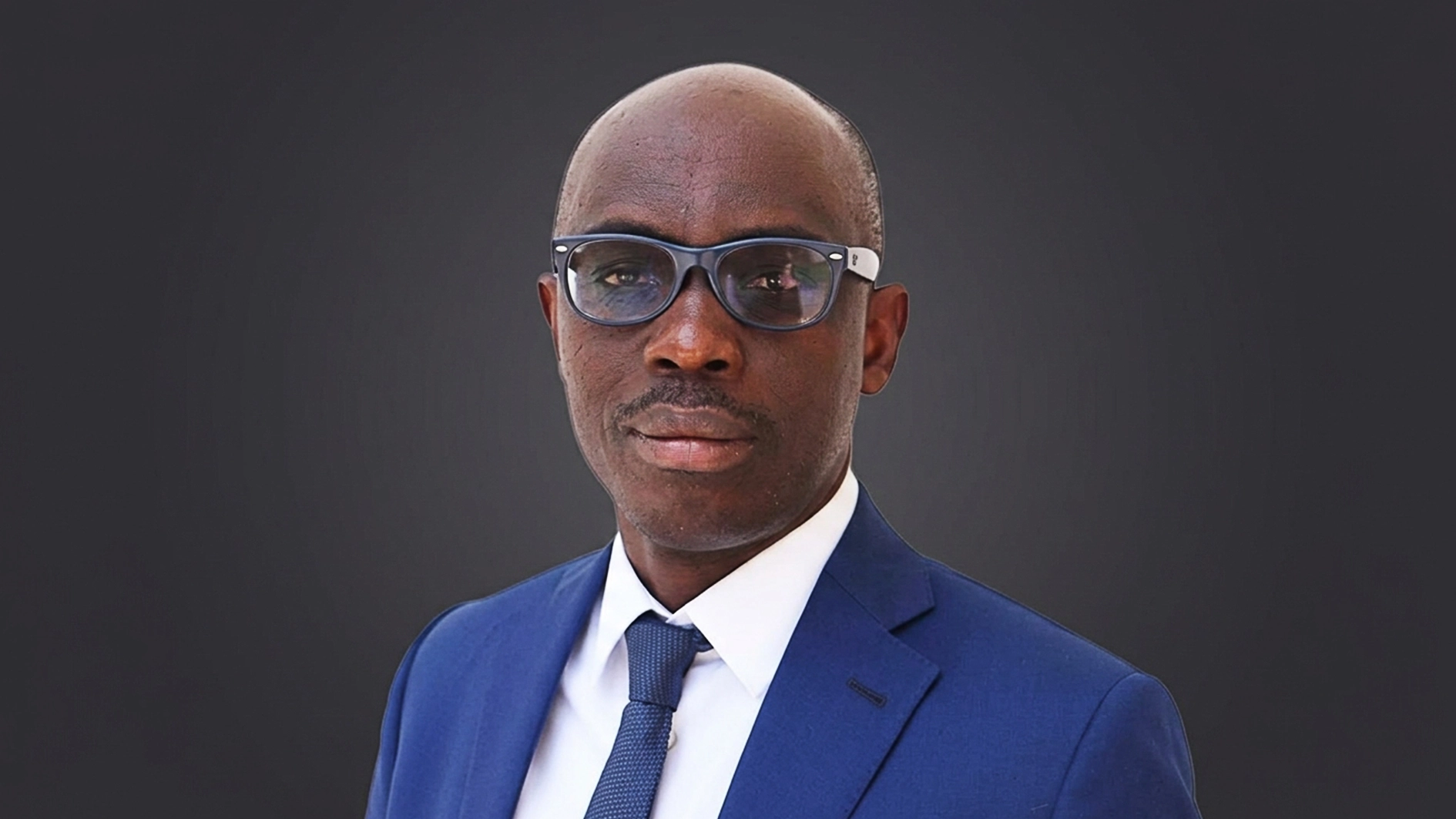
Steering Agribusiness Transformation: How Mr Odoukou Olivier is Driving Sustainable Growth and Human-Centred Governance at Rubber Estates Nigeria Limited.
While conventional corporate leadership often measures success purely through balance sheets, Mr Odoukou Olivier has built his executive legacy at Rubber Estates Nigeria Limited on the fundamental belief that sustainable industrial growth begins with human wellbeing. Recognised among Nigeria’s 66 most inspiring business leaders on the occasion of the nation’s 66th Independence Anniversary, the Managing Director has established a pioneering model of community-integrated management across the company’s agricultural estates. With eighty percent of the workforce residing on-site, Mr Olivier has overseen the provision of comprehensive civic infrastructure, including electricity, potable water, medical clinics, educational institutions, and digital connectivity for workers and their families. This unwavering commitment to employee welfare earned the enterprise international recognition as the only Top Employer-certified firm in Nigeria featured on the global Top Employers Institute portal for embedding wellbeing directly into daily work operations.
Redefining Leadership in Agribusiness
When executive leadership in African agribusiness is discussed, the conversation frequently centres on traditional operational pathfinders who ascended strictly through field agronomy or factory management. Yet, the remarkable transformation recorded at Rubber Estates Nigeria Limited over the past five years presents a radically different paradigm of corporate stewardship. Leading this agricultural titan is Mr Odoukou Olivier, a seasoned finance and internal audit strategist whose transition from corporate governance to operational leadership has redefined natural rubber production in West Africa. Mr Olivier brought with him an uncompromising commitment to financial discipline and a vision of people-first corporate administration since taking charge of Rubber Estates Nigeria Limited in early 2021. His appointment marked a bold pivot, stepping deliberately outside his established francophone domain to lead Nigeria’s premier rubber producer in Africa’s most dynamic economy. Under his guidance, Rubber Estates Nigeria Limited has expanded industrial capacity, elevated community welfare, and converted audit principles into drivers for sustainable growth.
Professional Foundation and Audit Rigour
The foundation of Mr Olivier’s managerial style was forged across two decades of financial oversight and risk management. An Ivorian national, he earned a master’s degree in finance and marketing from the École Supérieure de Commerce d’Abidjan in Côte d’Ivoire. To solidify his command, he earned qualifications from the Institute of Internal Auditors, becoming a Certified Internal Auditor and attaining Certification in Risk Management Assurance. His career commenced with five years at Mazars as an external auditor, mastering accounting, compliance, and structural analysis. This experience laid the groundwork for his thirteen-year tenure within the internal audit ecosystem of the SIFCA Group. Mr Olivier served as Chief Audit Executive of SAPH in Côte d’Ivoire for close to three years, Chief Audit Executive for SIPH overseeing African rubber operations for three and a half years, and Chief Audit Executive for SIFCA Group across rubber, oil palm, and sugar divisions.
Transitioning from Governance to Operational Command

The constant engagement with business processes and executive boards ignited Mr Olivier’s ambition to drive operational outcomes. When the opportunity emerged in 2021 to become Managing Director at Rubber Estates Nigeria Limited, he recognised a pivotal moment to translate audit-derived insights into operational excellence. Moving from an advisory support role to operational leadership, Mr Olivier embraced navigating Nigeria’s vibrant economic terrain. His deep familiarity with SIFCA Group’s strategy provided a seamless transition, aligning the Nigerian subsidiary with world-class benchmarks in natural rubber cultivation, processing, and international trade.
Institutional Heritage and Corporate Evolution
To appreciate the scale of achievements under Mr Olivier’s stewardship, one must examine the institutional heritage of Rubber Estates Nigeria Limited. The company originally commenced operations in 1995 as Michelin Development Company Limited. A landmark evolution occurred in 2006 when Société Internationale de Plantations d’Hévéas, a French entity and core member of SIFCA Group, acquired Michelin’s majority stake. This transaction transferred management and ownership to SIFCA Group, culminating in renaming the enterprise as Rubber Estates Nigeria Limited on 5th June 2007. Today, as part of SIPH’s African network spanning Côte d’Ivoire, Ghana, Liberia, and Nigeria, Rubber Estates Nigeria Limited stands as the flagship of Nigerian natural rubber production.
Operational Excellence and International Standards
Under Mr Olivier’s strategic leadership, Rubber Estates Nigeria Limited has consistently surpassed operational milestones while maintaining strict adherence to global standards. The company’s processing facilities and agricultural estates operate in compliance with international benchmarks, including the European Union Deforestation Regulation, ISO 9001 for Quality Management, ISO 14001 for Environmental Management, and ISO 45001 for Occupational Health and Safety. These certifications reflect Mr Olivier’s philosophy that market leadership requires commitment to quality, safety, and environmental responsibility across every link of the value chain.
Expanding Market Leadership and Outgrower Partnerships
Since early 2021, the transformation overseen by Mr Olivier has yielded extraordinary operational expansion. Rubber Estates Nigeria Limited has secured a dominant share of the domestic raw rubber purchasing market, consolidating its status as Nigeria’s primary rubber producer. A central pillar of this growth has been creating robust partnerships with local smallholder farmers. By expanding factory processing capacities in 2025 and 2026, with further expansions planned for 2027, the enterprise has created guaranteed, lucrative market outlets for indigenous agricultural producers across host communities.
Surging Production Metrics and Strategic Vision 2040
The operational metrics achieved under Mr Olivier’s watch speak to his strategic clarity. In 2025, Rubber Estates Nigeria Limited reached a milestone by producing and exporting over 30,000 tonnes of natural rubber. Continuing this upward trajectory, the enterprise is projected to cross 40,000 tonnes in 2027, effectively doubling its production and sales volume compared to figures recorded when Mr Olivier assumed office five years prior. Looking further ahead, Mr Olivier has mapped out a roadmap targeting an annual output of 100,000 tonnes by 2040. Achieving this landmark will involve doubling the existing plantation footprint, deepening outgrower support schemes, and introducing research to continuously improve crop yields per hectare.
Human Capital and the Foundations of Rubber Cultivation
Despite these industrial achievements, Mr Olivier remains steadfast in his conviction that an enterprise’s true value lies in its human capital. At Rubber Estates Nigeria Limited, core operations begin with plantation development, where immature rubber trees require dedicated upkeep for six years before reaching maturity for tapping. This multi-year commitment relies on the daily effort of thousands of workers and industrial specialists. Recognising that employee satisfaction is the engine of success, Mr Olivier has championed an exceptional model of community and workplace integration.
Holistic Estate Communities and Civic Infrastructure
A defining characteristic of Rubber Estates Nigeria Limited’s operational footprint is that eighty percent of its workforce resides directly on company estates alongside their families. Rather than viewing residential management as an ancillary duty, Mr Olivier has transformed these settlements into fully functional civic communities. The company directly provides uninterrupted electricity, clean water supply, GSM and internet connectivity, educational institutions, medical clinics, and security. By ensuring workers and dependents enjoy safe living conditions, management fosters an environment where families build their lives.
Participative Governance and Bi-Annual Outreach
To maintain open communication, Mr Olivier instituted a bi-annual executive outreach programme. Twice every year, the Managing Director personally leads senior leadership on visits through employee residential quarters and neighboring rural communities. During these visits, management steps into workers’ homes, engages with families, and conducts town hall assemblies. These interactions allow leadership to assess administrative performance, evaluate unresolved concerns, and gather staff suggestions. Following each visit, binding action plans are established to ensure rapid resolution of identified needs, institutionalising participative management.
Empathetic Relief and World-Class Employee Wellbeing
This empathetic governance framework proved vital during recent macroeconomic headwinds, where rising local inflation severely impacted household living costs. Under Mr Olivier’s direction, management implemented targeted welfare support initiatives, distributing essential food items such as rice, eggs, chicken, and cooking oil to cushion economic burdens. Additionally, the enterprise introduced merit-based tertiary education scholarships for top-performing children of employees, investing in the intellectual future of workers’ families. Coupled with a progressive gender policy that protects staff from harassment while encouraging the recruitment of female tappers, Rubber Estates Nigeria Limited has emerged as an industry benchmark for inclusive employment. This dedication earned international acclaim when the company became the only Top Employer-certified firm in Nigeria featured on the Top Employers Institute portal for embedding wellbeing directly into work.
Financial Agility in Navigating Commodity Markets
Navigating the economic complexities of global commodity trade requires financial agility, a quality Mr Olivier possesses in abundance. As an export-oriented business, Rubber Estates Nigeria Limited generates revenues in foreign currency, converted to naira at official rates, while expenditures remain heavily exposed to domestic inflation.
Because global natural rubber prices are determined on international commodity exchanges, the enterprise cannot simply pass local cost increases onto buyers. To overcome this structural challenge, Mr Olivier applied his auditing background to eliminate operational inefficiencies, strictly control cost of sales, and harness the collective intelligence of the workforce.
Sustainability as a Strategic Competitive Advantage
Furthermore, Mr Olivier has elevated environmental sustainability from a regulatory obligation into a core competitive advantage. In global commerce, stringent sustainability practices represent a prerequisite for accessing high-value international markets that offer premium pricing for responsibly harvested commodities. By integrating sustainable agricultural techniques, strict forest protection, and community welfare directly into daily estate operations, Rubber Estates Nigeria Limited secures premium access to demanding global buyers. In doing so, the enterprise actively advances SIFCA Group’s regional vision of positioning West Africa at the forefront of sustainable natural rubber production.
Reflections on Nigerian Ingenuity and Ethical Governance
Reflecting on his leadership journey as an Ivorian executive who has spent over six years living and working in Nigeria, Mr Olivier expresses deep admiration for the dynamism and ingenuity of the Nigerian people. He frequently highlights the extraordinary resilience and problem-solving drive of Nigerian entrepreneurs who build world-class enterprises under demanding conditions. His executive philosophy is rooted in humility, active listening, fairness, equity in decision-making, and above all, leading by example. For young professionals and emerging business leaders, his central advice is to anchor every commercial venture upon unyielding corporate integrity, asserting that lasting prosperity can only be built upon foundations of exemplary conduct and ethical governance.

