 Follow Us on Google News


 Follow Us on Google Discover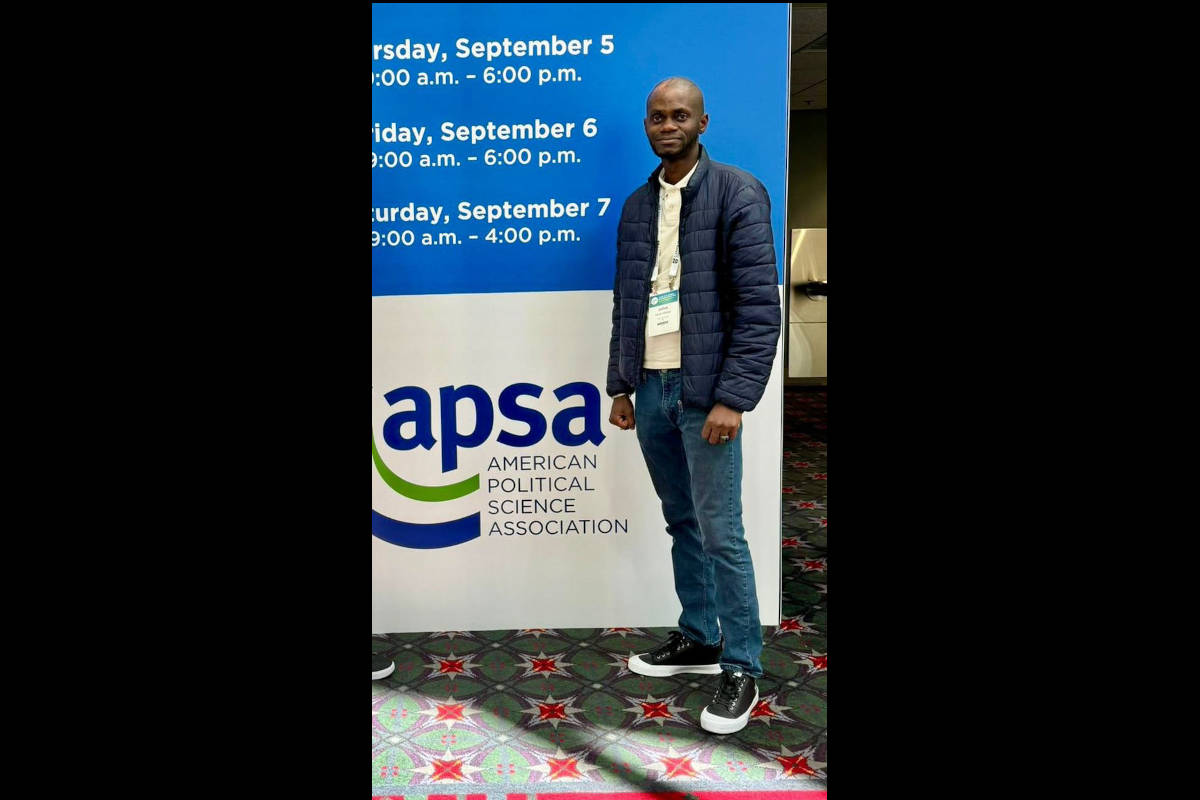
WITH civil society organisations across Africa still adjusting to cuts in United States foreign assistance, Nigerian researcher Dr Julius Adavize Adinoyi is among researchers examining how the funding disruptions are affecting organisations in Ghana and Liberia.
Dr Adinoyi, undertaking a second doctoral degree in Public Administration and Public Policy at Auburn University, United States, is presenting the work at the 54th annual conference of the Association for Research on Nonprofit Organizations and Voluntary Action, ARNOVA, holding in Indianapolis from November 20 to 22.
The conference programme lists Dr Adinoyi as the first author of *Impact of U.S. Foreign Aid Cuts on CSOs’ Financing and Operations in Ghana and Liberia*, alongside Kelly Krawczyk, Emmanuel Kumi, Janet Jock, Peter Weber and Chinonye Ekwujuru.
The research comes in a year in which the decision of the Trump administration to suspend and later terminate several foreign assistance programmes has forced governments and civil society organisations across Africa to reassess their dependence on external funding.
In Ghana, President John Dramani Mahama disclosed earlier in the year that the USAID suspension had created an estimated $156m funding gap, including a projected $78.2m shortfall affecting malaria prevention, maternal and child health, family planning, nutrition and HIV/AIDS programmes.
The effect has also been felt by organisations responsible for implementing donor-supported programmes, raising questions over staffing, programme continuity and how civil society groups can continue operating when long-standing funding streams are suddenly withdrawn.

Those questions form part of the work involving Dr Adinoyi and his colleagues, who are examining the financing and operational consequences of the aid cuts in Ghana and Liberia and how organisations are responding to the changing donor environment.
The situation in Liberia has been particularly severe. An International Monetary Fund assessment released this month said 28 of the 30 active USAID projects in the country had been confirmed for termination, involving about $434m in commitments over four years.
According to the IMF, the withdrawal is expected to lead to job losses, reduced opportunities for local businesses and funding gaps in education, health and agriculture, with vulnerable populations expected to bear much of the impact.
Liberian civil society organisations had begun warning about the consequences much earlier. In February, local groups reported programme closures and job losses following stop-work orders, while organisations struggled to determine which activities could continue without American support.
By June, civil society groups in the country were calling for stronger domestic resource mobilisation and reduced dependence on external financing, arguing that shrinking aid had exposed weaknesses in the sustainability of development programmes.
Adinoyi’s Ghana-Liberia work places the experiences of organisations in both countries within the same discussion, focusing on what happens to their financing and day-to-day operations when a major donor withdraws support.
The Ghana-Liberia research is one of two studies bearing Adinoyi’s name on this year’s ARNOVA programme.
He is also listed as the first author of *Impact of Internal and External Barriers on NGO’s Financial Transparency in Nigeria*, with Kelly Krawczyk of Auburn University and Ifatimehin Olufemi of Northeastern University.
The second study turns attention to Nigerian non-governmental organisations and the factors affecting financial transparency within the sector, extending Adinoyi’s current work into questions of nonprofit accountability and organisational finance.
Dr Adinoyi’s research work at Auburn University includes research on nonprofit transparency and accountability, humanitarian issues and community development.
He had earlier completed doctoral studies in International Studies at the University of Nairobi, with research covering governance and the effects of insecurity on institutions and communities.
The ARNOVA conference, themed *The Evolving Role of Philanthropy in Global, National, and Local Contexts*, brings together researchers and practitioners working on nonprofit organisations, philanthropy and voluntary action, with more than 180 paper and panel sessions scheduled for the three-day meeting.
For Dr Adinoyi and his co-researchers, the changes being examined are still unfolding.
Ghana is attempting to cover funding gaps created by the aid disruption, while Liberia is preparing for the longer-term economic and social impact of terminated programmes.
Their work at ARNOVA brings the experiences of West African civil society organisations into a wider discussion over what a sharp contraction in foreign assistance means for organisations that have long depended on donor funding.

