Greg Ogbeifun: WORLD CLASS PROFESSIONAL SETTING PACE IN THE MARITIME AND LOGISTICS SECTORS
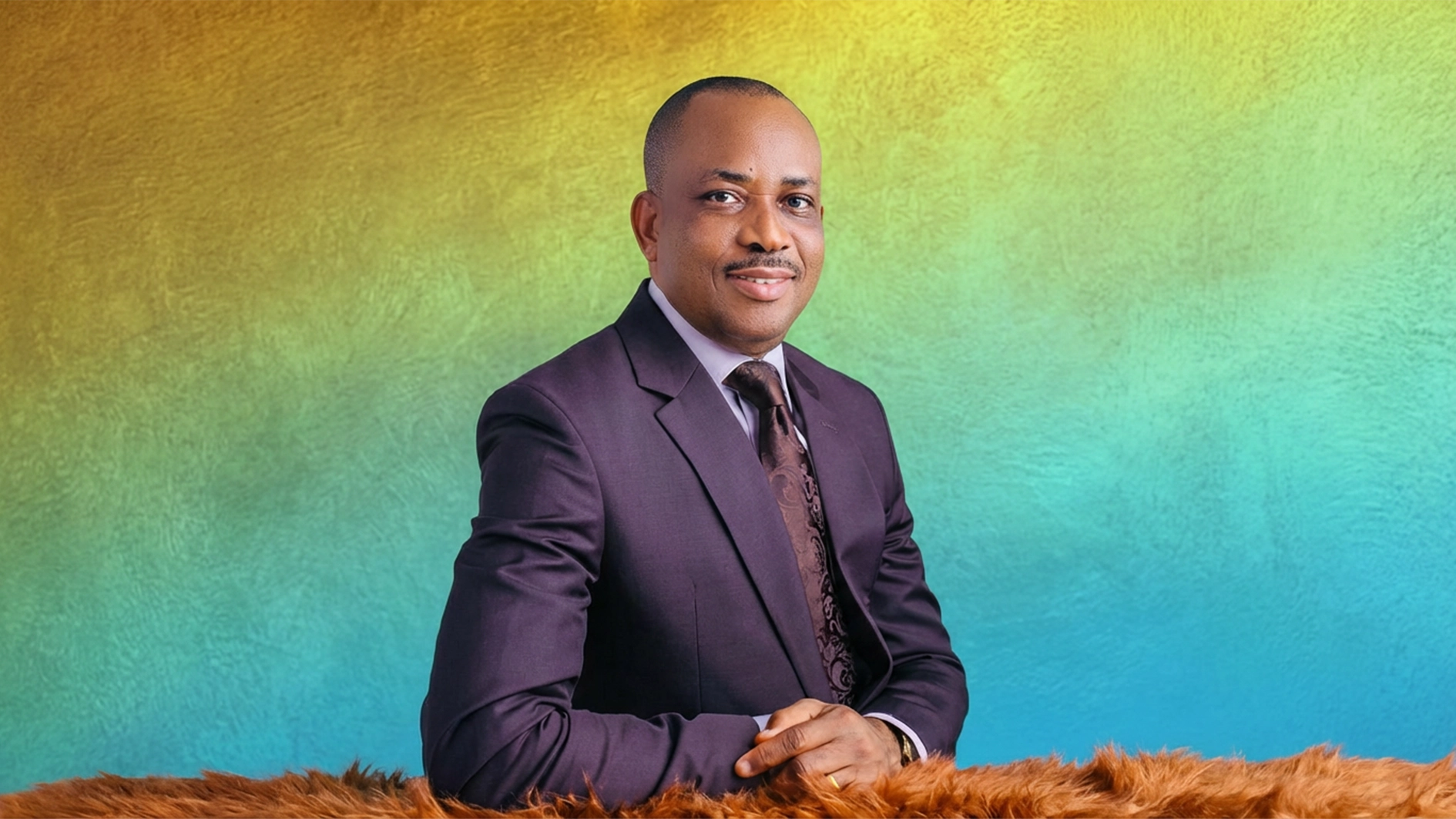
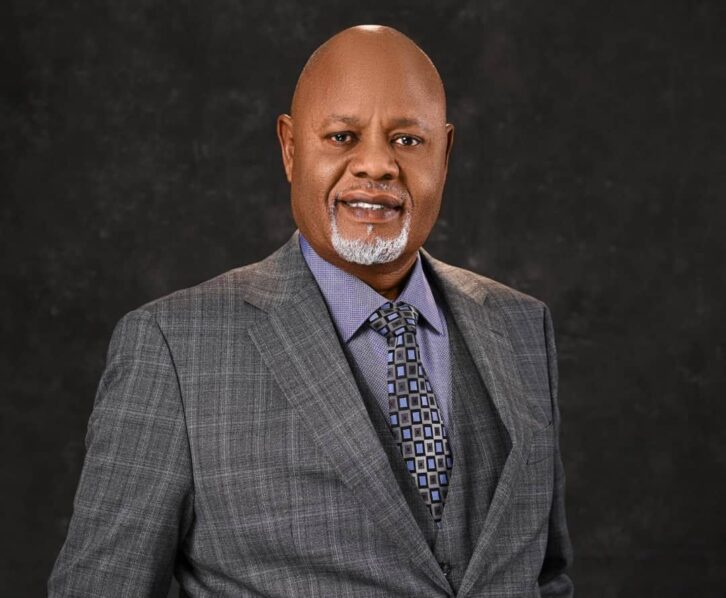
Greg Ogbeifun is the Managing Director/CEO of Starzs Marine and Engineering Ltd. He is also the Chairman of Starzs Investments He is a qualified Marine Engineer with First Class (Combined) Certificate of Competency, a member of the British Society of Marine Consultants and Ship Surveyors, the American Society of Naval Architects and Marine Engineers, the Institute of Directors (IoD) as well as the Pioneer President of the Shipowners Association of Nigeria (SOAN). He also sits as a member of the Advisory Board of the Commonwealth Enterprise and Investment Council (CWEIC). Ogbeifun’s counsel is most sought after by leaders in the Maritime Industry on both Federal and State levels due to his clarity of vision and in-depth professional experience and he has served in different federal, ministerial and State committees.
Committed to setting the pace in the maritime and logistics sectors, he takes us through different issues in response to his recognition by The Guardian
What drives your passion for contributing to the country’s growth, and how do you stay motivated?
It is simply the desire to see Nigeria develop like other developing and developed nations, and this can only be achieved if all Nigerians; private sectors, public sectors, individuals, and corporate entities contribute by ensuring that as much as is within our areas of influence, we do the right thing. We should try to maximize opportunities to create jobs, enhance economic activities in our environment or corporate entities and to lift the standard of living of the people within our areas of influence; this is the only way the country can generally grow, develop and enhance the life of the people. My motivation is driven by the fact that God has allowed me to develop skills, knowledge and the means to create opportunities within my industry, participate actively in my sector to bring about the desired impact on our environment, society and of course our economy. So, every day I look at the hardship in the land, every day I see how people are languishing amid plenty, I am driven to say “Look what can I do?”. I’m a marine engineer, I’m a ship owner, I must try and develop that opportunity to create more jobs to participate in the economic activities of the maritime sector as I contribute my little quota to the industry. Also, I’m a ship repairer, and I use the same passion to ensure that my business in that sector is sustainable, can grow, keep people employed, and contribute to the country’s economy. My biggest motivation is really when I see how many people are unemployed, hungry, how many people can’t afford school fees, how many people can’t afford to pay for basic amenities, I decided that as long as I live, I will continue to contribute to the growth of the country’s economy, employment of people and raising standards of living.
READ ALSO:Technology-Driven Education: TETFund wins 2024 Anthology Visionary Award
As the CEO of Starzs Group, what innovative strategies have you implemented to stay ahead in the competitive maritime industry, and how have these impacted the company’s success?
The first thing as the CEO of the Group that I’ve done is to ensure that every single company within the group makes 100% compliance to corporate governance as their watchword. Corporate governance is key to the sustainability of any business. Corporate governance is key if you must align with government policies and regulations. It’s not easy, sometimes it can be tough and expensive, so you find out that in every single one of our companies, we have a very effective Board, independent of me, that the management answers to. Each company has a board to which the management make presentations of the company’s activities and finances. This gives the Board of Directors (BoD) the opportunity to engage management for accountability of their performance. In this process, I being the Chairman of the Board is just an administrative head of the Board. In the same wise, in all the companies, the staff are made to understand that they are integral part and owners of the company to the extent of company’s business direction, information dissemination, financial management, to the extent that everything about the company is transparent to all. This makes the staff put in their best just as it is ensured the staff welfare and that of their families are paramount. As you may be aware, some staff who work on the ships are away from home for long periods and during these periods their families knows that the company is there for them to attend to situations in their homes that they cannot handle.
In terms of company growth, we are extremely involved in ensuring that we follow the business technology innovations, so we endeavour to subscribe to all the technologies that will help us perform optimally in line with global standards applying modern processes to new opportunities that come our way. This way we are opportune to operate in the global space to the extent that a couple of our ships have now gotten engagement opportunities outside the country where they are performing and operating well to international standards. So, you see, we are constantly looking at innovation that can help us improve our strategies and enhance what we are doing to satisfy our clients. These steps have made us a company of choice to most of our clients in the Oil and Gas Industry, both locally and internationally.
Nigeria’s maritime sector faces numerous challenges including infrastructure deficits and regulatory issues. How do you think the government and private sector can collaborate to address these challenges and unlock the sector’s potential?
When they say “Nigeria’s maritime sector faces numerous challenges” that is an understatement. Our maritime sector I’m afraid is structurally defective. When you talk about maritime and referring to opportunities in the maritime domain, it is important to realize that you cannot go maritime without having a very important asset which is the SHIP, it is the ship that you need as a platform to be able to carry out all the activities related to the maritime. We have not done too badly in the oil and gas space particularly upstream even though there is a struggle in that sector of maritime and shipping services, such that if we’re not careful, in the next five to fifteen years our upstream maritime shipping sector may totally disappear as far as vessel operations are consigned. Let’s look at the upstream sectors of the Oil and Gas where we are players, as we speak, only one or two ships are below the age of five years, all the other ships are about 10 to 15 years and more, and in this sector, ships over 15 years are considered inadequate for the nature of the maritime activities because of the sensitivity and the sophistication of operations, which includes exploration, exploitation and export. The reason for this is that, up to about 8 years ago, the system that existed was that the International Oil Companies (IOCs) in partnership with Nigeria through NAPIMS used to come out with long-term contracts for certain categories of vessels; three (3) years for the smaller vessels and five (5) years contract for the bigger offshore service vessels. The essence of these long-term contracts is to enable the operator who wins such contracts to be able to obtain finance for building the new ships required to obtain the contract. However, the establishment of the Petroleum Industry Bill which took a long time to be enacted created some level of uncertainty as to the nature of the activities in the oil and gas sector in the minds of investors, the IOC and other stakeholders. The result of this is that companies could not commit to long-term investment and operations or plan accordingly, instead, they now began to roll over short-term contracts for the existing ships which as earlier said are already ageing assets. This situation is adversary affecting the Indigenous ship owners who are now grappling with these old vessels and you can be sure that when these vessels can no longer operate, IOCs will be seen bringing foreign ships to take over the jobs and the country is back to square one as far as developing Nigerian shipping sector is a concern.
Now let’s talk about global shipping. Since the Nigerian National Shipping Line, which once had a fleet of up to twenty-nine (29) global trading ships, was liquidated in 1995, this country has not been able to re-establish Nigerian global trading fleets; be it private, public or even public-private partnership, to see that we as a nation get back into participating in global fleets ownership in order to carry some of our import and export cargo which today are totally monopolized by foreign ship owners. This is a scary and dangerous situation to be whilst considering the huge economic loss in Job creation and exposure of our maritime domain to foreigners who could be importing and exporting illegally in and out of our country. The consequence of this also is that all the freight charges both for import and export of our goods go to foreign ship owners.
The country should do all it can to get back into the global maritime trade. The place to start is to identify the need for a dedicated ministry to develop opportunities in our maritime and shipping world. This is why we should be eternally thankful to President Bola Ahmed Tinubu who found it necessary to announce the establishment of Ministry of Marine and Blue Economy, an evidence that Nigeria is now ready to explore and develop the opportunities in the shipping and maritime sector and tap into it to help grow the economy of the country.
We’re training cadets without ships in the maritime institution in the country! When they finish their training in the maritime academic institutions, there are no global trading Nigerian ships that they can go on to get the requisite sea time for their certification. Like I said earlier, most of the illegal imports and exports such as gun-running, drug-carrying and other toxic waste which the country is grappling with come be foreign ships. Furthermore, in most developed nations, their Navies are usually supported by their merchant ships in times of seaborne war, in our own case it means that if there is any war in which the Nigerian Navy has to participate, we do not have any auxiliary Nigerian merchant fleets that can support our Navy by providing services of carrying personnel, stores and bunker to the Navy in their area of operation. A Nigerian global shipping fleet can easily provide these auxiliary supports.
So, beyond the economic consideration of the country needing to be in a hurry to re-establish global trading fleet, we have to consider the security and safety of this country in times of aggression.