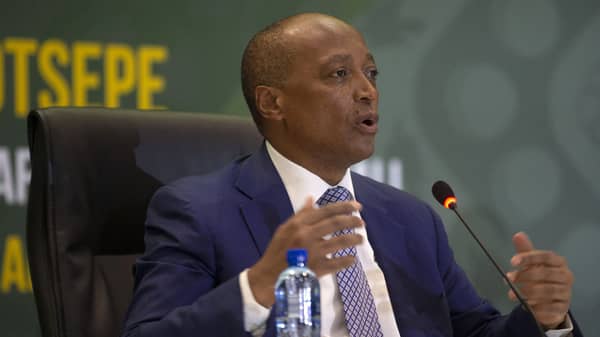
African football chief Patrice Motsepe on Saturday admitted that Morocco’s hosting of the Cup of Nations had raised the bar for the tournament but dismissed doubts about East Africa being ready to host the 2027 edition.
“This has been the single most successful AFCON in the history of the competition — the quality of the football has been world-class as has the quality of the stadiums and the infrastructure,” Motsepe told reporters in Rabat on the eve of Sunday’s AFCON final between the hosts and Senegal.
Morocco is gearing up to co-host the 2030 World Cup with Spain and Portugal and could be a candidate to stage the planned 2028 edition of AFCON as a further dry run for that.
Confederation of African Football president Motsepe said he has had “so many countries that want to host 2028” as he insisted that the 2027 Cup of Nations will go ahead in Kenya, Tanzania and Uganda as planned.
The countries jointly hosted last year’s African Nations Championship — a tournament for national teams using only locally-based players — although that competition was postponed from the beginning of the year to August to allow more time for work on facilities.
“Part of being a leader is to deal with difficult and unpleasant decisions which we have to take,” said the South African.
“I have a duty to develop football all over Africa — I can’t have football only in those countries with the best infrastructure, but I am confident that the AFCON in Kenya, Uganda and Tanzania will be enormously successful.
“We are not going to take the competition away from these countries.”
It will be the first AFCON to take place in the region since Ethiopia hosted in 1976 and comes just before the tournament switches to taking place every four years — it has usually been held every two years since the first edition in 1957.
Motsepe announced that controversial change on the eve of the tournament in Morocco and on Saturday insisted that it had not been a case of caving in to pressure from leading European clubs or world governing body FIFA.
“We have to free ourselves as Africans and not think whenever we take a decision it is because FIFA says this or Europe says this,” he said, while adding that “there are times when you have to make concessions.”