 Follow Us on Google News


 Follow Us on Google Discover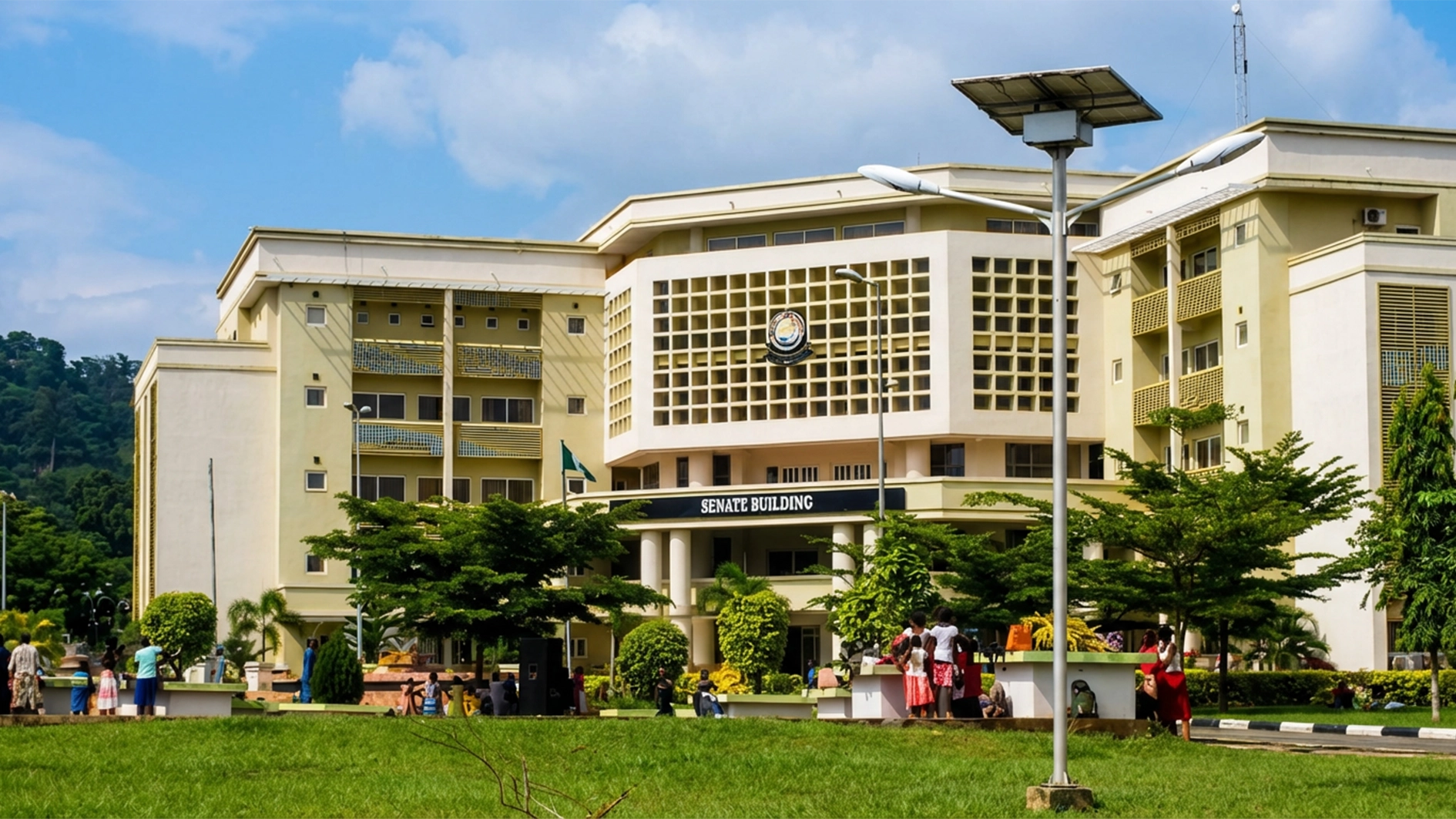
Adekunle Ajasin University, Akungba-Akoko (AAUA) on June 30, 2026, held its 67th inaugural lecture with Professor Olugbenga Oke-Samuel of the Faculty of Law delivering a lecture titled Environmental Injustice: Redeeming the Time Through Environmental Law Clinics in Nigeria, in which he called on Nigerian law faculties to establish dedicated environmental law clinics as a practical response to decades of environmental degradation and legal neglect across the country.
The lecture, presided over by the Vice Chancellor, Professor Olubena, attracted members of the governing council, faculty deans, legal practitioners, royal fathers, students, and guests from sister institutions.
Painting a damning picture of Nigeria’s environmental crisis, Oke-Samuel told the audience that the country generates over 32 million tons of solid waste annually, with only 20 to 30 percent properly collected. He noted that Nigeria flares more gas than any other country globally, with over 150 active flaring sites releasing carcinogenic substances into communities.
He also cited the 2011 UNEP assessment which described Ogoniland’s oil pollution as among the most extensive in recorded history, requiring 25 to 30 years and an initial one billion US dollars to remediate.
“These are not past afflictions. They are our realities,” he said. He argued that existing regulatory frameworks have failed affected communities, pointing to NESREA’s deliberate exclusion from regulating the oil and gas sector, the routine disregard of environmental impact assessments, and the non-justiciable nature of Section 20 of the 1999 Constitution, which obliges the state to protect the environment but cannot be enforced in court. He noted that this failure has driven communities to seek justice in foreign courts, referencing the landmark Okpabi v. Royal Dutch Shell ruling by the UK Supreme Court in 2021.
As a solution, he proposed the establishment of semi-autonomous environmental law clinics within university law faculties, mandated to provide free legal representation to pollution-affected communities, pursue strategic public interest litigation, engage regulatory agencies, and conduct environmental legal literacy programmes in communities.

He recommended that environmental law be integrated into the LLB curriculum as a credit-bearing clinical module across Years 3, 4, and 5, with students progressing from observation to supervised representation before administrative tribunals.
He recommended specific universities as pilot institutions, matched to their proximity to known environmental crises, and called on government to establish green courts, amend the constitution to make environmental rights justiciable, and formally fund law clinics through the Legal Aid Council and the National Universities Commission.
Delivering his closing remarks, the vice chancellor, for whom the occasion marked the final inaugural lecture of his tenure ending July 7, said the lecture had deepened his appreciation of the law’s scope.
“I never knew that law is science. But today, Professor Samuel told us that law is more than going to court to defend what is indefensible.”
Professor Oke-Samuel joined AAUA in 2001 as a Lecturer II and attained the rank of Professor in 2022. He holds a doctorate from the University of Zululand, South Africa, and has published four books and twenty-three peer-reviewed articles in environmental law and clinical legal education.

