 Follow Us on Google News


 Follow Us on Google Discover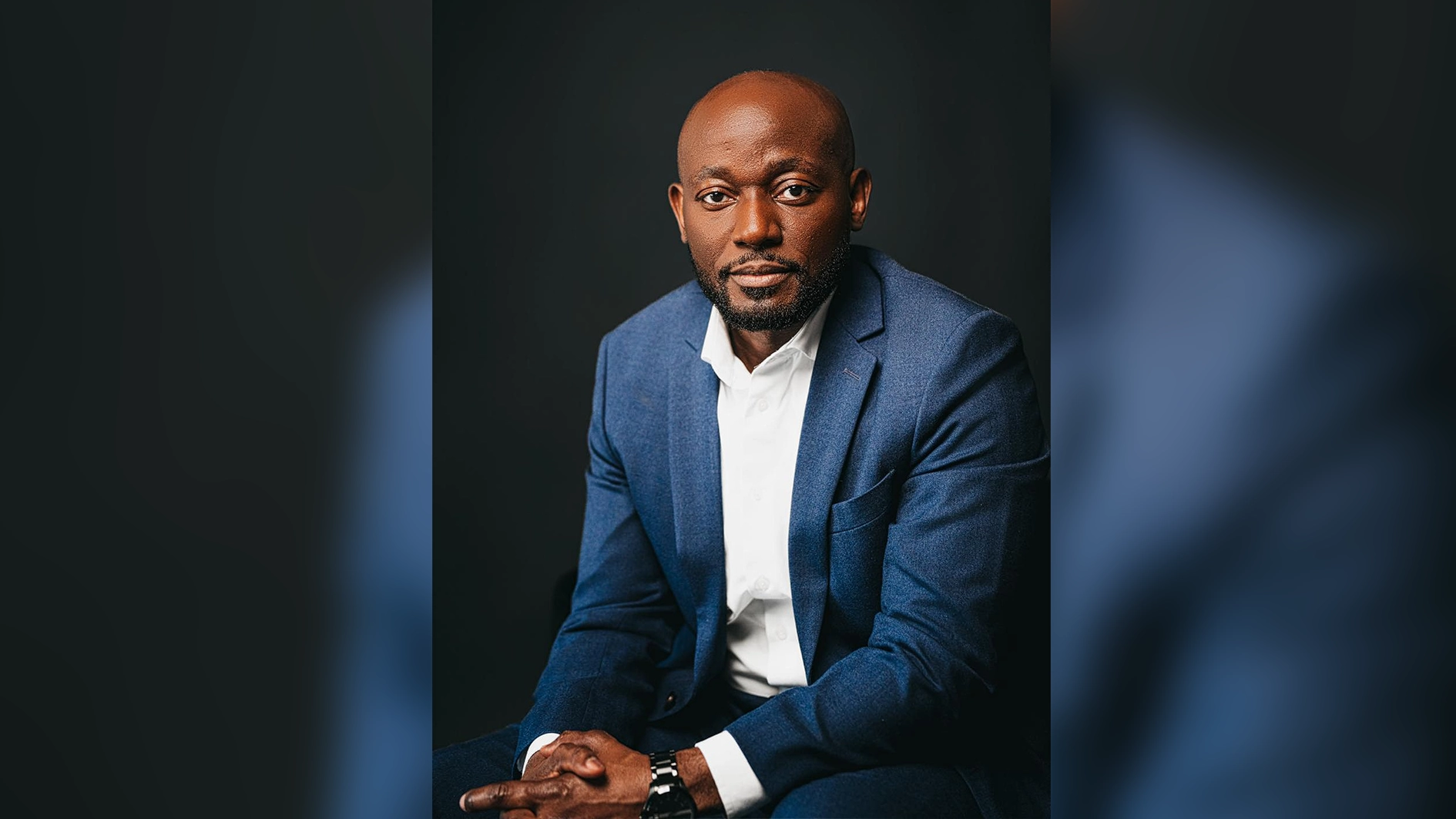
Oluwaseyi Ayodeji is a cloud infrastructure program management leader and founder of Sovereign Stack, a thought leadership platform exploring Africa’s role in the global AI economy. His career spans PwC Nigeria, materials engineering, semiconductor process engineering and large-scale cloud infrastructure. He founded GCL University, an enterprise learning framework serving a global organisation supporting a multi-billion-dollar machine-learning infrastructure operation.
Through Sovereign Stack, he examines Africa’s AI infrastructure prospects across power, compute, chips, governance and talent. Ayodeji holds an M.S. in Materials Engineering, a postgraduate diploma in Machine Learning and AI, and is a PMP and CSSBB-certified professional. In this interview, he speaks on AI in Africa.
Your career has taken you from PwC Nigeria and materials engineering to semiconductor process engineering and global cloud infrastructure. Looking back, how do you connect the dots between these seemingly different chapters of your career?
They look scattered on paper, but every chapter taught me the same lesson from a different angle: complex systems fail or succeed on the fundamentals. Auditing at PwC Nigeria taught me to trust the numbers, not the narrative. Materials engineering and semiconductor process work taught me that at the atomic level, there is no room for shortcuts, everything is cause and effect. Cloud infrastructure programme management is just that discipline applied at planetary scale, moving machine learning infrastructure equipment for operations worth billions of dollars.
At what point did you become deeply interested in artificial intelligence, and what was it about AI that made you realise this was an area you wanted to dedicate a significant part of your career to?
It wasn’t one lightning bolt moment. It was watching, from inside cloud infrastructure programme management, just how much capital, power, and physical infrastructure sits underneath every AI headline the world reads. That vantage point made it impossible to see AI as software alone. I realised the countries and companies that own the physical stack will define the next century, and I wanted Africa in that conversation, not reading about it after the fact.
Having worked across the physical and digital layers of technology from materials and semiconductors to cloud infrastructure, how has that end-to-end understanding changed the way you think about the future of AI?

Most people talk about AI as if it lives in the cloud, weightless. I know it lives in fabs, power grids, and rare earth supply chains before it ever reaches an app. That end-to-end view means I don’t get seduced by the model layer alone. I ask who owns the chips, who owns the power, and who owns the compute, because that is where real leverage sits.
You founded Sovereign Stack to examine how Africa can secure a sovereign stake in the global AI economy. What prompted you to create the platform, and what concerns about Africa’s position in the AI race were you trying to address?
My work sits inside the infrastructure buildout powering global AI, and from that vantage point, the scale of capital, power, and chips moving through this industry is staggering. What struck me was how rarely Africa featured in that picture, not because anyone was excluding it, but because the continent hadn’t yet built a seat for itself at that table. Sovereign Stack started as my way of closing that gap, asking what Africa owns in this stack rather than only what it consumes.
You frame AI sovereignty around five pillars: power, compute, chips, governance and talent. Of these five, where is Africa most vulnerable today, and where do you believe the continent has the greatest opportunity to leapfrog?
Power is our deepest vulnerability. You cannot run data centres or train models on an unreliable grid, and that single constraint quietly limits everything else on the list. Talent is where I see the greatest leapfrog opportunity. Africa’s population is young and hungry, and if we build the right pipelines, we can produce the people who build AI, not just the people who use it.
There is a lot of excitement about AI adoption in Africa, but less attention is paid to the infrastructure required to build and own AI systems. What do you think Africa risks losing if it remains primarily a consumer rather than a producer of AI technology?
We risk becoming permanently dependent, paying rent on intelligence instead of owning a share of it. Every sector AI touches, agriculture, banking, education, healthcare, will be shaped by whoever builds the underlying systems. If that is never us, we inherit someone else’s assumptions about our own problems.
You advocate the need for Africa to have a seat at the table in global AI governance and policymaking. What should African governments be doing now to ensure the continent is not simply implementing rules designed elsewhere?
Governments need to show up before the frameworks are finished, not after. That means investing in the technical expertise to negotiate as equals, not just diplomats in the room, but people who understand compute, data, and model risk well enough to shape the terms. Africa also needs to coordinate as a bloc. Fifty-four separate, quiet voices carry far less weight than one clear one.
Your work also places significant emphasis on talent. Given Africa’s young and rapidly growing population, what kind of AI talent ecosystem does the continent need to build, and what would it take to retain that talent here?
We need a pipeline that runs from foundational STEM education all the way through to applied AI roles with real career paths attached, not just short courses that end in a certificate and no job. Retention comes down to opportunity. If the best roles, funding, and recognition are only available abroad, we will keep training talent for other people’s economies.
You have built a successful career in global technology while also creating platforms focused on Africa’s future. What drives your personal commitment to ensuring that Africa has a meaningful stake in the AI revolution rather than simply observing it from the sidelines?
Honestly, part of it is unfinished business with myself, wanting to prove I can build something that matters beyond my own title. Part of it is watching a continent full of people who look like me get talked about instead of talked to. And part of it is refusing to watch Africa waste what it already has, our talent, our solid minerals, our natural resources, all of it sitting without a cohesive strategy to turn it into real leverage. If we get that strategy right, Africa isn’t just at the table, it has enough weight to help shape policy and extract maximum benefit from AI instead of leaving value on it for others to take.
When you look 10 or 20 years ahead, what does success look like to you for Africa in the AI economy, and what role do you want to have played in helping the continent get there?
Success looks like an African AI ecosystem that has become a genuine engine for prosperity, one where unemployment isn’t a talking point anymore because the opportunities AI creates are actually absorbing people into work. I want to see a startup ecosystem strong enough to produce multiple African-grown unicorns, companies employing Africans, lifting them out of poverty, and creating opportunity at scale, not just for a small elite. That kind of wealth creation is what earns Africa a real seat at the table, one with enough weight to dictate its own future instead of accepting a seat someone else made room for.

