 Follow Us on Google News


 Follow Us on Google Discover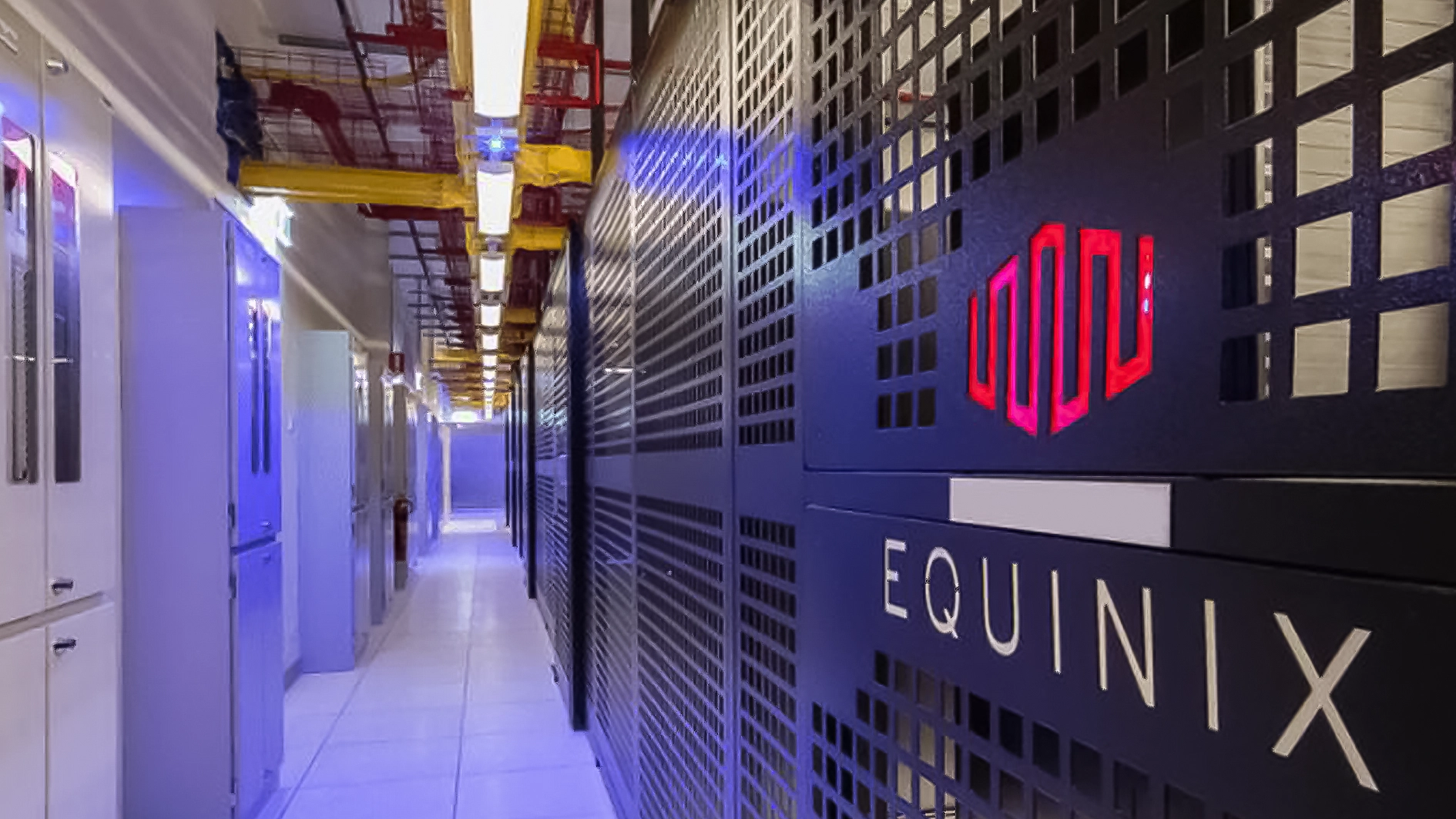
…Conference to examine who benefits as data centres, cloud platforms and gas suppliers converge in new digital economy
Nigeria’s emerging artificial intelligence infrastructure market is set to take centre stage at African Energy Week 2026, as investors, energy companies and technology players examine who will capture long-term value from the country’s expanding data centre and cloud economy.
The conference, scheduled to hold in Cape Town, South Africa, from October 12 to 16, will feature the Renegade Intel Platform, where discussions are expected to focus on the growing intersection between gas monetisation, electricity supply, hyperscale data centres, telecoms infrastructure and artificial intelligence.
The debate comes as Nigeria’s data centre industry moves beyond conventional enterprise hosting into high-density computing, cloud services and AI workloads, areas that require reliable electricity, fibre connectivity, scalable land, long-term capital and strong regulatory support.
For African Energy Week 2026, the central issue is not merely whether Nigeria can participate in the global AI economy. The more pressing question is whether the country can retain a meaningful share of the value generated from the infrastructure, power systems, data flows and digital services that will support that economy.
Across Nigeria, a new infrastructure chain is beginning to emerge. Gas producers are positioning to supply the energy required for compute-heavy facilities. Telecom companies and data centre developers are investing in carrier-neutral and hyperscale infrastructure. Global cloud and AI platforms are preparing to monetise the software, enterprise services and digital applications that run on top of these assets.
This convergence is turning Nigeria into one of Africa’s most closely watched markets for AI infrastructure development.
Nigeria’s data centre market enters new phase
Nigeria’s large population, expanding digital economy, deep telecoms penetration and rising demand for local cloud services have made it a natural market for data centre investment.
The country is already attracting interest from private equity platforms, telecom operators, interconnection firms, sovereign-linked investors and global technology companies seeking to build or support the next layer of Africa’s digital infrastructure.

Actis-backed Rack Centre has expanded its footprint with the LGS2 facility, which offers 12 megawatts of AI-ready capacity for hyperscale and enterprise workloads. Open Access Data Centres, part of the WIOCC Group, is also expanding in Lagos, with plans to scale capacity to support growing regional demand from cloud, enterprise and AI users.
Telecom operators are also moving deeper into infrastructure ownership. MTN Nigeria is investing more than $240 million through its Genova data centre platform, a move that reflects a broader transition from connectivity provision to cloud hosting, enterprise infrastructure and digital services.
Airtel Africa, through Nxtra, is developing a 38-megawatt hyperscale facility in Eko Atlantic, Lagos, targeted at large-scale cloud and AI tenants.
The market has also drawn sovereign-linked investment. Kasi Cloud has launched a 100-megawatt AI-ready campus in Lekki, backed by the Nigerian Sovereign Investment Authority.
The campus is being designed for high-density GPU workloads and advanced cooling systems, positioning it as one of the largest planned compute hubs in West Africa.
Analysts say these developments show that data centres are no longer being treated as isolated technology assets. Increasingly, they are becoming strategic industrial platforms linked to energy security, capital formation, data sovereignty and national competitiveness.
Gas-to-compute model gains attention
One of the major issues expected to shape discussions at AEW 2026 is how Nigeria will power its emerging AI infrastructure.
AI-ready data centres require uninterrupted electricity. In Nigeria, where grid reliability remains a major constraint, developers are increasingly exploring embedded gas-to-power systems to guarantee 24-hour uptime.
This is giving rise to what industry players describe as a “gas-to-compute” model, where domestic gas reserves are converted into dedicated electricity for data centres, cloud platforms and AI infrastructure.
Tetracore Energy Group is integrating a 20-megawatt data centre with a 100-megawatt gas-fired power plant through a $400 million partnership with Huawei. Gas producers such as Seplat Energy are also expected to benefit from long-term feedstock contracts tied to industrial power demand from data centres and digital infrastructure operators.
Distributed power and engineering companies, including Clarke Energy, are deploying modular gas engine systems to support facilities that require high reliability. Such systems are becoming critical to the bankability of data centre projects, especially those serving financial institutions, hyperscale cloud providers, AI training platforms and large enterprise users.
For Nigeria, the implications are significant. Gas has long been promoted as a transition fuel for power generation and industrial development. It is now also becoming a direct input into the digital economy.
Underutilised gas reserves could increasingly support cloud hosting, AI applications, enterprise data storage, digital payments, financial services infrastructure and regional data exchange.
That connection between gas and digital infrastructure is expected to feature prominently during the Renegade Intel discussions at AEW 2026, particularly as policymakers, investors and energy companies assess how electricity reform and private power models can support Africa’s technology ambitions.
The battle for value capture
Although infrastructure deployment is accelerating, a larger strategic question remains: where will the real value accumulate?
At the top of the digital stack, global hyperscalers such as Microsoft, Google and Amazon Web Services are positioned to capture major value from AI services, cloud applications, enterprise software and platform ecosystems. These companies can monetise demand even when they do not own the physical infrastructure on the ground.
Interconnection providers such as Equinix and Digital Realty also stand to benefit by enabling data exchange among networks, enterprises, cloud platforms, banks and technology companies. Their role becomes more valuable as more African workloads move onshore and demand grows for low-latency data processing.
Telecom operators, including MTN and Airtel, are seeking to capture more of the domestic cloud and enterprise hosting market by investing directly in data centres. This marks a shift from traditional mobile connectivity into infrastructure ownership, cloud enablement and digital services.
If properly structured, this could help Nigeria retain value that has historically flowed offshore through foreign hosting, external cloud dependence and limited domestic compute capacity.
Energy companies and gas suppliers are also in line to benefit. As AI workloads create demand for stable baseload electricity, gas producers and midstream operators could secure long-term industrial offtake agreements with data centre developers.
Such contracts would provide more predictable revenue while strengthening the commercial case for gas infrastructure investment.
The distribution of value across software, interconnection, telecoms, data centres and gas supply is expected to be one of the defining issues at AEW 2026. The Renegade Intel Platform will examine how African countries can design investment frameworks that allow them to capture more than raw energy supply or passive infrastructure hosting.
Ayuk: Africa must not be passive
Executive Chairman of the African Energy Chamber, NJ Ayuk, said Africa must position itself as an active participant in the global AI economy by aligning energy investment, digital infrastructure and financing models.
“Africa cannot afford to be a passive consumer in the global AI revolution. By aligning energy investments, digital infrastructure and financing models, we can ensure our resources, our data and our innovation power the next generation of global industry from within the continent,” Ayuk said.
His remarks reflect growing concern across African energy and technology markets that the continent could supply the energy, data and demand for the AI economy while most of the value is captured elsewhere.
For Nigeria, the stakes are particularly high. The country has the market size, gas reserves, telecoms infrastructure and entrepreneurial base required to become a major African AI infrastructure hub. But success will depend on whether policy, capital, power systems and local participation are aligned around value retention.
Energy and digital infrastructure converge
AEW 2026 is expected to bring together policymakers, financiers, energy companies, data centre developers, telecom operators and technology firms to examine how Africa can finance, power and own the next generation of digital infrastructure.
The Renegade Intel Platform will focus on gas monetisation, power market reform, cloud demand, local content, infrastructure finance and hyperscale development.
Nigeria is likely to feature prominently because it captures many of the key questions facing Africa’s digital economy.
Can gas producers become long-term suppliers to the AI economy? Can telecom operators become major infrastructure owners rather than only connectivity providers? Can African countries host hyperscale cloud platforms while retaining more data, jobs and revenue locally? Can sovereign capital help anchor strategic digital infrastructure? And can electricity reform make AI infrastructure bankable at scale?
These questions are no longer theoretical. They are becoming central to Africa’s competitiveness.
As Nigeria’s AI infrastructure market accelerates, the country is showing that the future of energy will not be shaped only by oil, gas and power generation. It will also be shaped by compute capacity, data centres, fibre networks and cloud platforms.
AEW 2026’s Renegade Intel Platform is expected to place that debate before Africa’s energy and investment leaders, with Nigeria offering one of the clearest examples of how gas, data and artificial intelligence are beginning to converge.

