 Follow Us on Google News


 Follow Us on Google Discover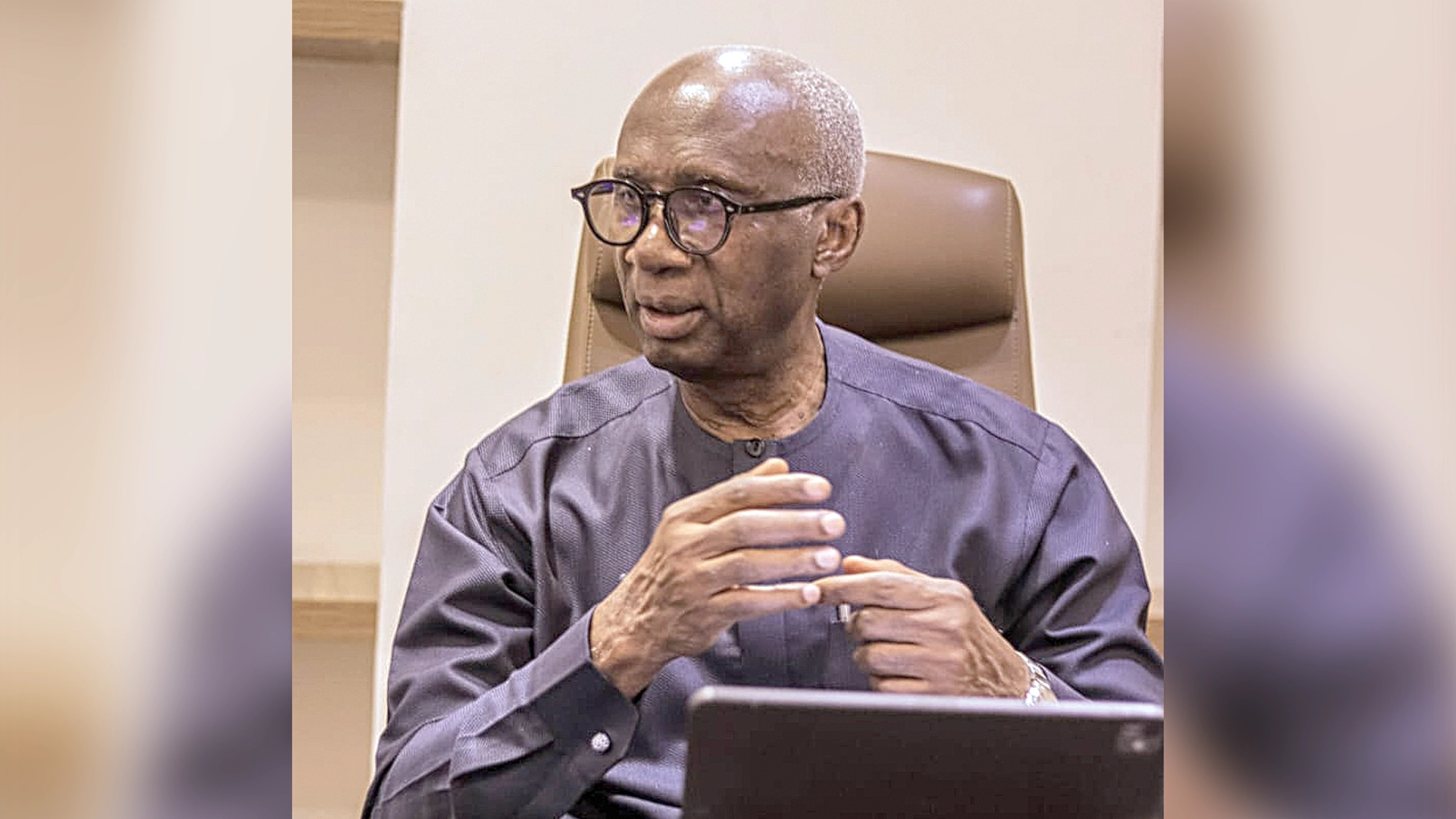
Dr Ernest Ndukwe, the Chairman, MTN Nigeria, led General Telecom Plc for 11 years before serving as Executive Vice Chairman of the Nigerian Communications Commission (2000–2010), a period hailed as Nigeria’s Telecommunications Revolution. In this exclusive interview with ADEYEMI ADEPETUN, Ndukwe reflects on the hurdles and triumphs of Nigeria’s telecom revolution. From spectrum recovery and infrastructure gaps to balancing competition and consumer protection, he highlights GSM’s transformative impacts, ongoing challenges and lessons guiding the future of 5G and emerging technologies.
Looking back, what were the toughest regulatory and infrastructural challenges Nigeria had to overcome to introduce GSM?
WHEN President Olusegun Obasanjo came into office, one of the government’s priorities was to improve telecommunications services in Nigeria. At the time, the regulatory body was considered not to be pulling its weight, and the President decided to change the leadership of the Nigerian Communications Commission (NCC). The first Executive Vice Chairman (EVC) of the NCC was Engr. Cletus Iromantu, who had been Head of Telecommunications at Shell and was persuaded to join government service when the NCC began operations as a regulatory body in 1993.
The NCC had been established in 1992 by Decree 75 during the military government, as the landmark law setting up the Commission. In those days, NITEL was the only telecommunications company, and its management was not receptive to competition or to the entry of other companies into the industry. Despite those challenges, the NCC, under its board at the time, continued to press on, developing rules, regulations and the general framework for the Commission.
At that time, I was also in the industry as Managing Director of GEC Telecoms, a private telecommunications company that supplied equipment and services. I was also President of the Association of Telecommunications Companies of Nigeria (ATCON). We were all concerned about developing the telecommunications space because NITEL was underperforming. In fact, countries such as Algeria, Cameroon and Ghana had already started GSM before Nigeria.
The NCC initially licensed operators such as Intercellular, Multilinks, Starcomms, Mobitel, Zoom Mobile, Telnet and others. There were up to 10 different companies with varying spectrum allocations. At that time, the Ministry of Communications was fully responsible for awarding spectrum, and the allocation was haphazard, with companies receiving different sizes of spectrum depending on influence and lobbying.

By 1999, the President recognised that the sector had a problem that needed to be fixed. A new EVC, Engr. Nnama, who had been Head of Telecommunications at the Nigerian Ports Authority, was appointed to take over from Engr. Iromantu. However, his tenure did not last long. A licensing process attempted around October/November 1999 was fraught with problems and was eventually cancelled.
I came into the NCC as the third EVC in February 2000. The mandate was clear: to organise a transparent and credible spectrum licensing process as quickly as possible, one that would attract strong local and international investors into Nigeria’s telecommunications market. President Obasanjo also appointed capable commissioners to work with me, including Alhaji Ahmed Joda, who served as Chairman of the Board and provided strong support.
Tell us more about these hurdles?
The first major hurdle was access to spectrum resources. Without frequency, it is impossible to build a mobile or wireless network. The relevant spectrum had already been allocated in small and uneven chunks by the Ministry of Communications. Some operators had 5MHz, some had 7.5MHz, while others had 10MHz, and there was no clear structure guiding the allocations.
It was determined that for fair competition at the start of the new telecom market we were trying to birth, all operators needed to have the same size of spectrum through a transparent licensing process. Our biggest challenge, therefore, was to recover the scattered frequency allocations and encourage the companies that held them to participate in the broader vision the government had for the sector.
I worked with the Permanent Secretary in the Ministry of Communications, Professor Burkindo, who was very cooperative. Together with his team, we developed a process for recovering the spectrum. It was not easy, and one or two companies even took us to court. However, we remained focused on the outcome we wanted to achieve and succeeded in recovering enough spectrum in the 900MHz and 1800MHz bands, which were required for GSM and CDMA services at the time.
After recovering the frequencies, we engaged consultants who advised on how to arrange the spectrum into auction slots. We had four spectrum slots of 5MHz in the 900MHz band and 15MHz in the 1800MHz band for each bidder. That enabled us to organise the auction and overcome the initial regulatory challenge.
The second major hurdle was infrastructure. Nigeria was severely short of telecommunications infrastructure, which made it necessary to quickly commence a licensing process capable of attracting the right private companies to build out the network. NITEL had landline and limited mobile infrastructure that were grossly inadequate. For a population of about 120 million people, Nigeria had only about 400,000 fixed lines and about 20,000 analogue mobile lines. The infrastructure therefore had to be expanded very quickly.
In terms of balancing competition and consumer protection in the early days of GSM rollout, how was the NCC able to achieve that balance?
The first point is how GSM came to be. We prepared an Information Memorandum that was issued, inviting local and international companies interested in participating in the auction. At the time, we chose not to call it a GSM auction because CDMA was being used in some countries, including the United States of America, while GSM was more common in Europe and many other parts of the world. We therefore called it a Digital Spectrum Auction so that bidders would not be restricted to a particular technology.
Those who obtained licences were free to roll out either CDMA or GSM services. The auction took place in January 2001. Five companies participated, and three succeeded. They were required to pay the licence fee by 14 February 2001 to qualify. One spectrum slot was reserved for NITEL as the incumbent operator. Of the three companies that qualified through the auction, MTN Nigeria and Econet paid the licence fees on time, while CIL did not meet the payment obligation. As a result, MTN Nigeria, Econet and NITEL were awarded the three digital mobile licences. All three decided to adopt the GSM technology.
In balancing competition and consumer protection, the first concern was to encourage the operators to roll out services. They were given six months from the award of the licences in February 2001, which is why August is celebrated as the period when the telecommunications revolution began. By August, the operators had commenced rollout.
A regulator must always pay attention to three stakeholder groups: the consumers, operating companies and government. Government provides the policy direction for network build-out and the desired national outcomes; in this case, President Obasanjo wanted telecommunications services to be available to millions of Nigerians, not just a few thousand. The objective was therefore to encourage massive investment and network rollout from the outset.
The demand for telecommunications services was far greater than many people anticipated. Before the end of the first full year, operators had installed the number of lines initially projected by the operators for five years. The regulator therefore had to maintain a balance: over-regulation could drive operators out of the market, while under-regulation could harm consumers.
In the early days, SIM cards were sold for over N20, 000. This was similar to what NITEL charged for analogue fixed lines that were not readily available and could take up to two years to obtain. Initially, capacity was limited, and pricing helped manage network congestion risks. As networks expanded, prices began to fall, and about two years later, SIM cards became free. That was how competition and consumer protection were balanced in the early years.
What ran through your mind when the first official GSM call was made?
It was a great day for us at the NCC because we had achieved our target. One challenge that regulatory bodies can face is licensing companies that lack the financial capacity to roll out networks quickly. We were happy that the companies awarded licences had the capacity to invest and deliver. We could immediately see the happiness of the Nigerian public as telecommunications services became easily and widely available. For the other members of the Commission at the time, it was a dream come true, and it showed that Nigeria could hold its head high among the comity of nations.
Would you say spectrum recovery was part of the decision that shaped the trajectory of mobile telephony in Nigeria?
Spectrum is the oxygen of telecommunications infrastructure. It is the basic resource required to roll out wireless networks. Without the right size of spectrum, operators with small allocations such as 5MHz or 7MHz would not have been able to build serious networks of an appreciable customer base. Recovering enough spectrum attracted the right operators to bid for the licences; otherwise, they would not have come.
Some major international companies, including Vodafone in the UK, were specifically invited to participate in the auction but declined because Nigeria was just emerging from military rule and many did not believe something credible could come out of the country. Some companies from the UK, Germany and America did not come. Others did, and five companies paid the $20 million deposit required to demonstrate commitment. The auction took place; it was transparent, and three companies succeeded.
What is the biggest impact of the GSM revolution?
The biggest impact has been its role in catalysing economic development. There is hardly any aspect of commerce that does not depend on telecommunications services. Before GSM, companies such as Visa and Mastercard avoided Nigeria because they could not operate effectively in an environment without reliable telecommunications services. Once the sector opened up, they came in, as well as local companies such as Verve, which also emerged.
GSM has been a major enabler. For the banking industry today, it would have been impossible to attain the expansion and the high level of performance and efficiency it has attained without pervasive telecommunications infrastructure and services. Mobile money and fintech platforms such as MoMo, OPay, Moniepoint and Palmpay, as well as similar innovations in other parts of Africa such as M-Pesa in East Africa, depend on telecommunications infrastructure. Telecommunications has also transformed education, healthcare and access to information. Broadband has become a foundation for learning, and this was amplified during COVID with the emergence and use of platforms such as Zoom.
Telecommunications has made it possible for Nigeria to participate in global developments and has helped prevent the digital divide between us and the more advanced countries from widening further.
MTN Nigeria has remained a major player in the last 25 years. How has it been able to survive the challenges?
I was not part of MTN Nigeria from inception, so I cannot speak directly to everything that happened in the very beginning. I joined the Board of MTN Nigeria in 2018, about eight years after I left the NCC. However, after leaving the NCC, I joined the faculty of Lagos Business School, where teaching is case-study based. I recall a case study on MTN Nigeria which highlighted that one of the factors that distinguished the company was that it did not have the shareholder issues that affected Econet, which later became Vmobile, Zain, Celtel and then Airtel.
Despite those ownership challenges, Airtel remains a formidable number two operator in Nigeria. Glo, which received its licence in 2003 as the Second National Carrier, has also made its strong contribution to the sector. Etisalat also had shareholder issues and later became 9mobile and then T2 today.
MTN Nigeria’s consistency has helped it as a business. From my years after joining the MTN Nigeria Group, the company is well run, has a strong culture profile, is strictly managed, and has high-performing members of staff. It is therefore not surprising that MTN Nigeria has remained a major player and sustained its leadership. Even after the major fine imposed on the company in 2015, the company was able to trade through the challenges. The sale of shares to the Nigerian public has also been a major positive development because millions of people in the country now regard themselves as shareholders of MTN Nigeria and are invested in the company’s success.
Twenty-five years later, what challenges is the sector still battling?
THE biggest challenges remain insecurity, power and right of way. These three issues continue to keep the managers of telecommunications businesses awake at night.
In many advanced countries, power supply is taken for granted, allowing operators to focus on building networks. In Nigeria, however, operators must also become specialists in power systems, security systems and monitoring systems. These additional expenses could otherwise have been used to expand telecommunications infrastructure.
Security continues to be a major issue. Consumers are mainly interested in the network working well, and it is difficult to explain network downtime caused by cable cuts or willful damage. There are cases where people pour petrol into manholes and set them on fire, cut fibre cables, or damage cables during road construction because excavators fail to pay attention to where optic fibre cables are installed.
In remote areas with high insecurity, it can be difficult to reach locations to repair faults because of kidnapping risks. There are also challenges with some sub-national governments, which do not always recognise telecommunications as an enabler of development and instead focus primarily on internally generated revenue. At times, base stations are locked up over fee demands, and a fault at one base station can affect several others that may be interlinked within a community.
Operators are not sleeping. Various systems and operating centres have been established to monitor situations and respond as quickly as possible when issues arise. There has also been strong cooperation from the government, including support from the Office of the National Security Adviser, the NCC, the Central Bank of Nigeria and others.
Looking at the listed challenges, will subscribers ever get quality of experience?
AT our Board and executive levels, we are always anxious to ensure that consumers are happy and receive value for their money, and that quality of experience remains high across the country. At our annual Board retreats, we discuss quality of service and how to keep it at the highest level.
However, unless the challenges around insecurity, power and right of way are addressed, there will continue to be issues. We do not want to make excuses, so we continue to invest in building a resilient network to manage these challenges.
Recently, we began investing in additional cable infrastructure, particularly in the northern part of the country, to provide redundancy for our main fibre capacity. The aim is to improve customer quality of experience so that when a cable is cut, traffic can be rerouted through another route and services can continue.
With 5G now on the horizon, how do you see GSM’s legacy influencing the next phase of mobile connectivity?
5G is the future, and it is also part of the present and immediate future because of the speed it brings to broadband services. MTN Nigeria became the first operator to embrace 5G and obtain a licence. We have the highest number of 5G rollouts in the country today, and we will continue to invest in the infrastructure.
It is imminent that some networks, especially the 3G networks, may be decommissioned to allow greater concentration on 4G and 5G networks. This, we believe, will improve network efficiency and quality of experience.
Our half-year report shows that data has overtaken voice in revenue generation, and we expect that trend to continue. Voice is also increasingly embedded in data, since calls made through platforms such as WhatsApp , etc, are voice services riding on data. Everything is converging, and 5G will continue to expand as we invest further in the technology.
What lessons from the GSM era should guide Nigeria’s approach to deploying emerging technologies?
ARTIFICIAL intelligence is a major present challenge for developing countries. Some people believe it could create another era of digital divide because much of the infrastructure supporting AI is located outside developing countries. The lesson from the GSM era is that we must invest heavily in new technologies so that we are not left behind.
Data centres are critical, but power remains the major issue. Data centres consume significant power, which is why the power challenge must be addressed. Government is looking into the power issue, but the focus must extend beyond power for homes to power for critical infrastructure. Water supply is also important for data centre operations.
Developing countries must wake up and invest in new technologies while also addressing infrastructure challenges, not only ICT or telecommunications infrastructure. Power is part of the second industrial revolution, yet Nigeria is still struggling with it. Emerging technologies such as AI, IoT and digital identity are linked, and data centres are required to manage them properly.
The major data centres and hyperscalers serving much of the world are largely in America, Europe and China. China has done well, and we have a lot to learn from that country. At a recent function, while Nigeria was discussing generating 5,000MW of electricity, it was noted that China was already generating about four million MW. That illustrates the scale of the challenge in areas such as manufacturing and infrastructure. Nigeria must wake up and take action as a country.
What advice do you have for Gen Z, drawing from your wealth of experience?
GEN Zs are fortunate to have been born in an era where phones, telecommunications facilities and the internet are widely available. Some of us lived at a time when travelling from Lagos to Enugu meant nobody could reach you until you arrived. Even after arrival, you might still need to find a NITEL exchange, which might not be nearby, before making a call.
Today’s 25-year-olds are fortunate to have access to extensive telecommunications facilities and the internet, enabling them to share knowledge with peers around the world. As the business, government and political leaders of tomorrow, they must recognise that there is still a lot of work to be done. It is not yet uhuru. Nigeria still needs a reliable power supply, and anyone going into politics should have ideas on how to address the power challenge, which remains one of the most important issues facing the country. Young people should also consider going into politics early. Politics is not inherently dirty; it is people who make it dirty.
Nigerian unicorns such as Flutterwave, Moniepoint and OPay have done well, but the country needs many more to move forward.

