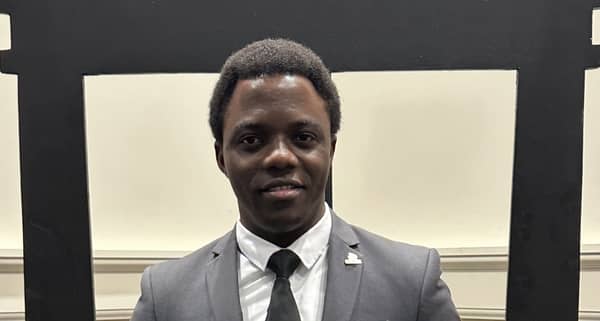
For years, conversations about the future of engineering education have centred on curriculum updates, new technologies or industry partnerships. Taiwo Feyijimi approaches the debate from a more fundamental question: what does it actually mean to be qualified in today’s engineering landscape? His research, housed at the University of Georgia’s Engineering Education Transformations Institute (EETI), argues that the answer is more complex than the traditional distinction between theory and practice. It is, in his words, a widening “competency chasm” between what universities certify and what the workplace expects.
Feyijimi brings an unusual blend of experience to the subject. Before turning to full-time research, he spent more than a decade in industry as a founder, technology strategist and technical lead across manufacturing, IT and educational technology. That background informs the questions he now studies as a doctoral researcher and teaching assistant in Electrical and Computer Engineering, where he examines how engineers learn, how they self-regulate and how institutions define readiness for professional practice.
His research model integrates ideas from psychology and learning sciences, including the Iceberg Model of competence and self-regulated learning theories. Using Q-methodology and computational tools, he seeks to understand not only what skills employers ask for, but how emerging engineers develop the motivations, identities and reflective habits needed to sustain a career in a rapidly evolving field. This work has attracted interest at engineering education conferences, including the American Society for Engineering Education (ASEE) annual meeting, where his study on competencies for entry-level electrical engineers was accepted for presentation.
Alongside his conceptual work, Feyijimi has also become known for developing AI-assisted methods for qualitative research. His frameworks, including TAIWO, designed to support thematic analysis using large language models, and PEASSA, which focuses on validity and reliability when employing AI tools, have been featured in sessions at the Learning Analytics and Knowledge (LAK) Conference in Dublin, the IEEE Integrated STEM Education Conference at Princeton, and upcoming programmes for the IEEE Frontiers in Education meeting. These events have described his contributions as part of a wider effort to help researchers make responsible use of AI without compromising depth or rigour.
At the University of Georgia, he is part of a faculty learning community exploring the role of generative AI in engineering instruction. His involvement reflects a broader shift within universities as educators grapple with how artificial intelligence, automation and changing workplace expectations are reshaping the skillsets graduates will need.
Feyijimi’s work also intersects with wider debates in Africa and the United States about how to build systems that support both competence and inclusion. His longer-term research plans involve developing AI-supported tools for metacognition and self-regulation, studying the competency gap across regions and contributing to new learning infrastructures that serve students with diverse backgrounds and trajectories.
What distinguishes his emerging profile is the growing attention his work receives across professional and academic platforms. Conference programmes, institutional showcases, and research exhibitions have consistently highlighted his frameworks and findings, suggesting an appetite for scholarship that bridges theoretical insight with practical application. In a field marked by rapid technological change, Feyijimi’s work is part of an expanding conversation about how universities can prepare engineers not only to meet current demands but to adapt to those still to come.