 Follow Us on Google News
 Follow Us on Google Discover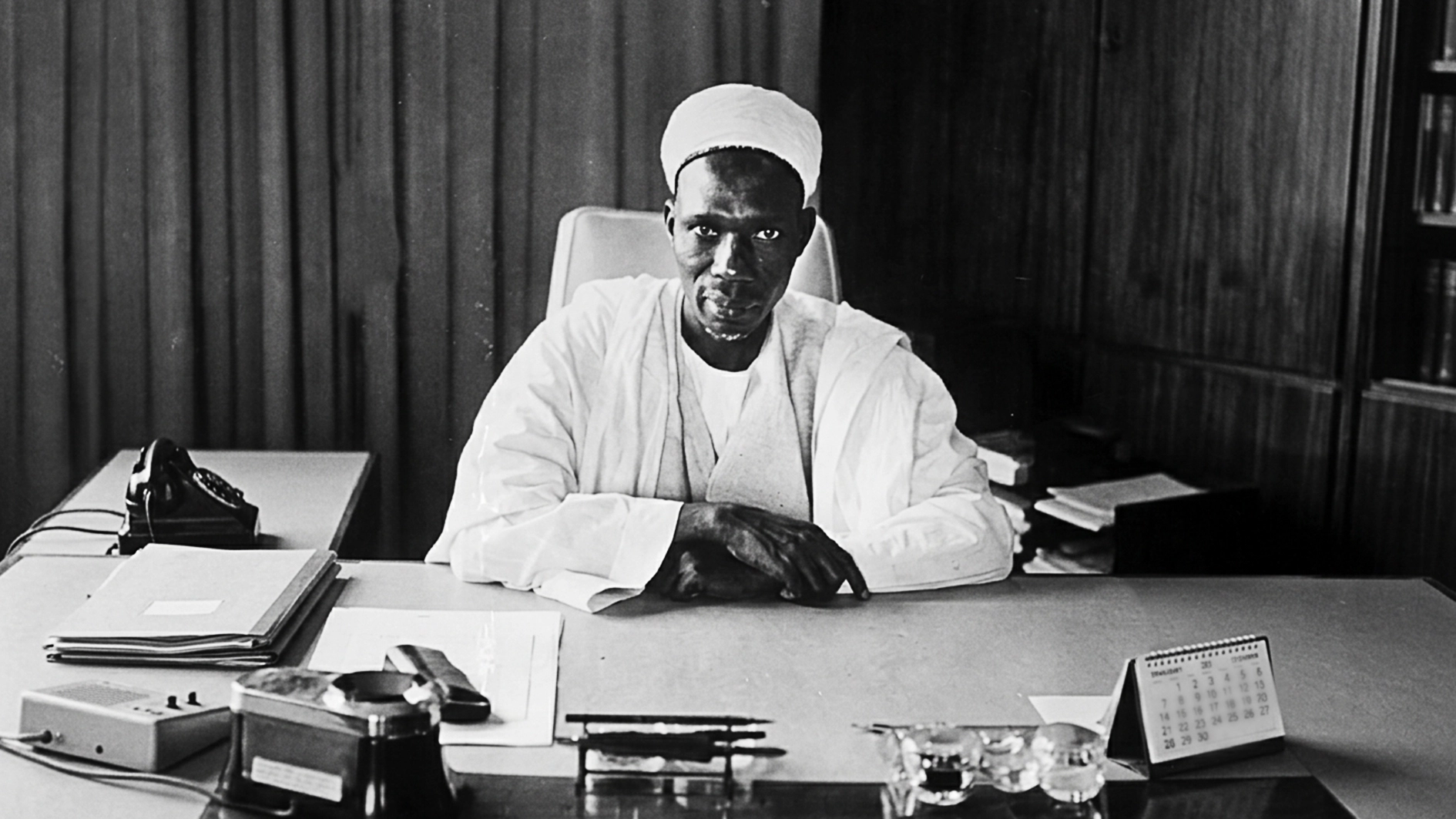
When the Union Jack was lowered and the green-and-white flag rose for the first time on October 1, 1960, the weight of a newly independent nation fell heavily on the shoulders of one man. While Dr Nnamdi Azikiwe assumed the ceremonial role of Governor-General, it was Sir Abubakar Tafawa Balewa, Nigeria’s first and only Prime Minister, who held the executive steering wheel.
Known across the globe as the “Golden Voice of Africa” due to his immaculate diction and oratorical grace, Balewa’s speech that morning radiated a profound sense of optimism. He spoke of a nation built on firm foundations and praised a peaceful transition of power that many hoped would serve as a democratic beacon for the rest of the continent.
Six decades later, as Nigeria marks another Independence Day, looking back at Balewa’s tenure offers more than a simple history lesson. It provides a mirror to the country’s contemporary political soul. To understand modern Nigeria, one must examine the complex interplay of Balewa’s personal integrity, his diplomatic triumphs, and the structural faults of the First Republic that ultimately cut his life short.
The three giants
Balewa’s primary challenge was an extraordinary exercise in political tightrope walking. Unlike the dominant regional titans of his era, Sir Ahmadu Bello in the North, Dr Nnamdi Azikiwe in the East, and Chief Obafemi Awolowo in the West, Balewa did not have a monolithic regional fortress to command from Lagos.
Instead, he was tasked with running a highly fragile central government, constantly forced to mediate between these fiercely competitive ethno-regional blocs. His position required immense compromise. He was a devout northern conservative, yet he had to govern a sprawling, multi-ethnic federation where southern intellectuals and politicians demanded immediate radical changes. His career forces historians to ask a difficult question: Was Balewa the visionary architect who managed to hold a fragile, disparate union together through sheer patience, or was he a leader trapped by the design flaws of a loose, unyielding federation? This delicate act of balancing regional anxieties remains a central theme in Nigerian governance today, making his early struggles incredibly relevant to modern political observers.
Global glory, domestic decay
On the international stage, Balewa’s diplomacy was nothing short of brilliant. Under his stewardship, Nigeria immediately secured entry into the United Nations, taking its place as a respected global player. He vocally led the Commonwealth’s opposition against apartheid in South Africa and played a pivotal, unifying role in the formation of the Organisation of African Unity (OAU) in 1963. To the outside world, Balewa represented the sophisticated face of a rising African superpower.
However, this external glory stood in sharp contrast to the domestic turmoil brewing at home. While international leaders lauded the Giant of Africa, the domestic political system was fracturing. The Western Region emergency of 1962, deep-seated census controversies, and the highly contentious federal elections of 1964 and 1965 showed that the local foundations were rapidly cracking. Balewa’s administration struggled to suppress the rising internal tensions, demonstrating a classic post-colonial paradox: a leadership highly capable of navigating complex international geopolitics, yet vulnerable to the fierce tribal and regional politics within its own borders.
A Legacy of Asceticism
Perhaps the most striking aspect of Balewa’s legacy is his personal character. In an era where political offices quickly became synonymous with sudden affluence and grand displays of wealth, Balewa maintained a remarkably simple and ascetic lifestyle. He was famously regarded as a reluctant leader, a dedicated teacher from Bauchi who preferred quiet local administration to the high-stakes theatre of Lagos politics.
When his life was tragically cut short during the violent military coup of January 15, 1966, the assets he left behind surprised both his critics and supporters. He did not leave behind vast estates or massive foreign bank accounts; his primary estate was a modest house in Bauchi. In a contemporary political climate often criticised for excessive governance costs and official indulgence, Balewa’s personal integrity and financial modesty offer a powerful moral narrative. His lifestyle serves as a reminder of an era when leadership was viewed strictly as a matter of national service rather than personal enrichment.
The trajectory from the immense joy of October 1960 to the tragic events of January 1966 highlights the vulnerability of early post-colonial democracy. The high expectations of independence inadvertently created a volatile environment when the government could not solve deep structural issues overnight. The military intervention that claimed Balewa’s life did not just end a prime minister’s term; it fundamentally altered the course of Nigerian history, ushering in decades of military rule and a devastating civil war.
As citizens reflect on independence, celebrating Sir Abubakar Tafawa Balewa means engaging with his entire story, honouring his undeniable patriotism and dignity, while looking at the systemic fragility that defined his era. He remains an enduring symbol of Nigeria’s foundational promises, a leader whose golden voice still echoes through history, urging the nation to find the unity.
