 Follow Us on Google News


 Follow Us on Google Discover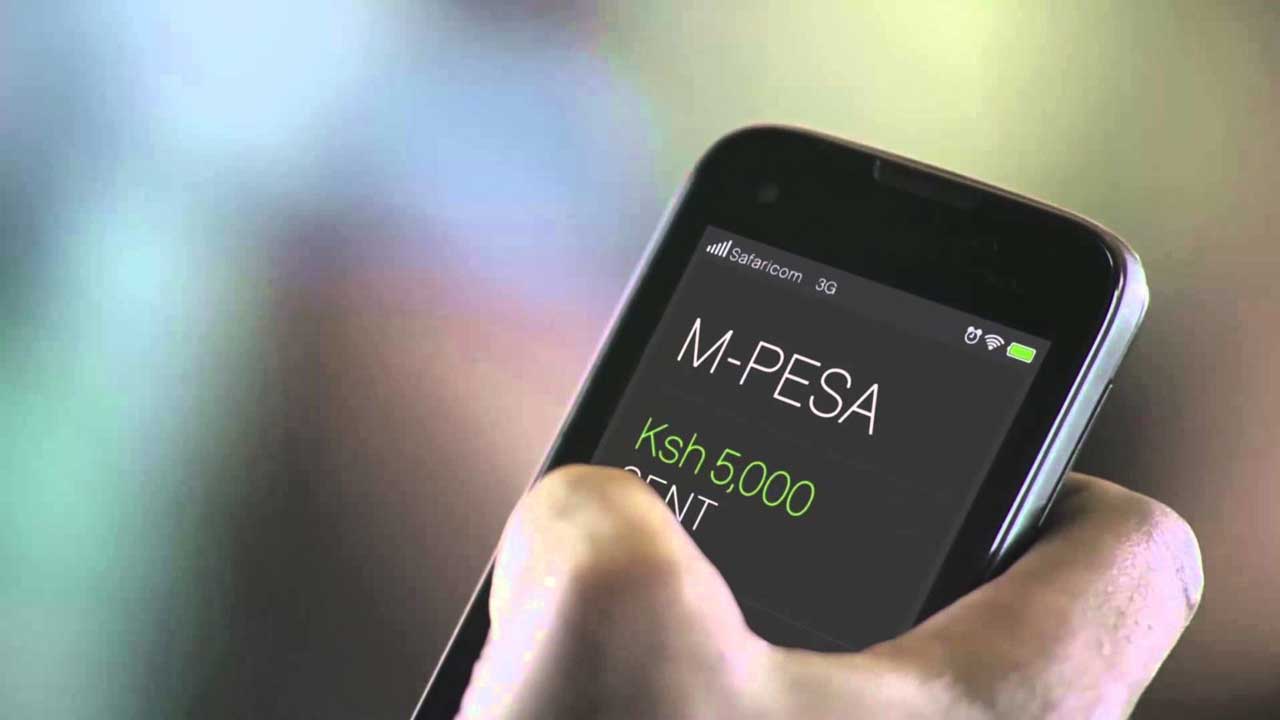

The Central Bank of Nigeria’s (CBN) cashless policy has been described as a laudable economic course of action that would enthrone fiscal responsibility among Nigerians as well as create an efficient and modern payment system that correlates with economic development if discreetly and strategically implemented. For the benefits of the cashless policy to be felt by Nigerians, especially rural dwellers, the CBN needs to understudy Kenya’s M-Pesa policy (mobile money), which seamlessly transformed its economy and brought about financial inclusiveness in the country. CHIJIOKE IREMEKA writes
[ad]
The tradition of visiting the banking hall, carrying bulk cash and spending productive hours in the bank is gradually being phased out by the Central Bank of Nigeria (CBN) through its cashless policy initiatives. The introduction of Automated Teller Machine (ATM), Point Of Sale and e-payment solutions to Nigeria’s economy have, no doubt, helped in trimming down the rate of customers’ visits to the banks.
However, the haphazard implementation of the policy as witnessed before the 2023 general election when the apex bank redesigned the naira and mopped up a lot of cash in circulation, put pressure on Nigerians and the country’s economy. Though, the CBN stoutly defended the policy, saying it was one of the creative ways to ensure that Nigeria took full advantage of opportunities and benefits of digital payment channels.
The apex bank believes that the policy, which promises to drive development and modernisation of the country’s payment system in line with Nigeria’s vision 2020 of being among the top 20 economies of the world by the year 2020, is a key enabler for economic growth and development in the country.
It also believes that this course of action would reduce the cost of banking services (including cost of credit), drive financial inclusion by providing more efficient transaction options and greater reach, and also improve the effectiveness of monetary policy in managing inflation and driving economic growth.
According to the CBN, the cashless policy seeks to curb certain negative consequences associated with high usage of physical cash in the economy, including high cost of cash along the value chain – from the CBN to the banks, corporations and traders.
The apex bank also reasons that high usage of cash encourages robberies and other cash-related crimes; and also leads to financial loss in the case of fire and flood incidents.

The CBN’s analysis showed that only 10 per cent of daily banking transactions was above N150, 000. “This suggests that the entire banking population subsidises the costs that the tiny minority 10 per cent incur in terms of high cash usage. High cash usage results in high volume of money outside the formal economy, limiting the effectiveness of monetary policy in managing inflation and encouraging economic growth. Also, high cash usage enables corruption, leakages and money laundering, among other cash-related fraudulent activities,” the apex bank insisted.
In spite of the significance of this policy, its shoddy implementation has elicited hash reactions from members of the public. Many stakeholders had warned that the implementation of the policy should be gradual and progressive until the infrastructure needed for its full take-off are in place. In fact, the World Bank had during the period of the implementation of the unpopular naira design policy, which resulted in cash drought in the country and forced Nigerian to be buying naira with naira, warned that it was highly unlikely that digital payments would increase fast enough to cover up for the shortage of new notes.
[ad]
“This concern is based on international experience which suggests that rapid demonetisations can generate significant short-term costs, with small-scale businesses, and poor and vulnerable households, including in rural areas, being particularly affected as they are liquidity-constrained and rely heavily on day-to-day cash transactions
“It is highly unlikely that digital payments can increase quickly enough to compensate for the shortage of new notes; according to the latest available data (before this policy), only 45 per cent of Nigerian adults had a bank account, 34 per cent reported paying or receiving money digitally over the past year, and only nine per cent made an in-store payment by digital means.
“Digitisation is a structural challenge that will take time and require a systematic approach, especially to address inclusion challenges,” it noted in a statement.
To say that the move by the CBN to get Nigerians to fully embrace cashless transactions was unsuccessful is an understatement. Although more Nigerians have become acquainted with online transactions as a result of the policy, majority of citizens, especially rural dwellers, still prefer cash transactions. This is even as many have, as a result of their experiences during the naira re-design quagmire, vowed never to have anything to do with banks again, saying they would rather keep their money at home and use it whenever they wish.
Nevertheless, the cashless policy that the CBN is finding difficult to institute in Nigeria is working perfectly in Kenya, an African country, through M-PESA, a mobile phone-based money transfer service, payments and micro-financing service, launched in 2007 by Vodafone and Safaricom, the largest mobile network operator in that country.
How Kenyans Embraced M-PESA
The ‘M’ in M-PESA stands for mobile while ‘PESA’ is Swahili for money. According to Wikipedia, Safaricom and Vodafone launched M-PESA, a mobile-based payment service targeting the un-banked, pre-pay mobile subscribers in Kenya on a pilot basis in October 2005. It was started as a public/private sector initiative after Vodafone was successful in winning funds from the Financial Deepening Challenge Fund competition established by the UK government’s Department for International Development to encourage private sector companies to engage in innovative projects so as to deepen the provision of financial services in emerging economies.
The initial obstacle in the pilot was gaining the agent’s trust and encouraging them to process cash withdrawals and agent training. However, once Vodafone introduced the ability to buy airtime using M-PESA, the transaction volume increased rapidly. A five per cent discount was offered on any airtime purchased through M-PESA and this served as an effective incentive. By March 1, 2006, KSh50.7 million had been transferred through the system. The successful operation of the pilot was a key component in Vodafone and Safaricom’s decision to take the product full scale. The learning from the pilot helped to confirm the market need for the service and although it mainly revolved around facilitating loan repayments and disbursements for Faulu customers, it also tested features such as airtime purchase and national remittance. The full commercial launch was initiated in March 2007.
[ad]
The service enables its users to deposit and withdraw local currency; transfer currencies to other users; pay bills; purchase airtime; save currency in a virtual account (Mshwari, Swahili for “calm”); transfer currencies between the service and, in some markets, a bank account and borrow money to complete a transaction when short on cash (Fuliza, Swahili for “flush (with money).”
According to Tonny Omwansa’s book, Money, Real Quick, Kenya was full of airtime distributors — small-business owners who would sell people prepaid airtime. Some of them took up distributing M-PESA as well. The book states that for the initial launch, M-PESA was to be used to repay microloans made to extremely low-income people, often by NGOs and international charities.
It says the creators of M-PESA began seeing other uses – businesses using it as an overnight safe because banks closed before agent shops, people journeying between pilot areas, depositing cash at one end, and withdrawing it a few hours later at the other end, people sending airtime purchased by M-PESA directly to their relatives in villages and other examples.
Omwansa’s book also notes that people were using M-PESA as a substitute for critical financial institutions that they didn’t have access to; in these instances, an overnight safe, low-friction and low-fee transfers of money, saving money for later use and avoiding a long trip with cash.
It notes that in communities where basic needs like these were going unmet, M-PESA took off. And by the end of 2009, the year Venmo was launched in the U.S., M-PESA had over eight million subscribers in Kenya. By 2012, it had 15 million and over 30, 000 agents.
Development economists, Tavneet Suri and William Jack looked into the benefits of M-PESA in a series of research papers. Their 2016 article published in Science, found that “access to M-PESA increased per capita consumption levels and lifted 194,000 households or two per cent of Kenyan households, out of poverty.” In fact, M-PESA was everywhere in Kenya as 96 per cent of households used it.
“Basic financial services such as the ability to safely store, send, and transact money – taken for granted in most advanced economies, and which in the form of mobile money, have reached millions of Kenyans at unprecedented speed over the past decade – appear to have the potential to directly boost economic well-being,” the 2016 paper noted.
Haseeb Ahmed and Benjamin W. Cowan observed that mobile money also increases access to health care. “Since people are more likely to save money when they have a convenient and safe way to do so, they are more likely to have savings as a cushion if a household member gets sick.
“Greater ease of sending money also means that they are likelier to be able to get help from friends and relatives in an emergency. Overall, the effect is that mobile money makes people likelier to be able to access medical care when they’re sick. Add it all up and there’s a case to be made that the global development community needs to focus more attention on mobile money accounts as a poverty alleviation tool.”
Over the past decade, M-PESA and competitors have worked to replicate the formula in Kenya across some countries in Asia and Africa. Today, M-PESA has 42 million active customers and 400,000 agents across seven countries.
Private companies have created M-PESA competitors. One of such company is Wave, a sleeker low-fee mobile money app. Wave was founded and is run by people who want to bring M-PESA-like programmes to unbanked people in other countries. Unfortunately, replicating the success of M-PESA has proven difficult.
[ad]
“When mobile money succeeded in Kenya, it lifted about a million people out of poverty. And yet, over 10 years later, most Africans still lack access to affordable ways to save, transfer or borrow the money they need to build businesses or provide for their families,” Wave’s splash page points out.
In some countries, mobile money has failed to take off, maybe because of a chicken-and-egg problem. M-PESA’s seemingly magical success wasn’t a product of its strategy alone. It was a combination of the right technology, at the right time, rolled out in the right way, with the right decisions from the Kenyan government to allow the system without applying onerous regulations or high government fees on every transaction.
Way Forward For Nigeria
The Nigerian mobile money has not done badly though, as many people use airtime to send money to their relatives even till now. The difference is that there is no deliberate policy on it by the government.
“When I was in school, my mum used to send me money through airtime and I sell it to the mobile phone operators and collect money,” said Susan Okereke, who at that time was schooling at the University of Benin while her family resided in Lagos.
Observation has also shown that the fintech industry has done remarkable work in providing financial services to Nigerians and this may lead to an entire generation of Nigerians seeing fintech as the most obvious, or even the only viable option for their banking needs, while dismissing traditional banks as slow and antiquated institutions.
Unfortunately, this is happening when banks are losing their trained Information Technology (IT) experts in droves to better job openings abroad, a fact that bank chiefs have acknowledged to be affecting their Internet banking services.
“The japa crisis has impacted negatively on banking operations. Most of our skilled and tech-savvy guys have resigned and relocated abroad for bigger pay, security and better working environment and condition,” said the Chief Information Officer (CIO) in one of the banks, who spoke to The Guardian on the condition of anonymity.
According to the source, the situation has been compounded by shortage of people with tech skills workforce in the banking sector. He said there was a need for aggressive investments in the e-payment space of the banking sector to withstand the wave of takeover from the fintech as majority of bank customers are currently opening accounts with fintech companies to aid their day-to-day business requirement to forestall transaction failures.
[ad]
“The CBN has to deal with the multiple charges of the POS and the time of reversal for failed transaction to encourage more people to drive financial inclusiveness,” a fintech expert, Zubby Obajaseh also said.
According to the CBN’s guidelines on POS card acceptance services and issues related to dispense errors, resolution of disputed/failed POS or Web transactions shall be concluded within 72 hours from the current five days.
The apex bank also directed that all banks are bound to resolve the backlog of all ATM, POS and Web customer refunds within two weeks starting from June last year.
“Failed ‘On-Us’ ATM transactions (when customers use their cards on their bank’s ATMs) shall be instantly reversed from the current timeline of three days and where instant reversal fails due to any technical issue or system glitch, the timeline for manual reversal shall not exceed 24 hours.
“Refunds for failed ‘Not-on-Us’ ATM transactions (where customers use their cards on other banks’ ATMs) shall not exceed 48 hours from the current three to five days,” the apex bank said.
Speaking further on how the conventional banks could respond to the challenges of e-payment solution failures and encourage inclusiveness, a tech expert and the Managing Director, Zardalic Securities Limited, Ovie Johnson, said: “The banks may consider an integration that would see to setting up of fintech companies that would directly man their online transactions, especially with their huge financial outlook.”
[ad]

