 Follow Us on Google News


 Follow Us on Google Discover
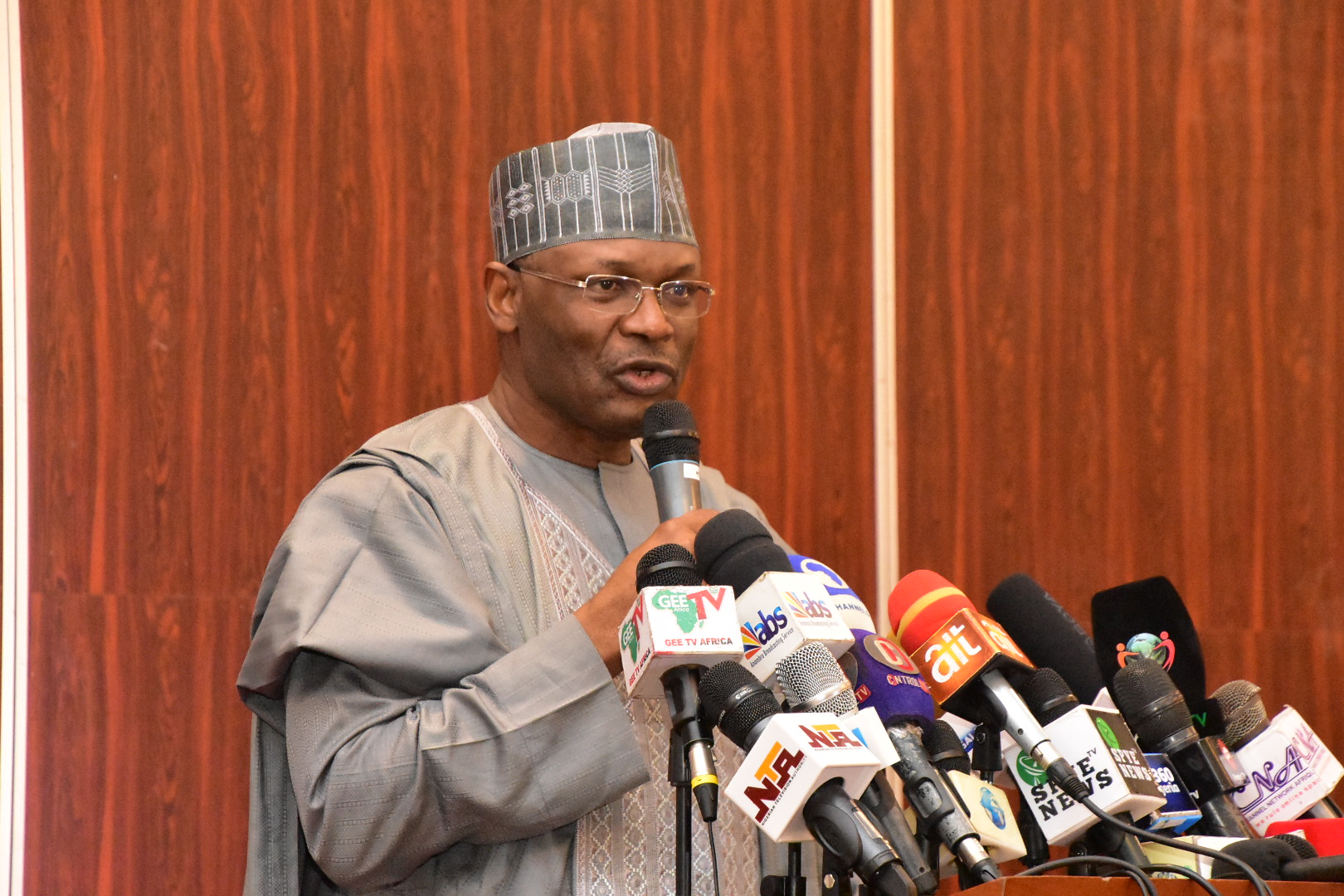
The Independent National Electoral Commission (INEC) on Wednesday refuted allegations by the Socio-Economic Rights and Accountability Project (SERAP) regarding its handling of electoral offences from the 2023 general elections.
[ad]
In a statement signed by Sam Olumekun, INEC’s National Commissioner and Chairman of Information and Voter Education, the commission rejected SERAP’s claims that it failed to prosecute electoral offenders, including governors and deputies, or engage independent lawyers for cases such as vote-buying.
INEC clarified that governors and deputy governors are constitutionally immune from prosecution.
“SERAP cannot be unaware of this provision. The Commission has no record of any such officials being investigated or charged for electoral offences,” the statement read.
[ad]
The commission disclosed it had received 215 case files from the police, implicating 238 suspects during the presidential and national assembly elections, and 536 more from the governorship and state assembly elections. It noted that prosecutions were ongoing, including against some of its own officials, such as a Resident Electoral Commissioner currently facing trial in Yola.
“Furthermore, if SERAP had done a basic fact check, it would have known that at the end of the 2023 General Election, the Commission announced that it received 215 case files from the Nigeria Police following the arrest and investigation of alleged violators of the electoral laws across the country,” INEC said. “These include 52 files involving 238 alleged offenders during the presidential and national assembly elections and 163 files for 536 suspects from the governorship and state assembly elections.
“It is important to also inform the public that the Commission’s commitment to the prosecution of electoral offenders is not limited to persons outside the Commission. Indeed, officials of the Commission, some of them highly placed, have been affected, including a Resident Electoral Commissioner currently being prosecuted in a High Court in Yola.”
[ad]
INEC noted its collaboration with the Nigerian Bar Association (NBA), allowing private lawyers to represent the commission on a pro bono basis, resulting in convictions in states like Kebbi and Kogi.
It also noted the involvement of anti-corruption agencies, including the Economic and Financial Crimes Commission (EFCC) and the Independent Corrupt Practices Commission (ICPC), in prosecuting vote-buying offenders. A special joint prosecution team of 18 lawyers from INEC and EFCC has secured convictions in Lagos, Gombe, and Kwara states.

Addressing concerns over delays in prosecuting electoral offences, INEC explained that, unlike election disputes, these cases are not bound by strict timelines and are prosecuted in the jurisdictions where offences occur. The commission reiterated its call for the creation of an Electoral Offences Tribunal to expedite the process.
[ad]
INEC assured the public of its commitment to upholding the electoral process and urged SERAP to verify facts before making further accusations.
“Specifically, a special joint prosecution team of 18 lawyers drawn from the EFCC and INEC was set up to prosecute suspects. Through this joint effort, successful prosecutions have so far been recorded in Lagos, Gombe, and Kwara States,” the agency said. “The prosecution of electoral offences is very slow for the simple reason that electoral offences are not time-bound, unlike pre-election and post-election cases which must be determined within 180 days at the trial court/tribunal and a maximum of 60 days at each layer of appeal.
“Furthermore, under Section 145 (1) of the Electoral Act 2022, electoral offences are prosecuted in the jurisdiction where the alleged offence is committed and by the state judiciary. Some cases can go on for several years,” INEC explained. The commission reiterated its call for legal reforms to enhance the efficiency and speed of prosecuting electoral offences.
“That is why the Commission has been at the forefront of advocating for electoral reform to make electoral offences time-bound for the speedy prosecution of electoral offenders, including the establishment of an Electoral Offences Tribunal.”
[ad]

