 Follow Us on Google News


 Follow Us on Google Discover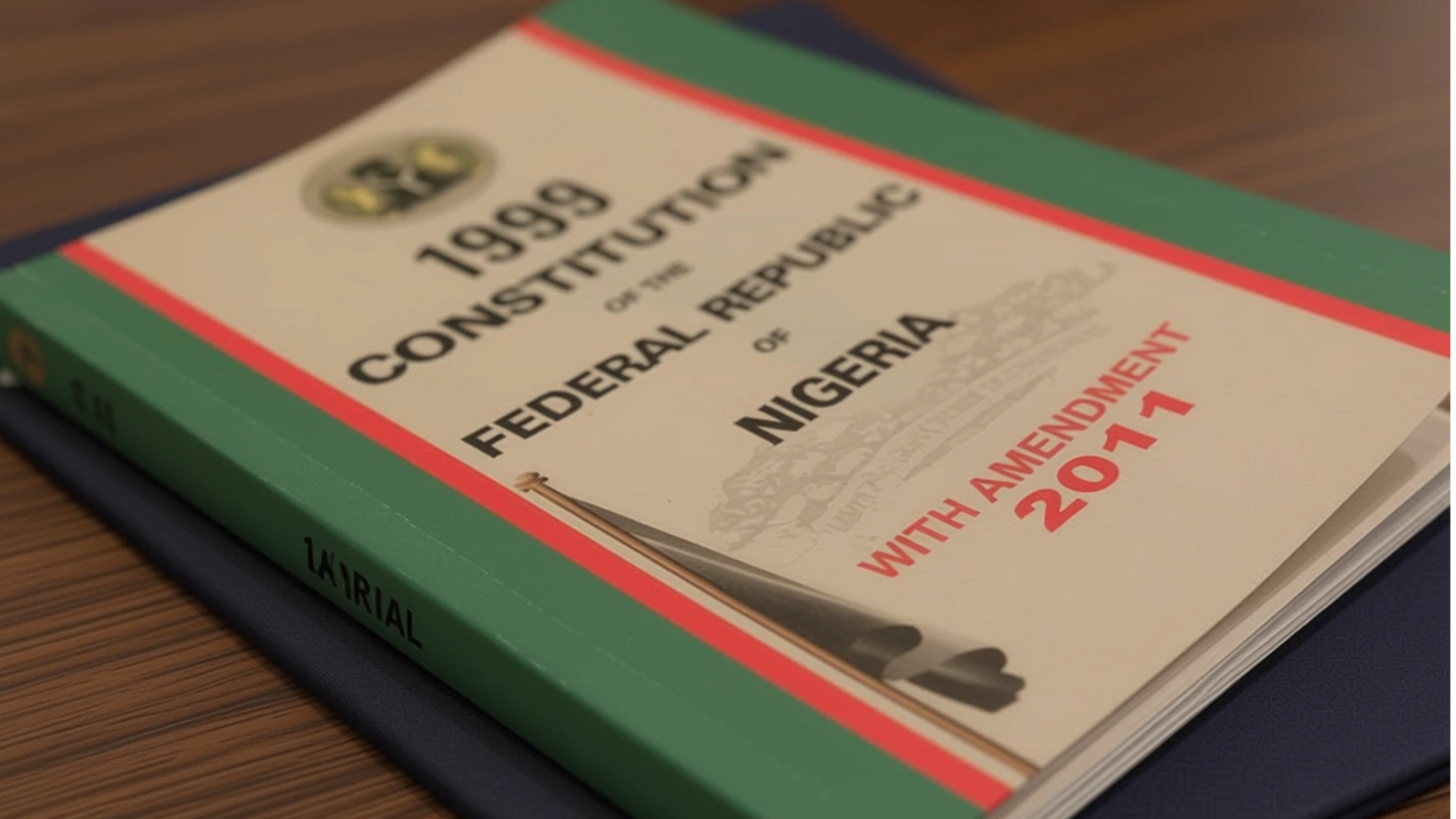
Local government autonomy in Nigeria has extensively been one of the most debated issues in the country’s federal system. The Local Government (LG) tier is constitutionally recognised under Section 7(1) of the 1999 Constitution, which guarantees a system of local government by democratically elected councils. The Fourth Schedule of the Constitution outlines their functions, including the provision of markets, local roads, sanitation, parks, and other grassroots services.
In principle, therefore, local governments are expected to be independent and functional units of governance closest to the people. In practice, however, their autonomy has been severely undermined for decades by state government control over finances, administration, and elections.
A significant turning point came on July 11, 2024, when the Supreme Court of Nigeria delivered a landmark judgment affirming the financial autonomy of local government councils. The Court ruled that the 774 LGAreas should receive their statutory allocations directly from the Federation Account. By implication, it declares the long-standing practice as unconstitutional where state governors held and disbursed funds through the Joint State–LG accounts.
This decision was hailed as a victory for democracy and grassroots development, as it sought to end the diversion or misappropriation of local funds by state governments. Following the judgment, there has been growing national consensus in favour of strengthening LG independence. Even the Nigeria Governors’ Forum, which had historically resisted full autonomy, has publicly supported reforms that promote administrative and financial independence for councils.
This piece raises the debate on the quest for LG autonomy in Nigeria from Judicial victory to governance reality, therefrom proffering solutions from theoretical perspectives. The 2024 Supreme Court judgment granting financial autonomy to Nigeria’s 774 LG councils has been widely celebrated as a landmark decision, yet its implementation has encountered numerous challenges. One of the most significant obstacles is the unabated political resistance from state governors: many of whom have been reluctant to relinquish control over local government funds.
Despite the Court’s clear directive that allocations should be paid directly to local councils, some states continue to channel funds through the Joint State–LG accounts or create new administrative bottlenecks to maintain influence over local finances. This resistance has prompted the federal government to threaten contempt charges against errant governors.

Another major issue stems from constitutional ambiguity—the 1999 Nigerian Constitution still treats local governments as creations of the states, granting governors substantial oversight powers that conflict with the spirit of the Court’s decision. Consequently, several states have enacted local government laws that undermine or reinterpret the ruling. A recent example is Anambra State, where the State House of Assembly passed the Anambra Local Government Administration Law, 2024, which, despite adopting the headline of complying with the Supreme Court of Nigeria judgment, includes provisions that effectively retain state-control over local government allocations. For instance, the law mandates that federal allocations to LG councils in Anambra State should firstly be deposited into a State-Joint LG account overseen by the state government, and allows the state to deduct a specified percentage before disbursement to the councils.
Furthermore, institutional and capacity weaknesses at the local level have raised concerns about the effective management of funds. Many councils lack strong financial systems, and transparency mechanisms, creating fears that direct funding might lead to corruption or mismanagement rather than improved governance. Implementation has also been slow, as numerous local governments have not yet opened independent accounts with the Central Bank of Nigeria, while clear operational guidelines for fund transfer, auditing, and oversight remain undeveloped. Additionally, the reluctance of some State governments in 2024 to discontinue the use of caretaker committees instead of elected councils undermines the democratic legitimacy of local administrations, which is essential for true autonomy. Critics further argue that the ruling could inadvertently centralise power at the federal level, weakening Nigeria’s federal balance by side-lining state governments.
Overall, while the Supreme Court judgment marks a significant step toward empowering local governments, its success has been curtailed by political resistance, legal contradictions, administrative incapacity, and uneven implementation across the federation. True autonomy will require not only judicial backing but also constitutional reform, political commitment, and stronger governance structures at the grassroots level.
Despite this judicial and political progress, local government autonomy in Nigeria remains partial and inconsistent. While the Supreme Court’s verdict addresses the financial aspect, administrative autonomy is still limited. Many state governments continue to interfere in local government affairs by controlling recruitment and staff deployment, and determining which projects are implemented. Furthermore, the 1999 Constitution still gives States considerable control over LG structures and operations, creating a legal contradiction between guaranteed autonomy and state oversight.
Beyond legal and political obstacles, capacity challenges also hinder true autonomy. Most LGs depend almost entirely on federal allocations, as their Internally Generated Revenue (IGR) remains low due to weak administrative structures and limited economic activities at the local level.
Issues such as corruption, poor planning and poor accountability persist, leading to ineffective service delivery and eroding public confidence. Even with direct access to funds, without transparency and institutional reforms, there is a risk that financial autonomy could simply shift corruption from state capitals to local council headquarters.
Addressing the challenges confronting the implementation of the 2024 Supreme Court judgment on LG autonomy in Nigeria requires a combination of institutional, administrative and political reforms, guided by sound theories of governance and public administration. Several theoretical frameworks—decentralisation theory, fiscal federalism, good governance theory, public choice theory, and new public management (NPM)—offer useful lenses for diagnosing the problems and crafting workable solutions within Nigeria’s federal context. More remarkably, each provides a lens for diagnosing the root causes of Nigeria’s local government dysfunction and for formulating sustainable solutions that can translate constitutional ideals into practical governance outcomes.
To begin with, decentralisation theory emphasises the transfer of authority, resources, and responsibilities from higher to lower levels of government to improve responsiveness, accountability, and service delivery. Nigeria’s local governments, though recognised in the Constitution, have remained largely dependent on state governments due to ambiguous constitutional provisions and political interference. For true decentralisation to occur, there must be constitutional clarity that explicitly defines local governments as a distinct and independent third tier of government rather than as administrative extensions of the States.
This would require amending Sections 7 and 162 of the 1999 Constitution to eliminate the Joint State–LG account and guarantee direct financial transfers. In addition, democratic decentralization demands that all local governments be administered by democratically elected councils, not caretaker committees. Regular, credible local elections supervised by an independent body—either the Independent National Electoral Commission (INEC) or an autonomous State–Local Electoral Commission—would strengthen local legitimacy and public trust. Moreover, decentralisation must be accompanied by capacity building to empower local officials with the skills and resources needed to manage their responsibilities efficiently.
Closely related to this is fiscal federalism, which provides a framework for the equitable and efficient allocation of financial powers among the tiers of government. The Supreme Court’s directive for direct funding to local governments aligns with this principle, but autonomy without accountability can lead to fiscal indiscipline and corruption. Therefore, there is a need to institutionalise mechanisms for financial transparency and oversight.
Establishing a Local Government Fiscal Responsibility Commission could ensure compliance with budgetary standards, auditing, and fiscal prudence. Local councils should also strengthen their Internally Generated Revenue (IGR) base through improved tax collection systems, property registration and partnerships with the private sector. Introducing performance-based grants would further encourage fiscal responsibility, as councils meeting governance and service-delivery benchmarks would receive additional federal support. These measures, rooted in fiscal federalism theory, would balance autonomy with accountability while promoting equitable development across regions
To be continued tomorrow.
Lamidi is an Associate Professor in the Department of Local Government and Development Studies, Obafemi Awolowo University, Ile-Ife. He can be reached via: [email protected]

