 Follow Us on Google News


 Follow Us on Google Discover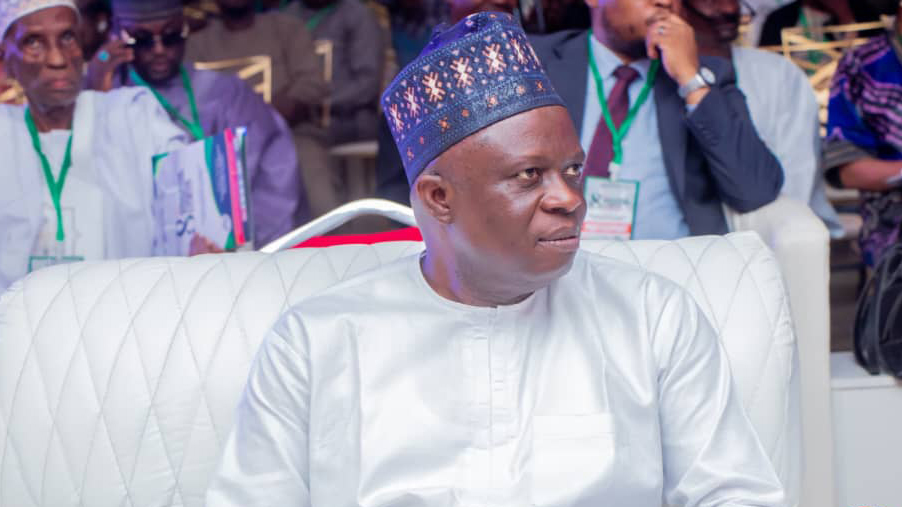
The President of Federation of Tourism Associations of Nigeria (FTAN), Dr Aliyu Badaki, has called on the government to embrace tourism as a central pillar of national development.
Badaki stated that the “Nigeria Tourism Investors Forum and Exhibition (NTIFE) 2025 represents far more than a yearly event; but symbolises Nigeria’s readiness to embrace a bold new future.”
Speaking at the 2025 NTIFE, with the theme: National Tourism Investment and Global Partnership, held recently in Abuja, Badaki noted that the new future is where tourism becomes a significant contributor to economic growth.
He disclosed that one of FTAN’s most significant contributions this year was full participation in the final review of the National Tourism Policy, an exercise coordinated by the Nigeria Economic Summit Group under the guidance of the Ministry.
Badaki pointed out that participating in the tourism policy was a landmark moment for the private sector, as FTAN’s voice was not only heard but deeply integrated into the policy.
He added that the final document reflects shared priorities, private-sector realities, and global best practices, stressing that it is a policy Nigerians can proudly present to the world.

FTAN President said: “Another major milestone we achieved was the signing of a historic Memorandum of Understanding between FTAN, the Ministry of Arts, Culture, Tourism and Creative Economy, the Nigerian Tourism Development Authority, and the National Gallery of Art. This MoU marks a new era of structured collaboration. It acknowledges the private sector as a major engine of tourism development and creates formal pathways for joint programming, marketing, destination development, cultural tourism integration, standards improvement, and investor support.
“For the first time, FTAN is not participating from the sidelines; we are now embedded in the architecture of national tourism planning and implementation.”
Badaki explained his Tourism Transformation Mandate, which distilled his aspirations into three major areas, which include the need to grow tourism through strong partnerships and meaningful policy influence, the transformation and unification of FTAN’s institutional framework; and the expansion of market development, national image amplification, and legacy-building initiatives.
He noted that the Tourism Transformation Mandate is no longer an idea on paper; but an active, living blueprint guiding its actions and shaping its results.
He added: “Every step we have taken since our inauguration has been intentional. Immediately after the elections, we convened a strategic executive retreat. That retreat was our starting point, a space where we aligned our priorities, agreed on implementation pathways, and unified our collective understanding of FTAN’s role in Nigeria’s tourism journey. “
Badaki noted that the clarity and cohesion that emerged from that retreat set the pace for the progress they are now celebrating. He said FTAN had embarked on a series of courtesy visits to key government agencies, including the Ministry of Arts, Culture, Tourism, and Creative Arts, the Nigerian Tourism Development Authority (NTDA), and the National Gallery of Art (NGA).
Badaki further observed that these engagements strengthened institutional trust, reinforced public-private alignment, and ensured that FTAN is firmly recognised as a reliable partner in national tourism development.
Badaki stated that FTAN would be taking it a nudge higher by signing strategic MoUs with them.
FTAN President lauded the Minister’s unwavering partnership, visionary support, and exemplary leadership which have been instrumental in strengthening its efforts, qualities that deserve not only its admiration but their collective emulation.
Badaki explained that: “Understanding that international collaboration is essential to any competitive tourism economy, we expanded our diplomatic engagements by visiting embassies and high commissions across various regions. These meetings were strategic, and they opened channels for cultural exchange, tourism promotion partnerships, investment interest, and bilateral cooperation. Nigeria’s tourism potential is vast, and our discussions with foreign missions confirmed that the world is paying attention”.
Badaki noted that with the new tourism policy in place, stronger public-private collaboration, an energised creative industry, improved visibility for Nigerian culture, and a large domestic market, Nigeria is primed for unprecedented tourism investment.
He informed investors that Nigeria offers limitless opportunities in hospitality, ecotourism, entertainment, and creative festivals, MICE tourism, community tourism, travel technology, transportation, culinary tourism, cultural infrastructure, and much more.
Badaki noted that the FTAN family welcomes increased incentives for tourism investors, improved safety and infrastructure around tourism sites, enhanced national marketing, and the activation of structures such as the Presidential Council on Tourism. He maintained that with deeper collaboration, Nigeria could unlock billions in untapped tourism value.
According to him, “Nigeria has everything it needs to become a leading tourism destination in Africa: diversity, creativity, cultural richness, natural beauty, and the warmth of our people. What remains is sustained collaboration, bold investment, and long-term commitment.”
He urged stakeholders to build partnerships that endure, attract investors who see Nigeria not as a risk, but as a rising opportunity and to leave behind a legacy of growth, unity, and transformation.

