 Follow Us on Google News
 Follow Us on Google Discover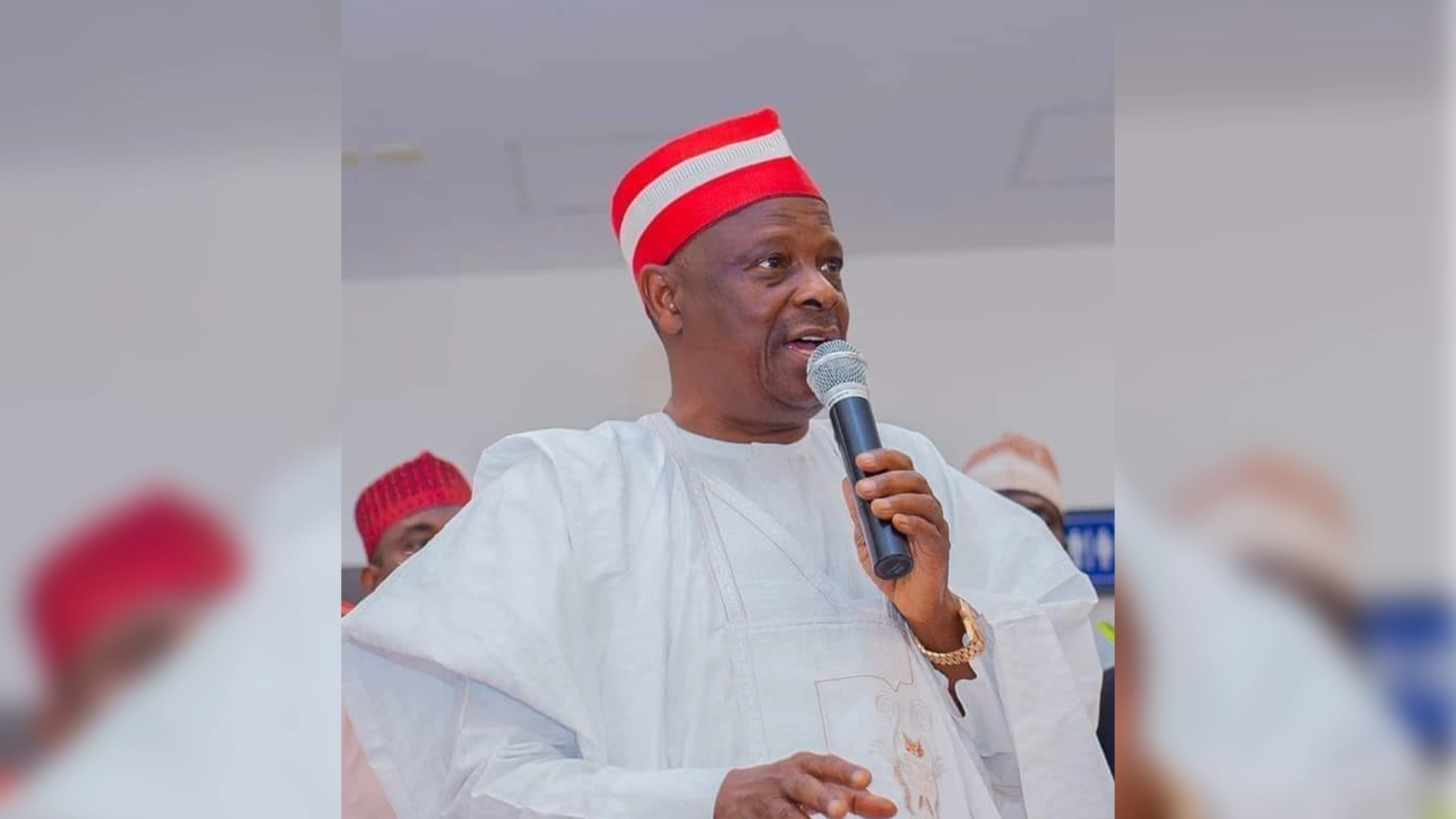
Ex-Governor of Kano State and leader of the Kwankwasiyya Movement, Senator Rabiu Musa Kwankwaso, has described education as the most enduring legacy any leader can bequeath to society, as beneficiaries of the Kwankwasiyya scholarship programme gathered for their maiden annual convention in Kano.
Speaking at the event, Kwankwaso thanked Almighty God for sparing their lives to witness what he described as “a very historic day for Kano State and Nigeria”, pointing out that the convention brought together scholars sponsored over a period spanning nearly 25 years.
He said, “I remember many of you when you were very young. Some of you looked like you came straight from the villages. Today, I see confidence, professionalism and grey hair.”
According to a statement by Dr Mansur Hassan, and made available to journalists in Kaduna, Kwankwaso, who governed Kano State for eight years, said the gathering offered an important lesson on leadership, sustainability and foresight, stressing that “true governance is measured by the long-term impact on human capital.”
Kwankwaso said that following the 2019 general elections, when government sponsorship of foreign students stopped, he resolved to personally sustain the programme through the Kwankwasiyya Development Foundation (KDF).
“I realised I had properties I did not need — plots in Lagos, Kaduna, Sokoto, Adamawa and other places. I sold them all and used the proceeds to sponsor 370 young men and women from Kano State to study abroad,” he disclosed.

Kwankwaso revealed that, in addition to the foundation-sponsored scholars, the programme had earlier supported over 3,000 students within four years to study in 14 countries across Europe, Asia, Africa and the Middle East.
Doctors, engineers, pilots and global professionals were produced through the programme.
“Available records from the Kwankwasiyya Scholars Assembly indicate that the scholarship scheme has so far produced hundreds of medical doctors and specialists, many currently serving in teaching hospitals across Nigeria and abroad,” the statement added.
It further stressed “scores of pilots and aviation professionals, including commercial airline pilots, flight engineers and air traffic specialists; thousands of engineers, ICT experts and technologists contributing to Nigeria’s digital and infrastructure sectors.”
“Academics and researchers, with over 300 PhD holders unveiled at the convention; pharmacists, architects, economists, lawyers, public policy experts and development practitioners, now working in Nigeria, Africa, Europe, North America and the Middle East,” the statement also noted.
Meanwhile, Kwankwaso remarked that the foundation’s intention was not only to sponsor scholars but also to track, mentor and integrate them into public service, governance and national development.
“That is why we decided to engage you politically—at ward, local government, state, zonal and, by the grace of God, national levels, for those who are interested,” he said.
He, however, cautioned against elitism, noting that possession of higher degrees should not deter service at the grassroots.
“It is not fair for someone with a PhD or master’s degree to feel too big to serve at the ward level,” he warned.
While expressing hope for a scholar-governor, scholar-president society in the country, Kwankwaso expressed gratitude to the incumbent governor of Kano State, Abba Kabir Yusuf, for appointing many scholars as commissioners, advisers and senior aides, and prayed to witness a day when a beneficiary of the programme would emerge as governor of Kano State — and even president of Nigeria.
He also urged proper documentation of all beneficiaries to enhance coordination, communication and digital engagement.
While acknowledging overwhelming loyalty, he cautioned a few who had “crossed over to the other side”, warning that betrayal never leads to lasting success.
Besides, the Deputy Governor of Kano State and scholars lauded the initiative.
The Deputy Governor of Kano State, Aminu Abdussalam Gwarzo, commended Kwankwaso’s foresight and described the scholarship programme as one of the most impactful human-capital interventions in Nigeria’s history.
Earlier, in his opening remarks, Dr Mansur Hassan, National President of the Kwankwasiyya Scholars Assembly (KSA), described the convention as a defining moment and praised Kwankwaso for initiating “the most unprecedented scholarship programme Nigeria has ever witnessed.”
Dr Hassan said evidence showed that without Kwankwasiyya scholars, several private, state and federal tertiary institutions across Kano, Jigawa, Katsina, Bauchi, Gombe and beyond would face academic collapse.
He also praised Governor Abba Kabir Yusuf for introducing the “1001 Scholars” initiative, restoring Kano’s leadership in academic excellence.
According to him, Kano State now boasts the highest concentration of highly qualified academics in Nigeria, with over 300 PhDs unveiled at the event.
Dr Hassan announced plans to establish a Kwankwasiyya Scholars Assembly Research Institute, aimed at driving evidence-based governance, innovation and policy development, while appealing for the absorption of unemployed scholars in the state’s proposed recruitment of 1,000 professionals.
There was a presentation of awards and goodwill messages at the event.
Highlights of the programme included the presentation of awards to Senator Rabiu Musa Kwankwaso, goodwill messages from scholars across the globe, and testimonies of how the scholarship transformed beneficiaries from obscurity into globally competitive professionals.
The event, which was attended by many dignitaries, ended with prayers for the Kwankwasiyya Movement, Kano State and Nigeria.

