 Follow Us on Google News
 Follow Us on Google Discover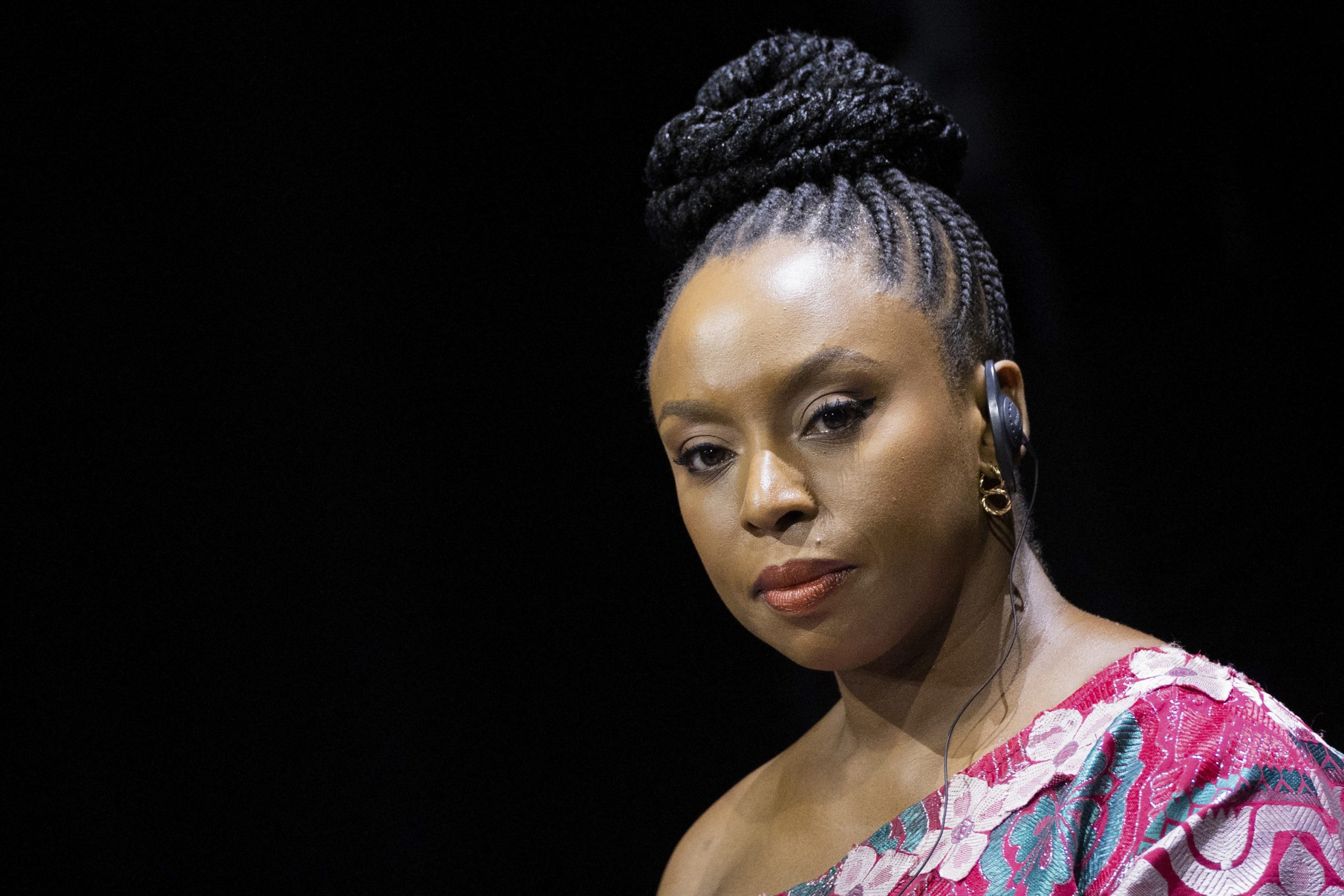
The beginning of each year typically brings with it hope, a high-spirited optimism that things will only get better.
For celebrated Nigerian author Chimamanda Ngozi Adichie and those who identify with her across the globe, that optimism has swiftly succumbed to a soul-wrenching grief, the extent of which no words can adequately describe.
That grief has spread like lightning.
From social media feeds to newspaper pages, blogs, and across the airwaves, a heavy gloom has settled over the public, leaving a lingering, painful question: How does spending time in one’s own country turn into the tragedy of a lifetime?
The news broke with a statement from the family confirming that 21-month-old Nkanu Nnamdi, the son of the novelist and her husband, Dr. Ivara Esege, died on Wednesday, 7th January, after a brief illness.
While the family initially requested privacy and prayers, the narrative shifted from private mourning to a public demand for accountability following the leak of a private message Adichie sent to close friends.

“My son would be alive today if not for an incident at Euracare Hospital on January 6th,” Adichie’s message read. According to her account, her son Nkanu was stable at Atlantis Hospital and cleared for medical evacuation to Johns Hopkins in Baltimore, USA, the next day.
He was referred to Euracare Multi-Specialist Hospital only for a routine MRI and a “central line” procedure.
“I saw people… rushing into the theater and immediately knew something had happened,” Adichie recounted.
She alleges that an anesthesiologist at Euracare administered her son an overdose of Propofol and, crucially, was left unmonitored.
“How can you sedate a sick child and neglect to monitor him? The anesthesiologist was criminally negligent.
He was fatally casual and careless with the precious life of a child,” Adichie’s message noted.
Dr. Anthea Esege Nwandu, a dual-board-certified physician and the boy’s aunt, expanded on these claims to TVC News: “Standard clinical practice demands that such a baby be monitored continuously.
Instead, the anesthesiologist disconnected the child from his ventilator and carried him on his shoulders to the ICU unmonitored. He arrived pulseless. That was the beginning of his death.”
Beyond a Private Loss: A Systemic Crisis
The disclosure has sparked a firestorm of public discourse, reopening wounds for Nigerians familiar with medical failure.
Celebrity stylist Toyin Lawani has shared via her Instagram handle (@tianahsplacempire) what has probably been the most damning testimonial, detailing a near-fatal medical ordeal that followed a spinal implant surgery at Euracare Hospital.
According to her, what was meant to be routine care spiralled into repeated emergency surgeries, lung complications, loss of speech and mobility, cardiac distress, and months of hospitalisation and rehabilitation
. Despite spending close to N100 million, poor postoperative care and delayed responses allegedly worsened her condition, forcing an emergency evacuation abroad, where further infections were discovered and another corrective surgery was performed.
“I kept asking myself why I did my spine surgery implant in Nigeria…I did two months in total there (Euracare) and a month in a rehabilitation centre because I lost the use of my hands and legs.
I also had a bedsore, had to learn how to walk again, speak again, bathe myself again, and I’m still in therapy for speaking till now,” she wrote.
Commenting on an Arise TV post on Instagram, one user, @iammsbel, wrote: “Euracare again? I don’t want to talk about the damage they did to my uncle. People should stop going to Euracare.”
X user @NosaAguebor also commented: “Euracare??? They should keep quiet and not even talk on this matter at all. Whatever they said they did, they did. I won’t even be giving them (the) benefit of doubt on any matter. I’m typing this with my full name and chest, and they can jolly respond, and I will speak…”
Similarly, @carameljay wrote: “My family is currently planning to travel home to bury our mom, who we lost on Christmas Day! She travelled to Nigeria for Christmas and never made it back home to us because she had a health emergency, and two hospitals turned her away because they didn’t have a defibrillator. She died in the car on her way to the 3rd hospital.”
This groundswell of dissatisfaction highlights a more profound anxiety that even at “world-class” facilities, several systemic shortcomings, including the regulatory accountability vacuum and a lack of adherence to safety protocols, continue to claim lives.
Euracare’s Defence and the Clinical Paradox
Euracare Hospital’s formal statement sought to frame the tragedy as a result of the child’s “critical” pre-existing condition. However, their defence raises more questions than it answers:
● The Referral Claim: Euracare claimed the child was referred after treatment at two other centres; Adichie’s account clarifies he was at only one (Atlantis Hospital) and was stable for international travel.
● The Shield of Protocol: Euracare also claimed adherence to “international standards”, but, according to Dr. Nwandu, international standards demand that a child on oxygen who is given sedation must have continuous oxygen therapy. “Did Euracare do this? No! They confirmed this verbally to me when I went to the hospital to question the doctors,” she wrote in a detailed rebuttal.
● The Transfer Violation: International standards mandate moving sedated patients with resuscitative equipment, such as an Ambu bag.
The anaesthesiologist’s alleged decision to carry the child on his shoulder without oxygen is a non-standard practice that made visual and clinical monitoring impossible, yet Euracare’s statement did not address that.
● The Documentation Gap: Euracare claims to have commenced an investigation. Dr Nwandu does not think that is possible. “Since there was no monitoring, is it possible to accurately document when the child stopped breathing or for how long he was pulseless before he was resuscitated? No.”
Ultimately, Euracare’s defence hinges on the vague claim that public reports contain “inaccuracies,” yet has not specified which details they contest.
Quite understandably, the family has vowed to pursue all necessary avenues for justice. “It is time for the public and healthcare providers to demand accountability, transparency, and consequences for negligence in our healthcare system in Nigeria,” Dr. Esege-Nwadu said on TVC News.
As Chimamanda Ngozi Adichie navigates a grief beyond words, we’re reminded of the ending statement in her trending leaked message: “We have now heard about two previous cases of this same anesthesiologist overdosing children. Why did Euracare allow him to keep working? This must never happen to another child.”
The onus now falls on the general public, especially the authorities and regulatory bodies, to ensure that no other parent endures a similar fate.
Adegoke is a trained journalist with a BSc and MSc in Media and Communications.

