
GDN SIDEBAR
As the world marks the International Day of Zero Tolerance for Female Genital Mutilation (FGM), Nigerian medical doctor and health advocate, Chinonso Egemba, popularly known as Aproko Doctor, has delivered a reminder many are uncomfortable hearing: female genital mutilation is not culture, not protection, and not discipline — it is violence.
In a strongly worded video shared on his Instagram page to mark the day, Aproko Doctor described FGM as a deliberate act of harm carried out mostly on young girls who cannot speak or defend themselves. He dismissed long-held justifications often used to protect the practice, calling them “absolute balderdash.”
“You can call it culture, but it’s not,” he said. “It is called female genital mutilation, and it is a crime.”
FGM, he explained, involves the cutting, injuring, or alteration of a woman’s external genitalia, and in some cases, internal organs, for no medical reason. According to him, there is no health benefit whatsoever attached to the practice, contrary to claims that it is done for protection, purity, or discipline.
Aproko Doctor questioned what exactly girls are being protected from, noting that the practice teaches a dangerous lesson early in life that a girl’s body does not belong to her.
“What it is actually teaching her very early is that her body is not her own,” he said.

He stressed that the consequences of FGM do not end with the act itself. Instead, the damage follows survivors into adulthood, affecting intimacy, childbirth and mental health. Many women, he noted, are expected to endure years of pain and trauma in silence, simply because a harmful tradition must be preserved.
“FGM causes severe pain. It causes bleeding. It causes infections. It can cause problems with menstruation, pains during sex and dangerous complications during childbirth,” he said.
Beyond the physical harm, Aproko Doctor highlighted the psychological trauma associated with the practice, stating that the emotional scars often last a lifetime. He rejected the idea that FGM is a private family matter or a “women’s issue,” insisting that it is a clear violation of human rights.
“This is not a private family matter. It is a human rights violation,” he said, adding that the practice remains illegal in many countries, including Nigeria, yet continues to thrive due to silence, excuses and weak enforcement.
Marking World FGM Day, Aproko Doctor said the goal is not merely awareness, but accountability. He urged communities to stop excusing violence and to stop branding abuse as culture.
“Somebody started that culture. Somebody can end it. And it can be you,” he said.
WHO: FGM is a human rights violation with lifelong consequences
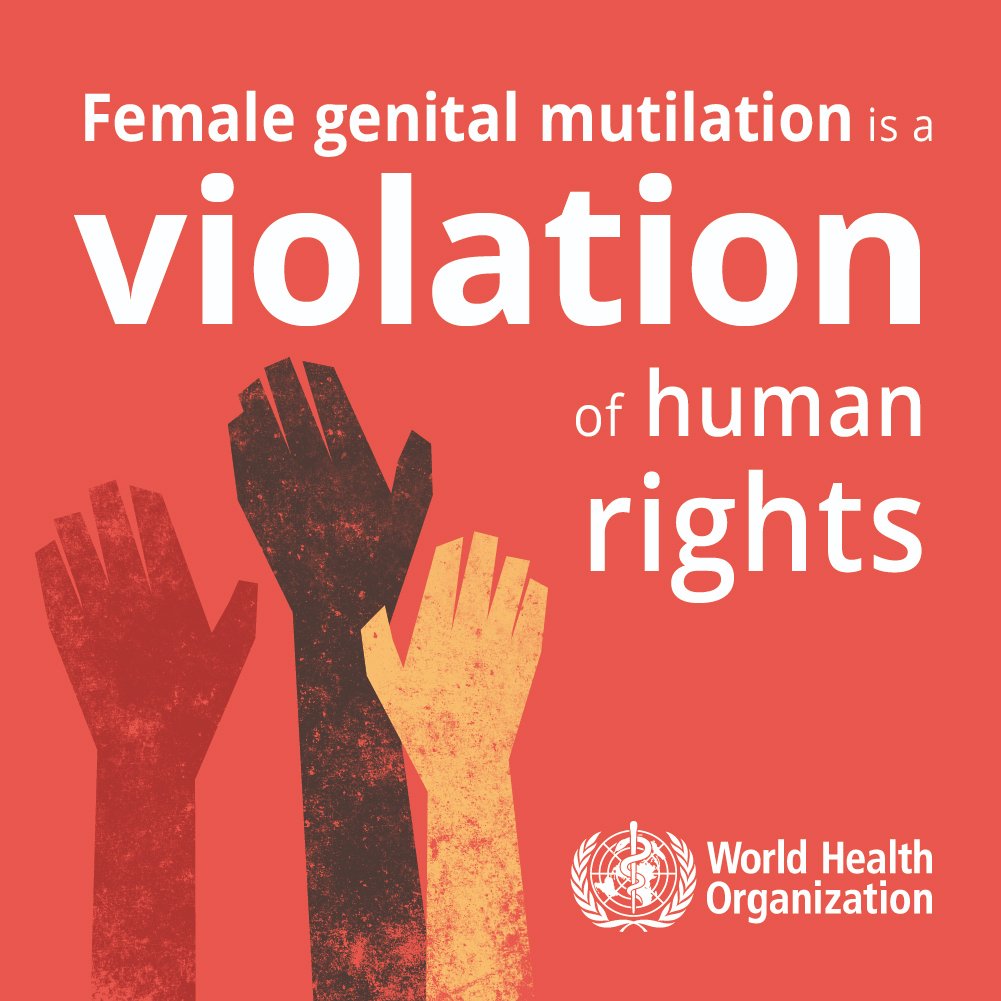
The World Health Organization (WHO) has repeatedly warned about the scale and impact of female genital mutilation, describing it as a global human rights issue with serious health and economic consequences.
According to WHO, more than 230 million girls and women alive today have undergone FGM across 30 countries in Africa, the Middle East and Asia. The practice is mostly carried out on young girls between infancy and the age of 15.
WHO defines FGM as all procedures involving the partial or total removal of the external female genitalia, or other injury to the female genital organs, for non-medical reasons. The organisation states clearly that the practice has no health benefits for girls and women.
Instead, WHO links FGM to severe bleeding, difficulty in urination, infections, cysts, menstrual problems and complications during childbirth. In extreme cases, it increases the risk of newborn deaths. The trauma, according to WHO does not disappear with time and can affect a woman’s physical and mental health throughout her life.
Beyond health, WHO recognises FGM as a violation of fundamental human rights. It reflects deep-rooted gender inequality and constitutes an extreme form of discrimination against girls and women. Because it is almost always performed on minors, it also violates the rights of the child.
In 2008, the World Health Assembly passed a resolution calling for the elimination of FGM, stressing the need for coordinated action across health, education, justice, finance and women’s affairs sectors. WHO continues to support countries with guidelines, research and evidence-based interventions aimed at prevention and survivor care.
WHO estimates that treating the health complications of FGM costs health systems about $1.4 billion every year. A figure expected to rise unless urgent action is taken to end the practice.