 Follow Us on Google News


 Follow Us on Google Discover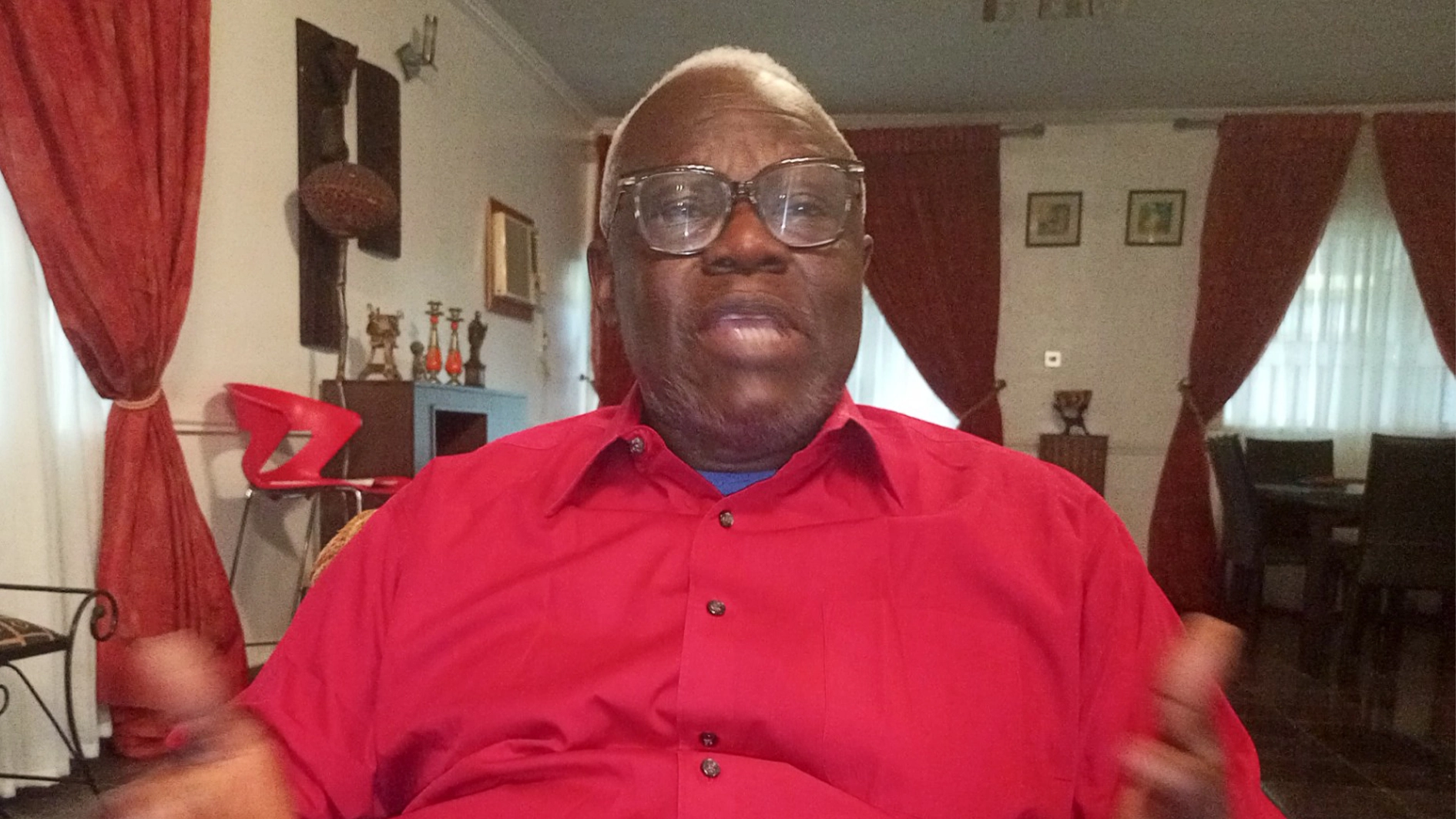
Olufemi Adeniji is the Chief Executive Officer of United States-based aircraft brokerage, Nigame Aircraft Consultancy. In this interview with OLUSEGUN KOIKI, he closely examines the aviation industry in Nigeria, touching on issues of state-owned airports and airlines, the challenge of poorly maintained infrastructure, the abandoned M.K.O. Abiola Airport in Osun State, and the current debt dispute between the Nigeria Civil Aviation Authority (NCAA) and indigenous airline operators.
In recent times, state governments have been investing in the aviation business, setting up state-owned airlines. What is your view about this development?
Airlines are an economic development in any country, but states that cannot maintain their citizens, that cannot pay salaries, are going into the airline business; it makes no sense. Number one, aviation is an industry where you spend billions of naira to make a few million naira. But in the long run, if it is properly operated and maintained, you recover your money and break even.
Personally, I think the state governments’ involvement in the airline business is a way to siphon the little resources they have. It is so funny the way we run airlines in this country.
Generally, we lack a maintenance culture in Nigeria; we don’t maintain anything. How do you want to maintain your aircraft? And the concept outside Nigeria is that any aircraft from Nigeria is paper maintenance. The impression is that Nigeria doesn’t actually maintain its aircraft. They just show documents they’ve done, but when you ask for documentation to prove the maintenance and where it was done, it becomes storytelling.
So, all these airlines started by the states make no sense to me. If three or four states collaborate to establish maintenance, repair and overhaul (MRO) facilities where they can maintain their aircraft, or you have staff and economic sufficiency, then you can go ahead and establish one.

You alleged that setting up an airline is a way of siphoning money. Can you explain this?
As I said earlier, you use billions to make millions. How do you get the billions of naira to use when you owe your citizens’ salaries, and you are not paying minimum wages? Given the current cost of living, the minimum wage should not be less than N300,000 per month. But you still see states struggling to pay the minimum N70,000. Some of them are not even paying.
So, I see no reason states should get into airline operations. Who are the people operating these airlines? Who are the states’ representatives? Yes, some of them are operating very well. Like Enugu Air, it has efficient operations. Can you sustain it?
The airline business is not just something that you operate for a few years. Sustainability is the issue. Are you efficient enough? Can Nigerians afford it with the current standard of living?
With the current passenger traffic in Nigeria, does the country need the number of airlines it presently has?
I don’t think so. Efficiency is what dictates the airline business. Spirit Airlines, based in the United States, just shut down. The airline was the cheapest, but it shut down due to inefficiencies. And the good news is in the United States, you either do it or you close shop. They were asking for $500 billion from the government and the government said, ‘Sorry, we cannot give you the money, sell it off, declare bankruptcy and let another airline take you off’.
It is the same situation in Nigeria. Take, for instance, the poor experience I had when I came into the country from the U.S. You have people at the airport stranded from morning till night, yet you have airlines everywhere. What sense does this make?
If you have four very efficient airlines that take passengers on time and as scheduled, then you don’t have a problem. What the Nigerian airlines are capitalising on at the moment is the security situation. If the country is secure, nothing prevents people from taking most of these trips by road.
Today, how many flights go to Anambra or Yobe? And the spare parts support maintenance for aircraft is in dollars. Anyone who operates aviation is known as a deep-pocket operator, because you must have deep pockets to run it. If you don’t have a deep pocket, you can’t sustain it.
What is your view about state-owned airports, which are also coming up now?
State-owned airports are good for industrial development, but is it viable? You have to maintain the airport; you don’t just put buildings down without maintaining it. If you do it in collaboration, if the state does it in collaboration with the airline that wants to come there, then the state will have to guarantee number of seats with the airlines and say ‘we will pay you for the number of seats, you make two or three flights a week,’ but you put up a building and you don’t maintain it, it deteriorates.
So, states owning airports, we should learn to take things with priority, not because Jigawa State has it, Ogun State has it, and Oyo State must have it.
I was involved with the Osun State Airport. Then, when Gboyega Oyetola took over from Ogbeni Rauf Aregbesola, I asked him whether he was aware of the existence of an airport in Osun. At that time, Akure airport was almost non-existent, Ibadan airport was dead, and the main reason I introduced Osun was to offset people coming from Ondo State. Instead of coming to Lagos, all that was needed was to fence out the airport, build buildings, and reuse the asphalt, but they destroyed the whole thing. The airport is still pending up to now.
Then, I even brought in a financier from the United States who would finance the whole project, trying to use Osun as Delta Air Lines hub. That was the intention. I spoke to Delta Air Lines, they were ready to have a hub in West Africa. They agreed that Osun offset from Lagos would be the best thing with the Osun Osogbo Festival because a lot of Americans come for the festival. But what was the outcome? Nothing came out of it.
I got Aregbesola involved; he tried, but the state deposited into an escrow account because the financier said the state had to deposit to determine the seriousness of the project, but by the time we knew what was happening with the deposit, the money had vanished. So, airport construction has been suspended. When Oyetola came in, he contacted me on how to get finance, but the financier was no longer interested. They said that Nigeria is known for project abandonments.
So, states have to be self-sufficient before they get into the airline or airport business.
In December 2024, West African governments signed an agreement that eliminated certain taxes and approved a 25 per cent reduction in passenger service charges (PSC) and security charges, among other resolutions. Six months after the resolution, implementation has been a major problem. What can be done to ensure the implementation of air pollution resolutions by West African governments?
First, transportation in Africa is generally very poor because there is nothing to prevent us from having an interconnected system of airlines and transportation. I will use China for example. If you fly business class from Miami, United States, to China, it’s about $600. If you fly the same class from the United States to Nigeria, it is about $6,000. Can you see the difference? Meanwhile, my flight from Miami to China is longer than my flight from Miami to Lagos. The cheapest ticket to Nigeria is $2,000.
Transportation in West Africa, especially when it involves Nigeria, is always high. They feel Nigeria has the money, the population and the capacity. So, they wonder why they should contribute to it when Nigeria will be the one to gain from it. Nigerians are the travellers. Other West African citizens travel minimally. You know how many years it took to build the Lagos-Benin Republic Road? It is the same thing. So, they know that the moment the transportation link opens, Nigeria will take advantage of it.
Nigeria should be the United States of West Africa. If we have the right government, the right perspective, and the right priorities, we should be ruling other West African countries, and they will respect us for doing so.
But when you get 200 million people against 50 million or 30 million, they look at the population and conclude that
Nigeria will be the one to gain from it. So, there is no necessity for them to implement such resolutions.
How do you think the back and forth of debt allegations between the airlines and the Nigeria Civil Aviation Authority (NCAA) can be resolved?
This can be resolved by having a single-pocket deposit, no human interaction, service for payment. If I get a service, I will pay you right there. If you refuse to pay, then you are grounded. We need to enforce the law. If you are going to be changing your tariff, call them together, agree on what you need to pay and you ask them.
The NCAA needs to be self-sufficient. The Federal Aviation Administration (FAA) in the United States will make a law and enforce it. There is no compromise.
The Airline Operators of Nigeria (AON) , who say they don’t owe the NCAA, is not an accurate statement because I can tell you the NCAA will not come and say ‘you owe me,’ when the airlines don’t owe it. If the NCAA grounds them for not paying, the airlines will lose revenue, and then they will pay up because the airlines will not carry passengers without payment. So, let the NCAA enforce the same thing.
Is there really multiple taxation in the industry, and how can it be eliminated?
Yes, there is, but the multiple taxation can only be eliminated with the right infrastructure in place. If you have your MRO here, develop your security measures to reduce it. If the NCAA goes digital and minimises human interaction, such issues will be minimal. The taxes or charges are for the airport authority to pay workers’ salaries. That is why you have all these different taxes from different areas.
If you have a single pocket, civil aviation or the Ministry of Aviation and Aerospace Development, this money is now itemised efficiently, the different tax payments will be reduced.
The old international terminal at the Lagos airport is undergoing a N712 billion reconstruction. Is it the right step?
It comes back to my previous statement – maintenance of infrastructure. We have a very bad attitude towards building and rebuilding, but we don’t maintain it. Even the new international terminal in Lagos, commissioned about six years ago, is already deteriorating. It is lacking in maintenance. Just yesterday (Monday), I saw two doors from the terminal falling.
If you have tied the contracts with maintenance, the contractor will still be maintaining it at present. The airport is a showcase. Before the Murtala Muhammed International Airport deteriorated to this level, it was just an air conditioner issue. The air conditioners were stolen twice. The toilet is inaccessible. If we had maintained properly whatever we had, we would not have to rebuild. We need to develop a maintenance culture.

