 Follow Us on Google News
 Follow Us on Google Discover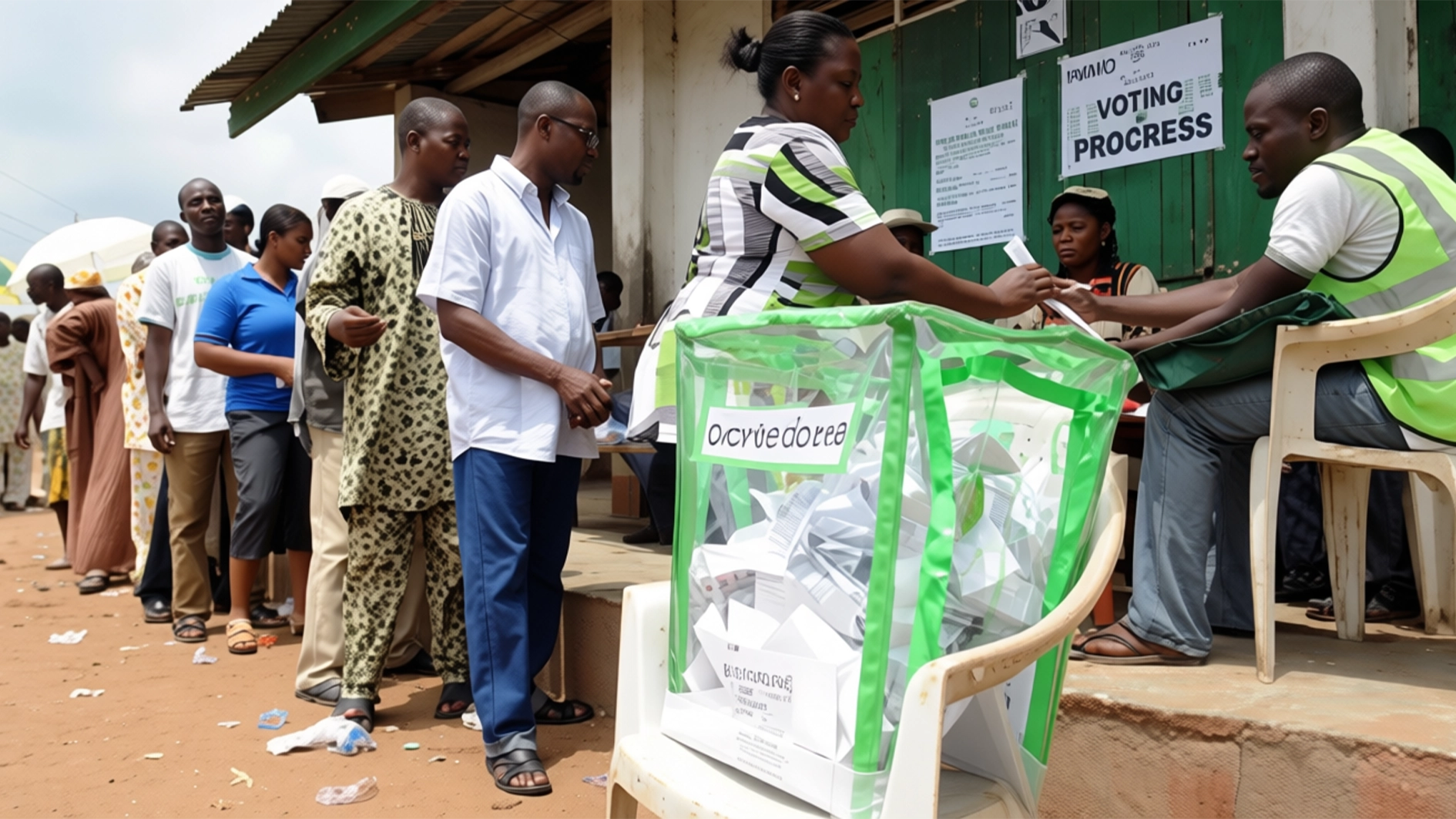
By Bolutife Oluwadele
Continued from yesterday
Electoral credibility is another pressing issue. Citizens are more likely to participate when they believe their votes count and when the process appears transparent, fair and secure. Where elections are clouded by irregularities, violence, inducement or avoidable confusion, democratic faith weakens. Participation shrinks when hope shrinks.
Civic education must also be taken more seriously. Democracy is not self-executing. Citizens need more than the right to vote; they need a practical understanding of how institutions work, how public decisions are made, and how leaders can be held accountable. A democracy of uninformed citizens is easily manipulated. A democracy of informed citizens is far harder to hijack.
The media and civil society remain crucial in this regard. They help convert public frustration into public scrutiny. They widen civic space. They give visibility to excluded voices. They track promises, expose abuse and sustain democratic conversation beyond campaign rhetoric. In a setting where formal institutions do not always listen well, these actors become essential democratic bridges.
Still, the burden is not only on institutions. Citizens, too, must resist the urge to reduce politics to complaint, cynicism, or online outrage. Democratic participation requires persistence. It means paying attention to local governance, asking questions about budgets and public services, joining lawful civic action, rejecting vote-buying and insisting that those elected remain accountable. Deep democracy is built not only in grand national moments but in the everyday habits of citizenship.

This is where local government and community-level governance matter greatly. Democracy becomes real when people can see and influence decisions that affect their schools, roads, markets, water, safety and livelihoods. If participation and representation are weak at the local level, democracy at the national level will remain fragile as well. The culture of democratic engagement must be built from the ground up.
Technology also presents both promise and peril. Digital platforms have opened new spaces for civic participation, especially among younger Nigerians. Information moves faster. Citizens can organise more easily. Public officials can be scrutinised in real time.
Yet digital politics can also reward misinformation, performative outrage and shallow engagement. Social media can amplify a voice, but it cannot substitute for institutions. Hashtags may spotlight injustice, but only responsive representation can convert public attention into lasting reform.
That is why Nigeria must pursue democratic reforms that strengthen both sides of the equation.
Political parties must open up. Elected officials must engage their constituents more consistently and transparently. Public hearings and town halls must become more than formalities. Legislative work must be better communicated. Women, youth and marginalised communities must have fairer access to political space. Electoral processes must inspire greater trust. Civic education must become a national priority. Participation must become routine, not occasional. Representation must become accountable rather than ceremonial.
None of this is impossible. What is required is democratic seriousness.
Nigeria does not lack politically aware citizens. It does not lack civic energy. It does not lack debate. If anything, the country often overflows with political passion. The deeper problem is that this energy is not sufficiently connected to institutions that listen, include and respond. That is the gap democratic reform must close.
The country should not settle for a democracy that merely exists. It should insist on one that works.
A democracy is deepened when citizens are not only voters but participants, and when leaders are not only winners of elections but genuine representatives of the people. It deepens when institutions are open to scrutiny, when public office is tied to service, when excluded voices are brought into the centre, and when the distance between state and society narrows.
This is the real task before Nigeria.
Not simply to preserve democracy as a constitutional arrangement, but to deepen it as a public culture. Not simply to hold elections, but to make citizens matter in the life that follows them. Not simply to produce officeholders, but to produce representation worthy of the name.
Dr Benet’s insight is therefore timely for Nigeria. Participation and representation are not rival democratic choices. They are a living polarity that must be managed with wisdom. When participation is strong and representation is weak, frustration grows. When representation exists but participation fades, democracy loses legitimacy. But when both are nurtured together, democracy becomes more resilient, more inclusive and more meaningful.
Nigeria’s democratic journey will not be completed by rhetoric. It will be advanced by building a system in which the people are not occasionally remembered, but consistently central.
That is the quest to deepen Nigerian democracy. And that is the work that still lies ahead.
(Benet, W. J. (2013). Managing the polarities of democracy: A theoretical framework for positive
social change. Journal of Social Change 5(1), 26-39. doi:10.5590/JOSC.2013.05.1.03)
Concluded.
Dr Oluwadele is a public policy scholar, author, and governance commentator based in Canada. He can be reached via:[email protected]

