 Follow Us on Google News
 Follow Us on Google Discover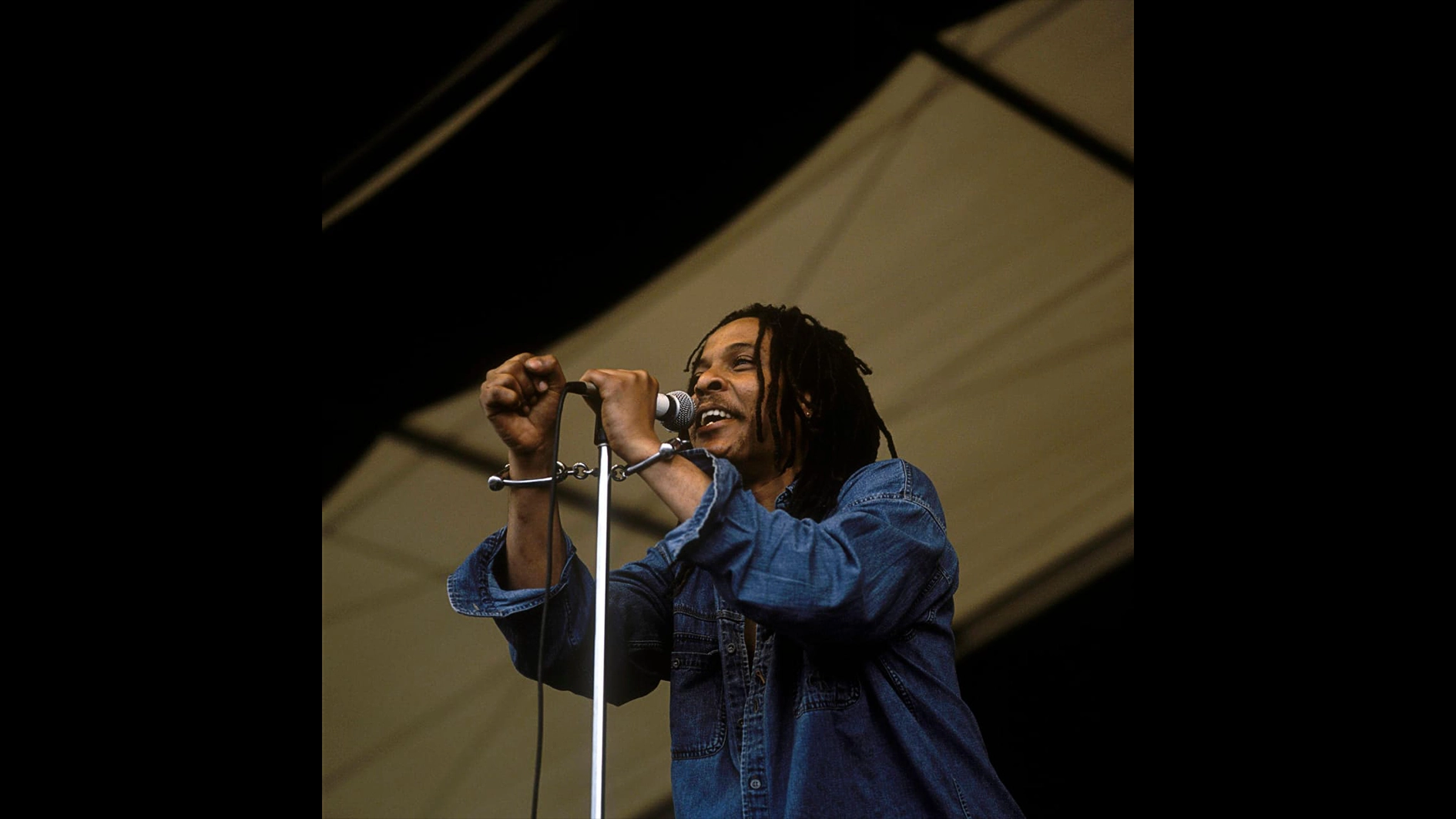
By Onome Amawhe
For a brief, electric moment in the early 1990s, Majek Fashek was not simply Nigeria’s reggae star. He was Africa’s candidate for the global reggae throne, carrying the burden and beauty of African reggae from Benin City and Lagos to New York, Interscope, Mango and Tuff Gong.
There are musicians who entertain a nation, and there are musicians who enter its weather. Majek Fashek belonged to the second category. He was not merely heard; he was awaited. His voice carried the force of invocation, the tremor of prophecy, the ache of exile and the stubborn hope of a people accustomed to surviving storms. Long before celebrity became a matter of algorithms, publicists and viral choreography, Majek Fashek became a myth because Nigerians believed something elemental moved through him.
He was called “The Rainmaker,” but that nickname was never simply about the weather. It was about atmosphere. It was about the strange authority with which he could step into a song and make a country feel that the sky itself was listening. In the late 1980s, when “Send Down the Rain” travelled across Nigeria like a national prayer, Majek did not sound like another musician chasing a hit. He sounded like a man standing between the people and the heavens, pleading for release.
But Majek Fashek was not only a Nigerian phenomenon. At his peak, he came frighteningly close to becoming one of the major global reggae voices of the post-Bob Marley era. He appeared on American network television. He opened for Tracy Chapman. He entered the orbit of Jimmy Cliff, Tuff Gong, Mango/Island and Interscope Records. He performed at The Ritz in New York at a time when world music, reggae, African pop and alternative rock were all searching for new crossover figures. For a brief, electric moment in the early 1990s, Majek Fashek was not simply Nigeria’s reggae star. He was Africa’s candidate for the global reggae throne.
That is what makes his story so magnificent and so painful. Majek did not merely rise and fall. He rose into a world that was not fully prepared to receive him, and perhaps he was not fully protected from the pressures of that world.

The boy from Benin City
Born Majekodunmi Fasheke in Benin City, Majek emerged from a cultural meeting point: Yoruba ancestry, Edo rootedness, Christian spiritual formation and the cosmopolitan sound-world of old Bendel. That mixture would later become central to his artistic identity. He was a reggae artist, yes, but he was also a church-trained melodist, a street philosopher, a pan-Africanist, a mystic and a performer whose body seemed permanently tuned to unseen frequencies.
His early grounding in the church mattered. It gave him more than melody; it gave him scale. The church teaches a singer to reach beyond entertainment. It teaches call and response, emotional build-up, moral confrontation and the drama of deliverance. When Majek sang, you could hear that background. Even when the riddim was reggae, the emotional architecture was often closer to revival: a congregation waiting, a preacher rising, a people answering.
Before the full arrival of the solo star, there was apprenticeship. Majek passed through Nigerian reggae bands and live performance culture when the country’s music scene was still shaped by musicianship, rehearsals, instruments and stage authority. This was the Nigeria of bands, not backing tracks; of nightclubs, television appearances and smoky performance venues; of artists who had to earn legitimacy before live audiences. Majek came out of that discipline with the instincts of a bandleader and the charisma of a wanderer.
By the time he stepped forward as Majek Fashek, he already carried the aura of someone preparing for a larger assignment.
“Send Down the Rain” and the making of a national myth
Every great popular musician has a song that introduces him to the public. A rarer few have a song that seems to introduce the public to itself. “Send Down the Rain” was that song.
Its power lay in its simplicity. It did not need elaborate explanation. The song entered directly into the Nigerian imagination because rain in Nigeria is never just rain. It is agricultural hope, urban inconvenience, spiritual metaphor, childhood memory, flood, blessing, fear and renewal. Rain can be mercy; rain can be danger. Majek understood its symbolic weight.
When he sang for the rain to come down, Nigerians heard more than weather. They heard a plea for cleansing. They heard a cry against dryness — physical, political, economic and spiritual. The nation was under military rule, its institutions strained, its citizens negotiating scarcity and uncertainty. In that climate, “Send Down the Rain” became an anthem of relief. It gave metaphysical language to public exhaustion.
This is why the legend surrounding the song endured. Whether or not one accepts all the stories of rainfall following his performances, the deeper truth is indisputable: Majek Fashek made Nigerians believe that music could alter the emotional climate of a nation. He created a public myth so powerful that it outlived the facts around it. That is what great art does. It moves from event into folklore.
Prisoner of Conscience
Majek’s breakthrough album, Prisoner of Conscience, remains one of the defining Nigerian albums of its era because it captured a rare fusion: spiritual yearning, social awareness, commercial appeal and international ambition. It was accessible without being shallow, prophetic without becoming obscure, rooted in reggae without sounding derivative.
The title itself was revealing. A prisoner of conscience is not merely a victim; he is someone held captive because he refuses to surrender moral truth. That was the posture Majek adopted. His music spoke from confinement toward liberation. The prison was political, psychological, economic and spiritual. The conscience was African, human and divine.
The album did not merely produce a classic song. It announced an artist with a complete world. Majek’s voice had grain and wound. It could rise into brightness, but it always retained a shadow. He sang like a man who had seen trouble and still believed in deliverance. That gave his songs their peculiar authority. They were hopeful, but never naïve.
At his best, Majek Fashek offered redemptive protest. Unlike Fela Kuti, whose genius often worked through confrontation, ridicule and political exposure, Majek’s genius moved through lamentation, prayer and spiritual pressure. Fela attacked power with fire. Majek appealed to the heavens against the disorder of the earth. Both were necessary. One named the oppressor; the other summoned rain.
Nigeria’s reggae prophet
To understand Majek Fashek’s significance, one must place him within the broader history of Nigerian reggae. The country had produced important reggae voices before and around him, including The Mandators, Ras Kimono, OritsWilliki, Evi-Edna Ogholi and others who helped localise the genre. But Majek brought a different kind of crossover force. He had the songs, the look, the voice, the mystique and the international possibility.
His dreadlocks were not mere styling. His stage presence was not mere theatre. He embodied the Rastafarian-inflected image of the conscious African artist, but filtered it through Nigerian street spirituality. In him, reggae became both global and local. He could speak the language of Jah, Babylon, Africa and redemption while still sounding unmistakably like a product of Nigerian struggle.
Majek’s art also arrived at a time when music carried heavier civic responsibilities. Before social media, musicians were among the loudest interpreters of national mood. Their songs travelled through radio, cassette, buses, markets, campuses, bars and living rooms. A major song could become public argument. A major artist could become a moral weather vane. Majek belonged to that era of cultural seriousness. His songs did not merely ask people to dance. They asked people to remember themselves.
The American opening
The decisive turn came when Majek moved from Nigerian superstardom into the American music machine. After the Nigerian breakthrough, he entered the orbit of major-label ambition.
Spirit of Love, released through Interscope Records in 1991, was the project meant to announce him beyond Africa. It was produced by Steven Van Zandt, the E Street Band guitarist and rock activist better known as Little Steven. That pairing alone said something about the scale of the attempt: Majek was being positioned not as a local curiosity, but as a serious international artist.
Spirit of Love was an ambitious record. It carried reggae, African percussion, rock guitar, social message and spiritual uplift. It was not simply trying to reproduce Jamaican reggae. It was trying to stretch reggae through African rhythmic intelligence. In that sense, Majek was doing something that global audiences often claimed to want from African artists: authenticity without provincialism, roots without isolation, message without museum treatment.
The American press noticed him. Critics heard the Marley echo in his voice, but the better ears also heard the difference. Majek did not merely resemble Marley; he carried a different burden. Marley sang from Jamaica into the world. Majek sang from Nigeria into a world that was only beginning to understand African popular music beyond stereotype. If Marley’s voice carried Trenchtown, Rasta prophecy and Third World rebellion, Majek’s carried Benin City, Lagos, Aladura spirituality, military-era anxiety and African postcolonial longing.
Letterman and the glow of crossover
Majek’s 1992 appearance on Late Night with David Letterman was more than a television slot. It was symbolic admission into American mainstream visibility. For a Nigerian reggae musician to stand before that audience and perform “So Long Too Long” was a major cultural moment. It placed him in the living rooms of viewers who might never have heard Nigerian reggae before. It also showed that the American industry, at least briefly, saw him as a plausible crossover act.
The song choice mattered. “So Long Too Long” was not merely a performance number. It was a message record, a diasporic call, a song that spoke across continents: Africa, America, history, labour, responsibility. On Letterman, Majek was not begging for exotic attention. He was carrying a message into the heart of American television.
There was something almost cinematic about that moment: the Nigerian Rainmaker, dreadlocked and intense, stepping onto a late-night American stage, backed by his band, presenting reggae not as imitation but as African testimony. It was a glimpse of what might have been — Majek as a recurring global presence, a bridge between Lagos, Kingston and New York.
Opening for Tracy Chapman
His tour association with Tracy Chapman further sharpened this moment. Chapman was not just any American star. By the early 1990s, she represented a certain moral seriousness in popular music: folk-inflected, socially conscious, poetic, restrained, politically aware. For Majek to open for her placed him within a lineage of conscience music, not simply pop entertainment.
This was a natural pairing. Chapman’s music carried quiet protest; Majek’s carried prophetic protest. Chapman worked with the intimacy of voice and guitar; Majek worked with the collective pulse of reggae and African rhythm. Both artists sang of a wounded world without surrendering to cynicism. For audiences encountering Majek in that setting, he was not being introduced as novelty. He was being introduced as a fellow traveller in the music of conscience.
That matters because Majek’s Nigerian success sometimes obscures the sophistication of his international positioning. He was not simply exported as “African reggae.” He was placed near artists and institutions that suggested moral weight, live musicianship and global seriousness. The tragedy is that the arc did not consolidate. The possibility opened, then narrowed.
The Ritz, Jimmy Cliff and the reggae fraternity
Then there was The Ritz in New York. The available performance history around Majek’s 1992 Ritz appearance places him in the company of reggae royalty and world-beat prestige. The Ritz was not a random room. It was one of those New York venues where an artist could be tested before a serious, mixed, musically alert audience.
The story that Jimmy Cliff blessed Majek into the reggae fraternity has the quality of ritual. Whether told as backstage memory, performance lore or symbolic recognition, its meaning is powerful. Jimmy Cliff was not merely a Jamaican star; he was one of reggae’s international door-openers, a figure whose work helped carry Jamaican music into global cinema and global consciousness. For Majek to receive his blessing, even in the informal language of music folklore, was to be recognised by an elder of the house.
That moment should be understood symbolically. Reggae has always had fraternities of legitimacy: Jamaica, Rastafari, live performance, message, suffering, exile, redemption. Majek was an African entering that house not as a tourist but as kin. He had not come to borrow the sound cheaply. He had come with his own wounds, his own prayers, his own African weather.
At The Ritz, the image of Majek opening his performance in handcuffs before freeing himself captured the entire philosophy of his art. It was theatre, but it was also statement. The prisoner of conscience was not just an album title. It was a persona. The chained man breaking loose before the music began was Majek’s way of turning concert into parable: captivity, struggle, liberation, song.
Interscope: promise and rupture
But major labels are not churches. They do not exist to protect prophecy. They exist to sell, position, control and recoup. Majek’s involvement with Interscope was the clearest sign of his global promise, but also one of the turning points in the complicated story of his international career.
Interscope gave him reach, machinery and a place within the American industry. But the fit was never simple. African reggae was not easy to categorise. Was Majek to be marketed as reggae, world music, African pop, rock-reggae hybrid, Marley successor, conscious music, or exotic import? The very richness of his music may have made him difficult for an industry that prefers clean boxes.
The record business of that period could be ruthless with artists who did not deliver quickly in recognisable commercial terms. Majek had talent, charisma and critical curiosity around him, but translating Nigerian myth into sustained American market success required more than brilliance. It required patient development, cultural intelligence, disciplined management and a label willing to explain him properly.
Eventually, the relationship with Interscope collapsed. He was dropped, and the great American breakthrough became less a completed conquest than a brilliant near-arrival. That rupture remains one of the saddest “what ifs” in Nigerian music history. What if the machinery had been more patient? What if the positioning had been clearer? What if Majek had been better protected? What if the industry had understood that it was handling not just an artist, but a spiritual voltage?
Mango, Island and the Marley shadow
After Interscope, Majek’s movement toward Mango, the Island Records imprint associated with international reggae marketing, made artistic sense. Island had been central to the globalisation of Bob Marley and reggae. Mango understood, more than many mainstream American labels, how to sell Caribbean and world music to international audiences.
But that move also placed Majek more directly under the Marley shadow. This was both blessing and burden. On one hand, the comparison gave him instant reference. On the other, it risked reducing him to the language of resemblance: the African Marley, the Nigerian Marley, the spiritual heir. Such comparisons were flattering, but also limiting.
Majek Fashek was not important because he sounded like Marley. He was important because he showed how reggae could return to Africa and become something else without losing its revolutionary grammar. His best work did not imitate Jamaica; it conversed with it. It answered reggae’s Atlantic journey from the African side.
Tuff Gong and the return to reggae’s sacred house
The later association with Tuff Gong carried deep symbolism. Tuff Gong was not just a label name. It was Marley’s house, reggae’s sacred architecture, a brand tied to one of the most important musical legacies of the twentieth century. For Majek’s Rainmaker to emerge through Tuff Gong International in 1997 gave his career another layer of meaning.
It was as if the music had travelled in a circle: Africa to the Caribbean through history, Caribbean reggae back to Africa through sound, and then an African reggae prophet returning to the institutional house of Marley. For Majek, Tuff Gong was not merely a business connection. It was a symbolic homecoming into the spiritual geography of reggae.
The album Rainmaker did not recreate the explosive national moment of “Send Down the Rain,” but it affirmed Majek’s identity. He remained the mystic, the wanderer, the man singing of promised lands, African unity and human struggle. The commercial moment had shifted, but the spiritual signature remained.
The tragedy of brilliance
No honest essay on Majek Fashek can avoid the later years: the decline, the illness, the reports of addiction, the public concern, the attempted recoveries, the painful spectacle of a once-commanding artist appearing diminished before a public that still loved him but did not always know how to protect him.
Yet it would be morally lazy to reduce Majek Fashek to decline. Many African artists have been failed by weak cultural infrastructure, exploitative contracts, poor health systems, lack of royalties, bad management, spiritual loneliness, public mockery and the absence of long-term institutional care. When artists fall, society often turns their suffering into gossip. We enjoy their genius privately and discuss their wounds publicly.
Majek’s struggles should not be read only as personal failure. They should also be read as indictment: of an industry that rarely builds safety nets; of a society that celebrates artists in their glory but abandons them in their fragility; of a public culture too quick to turn illness into spectacle.
The Rainmaker became, in his later years, a test of our capacity for compassion. Did we see only the broken man, or did we remember the voice that once gave a country hope? Did we laugh at the ruins, or did we ask what kind of system allows its prophets to wander unprotected?
The voice that remains
Majek Fashek died in 2020, but his voice did not enter the grave with him. It remains in the Nigerian air, especially in those moments when the country again feels dry, exhausted and in need of rain. Play “Send Down the Rain” today and the song still works, not merely as nostalgia but as invocation. It still carries that old ache. It still sounds like a people asking for cleansing.
That is the mark of a classic. It survives its production era. It refuses to become museum music. It keeps finding new emergencies.
Majek’s continuing relevance also exposes something about Nigerian memory. We are often careless with our cultural giants. We wait until they are gone before properly measuring them. We speak of legacy only after neglect has done its work. Majek Fashek deserved more sustained critical attention while alive, more institutional preservation, more serious archiving, more documentary treatment, more musical scholarship.
His life is material for books, films, university courses and major retrospectives. Not because it was perfect, but because it was large. It contained genius, migration, spirituality, fame, vulnerability, collapse, recovery, myth and national longing. It was the life of an artist who carried too much voltage for the circuits around him.
Why Majek Fashek matters now
In the age of Afrobeats’ global dominance, Majek Fashek’s story matters with renewed urgency. Today’s Nigerian artists operate in a world of streaming platforms, international collaborations, major-label deals, brand endorsements and global touring circuits. They are beneficiaries of a road built partly by earlier artists who pushed Nigerian sound into foreign ears under far more difficult conditions.
Majek belonged to that bridge generation. He came after the foundational giants but before the digital explosion. He had to travel physically where today’s music travels instantly. He had to persuade global gatekeepers at a time when African popular music was still often treated as niche. His career reminds us that Nigerian music’s current global confidence did not appear from nowhere. It was preceded by decades of experiment, ambition and sacrifice.
He also matters because he represents a kind of artist who is becoming rarer: the musician as spiritual witness. Much contemporary pop is built around pleasure, aspiration and personal triumph. There is nothing wrong with that. Every generation needs its party. But a nation also needs artists who can speak to its wounds, who can give language to its moral thirst, who can stand at the edge of despair and still sing of redemption. Majek Fashek was one of those artists.
The final rain
The most beautiful thing about Majek Fashek’s legacy is that it cannot be confined to tragedy. The fall was real, but it was not the whole story. Before the decline, there was the revelation. Before the frailty, there was the force. Before the gossip, there was the voice. Before the rumours, there was Letterman. There was Tracy Chapman. There was The Ritz. There was Jimmy Cliff. There was Interscope. There was Tuff Gong. There was a Nigerian artist standing at the gates of the world and nearly walking all the way through.
Majek Fashek was not perfect. Prophets rarely are. But he was necessary.
He sang like a man calling rain from a locked sky. He sang like a prophet who knew that nations, like fields, can become barren if mercy does not fall upon them. He sang from Benin City to Lagos, from Nigeria to New York, from Tabansi to Interscope, from Mango to Tuff Gong, carrying with him the burden and beauty of African reggae.
And perhaps that is why, whenever his great song returns, it does not feel like an old record. It feels like a request we are still making: send down the rain. Let it fall on the broken musician and the broken nation. Let it fall on memory. Let it fall on neglect. Let it fall on all the unfinished dreams that still wait, somewhere under the Nigerian sky, for cleansing, mercy and renewal.
Onome Amawhe is a culture journalists from Lagos

