 Follow Us on Google News
 Follow Us on Google Discover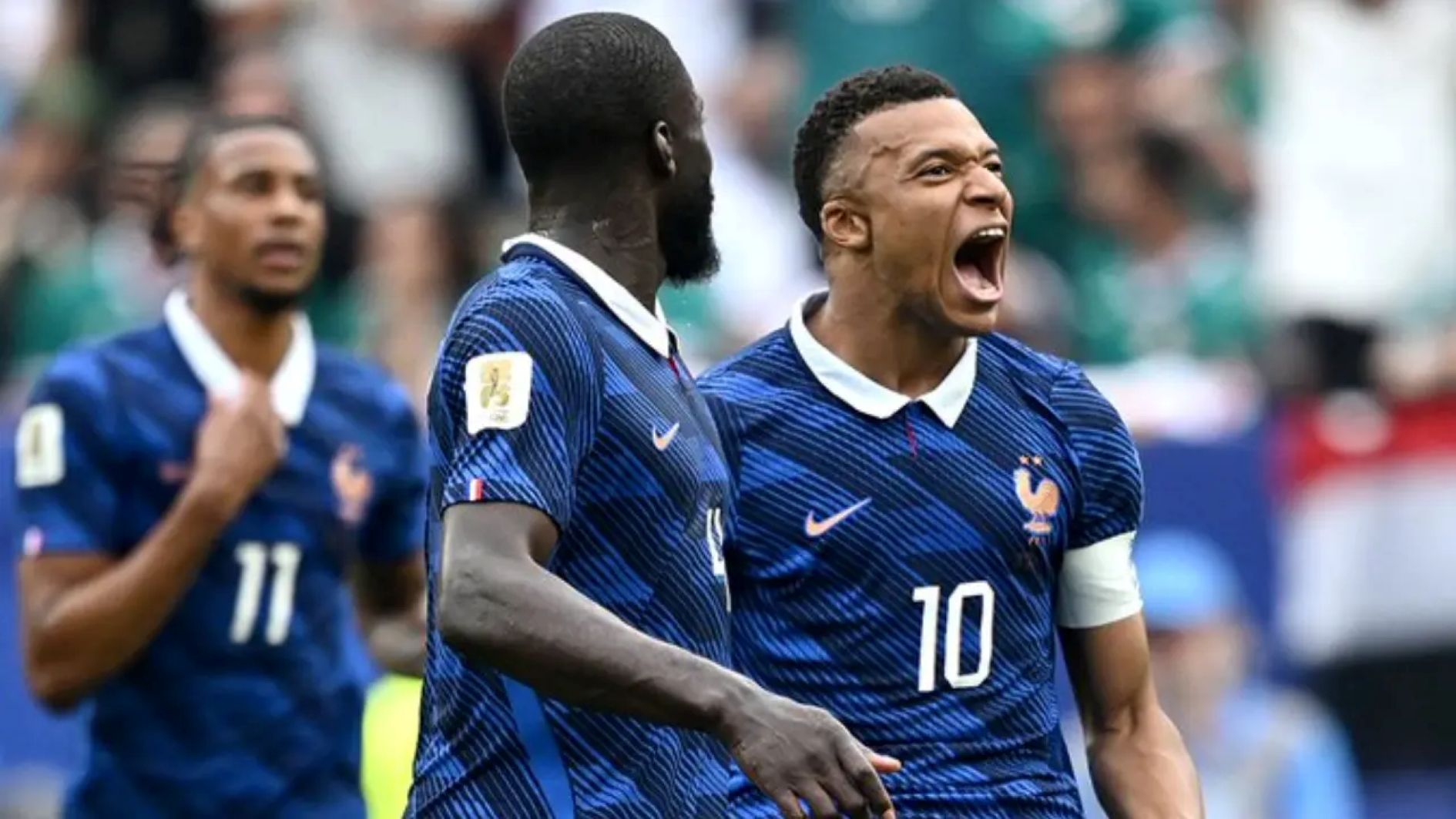
This is a policy brief for CAF and 54-member associations on what African football managers must learn from the organisational power that will continue to make “Africa’s sons” World Cup and Europe’s Champions League winners for Europe. It is a time to deconstruct ‘the teams’ that couldn’t qualify but may win the world cup even on July 19, 2026 when the global game will be lost and won.
Watch the 2026 World Cup and you will see it. France’s front line: Kylian Mbappé – father Cameroonian, mother Algerian; Ousmane Dembélé – Malian and Mauritanian roots; Michael Olise – Nigerian roots; Eduardo Camavinga – Congolese roots in Angola. England: Bukayo Saka – Nigerian; Eberechi Eze – Nigerian; Noni Madueke – Nigerian/Congolese.; Austria: David Alaba – Nigerian/Filipino. Germany, The Netherlands, Belgium, Portugal, Austria, Switzerland, etc, same story.
Now check the African qualifiers for 2026: Cameroon, Mali, Nigeria, Angola, Mauritania… all absent. The best African teams — “White Africa”: Morocco quarterfinalists, Algeria and Tunisia in groups — played well, but went home early. Isn’t that intriguing?
The uncomfortable question: How did the countries that failed to qualify produce the players who are likely to lift the trophy for someone else? The answer is not about “talent”. Africa has talent. The answer is about operating environments. It is about academies, data, sports science, legal departments, diaspora policy, and 20-year planning.
This my second commentary on the 2026 FIFA World Cup is not another bout of lamentation. It is about another blueprint on what African football authorities must copy, starting today.
The diagnosis: Why “Black Europe” Outperformed “Africa”

Environment beats genetics: Mbappé did not become Mbappé in Yaoundé. He became Mbappé in Clairefontaine, the French national academy, with 12 pitches, cryotherapy, video analysis, and a psychologist. Saka did not become Saka in Lagos. He became Saka at Arsenal’s Hale End, where every U9 player has GPS data and a nutrition plan. Olise did not become Olise in Abuja. He became Olise at Reading and Crystal Palace, with loan pathways, sports scientists, and agents regulated by the FA.
Talent is universal. Systems are not. Europe and South America built systems. Africa built vibes.
The three operating gaps
a. The development gap: France: 14 regional INSEP-style centres + Clairefontaine. 3,000 licensed academies. Every player tracked from U12 on the FFF database.
England: Category 1 Academies must spend £5m/year, employ 25 staff, and pass audits.
Nigeria: Less than 15 academies meet CAF “Elite” standard. Most “academies” are agents with jerseys. No central player database. No insurance.
b. The administrative gap: France Football Federation (FFF) has 120 full-time staff in technical department. FA England has 40 performance analysts.
Nigeria Football Federation (NFF) has 3 technical directors and constant board crises. Many FAs in Africa cannot pay referees on time.
c. The diaspora and retention gap: France, England, Germany: they have “Diaspora Units”. They call dual-nationals at 15. They send coaches to visit parents in Bamako, Dakar, Lagos, etc. Most African FAs meet a dual-national for the first time at 24, when he has three (3) England caps. Then we tweet “Come home”.
Morocco proved the exception, not the rule: Morocco reached quarterfinals in FIFA WC 2026, semi-final in FIFA WC 2022 because it copied Europe and here is how: Mohammed VI Academy in Rabat — €60m, dormitories, school, data laboratory and diaspora policy: “If you have Moroccan blood, we will find you at 14”. Government + Royal backing + 10-year plan. That is why Morocco beat “Black Africa” because Morocco stopped acting like Africa and started acting like Europe. It is curious that a lot of sports commentators and analysts have been profiling and deriding them.
The lessons: 10 things African football authorities must copy from Europe and even South America:
Lesson 1: Build national academy networks, not one academy: Europe model: France has Clairefontaine + 13 regional poles. Germany has 366 DFB academies linked to Bundesliga clubs.
Africa challenge: We celebrate one “Aspire Academy” or “Right to Dream” and call it progress. It is a celebration of mediocrity.
Action point: Every FA must create 4 regional Elite Centres by 2030. Funded 50% by FA, 30% by Government, 20% by sponsors. Minimum standards: 2 pitches, school, dormitory, medical, data analyst. CAF should withhold AFCON prize money from FAs without a certified academy.
Lesson 2: Data is the new scout: England knows Saka’s sprint speed at 14. France knows Camavinga’s pass completion under pressure. Whereas most African FAs still select by “who the coach saw at a tournament”.
Action point: Mandate a Central Player Passport System. Every registered U12-U20 player gets an ID with medical, match data, video clips. Partner with StatsPerform or local tech firms. This is how you find the next Olise in Enugu before Crystal Palace does.
Lesson 3: Professionalise the backroom: France’s World Cup staff: 42 people. Nutritionist, sleep coach, mental coach, 8 video analysts.
Nigeria’s staff: 1 coach, 2 assistants, 1 doctor.
Action point: CAF licensing must require FAs to employ: Technical Director, Performance Analyst, Sports Scientist, Player Welfare Officer. Fund it through 10% of FIFA Forward money ring-fenced.
Lesson 4: Win the diaspora war at 14, not 24: France called Mbappé’s parents when he was 11. England visited Saka’s home when he was 13. In Nigeria, we call players when they are starring in Premier League.
Action point: Create “Diaspora Technical Attachés” in London, Paris, Berlin, Milan. Their job: identify U14-U16 players of African descent, build relationships with parents, invite to camps. Offer dual-pathway: play for Europe until 21, then switch. Brazil does this with Japanese-Brazilians. We must do it.
Lesson 5: Club-FA partnership like South America: In Brazil and Argentina, clubs must produce and sell to survive. So they invest in 8-year-olds.
In Africa, clubs die because there is no TV money, no youth compensation.
Action point: Enforce FIFA Solidarity Mechanism. If Osimhen is sold for €100m, 5% must go to his first three (3) academies. Use that money to fund grassroots. Besides, give tax breaks to African clubs that run Category 1 academies.
Lesson 6: Stop the coaching tourism: European teams have 10-year technical plans. Spain had the same DNA from 2008-2024.
African teams change coaches every 11 months. We hire a Serbian, fire him, hire a local, fire him.
Action point: 4-year contracts for technical directors, not head coaches. The TD sets playing style from U17 to senior team. Coach executes it. Sack coach, keep DNA.
Lesson 7: Make the domestic league a factory, not a cemetery: Europe’s power comes from strong leagues that feed national teams.
African leagues: no VAR, no data, players unpaid for four (4) months.
Action point: CAF should create “African Super League 2” — 16 clubs with minimum standards: salary escrow, stadium, academy. Prize money only paid if audits pass. This forces professionalism.
Lesson 8: Legal and agent regulation: Dembélé’s first agent was regulated by FFF. Madueke’s agent is FA-licensed. Many African players are trafficked by “agents” at 15.
Action point: Every FA must license agents and run a Player Protection Unit. Partner with FIFPRO. Blacklist agencies that take minors abroad without school.
Lesson 9: Government must fund infrastructure, not salaries: Europe: Government builds stadiums and schools. FA runs football. Africa: Government pays coach salary, then delays it 6 months amidst poor infrastructure.
Action point: New model: Government builds 1 FIFA-standard stadium per geopolitical zone + school hostels. FA runs technical programme. Private sector sponsors kits and data.
Lesson 10: Measure what matters:
France Football Federation (FFF) key performance indicators (KPI): “Number of players in Top 5 leagues at 21”. FA England KPI: “Minutes played by U21 in Premier League”.
Most African FAs KPI: “Did we qualify?”
Action point: Publish annual “African Talent Development Report”. Metrics: # players exported, # minutes in top leagues, # academies certified, # coaches licensed. Name and shame FAs that don’t improve.
Case Studies: What we can copy tomorrow…
France – Clairefontaine Model: Central academy + regional hubs + school. Cost: €10m/year. Output: 1998 and 2018 World Cup winners.
Copy point: Nigeria can build 6 in 6 zones. Ghana 4. Senegal 3. Fund with AFCON TV rights + NNPC Corporate Social Responsibility (CSR).
England – Elite Player Performance Plan: Clubs get £200m/year to run academies. They are audited.
Copy point : South Africa, Egypt, Morocco already have this. Extend to 10 countries in Africa.
Brazil – Export and reinvest: Sell player → 30% reinvested in grassroots.
Copy point: Mandate that 20% of any transfer fee involving an African player must be paid to his development clubs.
Morocco – Diaspora + Infrastructure: Royal academy + scouts in Europe.
Copy point: Algeria and Tunisia already have large diaspora. Create “Maghreb Diaspora Desk”. Do same for West Africa in Paris and London.
The hard truths African FAs must accept:
1. You will lose some players: Mbappé chose France. That’s fine. But you should have called him at 13 and offered a real pathway.
2. Talent is not enough: We have 10x more raw talent than Belgium. Belgium has three (3) players in Ballon d’Or top 20 because of systems.
3. Corruption kills development. Money for academies ends in estates in most African countries. Until we audit, Europe will keep harvesting our boys.
4. Fans must accept 8 years of pain: Germany rebuilt after 2000 and won in 2014. We want AFCON next year and World Cup now. That is poor management of priorities.
A 10-Year “Africa 2036” Roadmap:
Years 1-2: Emergency Fix:
– Audit all academies. Close 70% that are fake.
– Launch Player Passport.
– Hire Diaspora Attachés in 5 cities.
Years 3-5: Build:
– 20 Regional Elite Centres open.
– Domestic leagues get salary escrow.
– Every FA has Technical Director on 4-year contract.
Years 6-10: Compete
– Target: 100 African players starting in Top 5 leagues.
– Target: 2 African teams in World Cup quarterfinals 2030.
– Target: Win U17 World Cup.
Here is the conclusion of the whole matter: The MBAPPÉS ARE OURS, THE SYSTEMS ARE NOT!
The Mbappés, Dembélés, Olises, Sakas, Ezes are not accidents. They are products. Yes, they are products of planning, of budgets, of databases, of lawyers, of schoolteachers who let them miss class for training because the system guarantees a future. The inconvenient truth is that Africa did not lose those players. Africa never built the machine to keep them.
Morocco showed us it is possible. Now the other 53 must choose:
Do we keep blaming FIFA, colonialism and even referees?
Or do we build Clairefontaines in Kano, Kumasi, Dakar, and Kinshasa?
The current 2026 World Cup will likely be won by a team whose best players have African blood. Let that be the last time we will be watching our children lift someone else’s trophy. Here is the real deal, sorry goal, in 2030, 2034, 2036 — the trophy should come home. Let it not be because we prayed harder. But because we planned better. This is how to avoid reading from the book of lamentation any time we participate in World Cup festival of the “beautiful game” called football!

