
 Get Guardian on Google
By Akin Olukiran
For anyone to deny that life has become exceedingly difficult for ordinary Nigerians would not merely be disingenuous, but an act of pathological denial. Millions of households are grappling with a dire economic reality in which even basic necessities are increasingly unaffordable. The anguish is real, the deprivation, palpable and the frustration, entirely understandable.
Yet, in our preoccupation with the immediate discomforts of the present, are we in danger of forgetting the economic precipice from which Nigeria might have struggled to retreat, had fundamental reforms been indefinitely postponed?
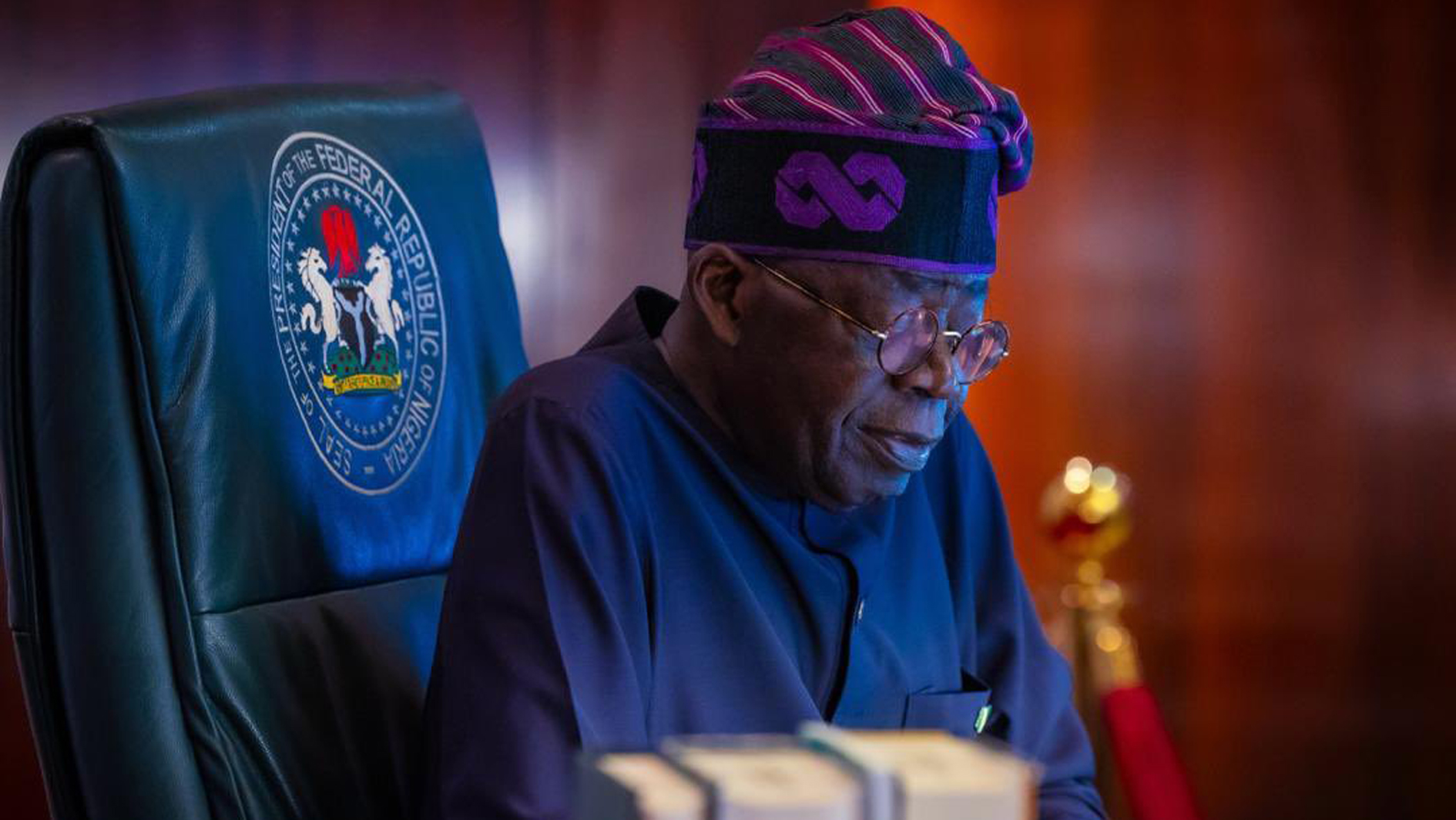
The three principal reforms undertaken by President Bola Ahmed Tinubu (PBAT) – petroleum subsidy removal, foreign exchange market unification and monetary policy recalibration – were always likely to impose considerable short-term costs. Their rationale was to address structural distortions that had become increasingly unsustainable. Unfortunately, geopolitical tensions involving Iran and the United States have compounded these difficulties through their implications for energy prices, inflation and economic stability. This is particularly unfortunate because, tentative green shoots of recovery had begun to emerge earlier in the year, with petrol prices easing and the naira recording periods of appreciation against the dollar.
Some armchair economists, practitioners of what might be called creeping determinism or simply, retrospective certainty, appear oblivious to the precarious circumstances in which Nigeria’s economy found itself when PBAT assumed office in May 2023. The country was burdened by an unsustainable subsidy regime, severe foreign exchange distortions, mounting fiscal pressures and an expansive monetary environment under Godwin Emefiele’s ignominious stewardship of the Central Bank.
We seem to have conveniently forgotten the aviation crisis, when operators struggled to access the foreign exchange required to repatriate funds owed to international carriers. Some threatened to suspend operations, raising the spectre of further disruption to an already beleaguered economy.

Several state governments were struggling to meet salary obligations, while multiple exchange rates encouraged arbitrage and rent-seeking, rather than productive enterprise. To imagine that this arrangement could have continued indefinitely without grave consequences is to confuse political expediency with economic prudence.
Successive governments were not unaware of the three-headed hydra that had stifled our economic development for decades. What was conspicuously lacking was the political will to confront these distortions and entrenched interests decisively. Until PBAT threw down the gauntlet, successive administrations appeared content to manage symptoms rather than confront underlying maladies.
As the Yoruba would say, A fi ẹ̀tẹ̀ sílẹ̀, a ń pa làpálàpá”(instead of treating leprosy, one is treating eczema). The wisdom here is profound.A society that persists with superficial remedies, while neglecting the underlying pathology, should not be surprised when its afflictions ultimately consume it.
It is here that Venezuela enters our national conversation, not as an exact replica of Nigeria’s circumstances, but as a cautionary tale. With a population of just 28.5 million (according to UNFPA’s 2025 estimate), Venezuela possesses the world’s largest proven oil reserves – some 303 billion barrels, against Nigeria’s 37 billion. Yet this extraordinary endowment did not spare it economic catastrophe. Dependence on oil revenues, fiscal excesses, foreign-exchange restrictions and monetary indiscipline contributed to its devastating collapse. Nigeria is not Venezuela, and their economic histories are not interchangeable.
Nevertheless, the warning is instructive: when governments sustain excessive spending, artificial prices and policies that erode confidence in their currencies, the eventual adjustment can be far more painful than the reforms initially resisted.
The question, therefore, is not whether Tinubu’s reforms have inflicted hardship. They unquestionably have. It is whether perpetuating the inherited distortions would have produced a more benign outcome. That question deserves serious consideration rather than the reflexive denunciation that frequently passes for economic analysis in our public discourse.
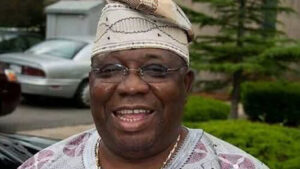
As young Nigerians would readily quip in their everyday parlance, “Na today?”. Economic hardship, of course, is hardly new to Nigeria. As far back as 1966, the late highlife maestro, Dr Victor Olaiya, first released Ìlú Le O! (Country Hard O!), whose plaintive refrain, “Kòs’ówól’óde”(there is no money in circulation), captured the prevailing economic anxiety. The song remains an unsettling reminder that economic distress may change its outward manifestations while its burden continues to fall disproportionately upon ordinary citizens.
The song found renewed relevance in the 1980s, when it was re-released against the backdrop of General Ibrahim Babangida’s Structural Adjustment Programme (SAP) and the attendant economic dislocation. The hardship, disillusionment and search for better opportunities contributed to the exodus of Nigerians, memorably captured in the expression, “Andrew was checking out”. Generations have since sought their fortunes abroad, driven by aspirations their homeland has too often struggled to accommodate.
Why, then, are we so forgetful? Perhaps behavioural economics offers an explanation. Human beings tend to privilege immediate suffering over hypothetical alternatives. Today’s hardship is tangible, measurable and painfully personal. The catastrophe that might have followed a different policy course remains conjectural. We can count the naira lost to rising living costs, but cannot readily quantify the devastation that might have resulted from a prolonged fiscal and monetary crisis.
This creates a curious political paradox. Reforms intended to avert a deeper crisis may become politically indefensible because their immediate costs are more visible than the dangers they were designed to prevent. The patient resents the bitterness of the medicine, particularly when the restoration of health appears painfully slow.
Yet, acknowledging the necessity of reform must not excuse governmental complacency. Economic policy is not vindicated merely by the soundness of its intentions, it must ultimately be judged by its outcomes. The administration must demonstrate that Nigerians’ sacrifices are translating into improved purchasing power, employment, public services and productive investment. The vulnerable must not be abandoned to bear a disproportionate share of the adjustment.
There is also an essential distinction between defending reform and defending every decision made in its implementation. The former requires economic reasoning; the latter risks political partisanship. A government that asks its citizens to endure hardship assumes an obligation to govern with transparency, compassion, fiscal discipline and demonstrable competence.
Venezuelans might well wish that their leaders had confronted their country’s underlying economic vulnerabilities before the crisis became so devastating. Nigeria has an opportunity to learn from that experience without assuming that our destiny must follow the same course.
PBAT has chosen a difficult path, and history will ultimately judge whether his reforms deliver the promised transformation. The courage to undertake unpopular measures deserves recognition, but courage must be accompanied by competence, accountability and results. Nigerians are entitled both to relief from present suffering and to the prospect of a better future. Neither should be sacrificed at the altar of political expediency.
The tragedy would be not merely to endure the pain of reform, but to forget why it became necessary and, in our impatience, abandon the opportunity to see it through and build something better. A nation that remembers only the bitterness of its medicine may never appreciate the gravity of the disease it was intended to cure.
May we not suffer collective amnesia, and to put it in everyday Nigerian Pidgin: “This our Nigeria go better!”
Olukiran, a social and political analyst, wrote from London. He can be reached via: [email protected]