 Follow Us on Google News
 Follow Us on Google Discover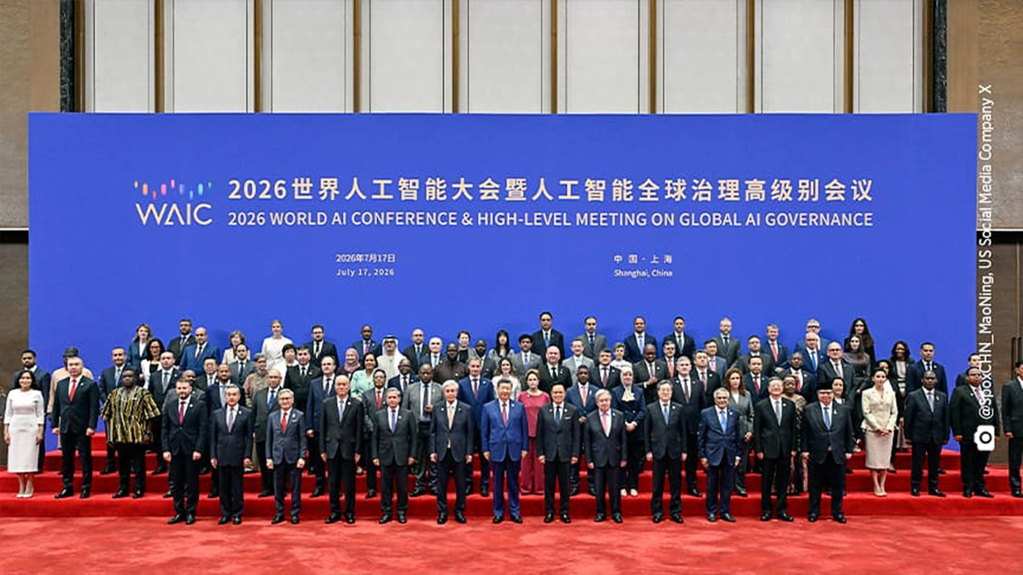
Artificial intelligence has quickly become the defining technology of the 21st century, reshaping economies, transforming industries and forcing governments to rethink everything from education and healthcare to national security and global governance.
Unlike previous technological revolutions that were largely driven by a handful of developed economies, the AI era is unfolding amid intense geopolitical competition, raising fundamental questions about who develops the technology, who controls it, who benefits from it and how its risks should be managed.
It was against this backdrop that Chinese President Xi Jinping delivered his keynote address at the opening of the 2026 World Artificial Intelligence Conference (WAIC) in Shanghai. While the speech reflected China’s growing confidence as a global AI power, it also presented a broader vision that deserves careful attention, particularly from Nigeria and the rest of Africa.
For decades, China was viewed mainly as a manufacturing giant that followed technological breakthroughs pioneered elsewhere. That picture has changed dramatically. Today, China is not merely catching up in artificial intelligence; it is helping shape the global conversation on innovation, governance and international cooperation.
Chinese companies such as DeepSeek, Alibaba, Tencent, Baidu, Zhipu AI and Moonshot AI have developed advanced large language models that increasingly rival those produced in the United States.
More importantly for developing countries, several Chinese firms have embraced open-source development, making powerful AI models available at lower cost for researchers, startups and businesses.

China’s progress is also evident in the scale of its domestic AI economy. In Shanghai, President Xi noted that the country’s core smart economy industries are now worth at least RMB 1 trillion yuan, describing intelligent manufacturing as “another shining hallmark of Chinese modernisation.”
He added that smart devices have become part of everyday life in countless Chinese homes, improving people’s livelihoods and showing how artificial intelligence is moving beyond research laboratories into factories, businesses and households.
This is a proof that China’s AI drive is no longer just about future ambition but about technology already creating measurable economic value.
That experience is particularly relevant to Africa, where affordability often determines whether new technologies are adopted or ignored. Across the continent, startups, researchers and software developers are already experimenting with Chinese open-source AI models because they provide practical alternatives that can be adapted to local needs.
In Nigeria, where young innovators continue to build solutions despite infrastructure challenges, access to affordable AI models could accelerate innovation in agriculture, healthcare, financial technology, education, logistics and public administration.
China’s ambitions, however, extend beyond technological development. Increasingly, the country is seeking to shape the rules governing artificial intelligence itself.
Throughout his address, Xi outlined four guiding principles for global AI governance. He argued that countries should embrace openness and shared benefits in technological innovation, strengthen safeguards to ensure AI remains secure and under human control, respect the diversity of civilisations and cultures, and deepen international cooperation to establish a fair and representative global framework for AI governance.
Those principles are not merely diplomatic language. They speak directly to challenges already confronting governments around the world.
While artificial intelligence promises enormous opportunities, it also brings new risks. Deepfake technology threatens electoral integrity. Algorithmic bias can deepen discrimination. AI-generated misinformation is becoming increasingly convincing.
Autonomous decision-making raises difficult ethical questions, while cybercriminals continue finding new ways to exploit AI tools. Without effective oversight, the same technology capable of improving healthcare and education could also become a tool for manipulation, surveillance and conflict.
President Xi therefore argued that governments should establish strong legal frameworks, ethical guidelines, monitoring systems, early warning mechanisms and emergency response measures to ensure AI remains safe and controllable.
“AI should be a trusted tool for humanity. Countries must prevent abuses and malicious use, and ensure that AI is always under human control,” he emphasised.
Finding the right balance between innovation and regulation will be one of the defining policy challenges of the coming decades.
For Nigeria, that conversation is no longer theoretical. The country is steadily emerging as one of Africa’s leading voices on responsible artificial intelligence. The latest Global Index on Responsible AI ranked Nigeria first in Africa and 38th globally, a remarkable rise from 80th position in the inaugural 2024 assessment.
Beyond the rankings, the report recognised Nigeria as a global “Bright Spot” for promoting AI literacy while strengthening protection for children and vulnerable groups in the digital age. The recognition reflects growing confidence in Nigeria’s efforts to build policies that encourage innovation while promoting responsible use of AI.
Much of that progress has come through deliberate government action.
Under President Bola Ahmed Tinubu, the Federal Ministry of Communications, Innovation and Digital Economy has advanced the National Artificial Intelligence Strategy, expanded digital public infrastructure, encouraged AI research, strengthened governance for emerging technologies and deepened international partnerships.
The Three Million Technical Talent (3MTT) programme, which is training young Nigerians in digital skills including artificial intelligence and machine learning, was highlighted in the report as an important initiative preparing the country for an AI-driven future.
Commenting on the latest ranking, the Minister of Communications, Innovation and Digital Economy, Dr Bosun Tijani, said the recognition reflected Nigeria’s “deliberate efforts to build an AI ecosystem that is inclusive, responsible and aligned with our development priorities.” More significantly, he argued that “Africa must not only participate in the AI revolution but also contribute meaningfully to shaping how these technologies are governed and deployed globally.”
That view closely mirrors President Xi’s message in Shanghai. While expressed from different national perspectives, both leaders make the same broad argument; developing countries should not simply consume artificial intelligence developed elsewhere; they should help shape its future.
Nigeria’s progress also reflects a broader shift taking place across Africa. Kenya continues deploying AI in agriculture and financial technology. Rwanda is integrating AI into public services. South Africa remains a leader in AI research and language technologies, while Egypt has adopted a national AI strategy covering education, industry and digital government.
Yet Africa’s biggest challenge is no longer whether individual countries embrace artificial intelligence, but whether the continent can build a common vision for its digital future.
That point was recently reiterated by Dr Bosun Tijani ahead of the African Telecommunications Union Conference of Plenipotentiaries in Abuja, where he argued that stronger regional cooperation would be critical to accelerating Africa’s digital transformation.
According to him, African countries need to develop common positions on emerging technologies, create policies that attract investment, build digital talent and expand meaningful connectivity.
Those priorities fit closely with President Xi’s call for greater solidarity among Global South countries in promoting AI development and governance. They also point to an emerging consensus that Africa’s digital future will depend not only on national policies but also on stronger continental cooperation.
The developments also suggest that Africa is no longer standing at the edge of the AI revolution. The challenge now is turning individual national successes into a stronger continental effort that allows Africa to contribute more to global AI development instead of remaining largely a consumer of technologies developed elsewhere.
In view of this, China’s growing engagement with the Global South becomes even more significant. During the Shanghai conference, President Xi announced that China would provide developing countries with 5,000 opportunities through AI training and seminar programmes over the next five years.
He also pledged support for international AI cooperation centres with the African Union, ASEAN, BRICS, the League of Arab States and Latin American partners, while expanding the AI-powered MAZU meteorological early warning system to help 30 countries improve disaster preparedness.
China also moved from vision to action by formally launching a new platform for international AI cooperation. On the eve of the conference, 29 countries signed the founding agreement establishing the World Artificial Intelligence Cooperation Organization (WAICO), an independent intergovernmental body that will be headquartered in Shanghai.
The organisation aims to promote international cooperation and global governance in artificial intelligence while encouraging AI that is safe, fair and beneficial to humanity.
Countries including Russia, Brazil, Pakistan, Indonesia, Kazakhstan and several African nations became founding members. Although Nigeria was not among the 29 signatories, China has since invited the country to participate in the new organisation.
That invitation deserves careful consideration. As African countries prepare common positions on emerging technologies through platforms such as the African Telecommunications Union, Nigeria’s engagement with WAICO could strengthen rather than compete with the continent’s digital agenda.
Nigeria’s recent rise to the top of Africa in the Global Index on Responsible AI has already established it as one of the continent’s leading voices on responsible AI development.
Participating in WAICO would not simply strengthen bilateral ties with China; it would also provide another platform for Nigeria to contribute to discussions on AI governance, technical standards, ethics, regulation and capacity building at a time when the rules governing artificial intelligence are still evolving.
At the same time, Africa should approach these opportunities with clear priorities. The continent should avoid replacing dependence on one technological power with dependence on another. Instead, international partnerships should be used to strengthen local universities, research institutions, digital infrastructure and innovation.
Long-term success will depend not only on importing AI tools but also on developing skilled people and strong institutions capable of creating home-grown solutions.
The exchange of ideas should not flow in only one direction. China also has much to learn from Africa, particularly from countries such as Nigeria, where innovation often thrives despite difficult operating conditions.
Nigerian entrepreneurs have built internationally recognised fintech companies in challenging environments, while developers regularly create products for multilingual and mobile-first markets where affordability determines success.
Those experiences offer valuable lessons for Chinese companies seeking wider adoption across emerging economies.
Perhaps the most memorable part of President Xi’s speech was his observation that artificial intelligence should become “a symphony of international cooperation” rather than “a solo performance by a single country.” That image captures an important reality.
AI is becoming foundational infrastructure much like electricity and the internet. No single country, regardless of its technological strength, can determine its future alone. The standards, ethical principles and governance that will guide AI over the coming decades will require broad international participation.
The wider lesson from Shanghai is that artificial intelligence should not be viewed simply as another commercial technology. It is becoming a force that will shape economic growth, healthcare, education, manufacturing, agriculture, public administration and international relations for decades to come.
Countries that invest early in talent, infrastructure and sound policies will be better placed to benefit from its enormous potential.
President Xi concluded his address by calling for artificial intelligence to be developed “for the positive, for good and for humanity.” Dr Bosun Tijani has similarly argued that Africa must help shape how AI is governed instead of simply adopting technologies developed elsewhere.
Together, those perspectives point towards a common goal, which is to ensure that artificial intelligence becomes a tool for shared progress rather than another source of global inequality.
Whether through the United Nations, WAICO or other multilateral platforms, the future of AI should not be shaped by a handful of technological powers alone. Countries such as Nigeria now have both the opportunity and the responsibility to help influence the rules that will govern one of the world’s most transformative technologies.
If China continues opening opportunities for technology sharing and capacity building, and if Nigeria and other African countries continue investing in people, innovation and responsible governance, then artificial intelligence could become one of the strongest examples of meaningful cooperation between China, Africa and the wider Global South.
That would not only help narrow the digital divide but also ensure that the next chapter of the AI revolution is written by a broader and more inclusive community of nations.

