 Follow Us on Google News
 Follow Us on Google Discover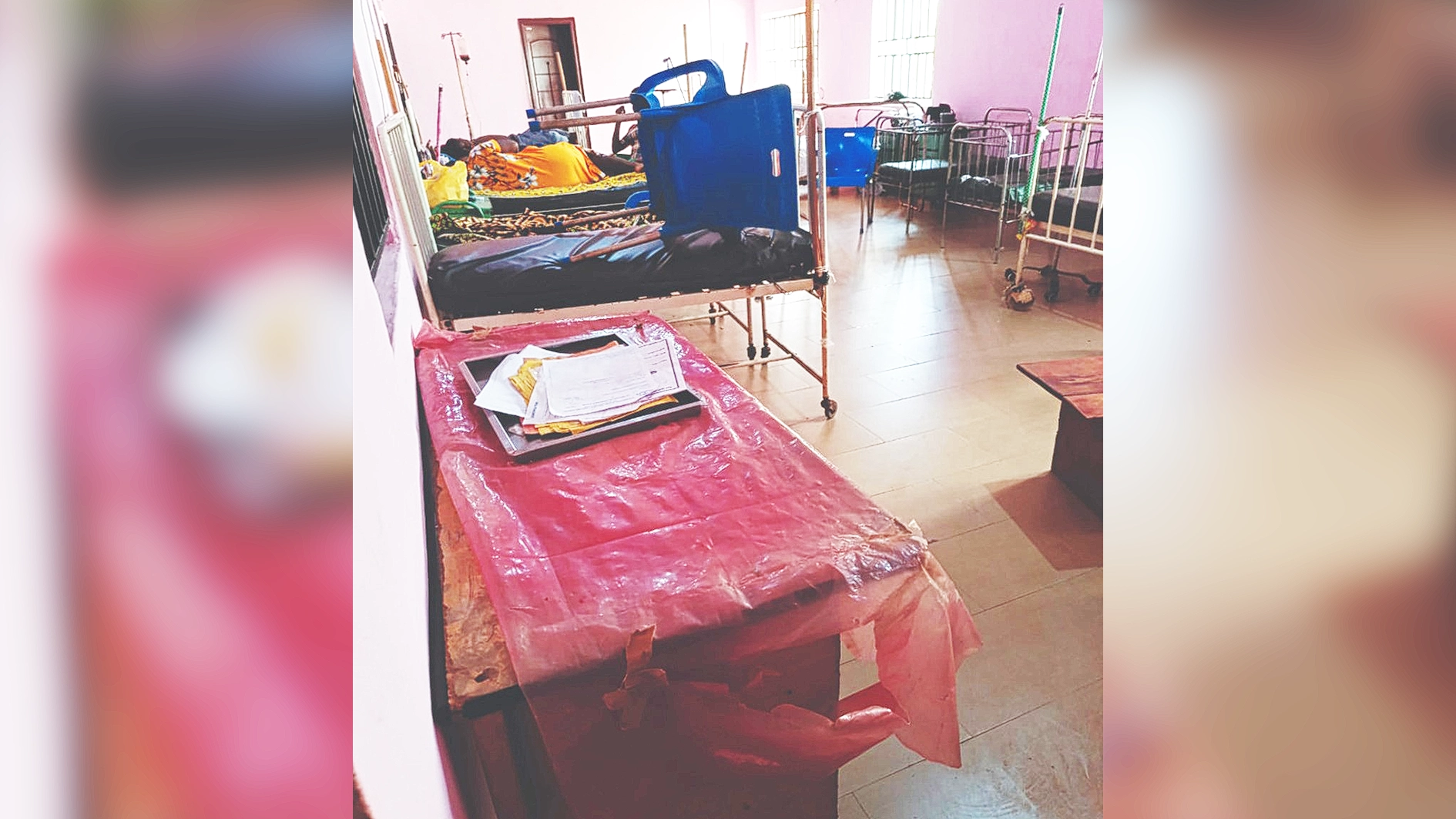
Tertiary healthcare in the South-East is on life support as decaying primary and secondary care, as well as systemic neglect, are paralysing the teaching hospital. Ranging from a paucity of medical facilities, lax service delivery, and poorly trained and remunerated medical personnel to poor funding, the challenges are simply dire and undermine the realisation of the goals set by the Federal Government in setting them up, LAWRENCE NJOKU, CHARLES OGUGBUAJA, GORDI UDEAJA, NNAMDI AKPA and CHUKS COLLINS report.
When Ogonna Egwu rushed her sick mother to the Accident and Emergency Ward of the University of Nigeria Teaching Hospital (UNTH) in February this year, she was convinced that her mother would be availed the needed medical attention to keep her alive.
On examination, Egwu was advised by the doctors to purchase a waterbed to aid her mother’s treatment. With none available at the dispensary, she had a couple of options – make a swift 25-kilometre trip to Enugu town (about a 45-minute journey depending on traffic) to purchase one, seek assistance from the appropriate hospital staff, or employ their contacts to help.
Since there was nobody to keep an eye on her sick mum while she went shopping, she elected to engage a hospital staff member to help procure the bed, which only arrived the following day, a development that negatively impacted the health of her mother. Sadly, she died a day after.
Upon her mother’s demise, Egwu was not allowed to leave the hospital with the waterbed in the guise that it was “hospital policy”, hence it was “confiscated.” Grief-stricken, she left to bury the dead.
After her mother’s burial, Egwu returned to the hospital to demand the release of her waterbed. However, through the intervention of a senior staff member, she recovered part of the money she had spent to purchase the waterbed from another Emergency Unit staff member, who had clandestinely sold it to another patient.

But for the poor state of primary and secondary health facilities in the state, Phina Unachukwu’s sister, Charity, would still be alive today. Unachukwu rushed the latter to the emergency unit of the UNTH after an automobile accident, since in her judgment, she stood a better chance of survival there, considering the advice handed out by doctors at the secondary health institutions around.
Due to the alleged failure of her sister to get immediate medical attention, as certain medical procedures that could probably have helped her case were not conducted several hours after their arrival, the victim gave up the ghost.
An enraged Unachukwu, apart from alleging negligence and unprofessional conduct by the UNTH staff, accused them of being responsible for her sister’s death.
She specifically alleged that delay in the provision of a bed space, blood transfusion, communication and logistical challenges, among several others, were deliberately meted out to her sister, resulting in her death.
Unachukwu’s strident cry led the hospital to set up an investigative panel. After the hospital admitted several operational lapses (as raised by Unachukwu), the development led to the issuance of an “emergency executive directive” by the hospital management that henceforth, “under no circumstances should any patient be refused care or turned away from the Emergency Department, even if it requires providing care on available benches or floor space when beds are full.”
Ugly scenarios like these two are not restricted to the UNTH; rather, they routinely play out in many tertiary hospitals in the South-East, which are witnessing a throng of infirm residents and their relatives.
Daily, before administrative blocks of these hospitals are fully open, emergency wards and outpatient clinics have been transformed into a mass of colours with a sea of human heads either wheeling in or out, their sick and some barely conscious relatives.
Poorly-resourced, funded secondary hospitals redirecting traffic to tertiary health facilities
STRANGELY, most of the patients that line the wide passages and seating areas of these hospitals are suffering from simple, manageable ailments, ranging from uncontrolled hypertension, simple malaria complications, or treatable paediatric infections.
While the crowded hallways are not a product of sudden epidemics, they constitute a direct fallout of a collapsing primary and secondary healthcare system bequeathed to the South-East by past and present administrations.
Across the zone, primary health centres are largely desolate and general hospitals are reduced to rote prescription centres that are devoid of basic diagnostic equipment, while sick residents are left with no choice but to circumvent local care entirely, thereby bottlenecking teaching hospitals with cases that should have been resolved in well-funded primary and secondary facilities.
This systemic failure is no accident of resource scarcity, but a calculated failure of priority and political will by regional leadership that has consistently treated public healthcare not as a fundamental human right, but as an administrative afterthought that is fuelling the crammed consultation rooms in tertiary health facilities.
Instead of strengthening their health insurance schemes, institutionalising transparent monitoring systems, or taking stock of the decay besetting local health facilities, South-East state governments appear to actively evade accountability, and in most cases, hide behind deflective rhetoric, or rely on international donor agencies to handle the heavy lifting of basic public health.
As this insulation from the real-world consequences of governments’ neglect of basic healthcare festers, state coffers continue to fund lavish, low-impact capital projects that offer immediate political optics but deliver zero tangible benefit to the public’s well-being. While this continuous pouring of billions into massive white elephant projects, cosmetic urban beautification initiatives, unviable infrastructure, and bloated administrative overheads continues, state-owned general hospitals are bereft of basic surgical equipment/consumables, a steady power supply, and adequately remunerated medical staff.
With the soaring cost of living making a balanced diet a luxury, the most basic life-support systems of the broader population are quietly crumbling.
These complex challenges plaguing the health sector in the geopolitical zone were adequately marshalled during the health sector transparency and accountability town hall meeting in the South-East, sponsored by BudgIT and CODE, held in August 2023. The event was held as part of the COVID-19 Transparency and Accountability Project (CTAP) to address healthcare challenges and needs in rural communities across the region.
A summary of outcomes and findings from the event stated that research and community feedback revealed that approximately 80 per cent of PHCs in the region fell below minimum standards set by the National Primary Health Care Development Agency (NPHCDA).
Participants also noted that many PHCs were built and managed solely by community members, resulting in severe government neglect and a lack of essential medical supplies, even as citizens highlighted major gaps in patient care, including illegal or exploitative charges for basic medical procedures (e.g., childbirth).
Community members and CSOs charted strategies to bridge the gap between citizens and the government by actively channelling feedback to Health Commissioners, Executive Secretaries, and health directors to demand better fiscal management and resource allocation.
Three years after these salient observations that basic healthcare in the zone was on life support, the conditions of tertiary hospitals in the area are daily oscillating between bad and worse.
Buffeted on all fronts, tertiary hospitals gasp for breath
THE UNTH, Ituku-Ozalla, Enugu State; Nnamdi Azikiwe Teaching Hospital, Nnewi, Anambra State; Federal Teaching Hospital, Owerri, Imo State; Alex-Ekwueme Federal University Teaching Hospital (AEFUTH), Abakaliki, Ebonyi State, and the Federal Medical Centre, Umuahia, Abia State all have one thing in common – they were set up and designated as “teaching hospitals” by the Federal Government to provide comprehensive medical care, education, and research across the states.
If their imposing entrances are anything to go by, patients and their relatives who run to them would worry less about patronising their services. But inside these massive premises, which are laced with expansive buildings devoted to medical care and education, painful experiences are being recorded daily. Thanks to poor services and infrastructural gaps in their operations.
Inside UNTH wards are archival hospital beds, some supported by the walls and others improvised; old and weak beddings; disused chairs; gallons or buckets of water stacked by the bedside, provided by patients’ relatives. Others are beds with side lockers and over-bed tables, while many are without lockers. Collectively, they constitute a sad reminder of Nigeria’s poor maintenance culture.
The general wards – both female and male – have no bed-partition curtain system. The movable curtains, where they exist, are in short supply. Practitioners have to hold fire until there is a free one before they attend to a patient in need.
At the Federal Teaching Hospital, Owerri, Imo State, patients constantly complain that the facility is still faced with out-of-stock drug syndrome, and they, in most cases, buy prescribed drugs and other consumables outside the facility with concomitant risks. Some medical examinations recommended by doctors are carried out at other health facilities owned by private concerns.
Joyce Ikenegbu, a patient recovering after a cesarean section, confirmed this much, stressing that accessing recommended drugs in the facility was a big challenge as she was meant to buy from vendors outside.
“Some of the medical tests that we conducted before surgery were recommended, but were done outside the hospital. The doctors kept saying that they do not trust the machines here; they kept saying they wanted reliable results. The unfortunate thing is that some of the tests were conducted in private facilities,” she stated.
The lack of theatre space has continued to hobble the Federal Medical Centre in Umuahia, formerly known as Queen Elizabeth Hospital, leading to the postponement of surgeries for some patients.
John Ogbuigwe, who suffered a growth on his left shoulder, was billed for surgery in March this year. He explained that the surgical section could not happen until the third week in April due to space constraints.
He also stated that the hospital lacks enough medical staff to take care of the numerous patients who surge through the facility daily.
At the female ward of the AEFUTH on Friday, April 10, a patient died in the early hours of the day. After the doctor on duty confirmed her death and authorised evacuation of the body to the morgue, trolley staff disappeared in the guise that they were attending to other emergencies. After relatives of the dead waited for hours to no avail, they wheeled their departed loved one to the mortuary themselves.
Justina Ike, who had a surgical intervention in the facility last year, explained that recovery was quicker because she had relatives who were on hand to “prompt the personnel to attend to me on time. The doctors will come when they want to, do their ward rounds, and make prescriptions. At times, it takes hours for the prescriptions to be administered. It is always a case of the personnel claiming to be busy or being overwhelmed with work,” she noted.
Dearth of key facilities, manpower shortage persists despite government interventions
ALTHOUGH none of the hospital heads agreed to divulge the amount of funding they receive from the Federal Government, they agreed that there are serious funding gaps in their operations, stressing that this is affecting service delivery.
The Minister of Health, Prof. Mohammed Ali Pate, in February this year, lent credence to claims of underfunding in the health sector when he revealed that only N36 million of the N218 billion appropriated for its 2025 capital expenditure had been received by the ministry.
He had noted that the meagre release made it practically impossible for the ministry to execute its capital projects for the year.
Also, statistics of capital appropriation in the health sector for 10 years between 2016 and 2025, released recently by the Budget Office of the Federation, revealed several funding gaps in the sector. According to the table, the highest percentage release within the period was 70 per cent in 2021.
However, from 2021 to 2025, capital appropriations release continued to dwindle, up to 45 per cent in 2022, 30 per cent in 2023, 15.06 per cent in 2024 and 0.0165 per cent in 2025.
Meanwhile, as part of efforts to tackle the challenges in the sector, the President Bola Tinubu administration in 2025 undertook the Renewed Hope Solarisation project in six geopolitical zones of the country. A tertiary facility in each of the zones benefited from the project, aimed at enhancing energy reliability and reducing reliance on diesel generators. About N100 billion was earmarked in the 2025 budget for the project.
In the South-East region, the UNTH was the only institution selected to benefit from the project, which delivered about 7MW of power. The Guardian spotted the three Hybrid Solar Power Systems on the hospital premises, fully utilised to power “critical sections” of the hospital.
Also in July last year, the Federal Government intervened in cancer treatment in the region by providing a modern linear accelerator and upgrading oncology infrastructure at the UNTH. The facility is equipped with a high-end Halcyon Linear Accelerator, used for precise external-beam radiation therapy to treat various forms of cancer. It was reported to have consumed about N2.06 billion at the time of its initiation in 2023.
The centre also received infrastructure upgrades, including a CT Simulator, dosimetry systems, and a dedicated power system to ensure the facility remains fully functional.
The new equipment has solved several years of lack of treatment for cancer patients at the hospital. Cancer treatment was suspended at the UNTH for several years because existing machines malfunctioned due to age and poor maintenance. Since the installation, cancer patients now throng the department to conduct their examination and treatment. There are fears, however, that the machine may soon be overwhelmed, since the centre is the only government hospital in the region offering the service.
Last year, the Federal Government also approved an increase in the budgets of the Alex Ekwueme Federal University Teaching Hospital, Abakaliki, and the Nnamdi Azikiwe University Teaching Hospital to fund ongoing infrastructure expansion. While Alex Ekwueme University got N25 billion, Nnamdi Azikiwe University got N61 billion. The government also initiated a programme to reduce the cost of kidney dialysis by 80 per cent at the Federal Teaching Hospitals in Owerri and Abakaliki.
The CMD of the Federal Teaching Hospital, Owerri, Dr Jideuma Egwim, who was recently appointed, also confirmed that the hospital, since its conversion in 2022, has continued to improve its infrastructure.
He said the facility currently boasts an Obstetrics and Gynaecology Complex, the Sub-speciality Outpatient Complex, the Ultra-Modern Medical Ward Complex, the Hospital Central Stores Complex, a 500-capacity Auditorium, and the Food Court/Guest House. He added that there is a brand-new endoscopy machine, while the research centre has a state-of-the-art five-part full blood count auto-analyser, among others.
Poor power supply, obsolete equipment, empty dispensaries hamper service delivery
Even though the Federal Government has intervened in these hospitals from time to time, infrastructure gaps still exist, forcing certain medical procedures to be undertaken slowly or performed outside the facilities.
For instance, patients in all the affected hospitals patronise roadside pharmacies and chemist shops for medications prescribed by doctors, as well as other drugs that may be administered to them during admission. Many medical examinations are also referred to private facilities to ensure “accurate findings. One such medical examination is the Electroencephalogram (EEG), and brain tests such as Magnetic Resonance Imaging (MRI) are said to be sophisticated and largely undertaken in private concerns.
A stable power supply remains a major problem affecting the effective discharge of duties in these facilities and the operation of medical equipment. Stable power is said to be responsible for most referral cases. In one of the facilities, medical doctors narrated that “undertaking surgeries regularly is a big challenge due to the poor power situation. That is why we have to book patients in turns and prepare before they come. It is very rare to undertake emergency surgeries here. Doing so is a big risk because you may lose the patient, especially when the generators here cannot carry your equipment,” a doctor noted.
He insisted that, to continue running the facilities and make them respond to the people’s yearnings, patients should be made to pay for their services. He added that a new electricity policy that categorised consumption placed all the tertiary hospitals in Band A, thereby raising the cost of power and medical services.
At the Federal Medical Centre, Umuahia, for instance, the electricity bill has risen from N10 million to about N42 million on average, in addition to about N22 million spent on diesel and generator maintenance, bringing the cost of procuring power to run the hospital to about N70 million monthly.
The development has triggered a conscious effort for alternative renewable energy in the hospital and many others.
At the UNTH, Enugu, its Chief Medical Director, Prof Obinna Onodugo, confirmed that the hospital was coping because of a recent solar power initiative undertaken by the Federal Government, adding that the development has restored services in some critical areas of the hospital. He, however, disclosed that efforts were geared towards “uninterrupted power supply in the institution.”
At the Nnamdi Azikiwe Teaching Hospital, which relocated to its permanent site in Akamili, Nnewi, in 2023, the infrastructure gap remains pronounced. The relocation, intended to enhance healthcare services and reduce congestion, has not been implemented effectively due to a lack of critical facilities.
Several key facilities and departments are still lacking. The facility is in dire need of a cancer centre with radiotherapy; a fully equipped and functional laboratory; additional CT scans, and a Magnetic Resonance Imaging (MRI) machine, among others.
The chief medical director of the hospital, Prof. Joseph Ugboaja, told The Guardian:
“We need to develop our minimal access surgery, like a laparoscopy tower and an endoscopy machine. You know that it’s where the world is going now. No one is talking about open surgeries now.
“We want to compete with others in that area. We need in vitro fertilisation (IVF) facilities for obstetrics and gynaecology practice. We need consumables, including serviceable vehicles, ambulances, and buses to help our workers in shuttle transportation within and out of the new site.”
The Outpatient Department (OPD) of the Federal Teaching Hospital, Owerri, is always overcrowded. This is due to insufficient spaces. As a newly designated teaching hospital, it needs facilities to accommodate more departments, such as general surgery and diagnostic units. The lighting system has remained an issue, affecting service delivery and the comfort of patients and their relatives.
Last year, a caregiver raised an alarm about the hospital’s lighting after witnessing the level of darkness that had overtaken it in a single night. It was such that patients and their relatives used lanterns and mobile phone lights to illuminate the wards.
Although the Chief Medical Director of the Federal Medical Centre, Umuahia, Prof Azubuike Onyebuchi, said that the institution has continued to cope with its own power challenge, he is, however, worried about an inadequate number of doctors and other health workers, a development that has overstretched the available staff.
The Centre remains the only one providing care at that level in the state and, due to its central location, is often overstretched.
Mounting challenges negatively impacting level of care, research in tertiary health facilities
MEDICAL practitioners are unanimous in their submission that the present state of affairs has negatively impacted the level of care and research in the tertiary facilities. The Chairman of the Nigeria Medical Association (NMA), Enugu Branch, Dr Sunday Okafor, stated that adequate funding is central to ensuring that health facilities live up to their mandate.
He added that paucity of funds has grossly affected the operations of the hospitals, noting that the majority of them can no longer afford to power their equipment for major surgeries, research, and other activities.
“Our medical doctors are among the best in the world; without appropriate diagnostic facilities, they still undertake examinations and get the best medical results. We are working almost with our bare hands. Collapsed infrastructure, particularly power, is the order of the day. Tell me how you will concentrate and work when you enter a theatre, and you are sweating profusely?”
A female gynaecologist, Nwadi Ubani, said that the nature of medical facilities in the hospitals does not encourage efficiency and professionalism, stressing that it affects practice and research.
“There is nothing to cheer about what we do here. We are just striving to ensure that our people get the best health. I worry that when you consult at a private hospital, you have better facilities to work with than at government-owned tertiary hospitals.
“A tertiary hospital is supposed to be a referral facility. But here we are providing primary healthcare because, at the very low level, there are no facilities. Our colleagues are abandoning the practice here. There is no area of medical practice that you can visit in this region and get the actual number you require. Many of them have left the country. This is because what is on the ground does not encourage excellence. Some of the facilities being used here are outdated,” Ubani lamented.
Similarly, a consultant paediatrician at the Alex Ekwueme Federal Teaching Hospital, Abakaliki, Dr Fred Eke, stated that the teaching hospitals could put a stop to medical tourism in the country if well-funded, stressing that solving power issues remains cardinal in the realisation of the mandate of the teaching hospitals.
“We have certain heavy equipment that are used for medical examinations. They are such that any procedure you want to run, you will require steady electricity, without which there will be an error of judgment. That is the way it is. What I can say is that the Federal Government should equip these hospitals by first solving the power issue. No doctor or nurse can function optimally in any environment that is not conducive,” he explained.

