 Follow Us on Google News
 Follow Us on Google Discover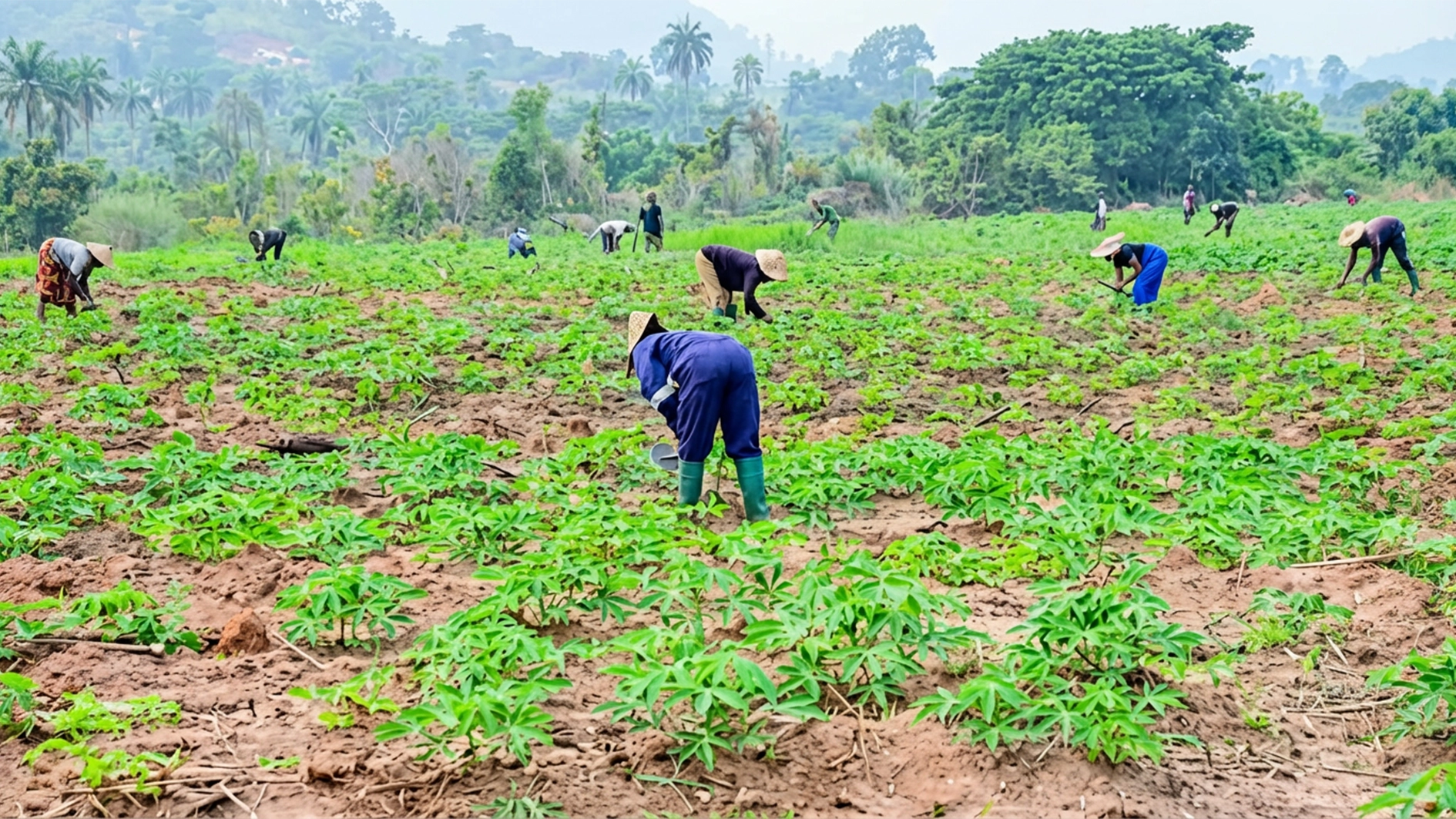
• Bagudu seeks stronger collaboration to transform agriculture
Nigeria has unveiled a comprehensive 10-year Agrifood System Strategy and Action Plan to transform its agricultural sector, boost food security and align the country’s policies with the African Union’s 2025 Kampala Declaration on agricultural development.
Announcing the development yesterday at the Agrifood Systems Working Group Meeting in Abuja, the Minister of Agriculture and Food Security, Senator Abubakar Kyari, said the strategy was developed through extensive consultations and validation meetings across the six geopolitical zones and at the national level, to ensure broad stakeholder participation and national ownership.
He disclosed that President Bola Tinubu has directed the ministry to develop a long-term, bankable and implementable roadmap to reposition Nigeria’s agrifood system.
In a related development, the Minister of Budget and Economic Planning, Senator Abubakar Bagudu, has reaffirmed the federal government’s commitment to transforming Nigeria’s agrifood system through stronger collaboration, institutional reforms, science-driven agriculture and increased private sector investment to boost food security and reduce poverty.
Stating that agriculture should not be viewed as the sole responsibility of the ministry but as a sector requiring contributions from science, technology, finance, research institutions, women, youth and the private sector, Bagudu called for stronger collaboration to tackle the challenges affecting food systems, including rising fertiliser and energy costs linked to global conflicts, trade distortions and subsidised imports.

Meanwhile, ActionAid Nigeria has raised concerns about the poor level of public investment in agriculture, revealing that the combined 2026 agricultural budget allocation by the 36 states and the Federal Capital Territory (FCT) is only 4.58 per cent, far below the 10 per cent target agreed under the AU commitments.
According to ActionAid Nigeria’s Food Systems Specialist, Azubike Nwokoye, the organisation’s analysis of agricultural spending across the country shows that Nigeria performed poorly in capital investment in the sector between 2023 and 2025.
Nwokoye announced ActionAid’s plans to conduct further analysis to identify value chains that deserve greater investment, stating that about 1.4 million direct quality jobs could be created if states implement their agricultural budgets in full, while the projected federal spending could generate an additional 2.1 million direct jobs, bringing the national total to about 3.5 million direct jobs.
Presenting ActionAid’s findings in a newly developed dashboard that assessed agricultural spending across the 36 states and the FCT, Nwokoye clarified that the 4.58 per cent figure represented budget allocations rather than actual expenditure.
Also, he said the assessment found that in 2025, 16 states recorded low capital spending on agriculture, eight states posted moderate performance, while only 10 states achieved high performance.
The agency noted that many states allocated only about three per cent of their capital budgets to agriculture, just as the federal government’s capital expenditure on the sector in 2025 was equally low.
However, Kyari said the 10-year Agrifood plan will be presented for adoption by stakeholders before being forwarded to the Federal Executive Council (FEC) for approval, after which ministries, departments and agencies will align their programmes and budgets with its objectives.
He explained that the strategy supports the implementation of the AU’s Kampala Declaration, which commits member -states to increasing agrifood output, expanding intra-African agricultural trade, reducing post-harvest losses, improving access to healthy diets, cutting poverty, and increasing investment in the sector.
The minister stressed that effective governance would be central to achieving the declaration’s targets, describing it as the foundation for sustainable production, investment, food security, inclusiveness and resilience.
In the meantime, Bagudu, who spoke in Abuja at the second biannual meeting of the Agrifood Systems Working Group (ASWG), organised by the Federal Ministry of Agriculture and Food Security, said agriculture remains central to the country’s development agenda.
He noted that President Bola Tinubu had set a target of lifting Nigerians out of poverty by 2030 through inclusive economic growth, improved livelihoods and food security. He also commended Kyari for driving the implementation of the Comprehensive Africa Agriculture Development Programme (CAADP) 2026-2035, saying the framework aligns with Nigeria’s efforts to build a resilient and inclusive food system.
Highlighting the importance of agriculture to the economy, Bagudu said Nigeria has over 42 million agricultural households, most of them smallholder family farms, which form the backbone of the nation’s food system.
However, he stressed that “the success of Nigeria’s food system depends on empowering our millions of farming households with the support, technology, financing and market opportunities they need to produce more efficiently and improve their incomes.”

