 Follow Us on Google News
 Follow Us on Google Discover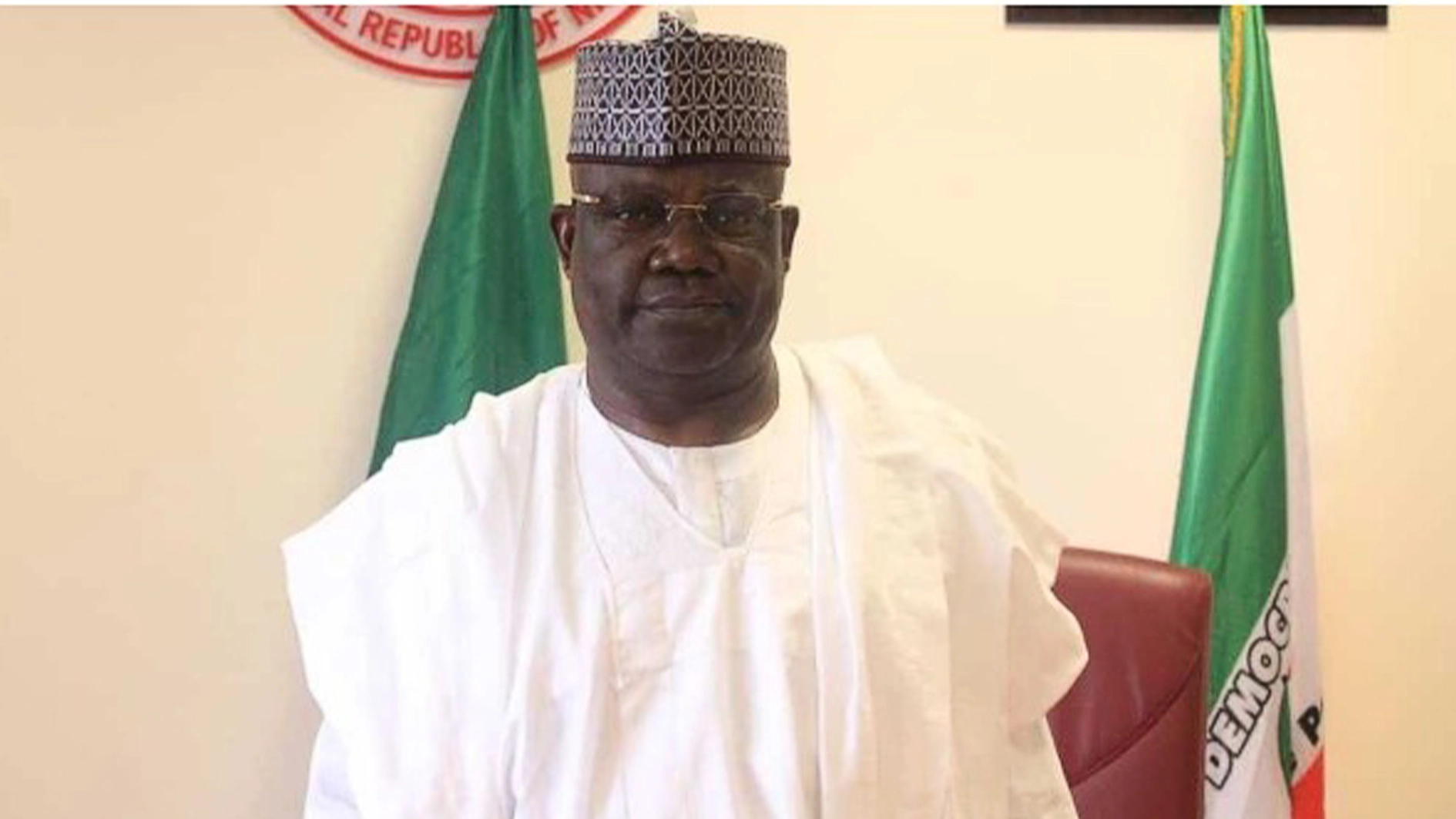
Three-term Senator and Peoples Democratic Party (PDP) governorship candidate for Taraba State, Emmanuel Bwacha, argues that the constitutional provision for a second term does not guarantee elected officials an automatic return to office. Speaking with LEO SOBECHI, he also advocates greater citizen participation in budget preparation.
Taraba is predominantly a PDP state. How do you feel returning to the PDP after leaving the ruling APC?
I agree with you that Taraba has been a PDP state from the beginning, and the people cherish the party.
My movement to the APC back in 2023 was to usher in a new dawn. However, the situation changed because of the internal dynamics within the APC in Taraba, and that has brought us to where we are today.
I found myself returning to the PDP, the party that brought me to national prominence. I can see the people celebrating my return because they believe the “Pharaoh” who held the party captive has left. So, it is time for us to rebuild the party and the state. The ground is fertile, and we are moving forward to take over.
However, I am conscious of the fact that we cannot allow overconfidence to weigh us down and deny us victory because overconfidence has a way of doing just that. So, we are guarding against it. It is obvious that the state government, or the incumbent governor, has virtually nothing to campaign on.
On our part, we are addressing issues. We are avoiding personal attacks, mischief and vendettas. We are not out to castigate anyone. My mission is to let the people of Taraba know that the state is on the precipice and that we must work hard to return it to the path of honour.

Essentially, we are striving to restore the glory of the state. We believe we can achieve this because the people are willing, they are prepared, and we are with them. It has nothing to do with money, influence or connections. It is about taking our destiny into our own hands, and the people understand that.
One specific feature of the present dispensation in Taraba State is the widespread perception that the incumbent governor is an accidental leader. Considering that you quickly congratulated him after he defeated you in 2023, what makes you different from him?
I agree with you that the governor was not prepared for the responsibility of governing Taraba State.
Personally, I did not know that at the time, which was why I congratulated him when he was declared the winner. In fact, before the official declaration, when I realised the election was going that way, I chose not to dwell on the irregularities and conceded.
Anyone in Taraba State will tell you that, among all those who contested the 2023 election, my votes truly reflected the will of the people. But when I saw how the election was unfolding, I congratulated him, believing he had something different to offer from what existed before and which had prompted me to leave the PDP.
I even went so far as to say that I would not contest another election if the newly elected governor did the right thing. Little did I know that he was completely unprepared and lacked the vision required for the job.
We expected him to hit the ground running upon assuming office, but that never happened. Instead, it has been one tale of woe after another, like jumping from the frying pan into the fire. Those stories are simply not worth listening to.
The major challenge confronting development in Taraba State, and perhaps in many other parts of the country, is the lack of transparency in governance. When the leaders and the people are kept at arm’s length, and there is little understanding of what is happening in government, corruption inevitably takes centre stage.
The people of Taraba are not even aware of the huge resources accruing to the state through statutory allocations from the Federation Account. Beyond that, the government has borrowed over N800 billion within this period, yet if you travel round Taraba today, you will hardly find a project worth N10 billion.
I am from Taraba State and, by the grace of God, I remain in touch with the grassroots across virtually all the 16 local government areas. Wherever you see a project that should cost perhaps N2 billion, you are told it was executed for about N20 billion.
Talking about opacity in the budgeting process and budget implementation, what antidotes would you prescribe if elected?
Apart from being a lawyer, I have spent a greater part of my life as a parliamentarian. I am familiar with the budgeting process, and I will bring that experience to bear in budget preparation and implementation.
But I think the most important thing, as I have said, is transparency. Where the budgeting process is shrouded in corruption and secrecy, the desired development outcomes cannot be achieved because everything ends up distorted.
If you prepare a budget with a genuine vision for development, you will focus on key sectors and priorities that translate into tangible progress. Budgeting is not just about figures; it is about what the people eventually see on the ground.
If you fail to budget properly and come up with a bogus budget, you will achieve nothing. Bogus budgets are often the product of minds focused on stealing. But if you prepare an honest budget and involve competent professionals, people who are well-trained and experienced in accounting and public finance, the results will be evident.
And where will you see the results?
You will see them in the physical infrastructure around you. These things are not magic. If you approach them with honesty and an open mind, you will certainly achieve results.
But where there is no commitment or steadfastness, it is impossible to achieve any meaningful goal through budgeting. That is why you often see state governments prepare budgets, yet what is delivered on the ground differs completely from what is contained in the budget. That is because the budget is prepared merely to fulfil all righteousness, not to achieve the objectives for which it was designed.
This is a major problem in most states, and in our case, it is even worse. So, when we prepare our budget, we will pursue it with discipline and ensure that it is implemented to the letter. That is our mindset. Whatever we include in the budget must be executed. Essentially, that is what we intend to do.
Most of the time, state governments impose grandiose, white-elephant projects instead of adopting a bottom-up approach to project conception based on community needs. How will your administration handle project conception?
It is one of the areas we are working hard to improve because, in my state, for instance, not only have projects not been executed, but even the promises made were not aligned with the needs of the people.
For example, the governor goes to his hometown of Wukari and says he is going to build a flyover in a place where there is absolutely no need for one because there is hardly any traffic. That is a misconception because such a project is unnecessary.
You can stand at some of those junctions for one minute without seeing a single vehicle pass. So, what benefit would a flyover bring to the people? That is a clear case of misplaced priority.
These are the issues we intend to address by ensuring that projects are conceived and executed strictly on the basis of the people’s needs. We are fully aware of that. As I said earlier, the projects have not even been executed despite the promises made. Once again, what you find is a plethora of misplaced priorities.
How can a government that has failed to deliver development be deploying traditional institutions, which ought to be partners in nation-building, by involving them unconstitutionally in governance?
You simply reduce them to political instruments by saying, “Come and support me, and I will create a first-class chief for you.” That is not what the people want.
If you are going to create a traditional institution, you should also provide the infrastructure and facilities befitting that institution, rather than using traditional rulers as campaign agents.
Fortunately, the people are wiser now. They know what to do and they are prepared to do it.
There is still confusion over the constitutional provision for two terms. Some incumbents behave as though a second term is automatic. What is your view of this ‘four plus four’ narrative?
This is exactly the point we are making in Taraba State. Being elected to a first term does not automatically entitle anyone to a second term. Rather, a second term should be determined by what you achieved in your first term.
If you dance well, we will allow you to continue dancing. If you do not dance well, we will ask you to leave the dance floor. That is exactly our position. It is not automatic.
To those who say, “Bwacha will come and spend eight years,” I say it depends entirely on what Bwacha does. If he performs well, saves the state and positions it for future leaders, then the people will decide. We are not talking about those who sit on the sidelines waiting to say, “He has stolen his share; let me come and steal mine.” That is not what zoning is about.
Zoning should never come at the expense of merit and good governance. That is the mentality we are trying to discourage.
The politics of Taraba State, including this issue of zoning, has always been contentious. Was there ever a charter of equity or any arrangement that institutionalised zoning in the state?
I have been an advocate of zoning from the very beginning. The northern part of the state had its turn at the governorship. Our first civilian governor, Rev. Jolly Nyame, became governor in 1992, before that democratic transition was truncated after about two years.
Another transition followed during General Abdulsalami Abubakar’s administration after the death of General Sani Abacha, and Nyame went on to serve two full eight-year terms.
Thereafter, the governorship moved to the Central Senatorial District, where the late Governor Danbaba Suntai served until his tenure was cut short by an air crash.
We then argued that it should move to the South, and eventually, the South also produced a governor. The present governor is serving the South’s first term. He has spent more than three years in office, yet what we have witnessed is a monumental failure in governance.
As Taraba people, we have a point to prove that we are not like this. What we witnessed during Darius Ishaku’s administration was not encouraging. In fact, that was what made me leave the PDP.
At the time, we thought Darius was performing poorly. But when this administration came in, we realised that, by comparison, Darius looked like a saint.
So, we now have a duty to prove that this is not who we are and that something good can indeed come out of Taraba South.
That is essentially what informed my decision to contest, to demonstrate that we are a refined people who understand governance. Unfortunately, what happened was more like falling victim to a “one-chance” situation. We have a responsibility to prove that the people of Taraba South can be trusted with power. That is what we are working hard to achieve.
Now, if people say our responsibility is simply to complete Governor Kefas’ four-year tenure, we have no quarrel with that. If, after serving four years, the people believe that is enough, we will accept their verdict.
But if the argument is that public office is merely an opportunity for everyone to “take their turn” at stealing, then I completely disagree. I support fairness in the distribution of political power, but what Taraba needs today is good governance.
If I serve for four years and there is no significant difference in the lives of the people, then, as a matter of honour, I will not even seek a second term. I mean that. It is the people who should judge the difference and decide whether to ask you to continue. If they do, fine. If they do not, I will abide by that principle. I am fully prepared to do so. That is my position.

