 Follow Us on Google News


 Follow Us on Google Discover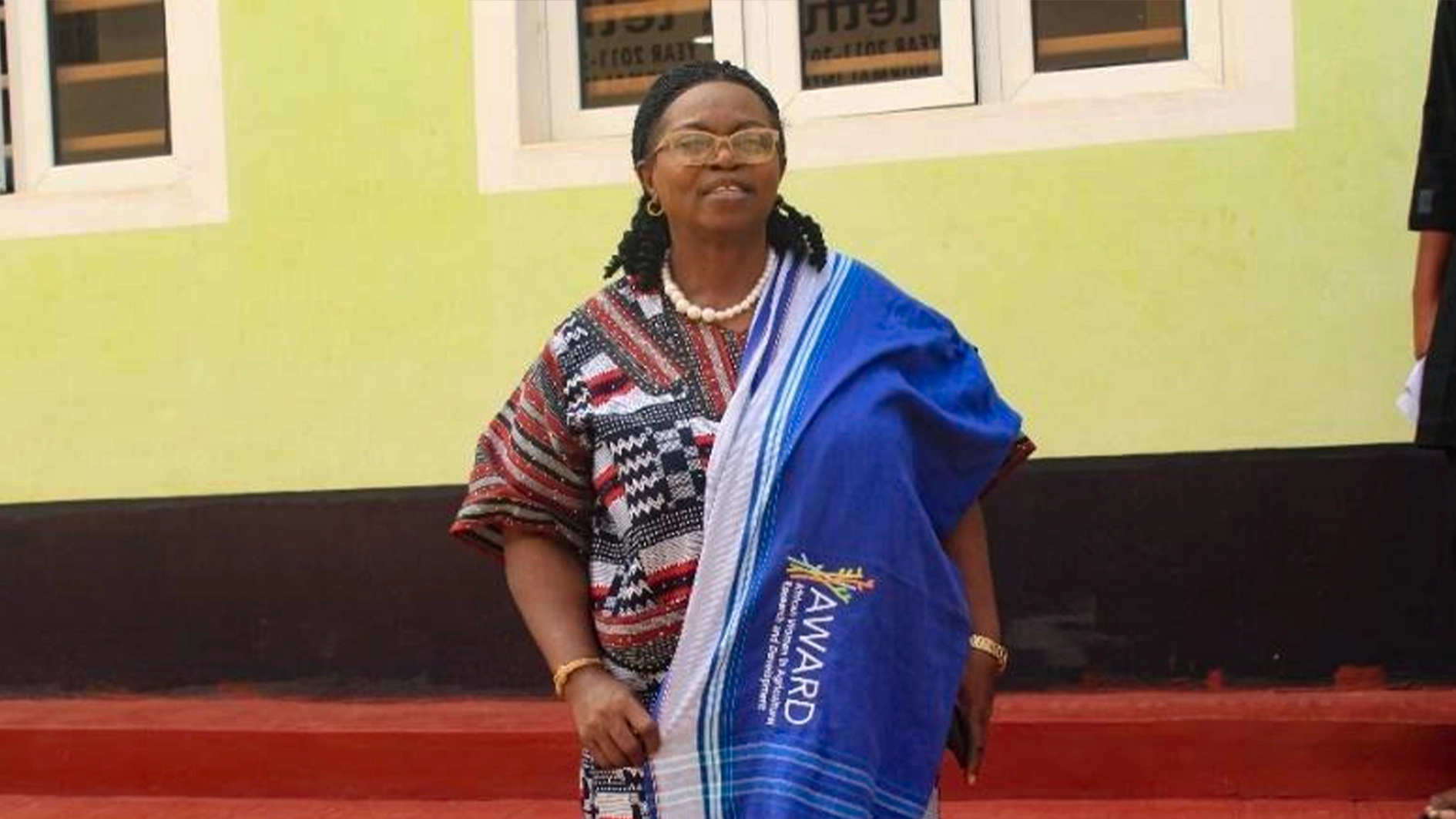
Nigeria must urgently reform its agricultural extension system to ensure that women, young people, children, persons with special needs and other underserved groups have equitable access to agricultural information, technologies and advisory services, a University of Ibadan researcher, Professor Stella Olusola Odebode, has said.
Prof. Odebode made the call in a policy brief titled: “Mainstreaming Gender in Nigeria’s Agricultural Extension System for Inclusive Service Delivery,” developed under the AWARD Policy Innovation Project.
The policy brief, based on policy assessments and evidence from agricultural extension stakeholders, identified significant gaps between Nigeria’s policy commitments on gender inclusion and their implementation.
It noted that although the National Agricultural Extension Policy (NAEP) 2023 recognises the importance of gender inclusion and ICT-enabled agricultural extension, the commitments have not been adequately supported by dedicated financing, clearly defined implementation responsibilities, measurable targets and effective accountability mechanisms.
According to the assessment, NAEP scored 23.5 per cent under the Gender and Agricultural Policy (GAPo) assessment, indicating that while the policy contains gender-sensitive intentions, its operational integration remains weak.
The policy also scored 61.4 per cent under the adapted WEAGov-Digital Inclusion assessment, suggesting a moderate foundation but significant weaknesses in areas including women’s leadership, financing and accountability.

The researcher said important issues such as social norms, care responsibilities, intersectionality, gender and climate resilience, as well as safety concerns, were not substantively addressed.
Odebode, therefore, called for a shift from broad policy recognition to concrete implementation mechanisms that would clearly establish who should act, what should be financed, how progress should be measured and how women and other underserved groups should participate in decision-making.
The policy brief also identified a gap between Nigeria’s research capacity and the extent to which research influences agricultural policy.
It found that while 91.9 per cent of researchers reported institutional support and 89.2 per cent had access to digital research tools, only 50 per cent routinely collected sex-disaggregated data.
The findings showed that research was more frequently used to inform extension programmes, at 81.1 per cent, than to reach policymakers, at 59.5 per cent, or contribute to policy dialogue, at 56.8 per cent.
Inadequate research funding, identified by 51.4 per cent of respondents, was reported as the most severe constraint, alongside weak links between research and policy, limited digital tools and inadequate gender expertise.
The policy brief warned that without consistent sex-, age and other relevant category-disaggregated data, it would remain difficult to determine who benefits from agricultural interventions and who is being excluded.
The professor also raised concerns over the gap between digital readiness and the actual delivery of inclusive agricultural advisory services.
She noted that despite relatively high access to smartphones and the internet, only 63.6 per cent of women farmers surveyed reported receiving digital advisory support.
More significantly, while all the extension stakeholders surveyed recognised the importance of addressing gender needs, only 33.3 per cent of extension agents reported actually providing gender-responsive advisory services.
The researcher said the findings demonstrated that access to digital technology alone could not guarantee inclusive agricultural service delivery.
She stressed that institutional support, adequate financing, appropriate content, capacity development and accountability mechanisms were equally necessary.
To address the challenges, the policy brief proposed six major areas of reform.
It called for the government to operationalise gender and digital commitments through a costed NAEP implementation framework with clear responsibilities, timelines, baselines and measurable inclusion targets.
It also recommended dedicated funding for gender-responsive digital extension, covering infrastructure, content development, data access, maintenance and last-mile support.
The brief urged stakeholders to strengthen women’s leadership and participation by ensuring meaningful representation of women and underserved groups in extension governance, digital-service design, implementation, feedback and evaluation.
On capacity development, Odebode advocated practical gender-responsive advisory tools, supervision, coaching, local-language content and opportunities for extension agents to combine digital and face-to-face communication.
She also called for stronger accountability and learning mechanisms, including digital gender audits, public progress reporting, farmer feedback systems and regular research-extension-policy review forums.
The policy brief identified the Federal Ministry of Agriculture and Food Security, state ministries and Agricultural Development Programmes, research institutions, women-in-agriculture structures, farmer organisations, digital-service providers, development partners and civil society organisations as key actors in implementing the proposed reforms.
Odebode added that Nigeria did not lack policy recognition, stakeholder interest or basic digital readiness, but that the major challenge remained implementation.
She argued that the evidence pointed to the need for a cost, measurable and accountable framework that would embed gender and digital inclusion throughout the planning, delivery, monitoring and learning processes of agricultural extension.

