 Follow Us on Google News


 Follow Us on Google Discover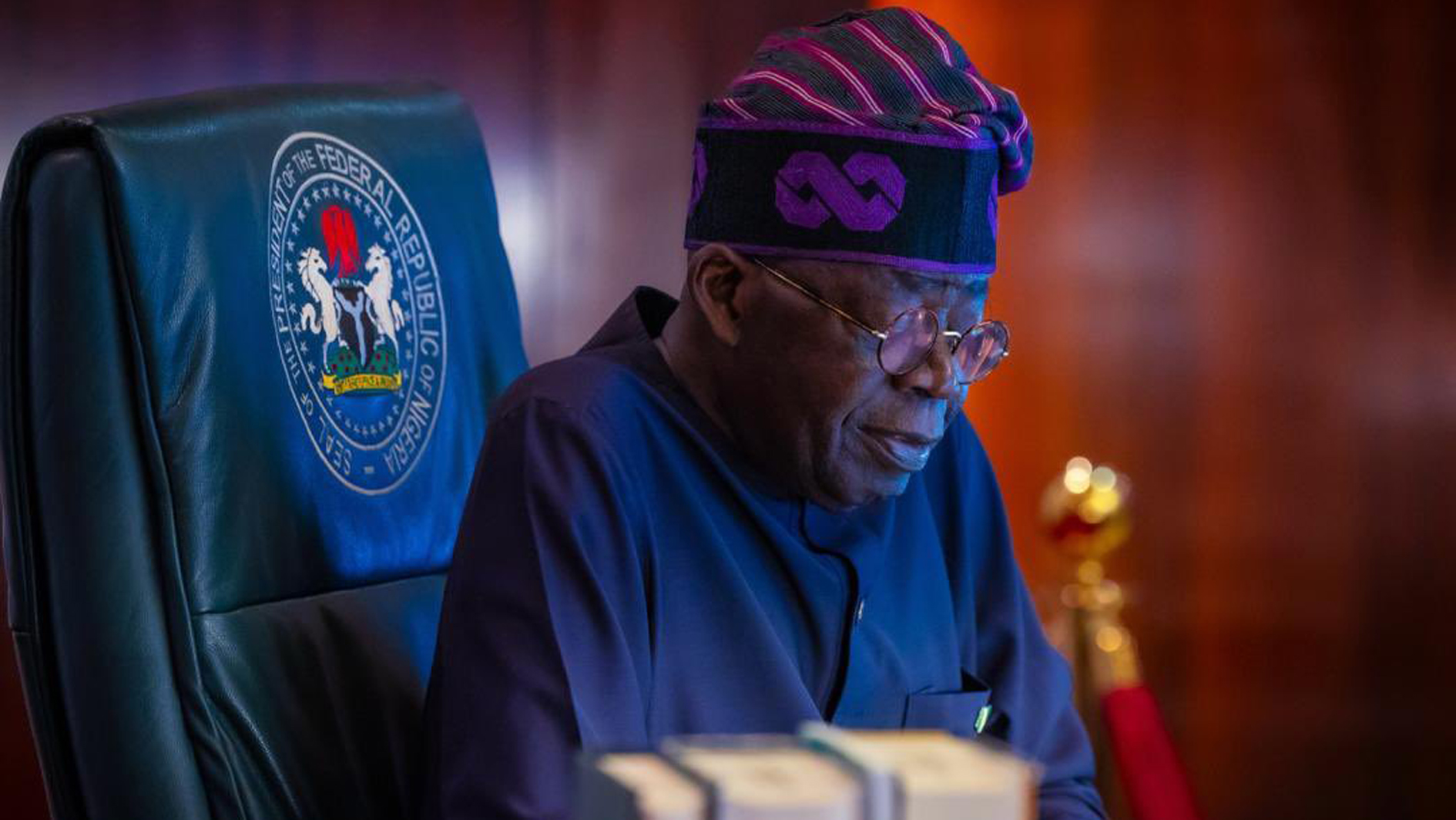
• President gives committee 90 days to produce five-year defence strategy
• Police remit over 11,000 recovered arms for destruction
• Odinkalu, others warn state police could deepen security problems
• Experts fault poor funding, political interference in proposed force
• Okenyodo links insecurity to governance failures, weak institutions
• Gunshots cause panic at Ataoja palace during Adeleke’s visit
Nigeria’s security architecture is set for another overhaul, with a five-year defence strategy in the works and thousands of recovered arms marked for destruction, yet concerns over policing, governance and recurring gun violence persist.
President Bola Tinubu has given a committee 90 days to develop a five-year strategic defence cooperation plan to strengthen the country’s security architecture and improve coordination among defence and intelligence institutions.
The Minister of Information and National Orientation, Mohammed Idris, disclosed this while briefing State House correspondents in Abuja after yesterday’s Federal Executive Council (FEC) meeting.
Idris said Tinubu had approved the establishment of a drafting committee to assess Nigeria’s security threats comprehensively and develop the framework for military and defence cooperation over the next five years.
The committee will comprise representatives of the Office of the National Security Adviser (NSA), the two Ministers of Defence, the Chief of Defence Staff and all the Service Chiefs.

Others are the Directors-General of the Department of State Services (DSS) and the National Intelligence Agency (NIA), as well as the Special Adviser to the President on Homeland Security.
According to Idris, the Special Adviser on Homeland Security will provide the secretariat for the committee, which is expected to submit its report to the President within 90 days.
He said the strategic plan was part of the administration’s broader efforts to safeguard lives and property and consolidate recent gains by the military and other security agencies in tackling terrorism, banditry and other forms of criminality.
The minister said the initiative also followed several measures approved by Tinubu to improve the operational capacity and welfare of members of the Armed Forces.
These, he said, included the recent increase in the remuneration of military personnel, the expansion of the military’s divisions from eight to 12, and the provision of additional housing for servicemen.
“If we put all this together, you see the direction that Mr President and the Federal Government are going, ensuring that our security agencies and our military personnel who are fighting so that Nigeria can remain safe for all of us are given the right atmosphere and the support that all of them require and need for them to continue to defend our country,” Idris said.
He said protecting lives and property remained the primary responsibility of government, adding that the administration was determined to deepen efforts to eliminate insecurity.
“President Bola Ahmed Tinubu’s administration is determined to further deepen that, so that once and for all we can take out this issue of insecurity from our land,” he said.
Police remit over 11,000 recovered arms to centre for destruction
THE proposed defence strategy came amid efforts by the Nigeria Police Force to tackle the proliferation of illicit weapons, with the force remitting more than 11,000 recovered arms to the National Centre for the Control of Small Arms and Light Weapons (NCCSALW) for destruction
The Director-General of the Centre, Johnson Babatunde Kokumo, disclosed this yesterday when he paid a courtesy visit to the Niger State Commissioner of Police, Adamu Abdullahi Elleman, at the Command Headquarters in Minna.
Kokumo said the transfer and destruction of recovered weapons were aimed at preventing their possible recirculation into the hands of criminal elements, particularly as illicit small arms and light weapons continue to fuel banditry and other violent crimes.
He commended the Inspector-General of Police, Olatunji Rilwan Disu, for directing state police commands to transfer recovered arms and ammunition to the Centre after investigations and other necessary procedures had been completed.
The NCCSALW boss called for stronger collaboration and information sharing between the Niger State Police Command and the Centre, stressing that effective inter-agency cooperation was critical to tackling the proliferation of illicit weapons.
He said the Federal Government established the NCCSALW to coordinate efforts to control the proliferation of illicit small arms and light weapons, with zonal structures across the six geopolitical zones and plans to establish state-level offices to strengthen its operations nationwide.
Kokumo, who was accompanied by the Centre’s North-Central Zonal Director, Abdullahi Adamu Eneche, also commended the existing relationship between the Niger State Police Command and the Centre.
He described his meeting with Elleman as both official and symbolic, recalling their professional relationship while they were in active service.
Responding, Elleman described Kokumo as a distinguished retired senior police officer, mentor and seasoned professional, and assured him of the command’s continued support for the NCCSALW.
He pledged that arms and ammunition recovered by the Niger State Police Command would be remitted to the Centre through the appropriate channels after investigations and other required procedures had been concluded.
Stakeholders warn against rushing state police amid insecurity
MEANWHILE, as debate over state policing intensifies and Nigerians await its possible introduction, stakeholders have urged caution, warning that creating state police may not fully resolve the country’s entrenched security challenges.
They argued that the proposed force could create fresh security concerns and be exploited by some governors as an instrument of political repression.
The stakeholders, comprising security and policing experts, human rights advocates, civil society representatives, legal practitioners, academics and development professionals, spoke yesterday at a virtual town hall organised by Global Rights.
The town hall, themed ‘State Policing in Nigeria: Opportunities, Risks and Safeguards for Security, Human Rights and Democratic Governance’, was told that Nigeria was not yet ready for state policing.
The participants argued that establishing state police without addressing the underlying causes of violence would do little to curb insecurity.
Former Chairman of the National Human Rights Commission, Prof Chidi Odinkalu, cautioned that state police could end up decentralising Nigeria’s policing problems rather than providing a lasting solution to insecurity.
He said the debate on state policing was being framed around the wrong diagnosis, arguing that the police should primarily be understood as a law enforcement institution rather than a security agency.
According to him, Nigeria’s security challenges are closely linked to failures in law enforcement, including the inability of institutions to properly investigate crimes, enforce laws and ensure equal application of the law.
Questioning the emphasis on using state police to combat banditry, kidnapping and other security threats, Odinkalu said the proposed model appeared more focused on giving state governors greater control over policing than addressing the fundamental purpose and structure of policing.
He noted that different societies had developed policing models based on their political and social circumstances, citing policing by consent in the United Kingdom and other models adopted in different countries.
Odinkalu urged Nigeria to determine the policing model that best serves its citizens before proceeding with state policing.
He also questioned how state governments would fund state police when many struggle to fund institutions such as ministries of justice, warning that the proposed system could create serious financial and institutional problems if states lacked adequate resources to sustain it.
“If you have states funded as they are currently funded, and getting state police to run, you are not setting up state police; you are setting up state armed robbers because they will not be able to pay these people, but they will give them uniforms and they will buy guns for them. States that are not funding ministries of justice cannot fund state police,” he said.
Odinkalu called for fiscal deconcentration to form part of any serious discussion on decentralising policing in Nigeria.
He argued that transferring policing responsibilities to states without addressing their financial capacity could create new problems rather than solve existing ones.
Rather than focusing narrowly on state policing, he urged policymakers to consider the broader concept of decentralising policing, which he said had featured in previous reform discussions.
He said decentralisation should focus on improving the functionality and effectiveness of policing while ensuring that the process did not simply transfer ownership and control of police institutions to state governors.
Odinkalu also urged policymakers to apply the principle of “do no harm” in considering the reform, warning that measures introduced to address insecurity could produce unintended consequences if fundamental institutional, financial and accountability questions remained unresolved.
He added that effective policing would depend on proper training in areas such as lawful arrest, evidence handling, weapons management and de-escalation techniques.
A retired Commissioner of Police and Provost of the Police Public Relations School, Emmanuel Ojukwu, said Nigeria should not be too ambitious about adopting state police, expressing concern that political interference and elite capture could undermine the proposed system without adequate safeguards.
He said the resources and structures required to make the institution effective must be put in place.
“If Nigeria wants state police as they do right now, they must provide the legal instruments, the constitution, the infrastructure, and then the funding capabilities to take care of the infrastructure needed for state policing,” he said.
Founder and Executive Director of Partners West Africa Nigeria (PWAN), also known as the Rule of Law and Empowerment Initiative, Kemi Okenyodo, said state police was not a silver bullet for Nigeria’s insecurity.
She argued that the country’s security challenges were rooted largely in governance failures that policing alone could not resolve.
Okenyodo said persistent insecurity was linked to deeper structural problems, including limited opportunities for young people, impunity, weak public institutions and the capture of state resources and institutions by political elites.
According to her, these underlying challenges could not be addressed simply by creating another layer of policing at the state level.
“It’s not the solution because the issues we have that have created insecurity in the country are governance failures. So, it’s not a silver bullet that would address the governance issues that we are dealing with,” she said.
Gunshots cause panic at Ataoja palace during Adeleke’s visit
IN a related development, there was tension at the palace of the Ataoja of Osogbo, Oba Jimoh Olanipekun Oyetunji, yesterday when suspected hoodlums reportedly engaged in sporadic shooting during Governor Ademola Adeleke’s thank-you visit to the monarch.
The incident caused panic among traders and shop owners around the palace at Oja Oba after Adeleke visited the monarch shortly after receiving his Certificate of Return from the Independent National Electoral Commission (INEC) in Osogbo.
Although the governor and his convoy were not targeted, his security aides reportedly fired several shots to disperse the suspected hoodlums and clear the way for the governor to leave the palace.
Sources at the palace said the suspected hoodlums had arrived in an unmarked Toyota Sienna vehicle and were waiting around the area when the governor’s convoy entered the palace.
The cause of the altercation that reportedly preceded the shooting remained unclear.
A trader, identified simply as Azeez Makanjuola, said shortly after Adeleke and his entourage entered the palace, gunshots rang out, forcing people in the area to flee for safety.
“The guys were shooting from inside the main gate while the governor’s security teams responded from inside the palace. The shooting was intense for almost three minutes before the hoodlums ran away with their vehicle and the governor’s convoy later exited the palace,” he said.
Confirming the incident, the Osun State Commissioner for Information and Public Enlightenment, Kolapo Alimi, said the gunmen were suspected to be hoodlums.
“It is true there were gunshots when we were exiting the palace and the governor’s security team had to go and engage them. But the circumstances that led to the shooting in the first place, we do not know.
“We only heard that there was an altercation between some groups outside the palace and we don’t know what caused it or which groups were involved,” Alimi said.

