 Follow Us on Google News


 Follow Us on Google Discover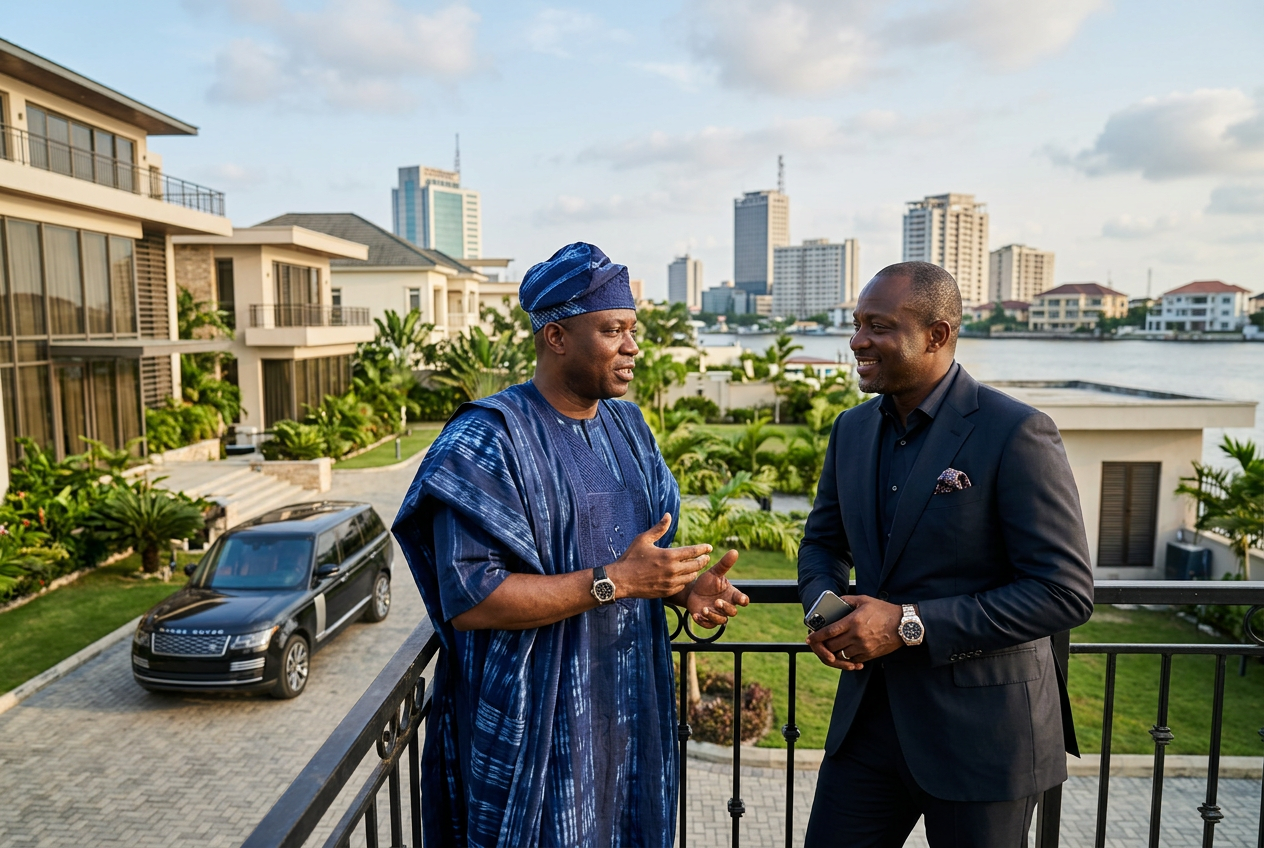
Welcome, and thank you for stopping by. Where do millionaires live in Nigeria? I have been asked that question at dinner tables in Surulere and in boardrooms off Kingsway Road, usually with a half smile, as though the asker already knows and simply wants confirmation. This piece is the conclusion of months of research into how wealth is distributed across our country, built on years of experience writing about Nigerian money and property. The people we are discussing carry a technical label, high-net-worth individual, and the residency answer is stranger than most people expect.
Everyone thinks they know. Banana Island. Maitama. Done.
But that answer, while not wrong, is the kind of answer that closes a conversation rather than opening one. It tells you where the mansions are. It does not tell you where the money is made, where it is held, whose name sits on the certificate of occupancy, or whether the owner has slept in the house this quarter. I spent a good part of this research realising that “where do millionaires live” and “where are the expensive houses” are two different questions that Nigerians have quietly merged into one.
Let me take you through what I found, and I promise it is more interesting than a list of postcodes.
Where Rich People in Nigeria Live: The Postcodes That Concentrate Wealth
Start with the obvious, because the obvious is genuinely true before it becomes incomplete.
Nigerian private wealth clusters in an astonishingly small number of places. In Lagos, the ranking runs roughly as follows: Banana Island first, then Old Ikoyi, Victoria Island, Eko Atlantic, Lekki Phase 1, Ikeja GRA, Parkview Estate and Oniru. In Abuja, it is Maitama, Asokoro, Wuse 2, and increasingly Guzape and Katampe Extension. In Port Harcourt, Old GRA and New GRA. In Ibadan, Bodija and Jericho. In Enugu, Independence Layout.

That is the map. Nine or ten neighbourhoods across three cities hold the overwhelming majority of Nigeria’s serious residential wealth, in a country of well over 200 million people spread across nearly a million square kilometres.
The concentration is not accidental. It follows the money, and the money follows infrastructure, security and legal certainty about who owns the land. Lagos State’s dominance in this respect is visible in the government’s own accounts. The National Bureau of Statistics publishes internally generated revenue by state, and the pattern is brutal: in the 2024 figures, Lagos generated ₦1.26 trillion against Rivers at ₦317.30 billion and the Federal Capital Territory at ₦282.36 billion, while Yobe managed ₦11.08 billion. Lagos alone routinely out-collects most geopolitical zones. Where the taxable income sits, the taxable people sit too.
There is a second reason, and it is less flattering. Wealthy Nigerians live where they can privately purchase the services the state does not reliably supply. A Banana Island service charge buys underground cabling, its own drainage, controlled access and a security presence. You are not really paying for a house. You are paying for a functioning municipality of about 1.6 million square metres, and you are paying for it in advance.
My colleagues on the Guardian property desk have tracked how this shapes what actually gets built. Their reporting on what is driving investment into first-tier Nigerian cities noted that more than 750 apartments priced at a million dollars or above were under construction in Lagos alone, concentrated in Old Ikoyi, Eko Atlantic, Victoria Island and Banana Island, with some asking prices reaching six million dollars. Developers build where the money is, which deepens the concentration, which attracts more money. Rather like a whirlpool, the thing feeds itself.
And the contrast is impossible to ignore. The Federal Ministry of Housing and Urban Development has put roughly 15.2 million housing units nationwide in the structurally inadequate category, a figure released alongside its national housing data work. Same country. Same year. One set of numbers describes waterfront triplexes with biometric gates, the other describes homes that fail basic adequacy tests.
Where Do Millionaires Live in Nigeria? The Direct Answer
Here is the plain response, stated as clearly as I can manage.
Nigeria’s dollar millionaires live overwhelmingly in Lagos, with a smaller cluster in Abuja and a modest one in Port Harcourt. Within Lagos they are concentrated on the Ikoyi and Victoria Island axis, in Banana Island, Old Ikoyi, Eko Atlantic, Oniru, Lekki Phase 1 and Ikeja GRA. Within Abuja they sit in Maitama, Asokoro, Wuse 2 and Guzape. A meaningful minority do not live in Nigeria at all for most of the year, holding Nigerian assets while maintaining primary residences in Dubai, London, Toronto or Johannesburg.
The closely related entities worth holding in mind as you read on:
- The 2026 Africa Wealth Report, produced by New World Wealth with Henley and Partners, which counts roughly 8,100 Nigerian dollar millionaires as at June 2026, up 12.5 per cent from 7,200 a year earlier and the first annual rise since 2021
- Lagos as the anchor city, credited with somewhere around 4,200 resident millionaires, a dozen centi-millionaires and the majority of Nigeria’s resident billionaires
- Abuja as the secondary pole, generally estimated in the several hundreds of resident millionaires, with wealth tied to government contracting, land allocation and professional services
- Banana Island, Old Ikoyi, Victoria Island, Eko Atlantic, Maitama and Asokoro as the physical addresses
- The naira exchange rate, which decides who counts at all, since the Central Bank of Nigeria’s published rates convert a million dollars into somewhere near ₦1.36 billion at official levels in recent months, and closer to ₦1.43 billion in the parallel market
That last point deserves emphasis, because it is the hinge on which this whole subject turns. Nigeria’s millionaire population fell by roughly 47 per cent over the decade to 2025, and almost none of that was wealth destruction in any real sense. It was arithmetic. Naira depreciation demoted thousands of people below a dollar line without any of them losing a single plot of land, share certificate or warehouse. A man who was a dollar millionaire in Ikoyi in 2014 and still owns the identical house today may simply have fallen off the list.
So when someone tells you Nigeria has 8,100 millionaires, hear it correctly. That is a count of people whose liquid investable assets clear one million United States dollars, excluding the value of the home they actually sleep in. It is a currency statement dressed as a wealth statement.
Which Town Is Richest in Nigeria, and Why the Answer Is Contested
Ask ten Nigerians which town is richest in Nigeria and you will get three answers with real conviction behind each.
Lagos, because of scale, ports, banks and the sheer weight of commercial activity. Abuja, because of proximity to the federation account and the contracting economy that orbits it. Port Harcourt, because of oil. All three are defensible, and which one you pick depends entirely on what you decide to measure.
Measure by total private wealth held by residents, and Lagos wins by a distance that is not close. Measure by land value per square metre, and Banana Island tops anything in the country. Measure by average household income, and the answer becomes murkier, because Abuja’s formal salaried professional class is proportionally larger and its poverty rate lower than Lagos, where enormous informal settlements sit a fifteen-minute drive from the most expensive real estate in West Africa.
My own view, for what it is worth, is that “town” is the wrong unit entirely. Nigerian wealth does not organise itself by town. It organises itself by estate. Banana Island is not a town; it is a gated peninsula reclaimed from the lagoon. Maitama is a district within a planned capital. The correct question is not which town is richest but which enclave, and once you frame it that way the data becomes much easier to read.
How Nigeria’s Wealthiest Enclaves Compare on Price and Character
| Enclave | City | Indicative prime home price | Indicative land price per square metre | Dominant wealth source | Character |
|---|---|---|---|---|---|
| Banana Island | Lagos | ₦1.5bn to ₦7bn | Up to ₦9m | Industry, oil, entertainment | Gated man-made island, strictest planning rules in Nigeria |
| Old Ikoyi | Lagos | ₦600m to ₦2.5bn | Around ₦2.15m | Banking, corporate, legacy money | Leafy and established, now building upwards |
| Victoria Island | Lagos | ₦400m to ₦1.5bn | ₦2.2m to ₦4m | Corporate headquarters, finance | Business district by day, nightlife by night |
| Eko Atlantic | Lagos | ₦700m to ₦3bn | ₦3m to ₦6.5m | New money, diaspora buyers | Reclaimed land, still filling in |
| Maitama | Abuja | ₦650m to ₦1.8bn | ₦300,000 to ₦1.5m | Government contracting, diplomacy | Quiet embassy belt, heavily policed |
| Asokoro | Abuja | ₦650m to ₦1.8bn | ₦180,000 to ₦1m | Government, institutions | Adjacent to Aso Villa, restricted access |
| Old GRA | Port Harcourt | ₦250m to ₦1.8bn | Varies widely | Oil and gas services | Colonial layout, long expatriate history |
Read across that table and one thing jumps out. Lagos does not simply have the most expensive enclaves; it has a price ceiling roughly six to nine times higher per square metre than Abuja’s best districts, which tells you the Lagos market is competing internationally while Abuja’s is competing domestically. The Abuja premium is about access to power, and access to power has a price, but it turns out to be a cheaper price than access to a lagoon frontage in Ikoyi.
The Guardian property desk’s outlook on Nigeria’s luxury residential segment for 2026 expects mature nodes such as Ikoyi, Victoria Island and Banana Island to appreciate at a moderate five to eight per cent annually, constrained by land scarcity rather than by demand. That is what a saturated top-end market looks like.
Which State in Nigeria Has More Billionaires Than the Rest
Now we arrive at the question with the most satisfying twist, and I enjoyed this part of the research more than I probably should have.
Forbes recognised four Nigerian dollar billionaires in its 2026 Africa ranking: Aliko Dangote at roughly 28.5 billion dollars, Abdulsamad Rabiu at about 11.2 billion after a remarkable year for BUA Cement, Mike Adenuga at around 6.5 billion, and Femi Otedola holding on near the billion-dollar line.
By residence, the answer is simple. All four are Lagos men in the practical sense. Lagos is where the offices are, where the exchange is, where the deals close.
By state of origin, the answer changes completely. Dangote and Rabiu are both Kano men. Adenuga is from Ogun. Otedola is Lagos. So Kano State, which will never appear in any list of wealthy Nigerian neighbourhoods, produced half of Nigeria’s Forbes billionaires.
Sit with that for a second, because it undoes the entire premise of the question.
The wealth was made in trading networks, cement, sugar and commodity distribution rooted in northern commercial culture, then domiciled in Lagos because that is where the corporate machinery lives. If you asked which state has more billionaires and meant residence, Lagos. If you meant provenance, Kano has an extremely strong claim. Both answers are true and people argue about it endlessly without noticing they are answering different questions.
There is a darker layer here too, and it would be dishonest to skip it. Not all money in the prime enclaves arrived through cement and telecoms. Guardian reporting on how illicit funds distort the property market has documented the phenomenon of expensive, permanently empty buildings, and made the point that corrupt money channelled into real estate inflates prices for everybody else. Some of Nigeria’s most exclusive addresses are stores of value rather than homes. The lights never come on.
Where to Meet Rich Guys in Lagos, and Why Proximity Is Not Access
I debated whether to address this one, and then decided that pretending people do not search for it would be a bit precious of me. So let us handle it honestly.
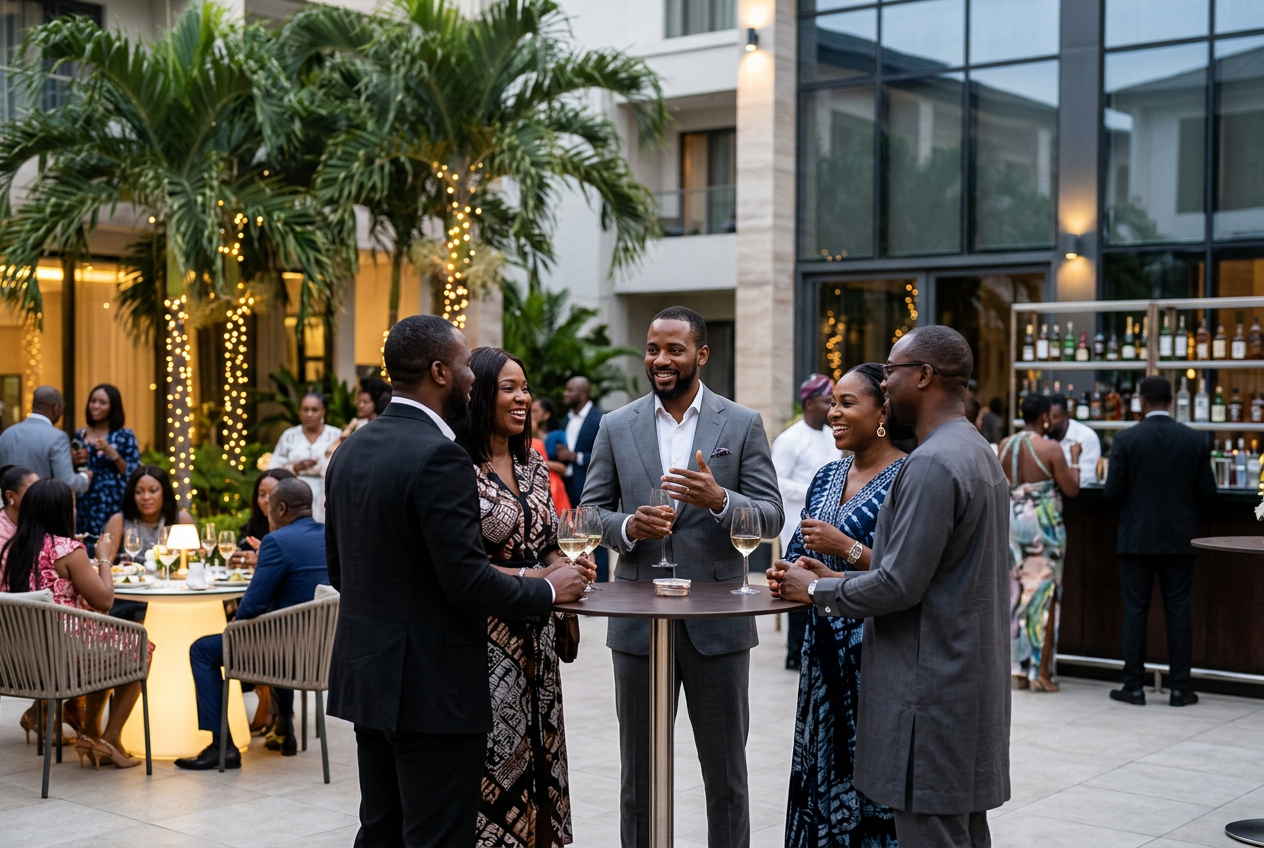
If you want to know the physical answer, it is not a secret. Wealthy Lagos men circulate through a fairly predictable set of places: the Ikoyi Club 1938 and Lagos Motor Boat Club, the Lagos Polo Club during the tournament season, the lobby bars of the Eko Hotel and the Wheatbaker, private members’ clubs on Victoria Island, Landmark and Oniru on a Sunday, and the business districts themselves during the working week. Layer on the professional circuit: Nigerian Exchange events, banking and fintech conferences, Lagos Business School alumni gatherings, art auctions, and the philanthropy dinners that mark the Lagos social calendar.
That is the map. Now the part nobody puts in the listicles.
Proximity is not access. You can sit in the Wheatbaker lobby every evening for a year and meet nobody, because these are closed networks that run on introductions, shared institutions and demonstrated competence. Wealth in Lagos moves through relationship chains that are years deep. The man at the next table is not looking for a stranger; he is looking for someone his cousin vouched for.
And there is a harder thing to say. The framing of this question, which imagines wealth as something you find rather than something you build, is precisely the framing that predatory people exploit in both directions. Lagos has a well-documented economy of fake wealth, borrowed cars and staged photographs, and a parallel economy of transactional arrangements that leave the less powerful party carrying all the risk. If a stranger’s money becomes visible to you very quickly, that visibility is usually the product being sold.
The more useful reframing, and this is genuinely how the people I know who moved up actually did it, is to get into rooms where competence is the ticket. Professional associations. Industry conferences. Serious volunteer boards. Alumni networks. Skill, consistently demonstrated over years, opens doors that a good outfit in a hotel lobby never will.
Seven Steps for Reading Nigeria’s Wealth Map Properly
Whether you are relocating, investing, reporting or simply curious, here is the sequence I use when I need to make sense of a claim about Nigerian wealth.
- Start with the currency before the postcode, because almost every dramatic swing in Nigeria’s millionaire count over the past decade has been an exchange rate story rather than a wealth story, and you will misread the whole picture if you skip this.
- Separate residence from origin, since where a wealthy Nigerian sleeps, where the business was built and where the family compound sits are frequently three different states.
- Check which measure is being used, because liquid investable wealth excludes the primary residence while total net worth includes illiquid company stakes, and the two produce very different lists.
- Follow the tax receipts rather than the rumours, using state revenue data to see where taxable income genuinely concentrates instead of relying on which governor shouts loudest.
- Compare land prices per square metre rather than headline house prices, since a five hundred million naira house means nothing until you know the plot size and the location.
- Ask what the wealth is attached to, whether that is manufacturing, oil services, government contracting, banking or technology equity, because the source predicts how durable it is.
- Test every wealth claim against the poverty data for the same place, which is the only way to keep the picture honest and the only discipline that stops a story about Banana Island becoming a story about Nigeria.
Practical measurements, since the brief asked for them and they matter. A serviced three-bedroom flat in Old Ikoyi typically runs 180 to 260 square metres of built area. A Banana Island five-bedroom detached house commonly sits on a plot of 500 to 800 square metres with 600 to 900 square metres of built area across three floors. Prime Lagos perimeter walls run 2.4 to 3 metres, and estate covenants in Banana Island regulate everything down to roof pitch and boundary setbacks. In Maitama, a 500 square metre plot has been quoted upwards of ₦199 million, while the same plot size in Asokoro has been quoted upwards of ₦90 million.
On the design side, since so many readers ask: the current prime Nigerian aesthetic has moved decisively away from the ornate columns and gold fittings of the 2000s. What sells now is restrained. Off-white and warm grey exteriors, deep overhangs sized for our rainfall, floor-to-ceiling glazing on the lagoon side with solar control film, terrazzo and large-format porcelain rather than heavily veined marble, and integrated inverter and solar systems concealed in a plant room rather than a generator house you can hear from the gate. If you are building at this level, budget the power and water infrastructure at fifteen to twenty per cent of the total build cost, because that is what actually determines whether the house is pleasant to live in.
Final Thoughts on Where Millionaires Live in Nigeria
So, where do millionaires live in Nigeria? In Lagos first and by a wide margin, in Abuja second, in Port Harcourt third, and within those cities in perhaps a dozen enclaves that you could drive through in a single afternoon. That is the honest short answer.
But I hope the longer answer has been more useful. The addresses are the least interesting part of this story. What matters is that Nigerian wealth is concentrated to an extraordinary degree, that the headline millionaire count is a currency measurement rather than a prosperity measurement, that residence and origin diverge in ways that undo lazy regional assumptions, and that the same statistical office describing ₦1.26 trillion in Lagos revenue also recorded 133 million Nigerians as multidimensionally poor in its 2022 survey. Those two facts live in the same country and must be held together.
If you take practical action from this piece, make it one of three things. Verify any wealth claim against the measure being used before repeating it. If you are investing, look at land value per square metre and title quality rather than the marketing brochure. And if you are trying to move closer to that world yourself, build the competence that gets you into the room, because the room is not entered from the lobby.
- Treat every Nigerian millionaire statistic as an exchange rate statement first and a wealth statement second, and re-check it whenever the naira moves materially.
- If you are buying into a prime enclave, price the land per square metre, confirm the title, and budget separately for power and water infrastructure before you fall in love with a facade.
- Judge any claim about a rich neighbourhood by looking at the poverty and housing data for the same city on the same day, because the two together are the only complete picture.
Related Articles
If the counting methodology in this piece caught your interest, my earlier examination of how the national millionaire tally is actually assembled goes much deeper into why Forbes and New World Wealth disagree about who qualifies, and what happened to the thousands of Nigerians who lost the label without losing a naira of assets. It pairs naturally with everything above.
And if you found yourself wondering where the threshold actually sits for ordinary Nigerians rather than for dollar-denominated lists, I worked through the naira income and net worth levels that define wealth locally, including why ₦400,000 a month means something entirely different in Enugu than it does in Lekki. That piece is the domestic-currency companion to this one.
Key Takeaways
- Nigeria’s roughly 8,100 dollar millionaires cluster in about a dozen enclaves across Lagos, Abuja and Port Harcourt, with Lagos holding the clear majority at around 4,200 residents.
- The decade-long fall in Nigeria’s millionaire count was driven overwhelmingly by naira depreciation rather than by any real destruction of assets, and the 2026 figures show the first annual increase since 2021.
- Residence and origin tell different stories, since all four Forbes-listed Nigerian billionaires operate from Lagos while two of them, Aliko Dangote and Abdulsamad Rabiu, are Kano men.
Frequently Asked Questions About Where Millionaires Live in Nigeria
Where do millionaires live in Nigeria?
Nigerian dollar millionaires live overwhelmingly in Lagos, particularly in Banana Island, Old Ikoyi, Victoria Island, Eko Atlantic, Oniru, Lekki Phase 1 and Ikeja GRA, with a smaller cluster in Abuja across Maitama, Asokoro, Wuse 2 and Guzape. Port Harcourt’s Old GRA and New GRA form a third and much smaller pole built on oil and gas services.
Where do rich people in Nigeria live outside Lagos and Abuja?
Outside the two main cities, affluent Nigerians concentrate in Old GRA and New GRA in Port Harcourt, Bodija and Jericho in Ibadan, Independence Layout in Enugu, and Nassarawa GRA in Kano. These are smaller pools of wealth built on regional industry, professional services and long-established family holdings rather than on national corporate money.
Which town is richest in Nigeria?
Lagos is the richest urban centre in Nigeria by every meaningful measure of private wealth, commercial activity and internally generated revenue, and it holds roughly half of the country’s resident dollar millionaires. If you narrow the question from town to enclave, Banana Island in Ikoyi commands the highest land values anywhere in the country.
Which state in Nigeria has more billionaires?
By residence, Lagos State is home to all four of Nigeria’s Forbes-recognised dollar billionaires, since that is where their corporate operations are based. By state of origin the answer shifts to Kano, which produced both Aliko Dangote and Abdulsamad Rabiu.
How many dollar millionaires does Nigeria have in 2026?
The 2026 Africa Wealth Report from New World Wealth and Henley and Partners counted approximately 8,100 Nigerian dollar millionaires as at June 2026, an increase of 12.5 per cent on the 7,200 recorded a year earlier. That marks Nigeria’s first annual rise in millionaire population since 2021, and places the country fourth in Africa behind South Africa, Egypt and Morocco.
Is Banana Island really the most expensive address in Nigeria?
Yes, Banana Island holds the highest residential land values in Nigeria, with prime plots quoted at several million naira per square metre and completed houses commonly listed between ₦1.5 billion and ₦7 billion. Its combination of controlled access, private infrastructure and strict estate covenants sustains a premium that no other Nigerian address currently matches.
Where to meet rich guys in Lagos?
Wealthy Lagos men circulate through private clubs such as Ikoyi Club 1938 and the Lagos Motor Boat Club, hotel lobbies on Victoria Island, the polo season, and professional gatherings including exchange events, fintech conferences and business school alumni networks. Being in those rooms is not the same as gaining access, because these are closed networks that run on introductions and demonstrated competence rather than on chance encounters.
How much money makes you a millionaire in Nigeria?
A dollar millionaire in Nigeria holds at least one million United States dollars in liquid investable assets, which converts to roughly ₦1.36 billion at recent official rates and closer to ₦1.43 billion in the parallel market. That measure deliberately excludes the value of the home the person actually lives in, which is why the count is lower than most Nigerians assume.
Why did Nigeria lose so many millionaires over the past decade?
Nigeria’s millionaire population fell by roughly 47 per cent between 2015 and 2025, and the overwhelming cause was naira depreciation rather than any loss of real assets. Thousands of wealthy Nigerians slipped below the dollar threshold while owning exactly the same property, shares and businesses they had held the year before.
Do Nigerian millionaires actually live in Nigeria full time?
A meaningful share of Nigeria’s wealthiest households now split their time between Nigeria and cities such as Dubai, London, Toronto and Johannesburg, keeping Nigerian assets while holding a primary residence abroad. This outflow is one reason the resident millionaire count has fallen faster than the underlying stock of Nigerian-owned wealth.
Is Abuja wealthier than Lagos?
Abuja has a higher proportion of formally salaried professionals and a lower poverty rate than Lagos, but Lagos holds far more total private wealth and generates several times the internally generated revenue. Abuja’s affluence is concentrated and government-adjacent, while Lagos wealth is larger, more varied and sits alongside much deeper poverty.
Can ordinary Nigerians afford to live in these areas?
No, and the gap is not marginal. With prime Lagos homes commonly listed above ₦600 million and commercial mortgage rates running well into the twenties, these enclaves are structurally out of reach for the overwhelming majority of Nigerian earners, which is why the Federal Ministry of Housing and Urban Development continues to report millions of structurally inadequate homes nationwide.

