 Follow Us on Google News
 Follow Us on Google Discover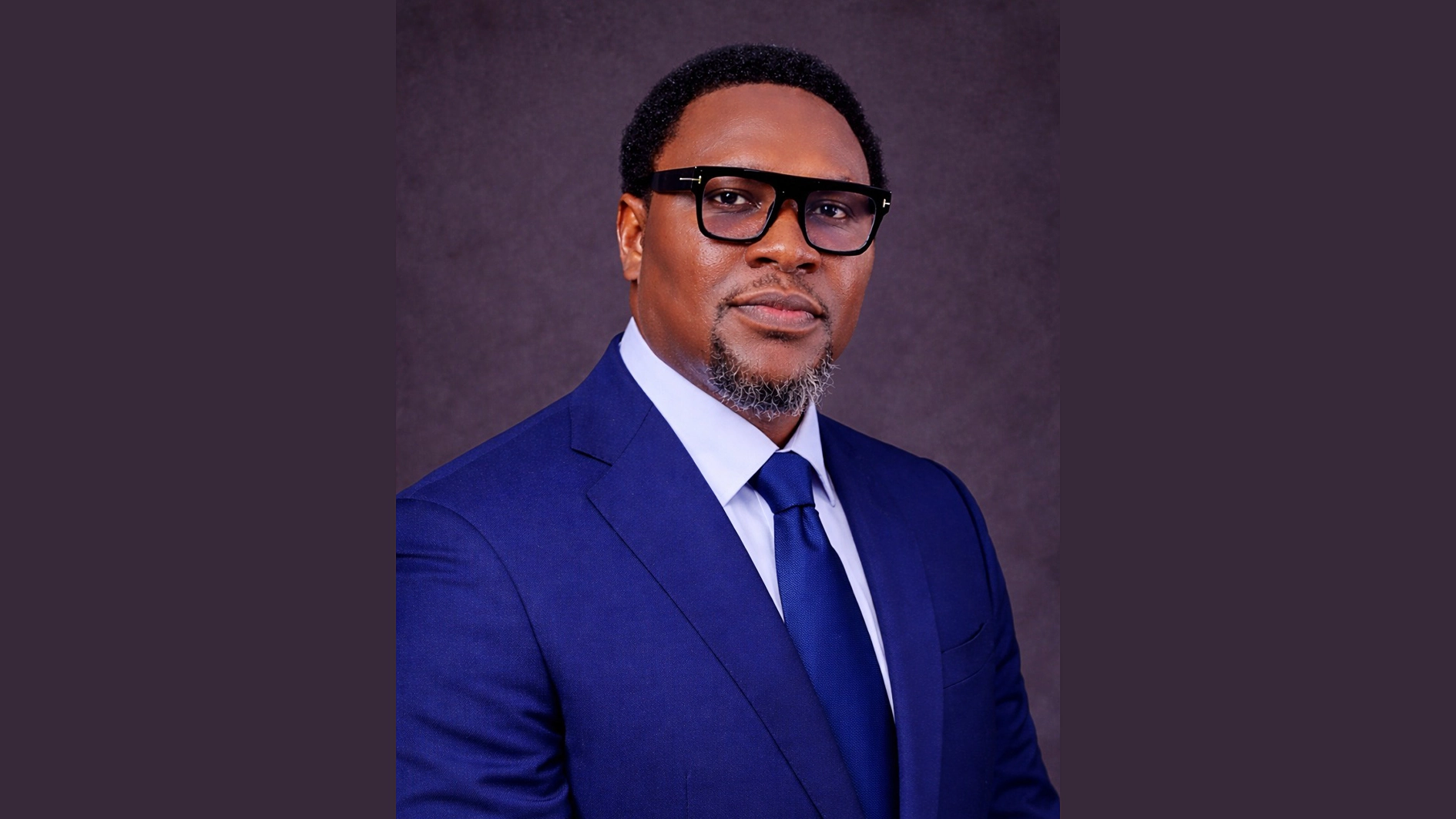
Engr. Dr. Morris Ogheneochuko Idiovwa carries the bearing of a man shaped by both fieldwork and boardroom governance. A native of Orogun in Ughelli North, Delta State, he entered the oil and gas industry with a practical engineer’s discipline and emerged with the reputation of a builder of institutions. Registered with COREN and armed with an MBA and more than two decades of sector experience, he now leads as Group CEO of Bicens Group, an indigenous firm known for drilling, operations, maintenance, EPCI and specialised labour supply across the oil and gas sector.
His academic grounding sits alongside recognitions earned in service. Beyond his MBA and COREN status, the resourceful engineer has received an honorary doctorate in Engineering Management from Highstone Global University, Texas, USA, an acknowledgement of his record in engineering management and fiscal leadership. That blend of technical certification and strategic training has defined how he approaches projects: not as isolated contracts but as systems that must deliver jobs, skills and durable infrastructure to host communities.

In public life, Idiovwa was entrusted with setting the template for local participation. As the inaugural Director-General of the Delta State Local Content Development Agency, he was mandated to enforce workforce quotas and drive skills development across the state’s oil-bearing areas. He earlier spent five years as Chairperson of the OML 30 Communities Development Board, coordinating engagement across more than 111 oil-producing and pipeline communities. In both roles he positioned community development not as charity but as a contractual obligation of the industry, and he pushed for alignment between operators, government and grassroots structures.
In the private sector his imprint is equally direct. Under his leadership Bicens Resources has grown into a credible indigenous contractor while he also serves as Vice President at Imperial Crest Energy Limited Worldwide. His work has focused on executing complex upstream scopes with local capacity, reducing reliance on imported expertise and keeping revenue cycles within Delta communities. Asked what principle drives such impact, he credits diligence, discipline and a dogged, never-give-up focus.
For Idiovwa and his community in Orogun, the announcement of the creation of Delta State did not arrive as mere administrative news; it was a moment of recognition long pressed for, a formal acknowledgment of a people who had always known themselves to be distinct within the old Bendel. The creation offered what he described as a window to showcase the heterogenic nature of the state, and with it came a renewed sense of belonging to the Nigerian project. The excitement was genuine, rooted in the belief that a state rich in human and natural resources would now have the room to define its own pace and purpose.
Decades later, that promise remains unfinished. Idiovwa argued that Delta State should have moved past the stage where road construction alone can be counted as development, and he pointed instead to the urgent need for industrialization driven by public-private partnership. He noted that the movement of corporate offices of IOCs in the 1990s slowed the state’s economic base, yet he believes the capacity now exists among Deltans to reverse that tide, if there is unity of purpose and structured collaboration between government and the private sector. Central to that turnaround, he said, is harnessing the state’s best brains regardless of where they are found. “We must look beyond party affiliation and politics and assemble capable hands in both the public and private sectors for the benefit of Delta State,” he insisted. For him, governance should be a convergence of technocrats, entrepreneurs, academics and community leaders who understand the terrain and can execute with discipline, not a reward system that sidelines competence.
On the question of why many oil and gas firms operating in Delta State still keep their headquarters outside the state, he is direct. He observed that while operations continue in Delta State, the corporate offices sit elsewhere, and the tax value that should accrue to the state slips away. For that pattern to change, he said, the state government must lead a collective front with traditional institutions, community leaders and youth structures to guarantee security and coherence, so that companies can return without fear of contradiction or politicization. According to him, Delta State deserves to be run as an industrial hub, not as a place where progress is measured by unsustainable small-scale enterprise alone, and that shift will require indigenes to set aside division and drive a sustainable entrepreneurship and industrialisation campaign with firm state backing and credible private sector investment.
At the core of Bicens Resources’ resilience is a resourceful team sustained by the managerial and technical competence of Morris Idiovwa, an outstanding Deltan who has steered the company through Nigeria’s difficult operating terrain. Visionary and focused, he does not speak of the team as staff alone. “We have a dedicated team , call ourselves the DARE Tribe because there is nothing too big for us to dare,” he said. That ethos shapes daily operations in a sector he described as highly competitive. The company runs on process, on discipline, and on a deliberate commitment to integrity. Every engagement is weighed against one question: how can it make the client better than yesterday. The team tracks trends, anticipates bottlenecks, and moves to ease pressure points before they harden. “The whole idea is value creation, and doing that, creating that value, as well as maintaining integrity and discipline. So I think that has been what has actually stood us out among other service providers.”
That same discipline now fuels a continental outlook. From a firm that began barely 15 years ago, Bicens Resources has grown into a company competing at international level, with operations in three Nigerian states and a presence already established in Equatorial Guinea. The next phase is deliberate expansion. “In a decade we intend to be the one-stop shop for local content pride. We want to be the mouthpiece of driving local content in Nigeria,” Idiovwa stated. Offices are being set up in Ghana before year end, with the Democratic Republic of Congo also in view. The objective is clear: to be the go-to for technical solutions in oil and gas, and to support the economies of Nigeria and Africa by spreading across African territories with innovative offerings. “We are committed to providing innovative solutions for sustainable progress,” he added.
That commitment to Delta State extends far past corporate offices into the communities that raised him and where Bicens Group operate. For Idiovwa, growth without impact at home would be hollow. “Giving back has been part of our nature, part of the value that we also believe in. As we grow, we ensure our people and those around us grow with us as well,” he said. At one point Bicens Resources ranked among the highest employers of youth in Delta State, creating what he described as an echelon of empowerment before other major players entered the space. The effort did not stop there. The company runs a yearly CSR tradition, while Idiovwa personally funds a survival support scheme and scholarships for indigenes, covering tuition and school expenses for children from his area. “CSR as a way of giving back, has been part of our foundation, which we tend to improve on, even as we progress, expand on it as much as possible. For us, it is to see that the impact of our growth is felt by our people and the host communities. It is very important for us.”
Engr. Morris Idiovwa’s counsel to young Deltans is blunt and rooted in his own path. “My life is a testament to the fact that dreams are achievable with skills, vision and dedication, because if you go read my story and how I got here, it is a clear evidence that you can become anything you set your mind to be,” he explained. He recalled a rough background and a tough start, which is why he keeps urging the present generation to look outside their present comfort zone. In his view, too many youths in the Niger Delta have narrowed their ambition to political patronage. “For some reasons, the state is constructed in a such a way that our youth has been too overly dependent on state government. You see many of our youth are going to book appointment to be PA, SA, and they are contended as long as they got the title, which is not life.” He argued that relying on political appointments alone limits growth and blinds young people to bigger possibilities.
The alternative, he said, is to take bold and visionary moves into private enterprise, career development, entrepreneurship and the expanding IT solutions market. “Corporate individuals grow economy, our youths must look outside their comfort zone at the moment and begin to explore their creative talent,” Idiovwa advised. The Niger Delta, he noted, is bound with resources that remain underused because the focus is misplaced. Instead of reliance, he wants to see partnership: young people looking inward, building skills, starting businesses, and converting local assets into products and services that generate wealth. “You cannot succeed by being dependent, you must leave your comfort zone, look beyond the horizon and understand that there is so much opportunity, and long as you begin to create and add value to the society, wealth is inevitable. We must get our youth to begin to look inward and see how we can transform the resources of the Niger Delta into valuable product that can generate wealth among the people. Many of our people are just for some reason not focused on the right direction, rather focused on what is not important.”
As Delta State marks 35 years, Engr. Morris Idiovwa stands out as an indigene whose career bridges engineering competence, policy execution and enterprise, a trajectory rooted in Orogun, tested in the field and now shaping how oil and gas value is retained at home.

