 Follow Us on Google News


 Follow Us on Google Discover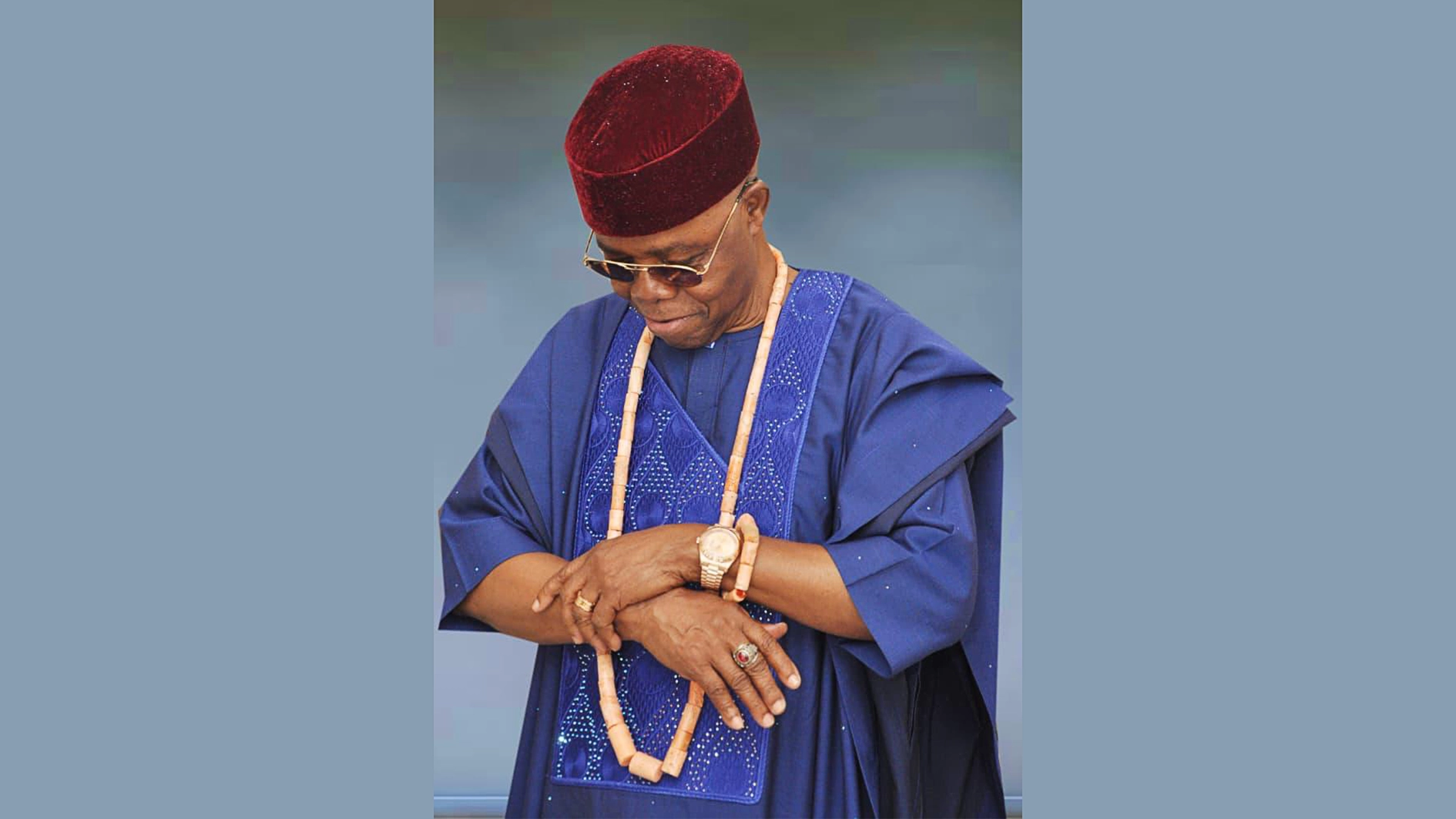
DR VINCENT EBUH: Profile of an illustrious Deltan making bold statement in global oil and gas space
Delta State’s illustrious son, Dr. Vincent Ebuh does not need much introduction. Though a man of few words, his towering profile speaks volumes. The Petroleum Engineering Explorationists and Chairman of the Indigenous Oil&Gas services company, Petrolog Group, has actually been around, being the First Nigerian to start an Oil & Gas services company in the country in the 80s.
Petrolog is represented in four continents, with over 10 offices, including those in Angola, Namibia, Guyana, Venezuelan, London and Houston,Texas.
Intellectual works
Dr. Ebuh has presented several Memoranda to the Nigerian Government on Solutions to the Issue of Perennial Shortages of Petroleum Products in Nigeria. His paper, “The Poor State and Management of Infrastructure in Nigeria- A call for Action” offered insight on how to maintain Nigeria’s critical infrastructure. He has in his kitty, several published works that have helped in strengthening the Nigerian Oil and Gas sector in particular, and the global industry, at large.
He authored, International Trade: Third World Dilemma: Implication for African Countries before Year 2000 and Beyond. The work used Nigeria as a Case Study, Nigerian Entrepreneurs in the Oil and Gas Industry; Problems, Challenges and Prospects, and Strategic Repositioning of Oil and Gas for more Impactful Contribution to the Economy.
Awards
In 2011, Dr. Ebuh received the “Lion of Africa Leadership Award” by the Constituency for Africa (CFA) in recognition of his outstanding private sector leadership and contribution in 21st Century Africa; Washington DC under the auspices of 2011 Ronald H. Brown Africa Affairs series. In 2014, 2016 and 2024, he was decorated with the Lifetime Achievement Award in Oil and Gas Industry, Pioneer of indigenous Oil and gas service company in Nigeria and Distinctive Leadership Medal of Honour respectively, by the Petroleum Technology Association of Nigeria, PETAN.

He was also named Top Executive and Professional of the Year 2015 by Strathmore’s Who’s Who Worldwide Edition, for his outstanding contributions and achievements in the oil and gas industry, Farmingdale, New York, USA. He was named one of the 50 most impactful African CEOs in 2022, by The Guardian. In 2026 he was decorated with the prestigious LIFETIME ACHIEVEMENT Award in the Vanguard Personality of The Year Award for the year 2025.
Professional Affiliations
Dr. Ebuh is a Fellow of Nigerian institute of Management; a Fellow of Nigerian Association of Petroleum Explorationist and Nigerian Institute of Petroleum Technology Association of Nigeria (PETAN), Chartered Institute of Corporate marketing and management, respectively. He is OPM Graduate of Harvard University and an Alumni of Oxford, Stanford and George Town Universities. He is a Member Entrepreneurship Institute of Houston and also President Nigerian Venezuelan Chamber of Commerce.
Entrepreneurship
He co-founded Zenith Bank PLC in 1990. In 2019, the Delta State born Petroleum Engineering Explorationist made a detour into the Technology Space, and founded InterstateData US Inc. (NEXIT), a revolutionary Navigational App which was first launched in North America and Globally on IOS and Android platforms in January 2025.
Dr. Ebuh is one of the first Nigerians to acquire a brand new, 100% Nigerian-owned, Nigerian-flagged, DSV Subsea Saturation Diving Vessel. For over 40 years, he has been an advocate of Local Content Development in Nigeria and Africa.
Recognized as an outstanding and impactful indigene of Delta State, he speaks on the state’s journey, offers advice on building a more prosperous Delta, discusses Petrolog Group’s growth strategy, and advises young Deltans.
What personal principles and values would you credit for such an enviable height you have attained as a business leader today?
I would say that my journey has been anchored on integrity, hard work, discipline, perseverance and the willingness to learn continuously.
I have always believed that success is not built overnight. It is the product of consistent effort, sound judgment and the courage to remain focused even when the environment is difficult. In business, reputation is one of the greatest assets a person can have. Once you lose people’s trust, it is difficult to rebuild it.
I have also learnt to treat people with respect, regardless of their position. I believe strongly in teamwork, accountability and keeping one’s word.
Most importantly, I have tried to remain humble and God-fearing. Every achievement comes with a responsibility to society, and I believe that whatever position we attain should ultimately be used to create value for others.
Can you take us back to 1991 when Delta state was created. How did you receive the news?
The creation of Delta State on August 27, 1991 was received with tremendous excitement and a strong sense of hope. For us as Deltans, it represented more than the creation of another state; it was the emergence of a political and administrative identity that brought government closer to our people.
At the time, there was a strong feeling that the new state would create greater opportunities for our communities and allow our people to participate more meaningfully in determining their own development priorities.
Looking back 35 years later, I think that hope has, in many respects, translated into home progress. Delta has produced remarkable people across business, politics, academia, sports, entertainment and the professions. But the creation of a state is only the beginning. The real test is how effectively we use the opportunities that statehood provides to improve the lives of our people.
How was life in the areas that now formed Delta State before August 27, 1991?
Before Delta State was created, the areas that now formed the state were characterised by strong community values, resilience and resourcefulness. However, development was also constrained due to the administrative structure of the old Bendel State and the sheer size of the territory. Our communities had enormous potential, particularly in agriculture, commerce, oil and gas, fishing and other natural resources, but infrastructure and access to opportunities were not always adequate.
Today, Delta has made significant progress, but there is still considerable room for improvement.
Are there areas you think the state government should improve their offerings?
I think the state should place greater emphasis on human capital development, education, power, healthcare, infrastructure, industrialisation and job creation.
We must also improve the business environment. Although the government cannot create all the jobs, it can however, create an environment where entrepreneurs and investors can establish businesses, expand and employ people.
I would particularly like to see greater attention to road infrastructure connecting rural production communities to urban markets, agricultural value chains, technical education and digital skills. Development should not be concentrated only in the capital. Our rural communities must also feel the impact of government.
Can you recollect people and places in Old Bendel or Delta State that shaped you most while growing up, and what lesson from home still guides how you lead Petrolog Group today?
Like many people of my generation, I was shaped by a combination of family, community, teachers, mentors and people whose lives demonstrated the importance of character and hard work. One of the strongest lessons I took from home was that your name is an asset. You must protect it because reputation takes years to build but can be destroyed by one careless decision. That lesson has stayed with me throughout my business career. At Petrolog Group, I have always emphasised integrity, professionalism, responsibility and respect for people. I also learnt that leadership is not about being the loudest person in the room. It is about taking responsibility, listening to others, making difficult decisions when necessary and accepting the consequences of those decisions.
Running a major Oil&Gas group comes with pressure. What keeps you grounded and motivated, especially when the business environment becomes tough?
The Oil- Gas sector is certainly not for the faint-hearted. It is capital-intensive, highly competitive and influenced by several factors, including government policies, global oil prices, foreign exchange, technology and the wider economic environment. What keeps me going is the understanding that challenges are part of the entrepreneurial journey. When the environment becomes difficult, you do not abandon your principles; you go back to the fundamentals, review your strategy, control what you can control and remain focused on the long term. I am also motivated by the people whose livelihoods depend on the organisation. When you have employees, families, suppliers, customers and communities connected to your business, you understand that leadership comes with responsibility. Above all, my faith in God, my family, my team and the belief that there is always a solution to a difficult problem keep me going.
What is one personal moment or achievement in your journey that makes you most proud to call Delta State home?
One of the things that makes me particularly proud is seeing how far we have come as Deltans and being able to contribute, however modestly, to the economic development of our state and Nigeria through the business I lead. For me, success is not simply about the size of a company or the value of an investment. It is about the number of lives that are positively affected by what you do.
When I see young people who have been given opportunities to develop themselves, professionals who have grown through the organisations I have been privileged to lead, and communities benefiting from private-sector intervention, those are moments that give me the greatest satisfaction. Being a Deltan is also a reminder of where I come from and the responsibility to ensure that whatever success I attain does not end with me.
Delta State is richly endowed with oil and gas. What specific steps do you believe the state government should take to attract more investment into oil and gas, and also diversify into other critical sectors?
Delta State should position itself as one of Nigeria’s most investment-friendly energy destinations. The state has the natural resources, human capital and strategic location to attract significant investment in oil and gas, but investors need predictability, infrastructure, security, efficient regulation and a business-friendly environment.
The government should strengthen engagement with private investors, improve infrastructure around industrial and oil-producing communities, facilitate access to land, reduce unnecessary bureaucratic bottlenecks and promote partnerships between government and the private sector. We should also think beyond crude oil. Delta has enormous opportunities in gas processing, petrochemicals, modular refining, logistics, marine services and other areas of the energy value chain. At the same time, diversification is critical. Agriculture and agro-processing, aquaculture, tourism, manufacturing, technology, solid minerals and the creative economy can become significant contributors to the state’s economy. The objective should be to move from an economy where we primarily extract resources to one where we increasingly process, manufacture, add value and export finished products.
In what ways have you given back to your state of origin, either through Petrolog Group’s CSR programs or through your personal philanthropic engagements?
I have always believed that business and society cannot be separated. A successful company must recognise the communities and people around it as important stakeholders. Although Petrolog Group is not necessarily a local company but a global entity, we have supported initiatives aimed at improving the welfare and opportunities of people within our communities. These interventions have included support for people in need, community development and efforts that promote education and human capacity development. For me, philanthropy is not about publicity. It is about impact. Where possible, I believe we should move beyond simply giving people temporary relief and support initiatives that empower them to become economically independent. I also believe that one of the greatest forms of giving back is mentoring and creating opportunities for young people. If you can help a young person acquire a skill, secure employment, start a business or develop confidence in himself or herself, you have potentially changed an entire family.
What advice would you give to young Deltans who look up to you as an outstanding indigene and are aspiring to make their own mark?
My message to young Deltans is simple: believe in yourselves, acquire knowledge, work hard and never compromise your integrity in pursuit of success. The world today is different from the one we grew up in. Young people have access to opportunities that previous generations could only dream about. Technology has removed many geographical barriers. A young person sitting in Delta State can build a company or provide a service for people anywhere in the world. But opportunity must be matched with preparation. Learn a skill. Understand technology. Develop financial discipline. Read widely. Build relationships. Find mentors. And don’t be afraid to start small.
Most importantly, don’t measure your journey against somebody else’s timeline. Success takes different forms and comes at different times for different people. As Deltans, we should also remember that our individual success contributes to the image and development of our state. Wherever you find yourself, represent Delta State with excellence, dignity and integrity. My greatest wish is to see a new generation of Deltans emerge who will not only inherit the achievements of the past 35 years but will take the state to a much higher height. Delta State at 35 years anniversary should not only be a celebration of where we have come from; it should be a renewed commitment to where we are going.

