 Follow Us on Google News
 Follow Us on Google Discover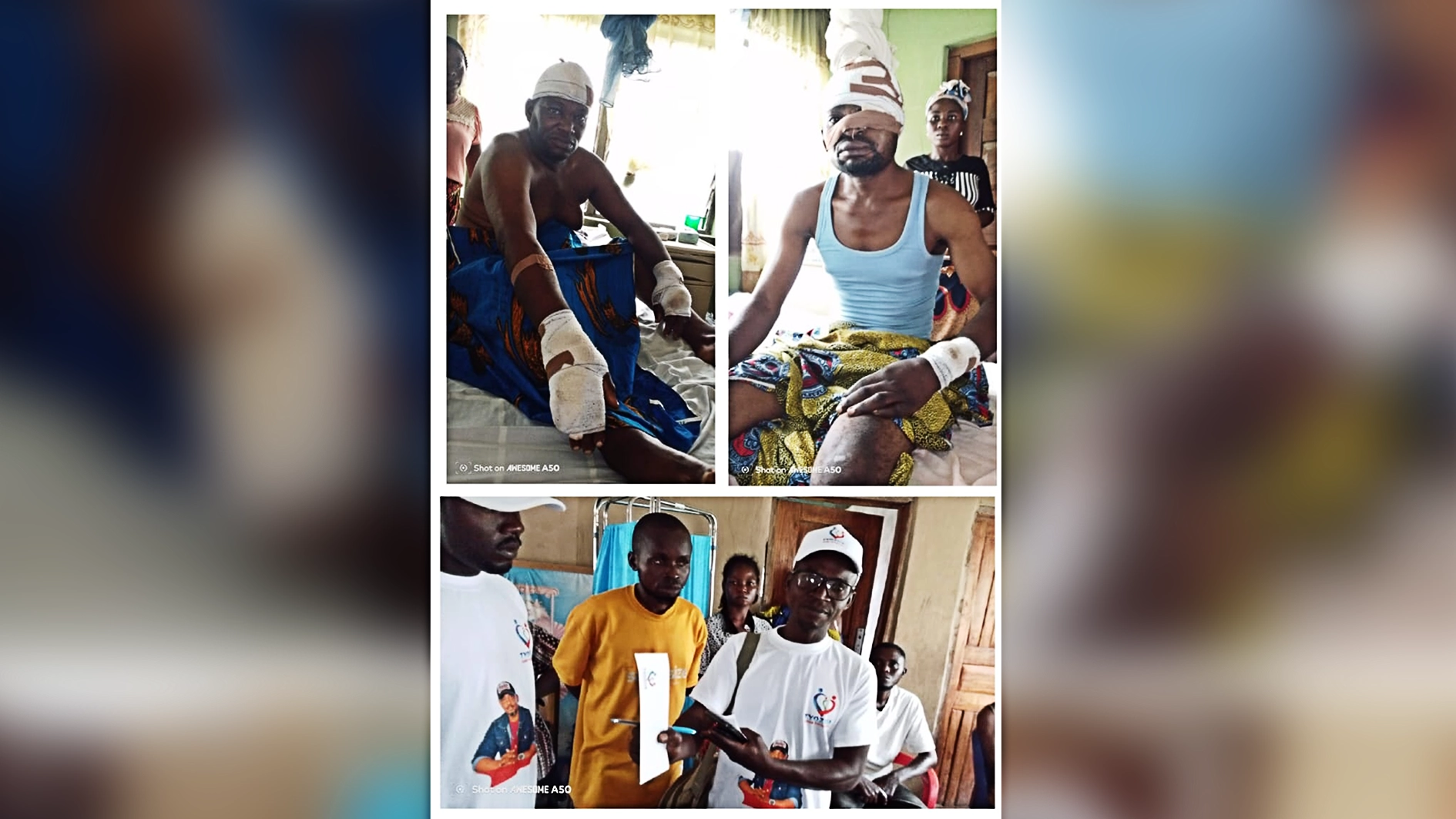
By Tyozua Terdoo Titus
There are places in Nigeria that rarely make national headlines until blood is spilled. Aboajio is one of them.

Located in Mbazun Mbaterem council ward of Ukum local government council, Benue state, close to the Taraba boundary and within the wider Wukari axis, Aboajio is far more than an ordinary rural settlement. It is a farming community, a safe haven for displaced families and a strategic border settlement increasingly exposed to Nigeria’s intractable security challenges.
For years, its people have carried the burden of living on the edge of a state boundary without receiving the infrastructure, security presence and institutional attention that such a strategically located community deserves. The question today is no longer whether Aboajio is vulnerable. The question is: how many more lives must be lost before government treats its vulnerability as a national security emergency?
The urgency became painfully clear on August 16, 2026, when suspected armed herders attacked Aboajio and nearby communities. The Benue State Police Command confirmed the attack, reporting deaths and injuries, while community sources suggested that the actual casualty figure could be higher. Communities affected included Aboajio, Ayaba, Ikpur, Yina and Ukpen.
The uncertainty surrounding the casualty figures is itself troubling. When even the number of people killed in a remote Nigerian community becomes difficult to establish, it exposes the disconnect between vulnerable citizens and the institutions responsible for protecting them. Behind every disputed figure is a human being—a father, mother, farmer, child, breadwinner and member of a community whose future has been violently truncated.
Aboajio occupies an important position between communities around Kyado and Jootar in Ukum and Rafin-Kada in Wukari, Taraba State. With a population running into thousands, it is one of the significant Tiv settlements at the extreme end of Mbazun council ward. Its importance, however, is not merely geographical. Over the years, Aboajio has also received families displaced by violence from parts of Taraba state. Communities such as Tor-Musa, Tor-Yorshaer, Apiirgwa, Tse-Yawe and Gbabo-Awhadi have had people seeking refuge around the area.
This history reveals an important reality that official security maps often fail to capture: border communities are not simply dots on a map. They are living shock absorbers for crises that cross administrative boundaries. When violence erupts in Taraba, people flee towards Benue. When markets become unsafe, traders depend on neighbouring communities. When roads are impassable, communities become isolated.
And when security fails, administrative boundaries mean little to families running for their lives. Aboajio has therefore become both a refuge and a potential target.
The long history of Tiv-Jukun conflict in the Wukari area provides important context. The devastating conflicts of the early 1990s resulted in thousands of deaths and widespread displacement. Subsequent research has identified land ownership, political competition, ethnic identity and disputes over traditional authority as recurring factors behind the conflict. The painful lesson is that curtailing immediate violence without resolving underlying grievances only produces temporary calm. Perhaps the most disturbing part of Aboajio’s story is the possibility that violence can go beyond generations. Mr. Ihyom Nyam was reportedly killed during the 1993 crisis, while decades later, his children, Lahaga Ihyom and Timothy Ihyom, were sadly, among those killed in renewed violence.
Aboajio is an agricultural community. Its people depend heavily on farming, including yam and groundnut production, while livestock keeping also forms part of the local economy and culture. But agriculture cannot thrive where farmers are afraid to enter their farms.
A farmer who hears gunshots instead of bird songs cannot confidently work. A trader who fears travelling cannot move agricultural produce. A widow who loses her husband and breadwinner may struggle to sustain her family. A child whose family has been displaced may stop attending school. Insecurity therefore destroys more than lives. It attacks the entire social fabric.
This therefore makes infrastructure part of the security solution. The proposed road linking Kyado through Dajo, Ayaba, Ikpuur and Aboajio, with onward connection to the federal highway at Melabu should not be viewed merely as only a development project but also as a security measure. When attackers strike, security personnel need roads to respond. When villagers are injured, ambulances need roads. When farmers harvest crops, traders need roads. When government officials visit vulnerable communities, they need roads. Of course a road will not resolve ethnic tensions or land disputes, but it can shorten the distance between a threatened community and help.
Sometimes, the difference between life and death is the number of minutes it takes for help to come.
Aboajio needs more than soldiers and police. It needs the visible presence of government. It is thus very important for the federal government and the Benue and Taraba state governments to establish a permanent security presence along the vulnerable Benue-Taraba border, rather than deploying security only after attacks.
Community-based early-warning systems should be established. Traditional leaders, farmers, women and youth groups should have reliable channels for reporting suspicious movements. Security agencies must investigate attacks professionally and prosecute perpetrators regardless of ethnicity or political affiliation.
At the same time, displaced families need urgent humanitarian assistance. Those who have lost homes, farms, livestock and livelihoods require support. Medical teams should attend to the injured, while traumatised children and families should receive psychosocial assistance.
Education must also become a security priority. Functional primary schools with teachers, desks and learning materials should be provided and upgraded. A child who repeatedly misses school because of conflict becomes an adult with fewer opportunities, increasing the risk of poverty and vulnerability to criminal exploitation. Education is therefore not simply a social service but also a potent security measure.
The same applies to water, electricity and healthcare. Functional healthcare centres, potable water facilities and rural electrification would improve communication, education, economic activity and emergency response while at the same time reduce the sense of abandonment experienced by remote communities.
Aboajio’s political importance should also not be ignored, particularly as Nigeria approaches the 2027 general elections. But government attention must not be limited to elections. Citizens deserve security and development throughout the political and governance cycle.
The immediate and urgent needs can be summarized as follows:
1. Establish permanent and coordinated security coverage along the Benue-Taraba border corridor.
2. Conduct a credible investigation into the August 16 attack and establish the true casualty figure and identities of victims.
3. Provide emergency relief and temporary shelter for displaced families.
4. Establish community-based early-warning and rapid-response systems.
5. Construct and rehabilitate the Kyado-Dajo-Ayaba-Ikpuur-Aboajio road corridor and link it to the federal highway at Melabu.
6. Provide functional primary healthcare and emergency medical services.
7. Upgrade schools and ensure adequate deployment of teachers.
8. Provide potable water and electricity.
9. Support farmers whose crops, livestock and livelihoods have been destroyed.
10. Revive legitimate markets and economic activity while securing trading routes.
11. Address the underlying Tiv-Jukun and farmer-herder grievances through sustained dialogue, land-dispute mechanisms and accountable peacebuilding.
Nigeria must stop treating rural insecurity as a problem that becomes important only after attacks and dead bodies are counted. Aboajio may appear small on the national map, but its location gives it strategic importance. If border communities collapse, the consequences will spread through displacement, economic decline, unemployment and increased criminality.
There is something tragically predictable about Nigeria’s response to rural violence: a community is attacked, people cry, politicians condemn, security agencies are deployed, government promises action, funerals are held, and then life goes on. Then another community is attacked again and the cycle continues.
Aboajio must not be allowed to follow that script. Its people have farms to cultivate, children to educate, markets to rebuild, families to protect and a future to secure.
They are not asking for luxury. They are asking for what every Nigerian citizen deserves: security, roads, water, healthcare, electricity, education and the right to sleep with their two eyes closed without fear.
The August 16 attack should therefore be treated as a warning and not simply as another isolated rural incident.
It is a warning that the Benue-Taraba border remains dangerously exposed. It is a warning that old grievances have not disappeared. It is a warning that displaced communities remain vulnerable. It is a warning that poor infrastructure can transform a security challenge into a catastrophe. Most importantly, it is a warning that government cannot continue to act only after precious lives have been wasted.
For now, Aboajio is still crying. The question is whether Abuja, Makurdi and Jalingo will hear that cry before the next rounds of gunshots, or only after the next funeral.
Engr. Tyozua Terdoo Titus is the MD/CEO of AJATEC Solutions Nigeria and Founder of Tyozua Cares Foundation.

