 Follow Us on Google News


 Follow Us on Google Discover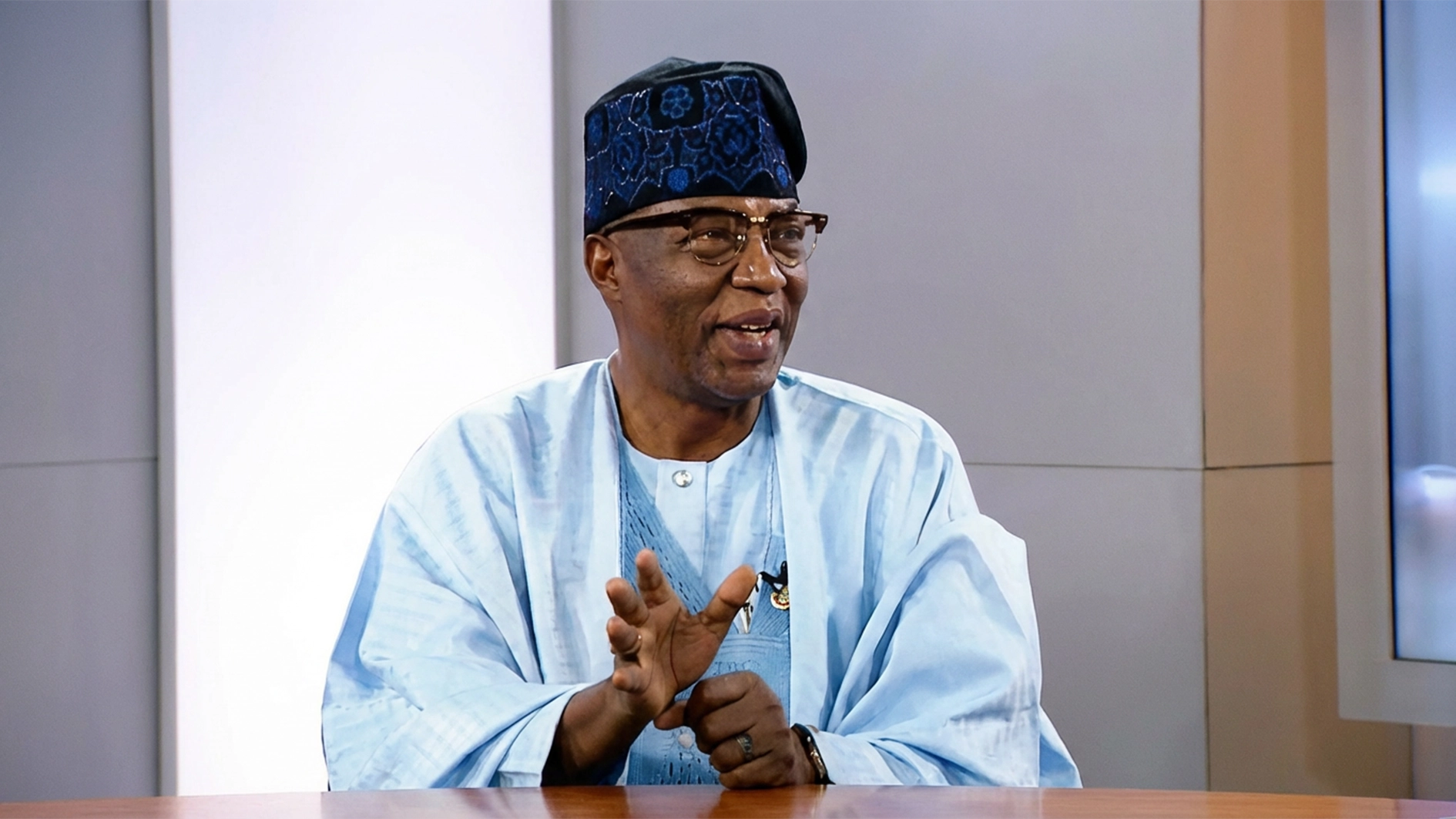
Former Ogun State Governor, Senator Gbenga Daniel, has said Nigeria cannot achieve a strong economy without security, stressing that economic development and national security are inseparable.
Daniel stated this on Thursday while delivering his preliminary remarks as Special Guest of Honour at the 7th Freedom Online Yearly Lecture held at the Sheraton Hotel, Ikeja, Lagos.
The lecture, with the theme, “2027 Elections: Economy, Security and Nigeria’s Future,” featured Lagos State Governor, Babajide Sanwo-Olu, as the Special Guest Speaker, while former Minister of Information and Culture, Lai Mohammed, served as chairman.
Daniel said although Nigeria’s economy had recorded encouraging signs, including a 4.43 per cent growth in the second quarter of 2026, the real measure of economic progress should be its impact on the daily lives of Nigerians.
He said, “Nigeria cannot have a strong economy without security, and it cannot have lasting security without a strong economy. The two are inseparable.”
According to him, economic performance should not be assessed solely through Gross Domestic Product figures, but also by whether Nigerians can secure decent employment, farmers can safely access their farms, manufacturers can produce competitively and small businesses can survive the rising cost of power, transportation and finance.

He said these challenges brought security directly into the centre of the country’s economic conversation.
Daniel argued that security should no longer be viewed solely as the responsibility of the military, police and other security agencies, describing it as an essential component of economic infrastructure.
“Security is not merely a matter for the military, police and other agencies. It is also an essential part of economic infrastructure,” he said.
He explained that insecurity had direct consequences for food production, transportation, business competitiveness and investment, noting that farmers who were afraid to cultivate their land could not contribute fully to food production, while businesses forced to spend heavily on security would face higher operating costs.
Daniel said the reported abduction of more than 7,800 people between July 2025 and June 2026 should therefore be regarded as more than a security statistic.
“The reported abduction of more than 7,800 people between July 2025 and June 2026 is therefore not only a security statistic. It is also an economic warning,” he said.
Despite the challenges, he said Nigeria possessed enormous potential, citing its young population, entrepreneurial culture, growing technology sector, financial institutions and creative economy.
“Our challenge is to create the conditions in which Nigerian ability can flourish at scale. Those conditions include security, infrastructure and opportunity,” he said.
The former governor also called for greater attention to the non-oil economy, saying Nigeria’s future could not depend on crude oil alone.
He noted that the non-oil sector accounted for approximately 95.8 per cent of real GDP in the second quarter of 2026, reflecting the growing importance of agriculture, manufacturing, technology, construction, financial services, tourism, entertainment and the digital economy.
“Our task is to convert these sectors into productive jobs, higher incomes and better living standards,” he said.

