 Follow Us on Google News
 Follow Us on Google Discover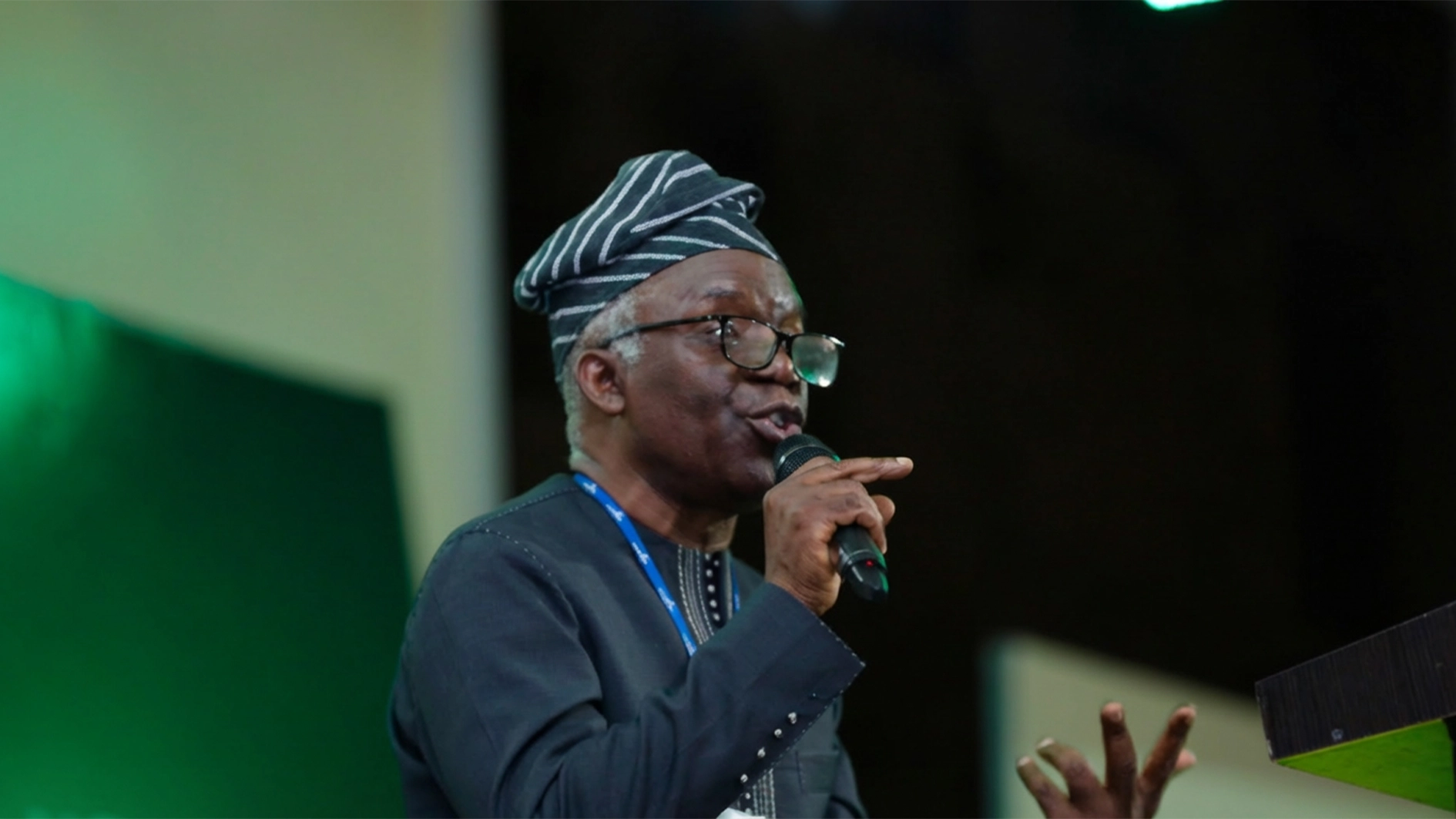
* Calls for INEC autonomy, citizen action
Human rights lawyer, Femi Falana (SAN), has warned that Nigeria’s democracy is at a crossroads ahead of the 2027 general elections, citing threats of political violence, rigged party primaries, weak electoral credibility and declining judicial integrity.
Falana made the remarks while chairing the Bishop Mike Okonkwo yearly birthday lecture titled: “Democracy at the crossroads: Electoral credibility, judicial integrity and the future of Nigeria,” held at the Muson Centre, Lagos.

The Senior Advocate said the 2027 general elections provide a rare opportunity for the nation to make a crucial decision about its future.
He described elections as the foundation of democracy and stressed that citizens have the right to participate freely and peacefully, without fear, intimidation or threat.
Falana noted that disputes arising from rigged elections are determined by election petition tribunals and the courts.
He, however, pointed to the recently concluded governorship elections in Anambra and Ekiti States as examples of credible polls.
He said no election petition was filed by any of the candidates who lost in the two states. He added that with the All Progressives Congress (APC), having accepted the results and congratulated the winner of the August 15, 2026 governorship election in Osun State, the result will not be challenged at the tribunal.
“The development confirms that if credible elections are conducted by the Independent National Electoral Commission (INEC), the electorate and not judges will determine the outcome of elections in Nigeria,” he said.
He called on Nigerians to ensure the complete autonomy of INEC.
Falana also expressed concerns over threats of violence by political actors, saying unless those involved are prosecuted, the country will continue to witness violence in subsequent elections.
The senior advocate recalled that a former Head of State once described a general election as “a do or die battle,” and the election turned bloody with many people killed, while the political leader who made the threat and his agents were never prosecuted.
Falana also cited former Cross River State Governor and Peoples Redemption Party’s (PRP) presidential candidate for 2027, Donald Duke, who alleged that some Nigerian politicians resort to human sacrifice in their desperation to acquire political power.
Duke warned that growing desperation among political actors ahead of 2027 could trigger widespread violence and plunge the country into crisis.
Falana said government must be compelled to end the reckless killing of unarmed citizens by terrorists, kidnappers, armed robbers and gunmen.
He also criticised some Nigerian political leaders who have appealed to United States President, Donald Trump, to monitor the 2027 elections to prevent rigging.
He said Trump is not qualified to save democracy in any country, citing his interference in the 2020 U.S. presidential election when he asked Georgia Secretary of State, Brad Raffensperger, to “find 11,780 votes” and overturn the state’s results.
Falana reminded that democracy is not only about elections, but also about accountable leadership, service, welfare and security of the people. He urged the police and anti-graft agencies to stop vote buying and called for funds kept for bribing voters to be invested in poverty alleviation programmes.
He said the Nigeria Labour Congress (NLC), and the Trade Union Congress, (TUC) should lead Nigerians to demand the implementation of welfare laws in addition to a new minimum wage.
He said Nigerians must be mobilised to fight for popular democracy as opposed to the imposition of candidates by godfathers.
Falana also called on the Church to monitor the budgets of federal, state and local governments, and to establish a human rights body to monitor the rights of its members and other Nigerians.
Delivering the lecture, renowned pro-democracy activist, Mrs. Ayo Obe, said while technology such as BVAS and IReV has improved the accuracy of counting, electoral credibility goes beyond the day of voting.
She listed factors that discourage voting as manipulation of voter registration, insecurity, violence, intimidation and vote buying. And also raised concerns about the abuse of state resources and the nomination of public office holders into party campaign councils.
Obe said the 2026 Electoral Act places more power in INEC’s hands by seeking to oust court jurisdiction over internal party affairs and by imposing heavy costs for petitions.
She warned that the power to recognise factions of political parties places enormous responsibility on INEC, which has not always been wielded with integrity.
On judicial integrity, Obe said it involves independence, impartiality, competence, courage, transparency and public confidence, and not just the absence of corruption.
She recalled past election cases, including the 1979 “twelve two-thirds” case and the 1983 Plateau State petitions, to illustrate how judicial decisions have shaped electoral outcomes.
She concluded that while elections have become more credible and the room for judicial idiosyncrasies is being reduced, the central question remains the “size of the prize” in Nigerian politics.

