 Follow Us on Google News
 Follow Us on Google Discover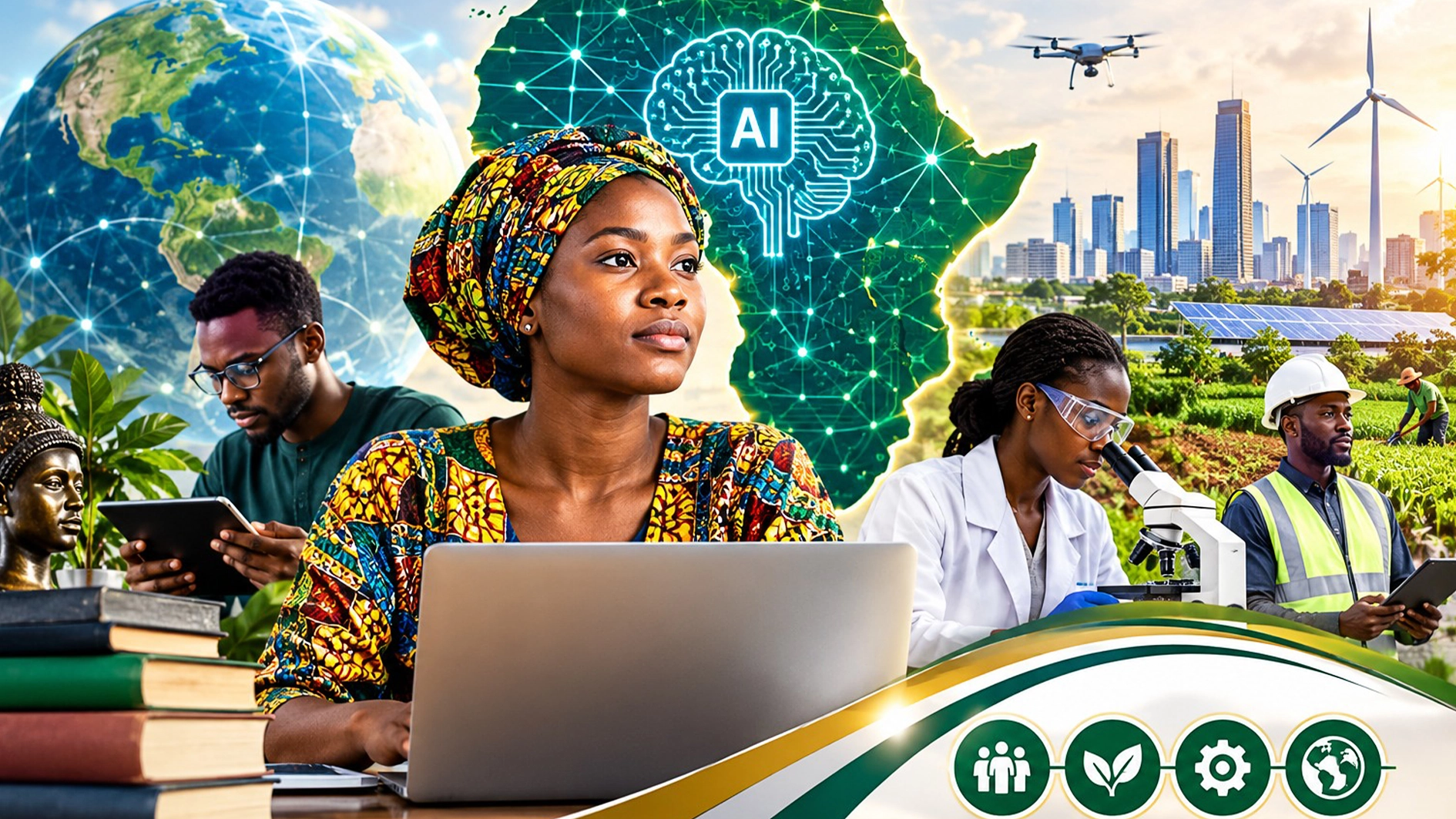
By Ojo Emmanuel Ademola
The global conversation on artificial intelligence has reached a decisive inflection point. After the recent developments at Anthropic and other leading AI laboratories, the world is confronted with a profound question: What kind of AI future do we truly need? For many in the Global North, the instinctive response has been to call for slower development, tighter controls, and more cautious experimentation.
Yet for developing nations—particularly across Africa, Asia, Latin America, and the Caribbean—this narrative is not only insufficient, but it is fundamentally misaligned with their urgent developmental realities.
What is required now is not deceleration, but decolonisation of AI development, equitable access to AI infrastructure, and a global framework that empowers developing nations to harness artificial intelligence as a catalyst for economic transformation and sustainability.
Artificial intelligence is no longer a futuristic abstraction; it is the engine driving productivity, innovation, and competitiveness in the twenty first century. To deny developing nations equitable access to this engine is to entrench a new digital hierarchy—one that mirrors the colonial structures of the past but with far more devastating consequences.
As Professor Ojo Emmanuel Ademola argues, the next frontier of global justice lies not in slowing AI down, but in democratising its development and ensuring that every nation has the tools to shape its own digital destiny.

The post Anthropic moment: A global reckoning
The recent turbulence within Anthropic has exposed a deeper truth about the global AI ecosystem: it is dominated by a small cluster of actors whose decisions reverberate across continents. This concentration of power is neither accidental nor benign. It reflects a broader pattern in which technological innovation is centralised in the Global North, while the Global South is relegated to the periphery as consumers rather than creators.
This imbalance is not merely technical; it is geopolitical. AI systems are increasingly shaping governance, security, finance, education, agriculture, and healthcare. When developing nations lack access to foundational models, compute infrastructure, and AI research ecosystems, they become dependent on external technologies that may not align with their cultural, economic, or political realities. The result is a new form of digital dependency—one that risks undermining sovereignty and stifling local innovation.
The post Anthropic moment therefore demands a global reckoning. It is time to confront the uncomfortable truth that AI development, as currently structured, is reproducing colonial patterns of exclusion.
Slowing AI development does nothing to address this imbalance. Decolonising AI does.
AI as an instrument of economic liberation
For developing nations, artificial intelligence is not a luxury. It is a lifeline. The potential applications are vast and transformative. In agriculture, AI can optimise crop yields, predict climate patterns, and reduce post harvest losses. In healthcare, AI can expand diagnostic capacity, support telemedicine, and strengthen disease surveillance.
In education, AI can personalise learning, expand access to quality instruction, and bridge rural urban divides. In governance, AI can enhance transparency, streamline public services, and combat corruption.
These are not theoretical possibilities; they are practical imperatives. Developing nations face structural challenges—limited industrial capacity, infrastructural deficits, and constrained fiscal space—that AI can help overcome.
But this requires access to AI tools, not restrictions. It requires investment in local AI talent, not dependency on foreign expertise. It requires sovereign AI frameworks, not imported digital architectures that fail to reflect local contexts.
Economic liberation in the 21st century will be driven by digital capability. Without equitable access to AI, developing nations risk being locked out of the global economy’s most dynamic sectors.
Decolonising AI is therefore not merely a moral argument; it is an economic necessity.
The ethical imperative: AI must reflect global diversity
Artificial intelligence is shaped by the data it consumes and the perspectives embedded within its design. When AI systems are trained predominantly on Western data, Western languages, and Western cultural assumptions, they inevitably reproduce Western biases. This creates a profound ethical challenge: AI becomes a mirror of the Global North, rather than a reflection of global humanity.
Decolonising AI means ensuring that developing nations have the capacity to build models that reflect their own languages, cultures, histories, and values. It means empowering African researchers to build AI systems that understand Yoruba, Swahili, Hausa, and Amharic.
It means enabling Asian researchers to develop models that reflect the nuances of Hindi, Mandarin, and Bahasa Indonesia. It means supporting Latin American researchers to create AI systems grounded in their social realities.
Ethical AI cannot exist without diverse AI. And diverse AI cannot exist without decolonised AI development.
The geopolitical stakes: Sovereignty in the digital age
In the digital age, sovereignty is no longer defined solely by territorial borders. It is defined by control over data, algorithms, and digital infrastructure. Nations that lack AI sovereignty will find themselves increasingly vulnerable to external influence—whether through imported technologies, algorithmic decision making, or digital surveillance architectures.
Decolonising AI is therefore a matter of national security. Developing nations must build their own AI ecosystems, establish their own regulatory frameworks, and cultivate their own digital talent pipelines.
They must invest in sovereign cloud infrastructure, national AI research institutes, and regional AI collaboration networks.
The geopolitical stakes are clear: nations that control AI will shape the future. Nations that do not will be shaped by it.
A new global framework: Equitable access, shared responsibility
The world needs a new global framework for AI development—one that prioritises equity, sustainability, and shared responsibility. Such a framework must include equitable access to compute infrastructure, ensuring that developing nations can train and deploy advanced AI models. It must support open and collaborative research ecosystems that enable cross border innovation and knowledge exchange. It must invest in local AI talent through scholarships, research grants, and regional AI academies. It must encourage indigenous AI development so that local languages, cultures, and contexts are represented in global AI systems. And it must promote sustainable deployment strategies aligned with climate resilience, economic inclusion, and social justice.
This is not charity; it is global responsibility. The future of AI must be built by all nations, not a privileged few.
Conclusion
The world stands at a crossroads. After Anthropic, the debate must shift from slowing AI down to democratising its development. The Global South cannot afford to be spectators in the AI revolution. They must be architects of their own digital futures. Decolonising AI is not a slogan; it is a strategic imperative for global equity, economic development, and sustainable progress.
Artificial intelligence will define the next century. The question is whether it will be a tool of liberation or a new instrument of digital colonialism. The answer depends on whether the world chooses caution over justice, restriction over inclusion, and centralisation over shared prosperity.
Professor Ojo Emmanuel Ademola asserts that the time has come for a new global compact—one that recognises AI as a universal right, not a privileged asset. The future belongs to nations that embrace AI boldly, ethically, and inclusively. Decolonising AI is the path to that future.
Ademola is first African Professor of Cybersecurity and Information Technology Management, Global Education Advocate, Chartered Manager.

