 Follow Us on Google News
 Follow Us on Google Discover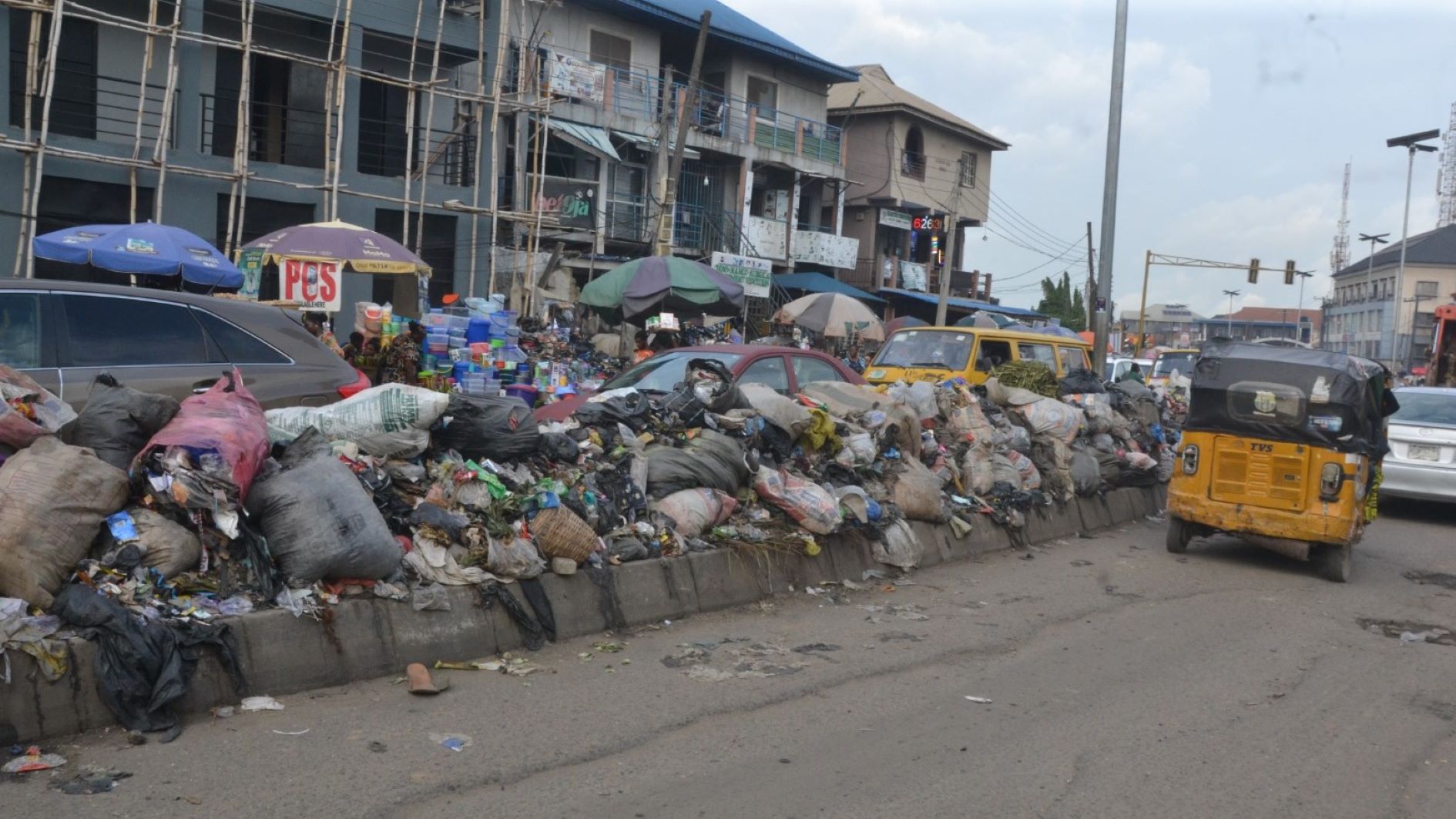
By Bertram Nwannekanma
There is a convenient fiction in Lagos: When a street is filthy, a drainage channel is choked with plastic bottles or a mountain of refuse suddenly appears by the roadside, the government must be responsible.
If the gutter is blocked, blame the government. If refuse is scattered across a market, blame the government. If someone sneaks out at midnight to dump a bag of household waste on a road median, the government is still expected to answer for it.
Government certainly has a major responsibility. It must provide an efficient waste-collection system, enforce environmental laws, maintain public infrastructure and ensure that residents have access to proper disposal facilities.
But there is a point at which blaming government for every dirty corner in Lagos becomes an excuse for citizens to avoid their own responsibilities.
A city of millions cannot be kept clean by sweepers, waste trucks and enforcement officers alone.

Lagos has a waste problem, but it also has a behaviour problem. That uncomfortable truth deserves more attention.
In April 2025, the Lagos Waste Management Authority (LAWMA) disclosed that more than 300 people had been apprehended for waste-related offences during intensified surveillance operations conducted with the Lagos State Environmental Sanitation Corps.
Among the offences was illegal dumping, including the practice of waiting until nightfall before disposing of refuse in unauthorised places.
The arrests are important. But the more important question is why such enforcement remains necessary in the first place.
Why does a resident who has just finished drinking a bottle of water feel entitled to throw the empty container onto the street?
Why does a trader sweep refuse from a shop into a drainage channel?
Why does a household deliberately avoid its designated waste collector and dispose of refuse in an uncompleted building, canal or roadside corner?
And why do some businesses treat the pavement outside their premises as someone else’s problem?
These are not merely sanitation questions. They are questions about civic responsibility.
Every bag of refuse dumped in a canal eventually travels somewhere. Every plastic bottle thrown into a gutter becomes part of a larger environmental problem. Every illegal dumpsite that develops in a neighbourhood tells us something about both the weakness of the system and the behaviour of the people using it.
The consequences are not abstract.
When the rains come, the same waste that appeared harmless when it was thrown away can obstruct drainage and contribute to flooding. A plastic bottle discarded in January may become part of somebody’s flood problem months later.
This is why Lagosians must begin to understand that waste does not disappear simply because it has left their hands.
Someone else pays for it.
Sometimes that cost is paid by the government through repeated clean-up operations. Sometimes it is paid by communities through degraded surroundings. And, during severe flooding, it can be paid with damaged property, lost income and, tragically, lives.
LAWMA’s deployment of more than 1,000 people for enforcement and waste-policing functions illustrates the scale of the challenge.
But enforcement has limits.
No government can station an officer beside every gutter. No surveillance team can monitor every canal. No camera can watch every street throughout the night.
A city cannot arrest its way into cleanliness.
At some point, environmental responsibility has to become a habit.
That means households owning appropriate bins and using their designated waste collectors. It means businesses providing receptacles for customers and ensuring that waste generated on their premises does not spill onto public spaces.
It means markets maintaining proper collection systems, construction companies handling debris responsibly and residents separating recyclable materials where facilities exist.
It also means parents teaching children that drainage channels are not rubbish bins.
This is where environmental education becomes as important as enforcement.
LAWMA Academy’s collaboration with the Lagos State Universal Basic Education Board on environmental education is therefore significant. Recycling and waste-sorting initiatives also deserve greater attention.
A child who learns to separate waste and protect a drainage channel may grow into an adult who does not need an enforcement officer standing over him before he behaves responsibly.
The economic value of recycling could strengthen that culture.
When residents realise that plastics, paper, metals and other materials can have economic value, waste stops being merely something to be discarded. It becomes a resource that can be recovered, sorted and reused.
Neighbourhood associations could be encouraged to participate in recycling schemes. Schools could make environmental responsibility part of everyday learning. Businesses could be incentivised to reduce packaging waste and support collection initiatives.
But there is an important caveat.
Government must not hide behind the language of civic responsibility to excuse poor service delivery.
It is unfair to punish residents for failing to use waste-collection services that are unavailable in their neighbourhoods. Businesses cannot be expected to patronise approved collectors if the services are unreliable.
Enforcement cannot be arbitrary or selective.
And the law must apply equally.
The roadside trader, the resident of an expensive estate, the multinational company and the government agency should all be held to the same environmental standard.
Responsibility must therefore run in both directions.
Government must provide the system. Lagosians must use it responsibly.
The objective should not simply be to produce a cleaner Lagos after another enforcement exercise. It should be to build a city where people instinctively understand that public space belongs to everybody.
A cleaner Lagos will emerge when throwing refuse from a moving vehicle becomes socially embarrassing, not merely legally punishable.
It will emerge when a shop owner sees the pavement outside his business as part of his responsibility.
It will emerge when residents report illegal dumping because they are protecting their neighbourhood, not because they are trying to settle a personal score.
And it will emerge when communities stop accepting illegal dumpsites as an inevitable feature of urban life.
Government can buy trucks. It can employ cleaners. It can clear black spots. It can arrest offenders and prosecute them.
But government cannot follow millions of Lagosians around the city, picking up after them.
That is the fundamental reality we must confront.
The Lagos we want cannot be built by government alone.
The cleaner city must begin with a change in attitude: the understanding that Lagos is not somebody else’s responsibility. It is ours.
And until Lagosians begin to treat the streets, drains, markets, canals and neighbourhoods around them as an extension of their own homes, the battle against waste will remain an endless cycle of dumping, clearing and dumping again.
Nwannekanma is a Lagos-based journalist.

