 Follow Us on Google News
 Follow Us on Google Discover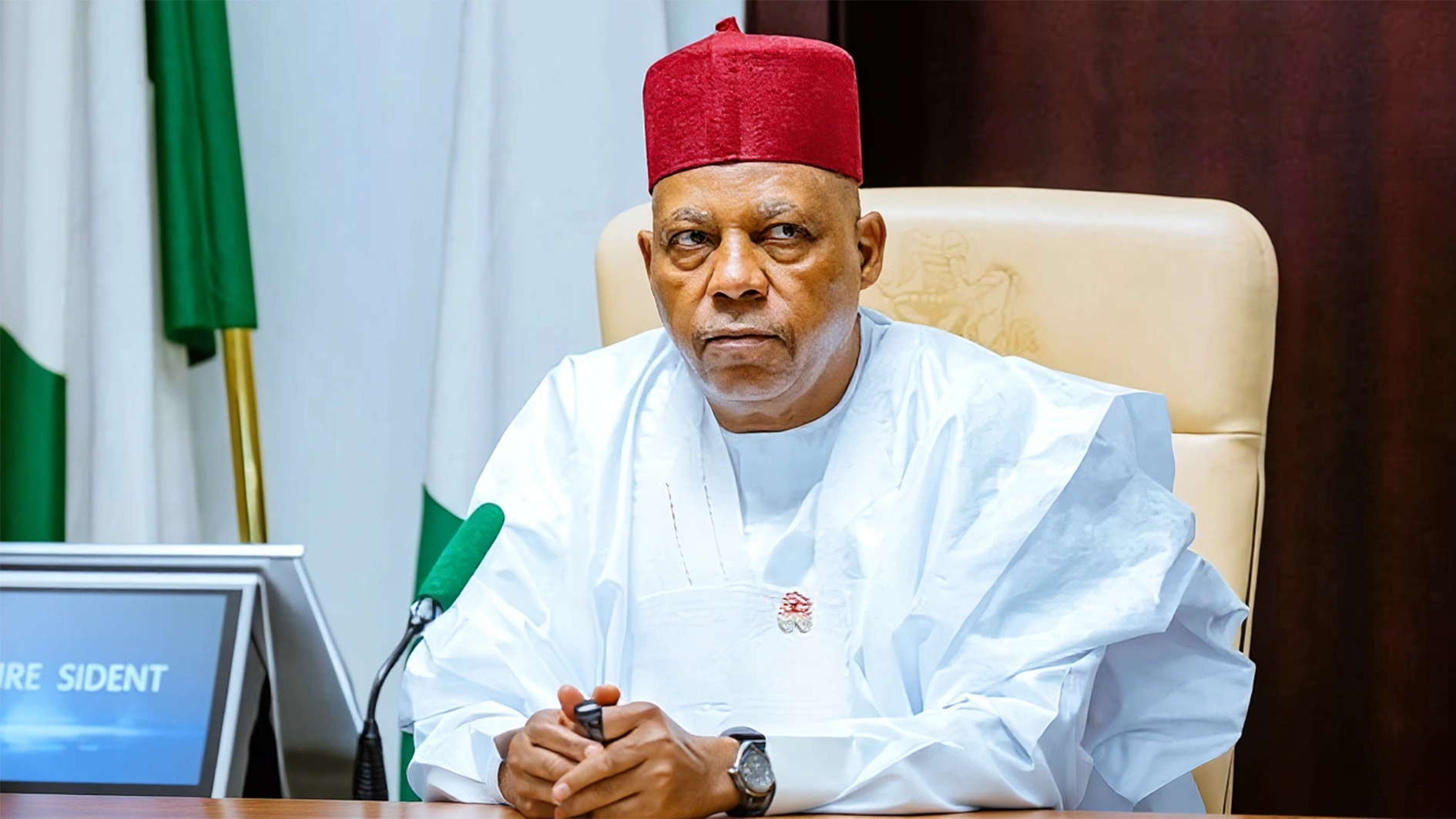
• Funding falls 67 per cent from 2017 peak
• Millions face hunger, displacement as aid operations shrink
• FG advocates new humanitarian, poverty reduction agenda
• Experts urge stronger focus on roots of recurring crises
• Obidient Movement, ex-UN envoy question Tinubu’s absence
• Guterres, Rahman renew calls for Africa’s security council seat
As world leaders gather in New York for the 81st United Nations General Assembly, Nigeria is seeking a shift from recurrent humanitarian assistance towards stronger national systems for poverty reduction, protection and resilience.
The move comes against the backdrop of about $7.83 billion in humanitarian funding recorded for Nigeria over 13 years, even as millions of Nigerians continue to face hunger, poverty, displacement and other consequences of prolonged crises.
The Federal Government is expected to present its emerging humanitarian and poverty reduction agenda at a high-level UNGA side event tomorrow, under the theme, “Beyond Assistance: Reducing Poverty, Advancing Protection and Building Shared Prosperity.”
The event is expected to focus on linking humanitarian response with social protection, recovery and economic inclusion.
Behind Nigeria’s new approach is the One Humanitarian One Poverty Response System (OHOPRS), a government reform designed to strengthen coordination between humanitarian response, social protection, poverty reduction and economic inclusion.

The Federal Government said the system is intended to address fragmentation and duplication by linking identification, needs assessment, targeted intervention, protection, empowerment and poverty eradication within a unified national architecture.
Minister of Humanitarian Affairs and Poverty Reduction, Bernard Doro, said the objective was to move beyond interventions that merely help vulnerable households survive individual shocks towards systems that can help them recover, build resilience and become progressively self-reliant.
The transition, however, comes against the scale of the country’s needs, with the government having to contend simultaneously with declining international financing, persistent food insecurity, displacement and poverty.
Humanitarian funding falls 67% from 2017 peak
AN analysis by The Guardian of funding records from the United Nations Office for the Coordination of Humanitarian Affairs (OCHA) Financial Tracking Service (FTS), alongside Nigeria’s Humanitarian Response Plans for 2014 to 2026, showed that about $7.83 billion was recorded as humanitarian funding for the country during the period.
The figure represents humanitarian financing reported through OCHA’s Financial Tracking Service and does not mean that $7.83 billion was paid directly into government coffers.
FTS is OCHA’s centralised platform for tracking humanitarian funding flows, including contributions from governments, UN agencies, NGOs, pooled funds and other humanitarian actors, as well as funding requirements and gaps linked to humanitarian response plans.
The analysis showed that Nigeria’s humanitarian response plans had identified about $10.51 billion in requirements for the period, leaving a difference of about $2.68 billion between planned requirements and recorded funding.
The difference, however, should not be interpreted as an audited national funding deficit, as humanitarian response plans are planning and resource-mobilisation instruments, while funding can also flow through channels outside individual plans and humanitarian needs can change during implementation.
But more significantly, the analysis showed a sharp contraction in humanitarian financing in recent years.
Humanitarian funding to Nigeria, according to the analysis by The Guardian, rose sharply from $70.6 million in 2014 to $158.4 million in 2015, $471.2 million in 2016 and $979.3 million in 2017, before remaining relatively high in the years that followed.
It stood at $936.3 million in 2018, $777.1 million in 2019, $806.7 million in 2020, $815.7 million in 2021 and $862.9 million in 2022.
But the trend reversed in 2023, when funding fell to $642.1 million, followed by $619 million in 2024 and $324.3 million in 2025.
Although overall humanitarian funding recorded for Nigeria recovered slightly to about $367 million in 2026, the figure remains about 62 per cent below the 2017 peak.
From the 2017 peak of $979.3 million to $324.3 million in 2025, humanitarian funding to Nigeria declined by approximately 67 per cent.
Nigeria’s recorded humanitarian funding had already declined from $862.9 million in 2022 to $642.1 million in 2023 and $619 million in 2024, before the U.S. cuts added further pressure to the global humanitarian financing system.
For instance, the 2025 Humanitarian Needs and Response Plan initially required about $910.2 million, but humanitarian actors subsequently prioritised interventions as global humanitarian financing came under increasing pressure.
The prioritised response identified about $298 million as urgently required, highlighting the difficult choices humanitarian organisations faced as available resources fell.
The funding data also shows that Nigeria’s aid response has relied heavily on international donors, with the United States, European Union, Germany and United Kingdom among the major sources of support over the years.
Beyond international financing, Nigeria’s domestic humanitarian spending has also faced implementation constraints.
Doro told the Senate in February that only N2.265 billion of the N30 billion appropriated for the ministry’s 2025 capital projects had been released, with the funds covering 15 of 60 projects.
He also disclosed that the ministry recorded 19.39 per cent overall budget performance in 2024.
The figures highlight the gap between budgetary provision and actual implementation at a time Nigeria is preparing to assume greater responsibility for humanitarian financing.
Under the emerging government-led model, the effectiveness of the response will depend not only on the availability of domestic resources, but also on timely releases, effective monitoring and delivery of programmes to people affected by hunger, conflict and displacement.
Funding squeeze leaves millions facing hunger, displacement
THE funding squeeze has come amid persistent humanitarian needs across the country.
The Food and Agriculture Organisation projected that 34.7 million Nigerians would face crisis or worse levels of acute food insecurity by mid-2026, including more than 5.4 million acutely malnourished children.
Furthermore, the crisis is acute in conflict-affected parts of the North-East.
The 2026 Humanitarian Needs and Response Plan identified 5.9 million people in Borno, Adamawa and Yobe states alone as requiring humanitarian assistance, while the plan sought $516.4 million to prioritise 2.5 million people with the most acute needs.
OCHA’s latest figures show a funding gap of about $157.5 million. This is as displacement has also remained a major driver of humanitarian needs.
The International Organisation for Migration’s Displacement Tracking Matrix identified 2,333,190 internally displaced persons in the six North-East states in its Round 51 assessment in 2025.
In North-Central and North-West Nigeria, IOM identified another 1,311,026 internally displaced persons across 10 states as of February 2026, with the majority living in host communities rather than camps.
The funding squeeze has also reduced the scale of humanitarian operations, with the World Food Programme sharply reducing emergency assistance in North-East Nigeria after available funding was exhausted.
The WFP said in July that it could support fewer than half of the 1.3 million people it assisted the previous year in the three North-East states, while 6.2 million people in the area were facing food insecurity.
These issues, among others, perhaps prompted the Federal Government to begin repositioning itself to assume greater responsibility for humanitarian coordination and financing
In July, the Federal Government and its UN and development partners began a humanitarian transition process aimed at developing a nationally led, sustainable and resilient humanitarian coordination system.
The process involves transferring greater responsibility for planning, coordination and financing to national institutions, while maintaining UN technical support.
The Federal Government is now taking that argument to UNGA, where it plans to advocate a model in which humanitarian assistance becomes a bridge to recovery, resilience and economic inclusion rather than an end in itself.
The shift also comes as the government seeks to demonstrate increased domestic intervention in poverty reduction.
Doro said in August that the Federal Government had disbursed more than N600 billion in cash transfers to vulnerable Nigerians over three years, reaching slightly more than 10 million households.
The disclosure came shortly after the government unveiled the $1 billion Household Prosperity and Economic Social Protection Project (HOPE-SP), designed to strengthen the country’s social protection and humanitarian response architecture and move vulnerable households from temporary assistance towards sustainable economic opportunities.
But international assistance remains an important part of the response.
The European Union recently committed an initial €33 million in humanitarian assistance to Nigeria in 2026 to support vulnerable populations affected by conflict, displacement and food insecurity.
On July 22, German Foreign Minister Johann Wadephul, during his visit to Abuja, announced that Germany would provide €10 million ($11.4 million) this year to support the return and reintegration of people displaced from communities affected by Boko Haram and Islamic State-linked militants.
For the United Kingdom, aid to Nigeria is also expected to decline significantly, with allocations projected to fall by about 50 per cent, from £136.62 million in 2025–26 to £68 million by 2028–29.
The United States has also scaled back and restructured its foreign assistance, a development that has affected humanitarian operations in Nigeria.
Although Washington subsequently approved $32.5 million through the World Food Programme for food and nutritional assistance to more than 764,000 people in Nigeria, the intervention came amid a broader reduction in U.S. humanitarian support.
Experts urge FG to tackle roots of humanitarian crises
EXECUTIVE Director of the Grassroots Centre for Rights and Civic Orientation, Armsfree Ajanaku, told The Guardian that humanitarian assistance should not be expected to resolve the structural problems responsible for Nigeria’s recurring humanitarian emergencies.
According to him, humanitarian assistance is fundamentally designed to respond to immediate emergencies rather than rebuild the systems that produce vulnerability.
“Humanitarian aid is not meant to solve your most fundamental problems. It is only a reaction to the symptoms of some of those problems you are facing,” he said.
Ajanaku said aid could provide food, cash transfers, healthcare or other emergency support, but would not by itself address Nigeria’s weaknesses in education, infrastructure, electricity, employment, skills development or the broader business environment.
He cited the problem of out-of-school children, warning that humanitarian interventions could address some immediate needs without removing the conditions that leave children vulnerable to recruitment by criminal and extremist groups.
He argued that the government must devote more resources to tackling those underlying problems instead of waiting for international assistance whenever a crisis emerges.
Executive Director of the Civil Society Legislative Advocacy Centre (CISLAC), Auwal Rafsanjani, warned against treating foreign humanitarian support as a substitute for Nigeria’s own responsibility to protect vulnerable citizens.
He said international assistance should complement domestic resources rather than become the foundation of Nigeria’s response to poverty, hunger, disease and displacement.
He argued that Nigeria possesses sufficient human and natural resources to finance much more of its own social and development programmes if public resources are properly managed.
According to him, support from international partners for programmes covering HIV/AIDS, tuberculosis, malaria, education, water and other areas should strengthen Nigeria’s efforts rather than replace them.
He also pointed to corruption, weak leadership and poor accountability as factors that make relatively small external interventions appear disproportionately important to vulnerable Nigerians.
Weak coordination blamed for gaps
FORMER Director-General of the National Senior Citizens Centre, Dr Emem Omokaro, blamed increasing humanitarian needs on weak coordination between institutions responsible for social protection and humanitarian intervention.
She questioned whether government agencies with statutory responsibilities for social development are sufficiently involved in leading interventions for vulnerable groups.
Omokaro said programmes targeted at older persons could include social care, geriatric services, skills and vocational training, caregiver certification and support for elderly people who remain economically active.
She said data from the National Social Safety Nets Coordinating Office (NASSCO) showed about 4.2 million poor and vulnerable older persons as of December 2024, with information reportedly disaggregated by age, disease prevalence, disability and vocation.
Omokaro said she had transmitted disaggregated data to relevant institutions to support targeted interventions but received no response.
Obidient Movement, ex-UN envoy question Tinubu’s absence from UNGA
MEANWHILE, the Obidient Movement has demanded an explanation from President Bola Ahmed Tinubu over his decision to remain in Europe instead of attending the 81st United Nations General Assembly (UNGA) in New York.
The group said Tinubu’s absence was raising questions, particularly because the President had earlier been expected to participate in the gathering of world leaders.
Former Special Representative to the United Nations Secretary-General, Prof Babafemi Badejo, also described Tinubu’s repeated absence from the high-level segment of the UNGA as a minus for Nigeria’s international relations.
Badejo, who spoke on the implications of the President’s absence from the 81st session of the UNGA in New York, said the annual high-level segment provides Heads of State and Government an opportunity to articulate their countries’ positions and priorities on global issues.
He noted that the 81st session of the General Assembly had commenced, with world leaders delivering addresses outlining their respective agendas and perspectives on global peace, stability and prosperity.
The Presidency has said Tinubu is on an extended working vacation, while Vice President Kashim Shettima is representing Nigeria at the UNGA. It announced on September 21 that the President would return to Nigeria at the weekend.
But the Obidient Movement said Nigerians were entitled to know why the President could undertake engagements in France, including a meeting with French President Emmanuel Macron, while choosing not to personally attend the UNGA.
Macron has also travelled to New York for the UN gathering, while Tinubu remains in France, according to reports.
In a statement signed by its Media and Communications Directorate on Monday, the movement asked Tinubu to explain what changed between the earlier expectation of his attendance and his eventual decision to stay away.
It also questioned the Presidency’s explanation that domestic priorities required the President’s attention, asking what those priorities were and why they could not be managed alongside his participation in the UNGA.
Badejo, meanwhile, said the UNGA was not limited to the high-level segment, as diplomatic engagements continued throughout the session through meetings involving government officials and Permanent Representatives of member states.
He said Heads of State and Government, as the chief diplomats of their respective countries, played an important role in advancing their nations’ foreign policy interests at such multilateral gatherings.
The professor acknowledged that leaders could be represented by other senior officials, but said their absence from the annual high-level segment carried diplomatic implications.
Badejo said the fact that Nigeria’s President had been absent from the high-level segment for three consecutive years could create an impression of ambivalence towards international relations.
Guterres, Rahman renew calls for Africa’s security council seat
ALSO, United Nations Secretary-General António Guterres and President of the General Assembly, Khalilur Rahman, have renewed calls for greater African representation on the UN Security Council, arguing that the continent’s continued exclusion from permanent membership undermines the credibility and legitimacy of the global body.
Guterres insisted that Africa should be given at least one seat on the Security Council, saying the structure of the council in the 21st century was unjust and indefensible and must change.
The President of the 81st General Assembly, Rahman, said Africa’s underrepresentation on the Council must end, describing it as a matter of fairness, justice and the credibility of the organisation.
He said Africa, which has the largest number of UN member states and remains a key focus of UN peacekeeping, could no longer be expected to wait indefinitely for what he described as a rightful place on the Council.
Rahman said the UN’s ability to maintain international peace and security was increasingly being judged by its response to conflicts around the world, including those in Sudan and the Middle East.
He acknowledged that the organisation had failed to prevent some wars and resolve longstanding disputes, but said the UN continued to provide critical humanitarian and peacebuilding support in conflict-affected countries.
On reform of the United Nations, Rahman said the organisation must undertake bigger structural changes rather than limit reforms to budget cuts, mergers and administrative restructuring.
Brazilian President Luiz Inácio Lula da Silva also called for a more representative and equitable multilateral system, particularly as global institutions face a crisis of credibility.
Lula said the privileges enjoyed by major powers, particularly through the Security Council veto, had created structural inequalities in global decision-making.

