 Follow Us on Google News
 Follow Us on Google Discover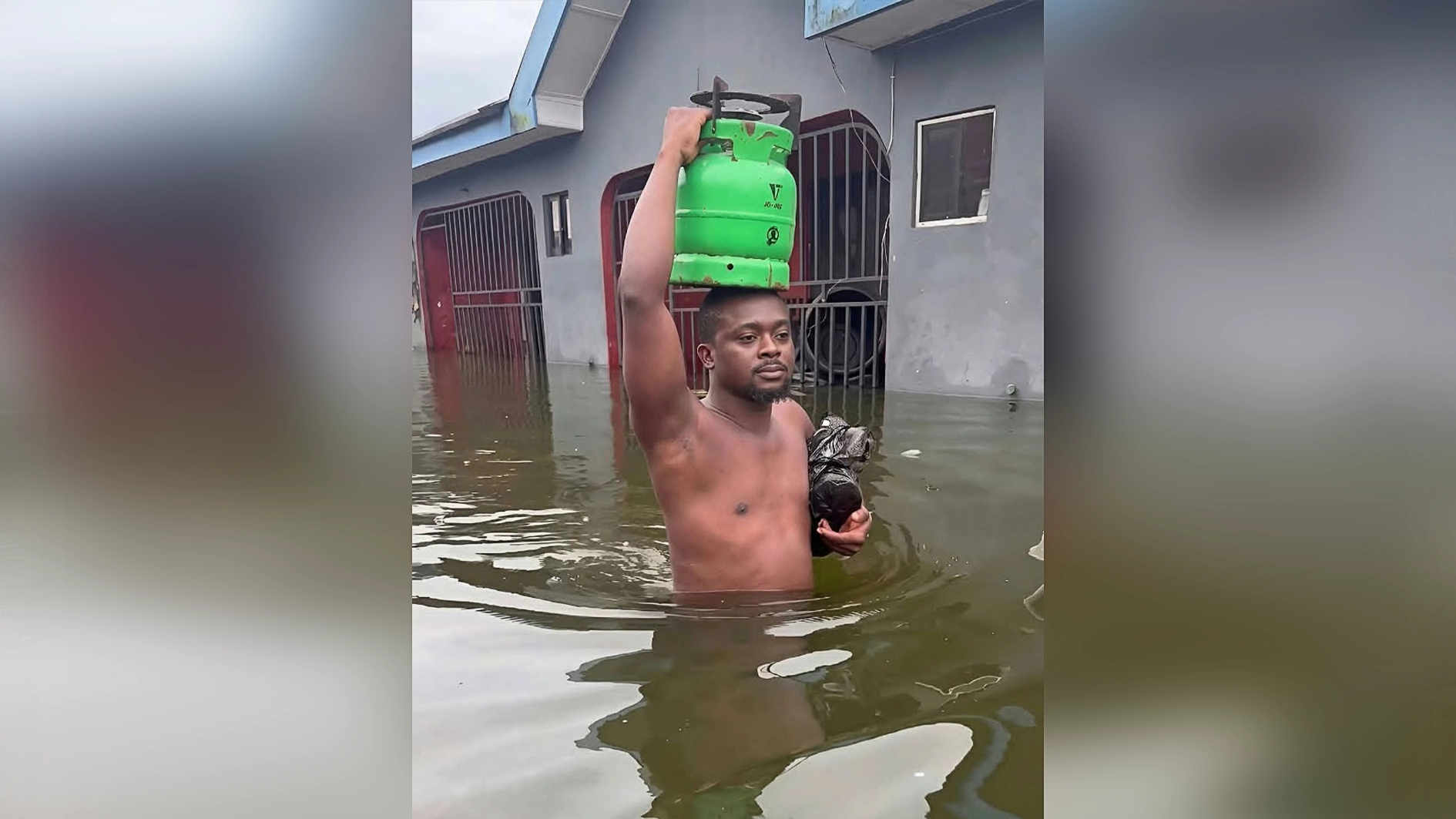
For Vivian Onyeije, a mother of four in Rumusita, Eneka, Obio/Akpor Local Council of Rivers State, the flood has turned the search for shelter into a desperate journey.
When floodwater rose to her waist and invaded her home, she fled with her children to her shop. Two days later, the water reached there too.
With nowhere else to go, Onyeije moved her family into an uncompleted building around Rumopku, hoping the temporary shelter would keep them safe. It did not.
Following another heavy downpour at the weekend, floodwater submerged the area around the building, forcing the family to flee once again. They now sleep in their vehicle.
Her ordeal mirrors the experience of hundreds of families across parts of Rivers and Delta states, where days of torrential rainfall have submerged homes, schools, businesses and roads, leaving residents scrambling for shelter and struggling to salvage their belongings.
The latest flooding came amid repeated warnings of heightened flood risks in both states. On September 28, the National Flood Early Warning Systems Centre listed Rivers and Delta among states with communities at critical risk of flooding between September 27 and October 10, citing heavy rainfall, saturated soil, rapid surface runoff, drainage surcharge and rising river levels.

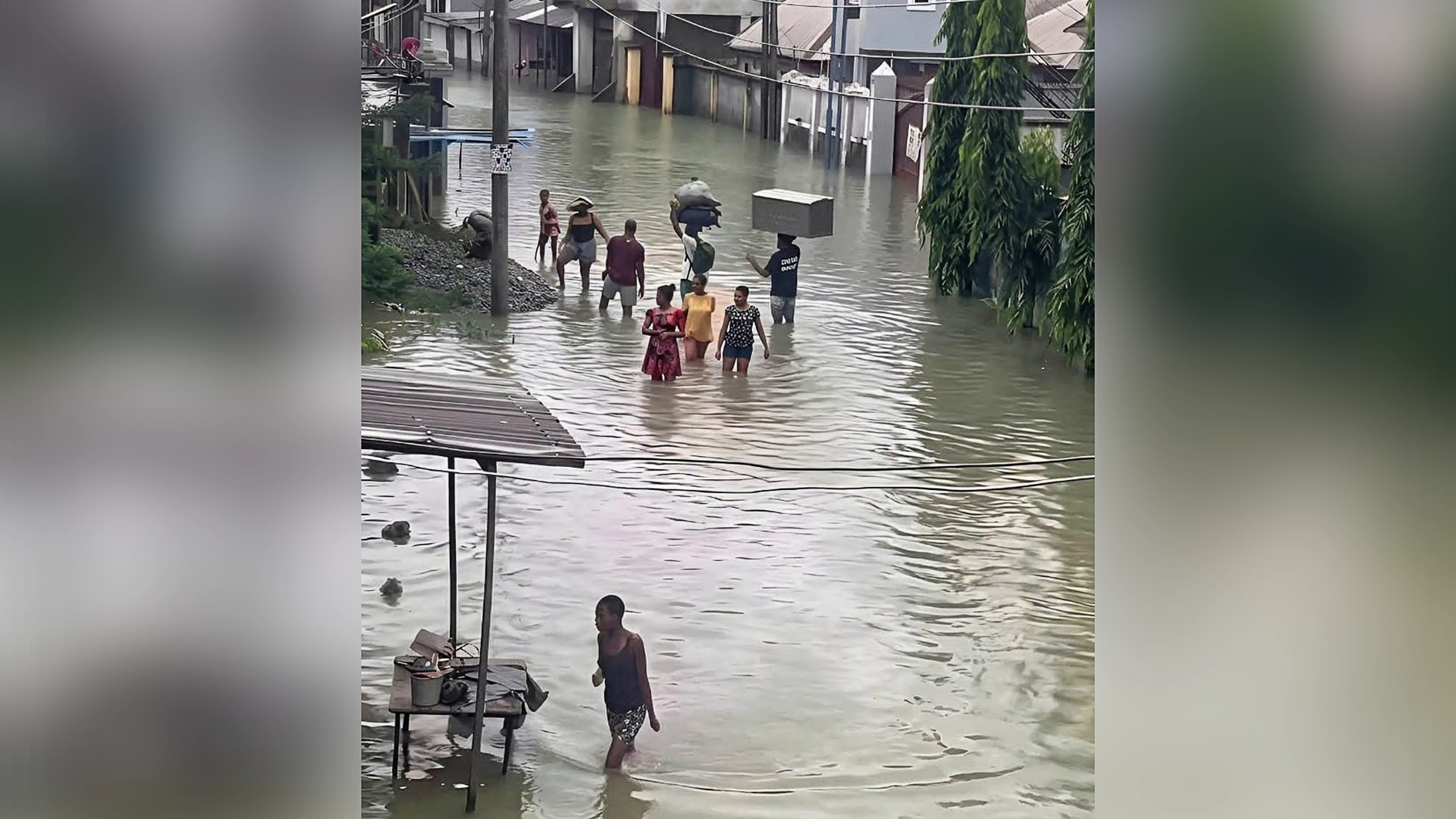 In Port Harcourt, floodwater was reported in parts of Eneka, Eliozu, Odili Road, SARS Road, Rupokwu, Rukpokwu and other communities after several days of persistent rainfall.
The Guardian monitoring showed that the flooding extended across several communities, including Rumuekini, Choba, Stadium Road, NTA Road, Mgboba, GRA, Peter Odili Road, Rupokwu, Alakahia, Oyigbo, Atali, Rumuparali, Ogbogoro, Iwofe, Rumulumeni, Rumoaholi and Elikpokwu.
At Rumuakoara Community Secondary School, Nkpolu, rising water forced teachers and students to leave the premises, while several schools around Rumusita and Eneka were also affected.
Businesses in Nkpolu and Rumuekini closed, while churches and other public facilities in parts of Ozouba and surrounding communities recorded disruptions.
A wedding venue in GRA, Port Harcourt, was reportedly inundated, leaving guests stranded.
For Vitalis Barile, a Rumusita resident, the scale of the flooding was difficult to comprehend.
“The water reached my waist. We went there to rescue some of our belongings that were floating in the water,” he said. “There were fish inside the water. Fish were swimming inside my compound and even in my kitchen.”
Barile said the flooding had also paralysed education and religious activities.
“All the schools there are now closed. Primary and secondary schools, including private schools, have been affected. Churches have also stopped holding services because people can no longer access them,” he said.
In Delta State, the situation was similar, with communities in Udu, Uvwie, Warri, Ughelli, Agbarho, Okpe, Ughelli South, Agbor and Okpanam affected.
At Udu, floodwater overwhelmed the popular Udu Express Junction and stretches of the road from Ovwian to Otor-Udu, as well as Orhuwhorun Road. Ekete Inland, Ekete Waterside, Okpaka, Opete, Ovwian, Orhuwhorun, Odjikpata, Emadadja and Ujevwu were among the affected communities.
In Warri, residents of Ubeji, Okere, Abala Street near the Third Marine Gate of Igbudu and Okumagba Avenue were forced to contend with flooded homes and business premises.
Alero Primary School and Igbudu Primary School were also affected.
In Uvwie, floodwater spread across Effurun, Refinery Road, Aka Avenue, Effurun GRA, Jakpa Road, Ebrumede, Ohore, Ugbomro, Alegbo, Alaka, Ugbolokposo and other areas. Shops, hotels, workshops, houses and vehicle yards were among facilities affected.
The Effurun-Agbarho section of the East-West Road was also almost overtaken by floodwater, raising concerns about the vulnerability of the strategic corridor during prolonged rainfall.
Parts of Ughelli South, including Otokutu, Otu-Jeremi, Egbo-Uhurie, Iwhrekan, Edjephe, Ekakpramre and Okpare-Olomu, were similarly affected.
At Okuokoko in Okpe, some families reportedly abandoned their homes after floodwater entered residential premises.
Across both states, residents blamed the severity of the flooding partly on inadequate or blocked drainage systems, poor physical planning, indiscriminate construction and obstruction of natural waterways.
In Rivers, Omenazu Jackson, Chancellor of the International Society for Social Justice and Human Rights, said the rapid growth of Port Harcourt had not been matched by adequate physical planning.
“Indiscriminate building along waterways has become a major problem,” he said, arguing that drainage channels should be properly connected to rivers to allow stormwater to flow naturally.
Environmental expert, Daniel Briggs similarly called for stronger drainage planning and maintenance, enforcement of building regulations, protection of waterways, proper waste management and faster emergency response.
Residents also acknowledged their own role in worsening the problem through indiscriminate dumping of refuse into drainage channels.
Emma Friday urged residents to change their attitude towards waste disposal while demanding government action.
“While we wait for the government to do its part, can we, as a matter of urgency, change our attitude towards our surroundings?” he asked.
The flooding has also revived questions about the adequacy of long-term flood-control measures and the use of resources allocated for ecological intervention.
A 2026 investigation by the Centre for Sustainable Development Initiatives reported concerns over the implementation of ecological and drainage projects in parts of Rivers, including Oyigbo.
For affected residents, however, the debate over funding and planning remains secondary to the immediate crisis.
A resident of Rumuekini, Blessing Friday, said families displaced by the flood were moving their belongings from one location to another without knowing where they would sleep.
He appealed to the government to deploy relief and emergency support to affected communities.
The Federal Government’s latest flood advisory urged authorities to intensify surveillance around rivers, drains, culverts and other vulnerable areas, while advising residents in critical-risk communities to identify evacuation routes and protect vulnerable household members.
But residents say warnings must translate into visible preparedness.
They want drainage channels cleared, blocked waterways restored, vulnerable communities evacuated when necessary and relief provided to families whose homes have become uninhabitable.
Attempts to contact the Permanent Secretary, Rivers State Ministry of Information and Communications, Dr Honour Kuru Sirawoo, for details of the state’s response were unsuccessful as of the time of filing this report.
Also officials of Delta State Government, including the Secretary, Kingsley Emu and the Commissioner for Works (Rural Roads) and Public Information, Mr Charles Aniagwu, didn’t pick calls put across to them.

