 Follow Us on Google News
 Follow Us on Google Discover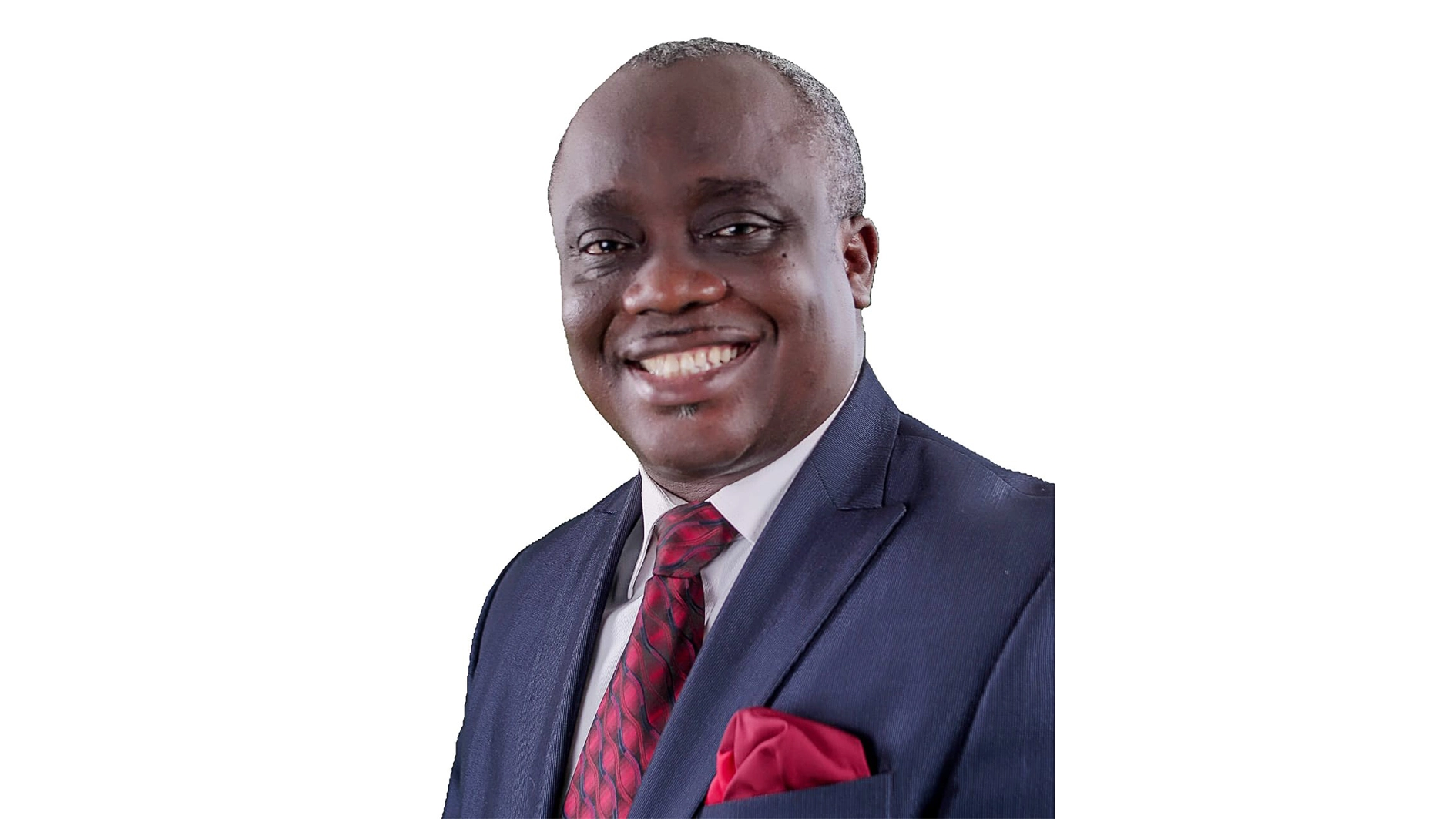
Dr. Babatunde Ipaye is an outstanding Governance and Public Health Specialist with over three decades of progressive experience in Nigeria’s health system, leadership, high-level advocacy, policy development, strategic planning, program/project reviews, reforms, performance management and digital health. He graduated as the overall best doctor from his university and won several awards including the University Chancellor’s prize.
On several occasions, he had provided high-level managerial and technical supports to country level programmes on Malaria, TB, HIV & AIDS, Health Systems, COVID-19 and health product manufacturing. He has also supported technical missions to several countries including Ethiopia, Rwanda, Zambia, South Africa, Uganda, Ghana, and USA.
Dr. Ipaye was lead consultant for writing three Nigeria’s proposals in 2020 and 2023 for the Resilient and Sustainable Systems for Health (RSSH) as well as COVID-19 grant to the Global Fund – the three proposals were successful. He was also the lead consultant for the development of the National Policy and Strategic Framework for Community Health, the Nigeria Malaria Program Review (MPR), the National Malaria Strategic Plan 2021-2025, the Nigeria’s CHIPS Program Strategic Plan 2023-2027, Health Industry Corporation of Nigeria (HICON) Policy, and several other national documents.
Before his appointment as the Honorable Commissioner for Health in Ogun State in 2015, he was consultant Health Specialist with the World Bank where he provided technical leadership for the implementation of the $225million HPDP2 Project; he also worked as consultant HIV&AIDS and Health Advisor to UK-DFID (now known as UK-FCDO) in Nigeria.
A Fellow of the prestigious West African College of Physicians in Community Health, Member of the National Postgraduate Medical College of Nigeria. He also holds a master’s degree in public health from University of Lagos and was Lecturer at Olabisi Onabanjo University Teaching Hospital where he taught health management at undergraduate and postgraduate levels.
He is presently the Team Lead, PELTOM Global Services (PGS) Limited – a technical services organization with core interest in Public Sector Productivity, Periodic Reviews, Organizational Capacity Development, Implementation Support, Health Finance and M&E. PELTOM implemented Nigeria’s JAR and Mid Term Review of the second National Strategic Health Development Plan, and led the first independent ART DQA in Nigeria. The company is presentlythe Independent Verification Agent for the World Bank-funded IMPACT Project.
Having been selected as one of the “100 Purpose-Driven, Transformative and Award-Winning Professionals of Excellence Who Impacted Nigeria’s Economic Growth In 2026”, Dr. Babatunde Ipaye spoke with The Guardian about his growing up, career journey, the Nigeria’s healthcare system, mission and operations of PELTOM, amongst other pertinent issues. Excerpts …
Can you tell us more about your professional training and how this has shaped your worldview and a successful career journey?
I came from a financially deprived background whereby my parents lacked the resources to see me through school. Being a very brilliant young boy, I had one of the best performances in WAEC with seven distinctions and one credit. Thankfully, my principal bought my JAMB form, the community rose up to help, and the Rotary Club offered me a six-year scholarship. In addition, the Premier Club of Ijebu-Igbo Ladies (PRECIL SISTERS) gave me another scholarship making two, valued at N1,000 a year. My school fees, as a medical student then was N278 only in 1986.
At graduation, I became the overall best student winning six university awards including the Vice Chancellor’s award. Initially, I started off my medical practice as a medical officer working at a teaching hospital, however I observed that many patients were often being referred from my town and a number of them died because they were not properly taken care of, early enough, which led to complications and deaths.
Thus, because I felt indebted to the people of my town, I resigned from the teaching hospital and took up a job at a local hospital in my community. This was to ensure there is at least another qualified medical doctor who can manage the people’s primary health problems and when there are complications, referrals could be made.
That changed the trajectory of my professional career. Thus, rather than becoming a cardiologist as I had initially planned, I ended up as a public health specialist with focus on population health and planning which are of more benefits compared to individual health. Public health enables preventive interventions which ensures that fewer people get sick by engaging in public enlightenment, hygiene, immunization, early diagnosis, and treatment of common ailments.
Essentially, two things defined my career success. First, is my secondary school principal, Mrs. A.K.O Ogunyemi who went beyond the call of being a school principal to being a mother. She raised money for my JAMB exam. Without writing JAMB at the time, there would not have been opportunity for me to become who I am today.
The second person was the then Zonal Education Officer of Ijebu-Igbo, Pa Samuel Ogungbe who took interest in me for coming first amongst all the students within the rural district at the time. Pa Ogungbe also supported my dream of opening a hospital in Ijebu-Igbo at the time no bank was ready to grant a loan. He gave me part of his life savings of N9,000 and that money was used to purchase the first set of medicines for what my late father called a “mushroom hospital”. However, four years later, I had enough money to build a 250-bed hospital.
In 2010, I moved to Malaria Consortium where I helped write the first comprehensive proposal for malaria intervention in Nigeria worth over USD400 million. That marked the distribution of mosquito nets to the Nigerians. I was an embedded technical adviser to the Federal Ministry of Health. I helped in systems development and capacity building for the programme across Nigeria. I developed the first system coordination programme for the Ministry and supported in developing its strategic plan in operational efficiency including training for directors.
In 2012, I joined the World Bank to manage the HIV programme valued at USD250,000 implemented in 35 states of Nigeria to combat high prevalence of HIV in the country. My role was in supporting the National Agency for the Control of AIDS (NACA) and the relevant line ministries. The epidemic was reversed. In 2015, I was appointed Commissioner of Health in Ogun State under Governor Ibikunle Amosun.
After completing my tenure as Commissioner, I returned to my public health work after turning down a second World Bank engagement because I believed I was more useful in serving the populace. Before I served in government, PELTOM Global Services was already created, working behind the scene, supporting training, systems design, and policy formulations.
Primarily, PELTOM is a consortium of public health experts, brilliant minds, and professionals who were directors of several global projects. We bid for projects covering implementation, efficiency in management, validation of results, to ensuring that whatever investments international agencies are providing for Nigeria. We help with monitoring quality and timely delivery. Our mandate is to ensure human resource produce result whenever the federal budget falters. At every point, we have hundreds of staff in the field working to ensure the population is secure.
As an accomplished an accomplished Management and Public Health Specialist with an impressive track record of almost three decades of experience in healthcare delivery at various levels, what can you adduce to Peltom Global Services Limited’s phenomenal progress, particularly how it has been able to earn the trust of both clients and other stakeholders under your watch and measures being put in place to sustain this feat?
At PELTOM, there is no position of a CEO and that is deliberate. The Nigerian healthcare development space has been largely populated by international NGOs/donors while most of the implementing agencies are also international organisations who recruit Nigerians to work for them and many of these Nigerians have become global experts.
Therefore, as the engine responsible for the success of international organisations, who are being celebrated, globally, I proposed to three of these local experts and we infused ourselves into one organisation and formed a formidable team as stakeholders. Naturally, someone must lead a team and that is the space that I fill. There are three Deputy Leads covering areas of operations and technical strategy, quality assurance, as well as finance, with everyone bringing their technical expertise to the table.
As a highly accomplished medical expert, what can you say is the major reason for the brain drain syndrome in Nigeria and how can government tackle this for the overall benefit of the country?
Brain drain is a very big problem for Nigeria. I called it the “pull effect”. Globally, medical doctors are the highest paid civil servants. They are made much more comfortable in terms of working conditions, and welfare package. This is simply because health is a factor of growth and development. There is a huge disparity between doctors in Nigeria earning about USD300 dollars equivalent and their counterparts in the US or the UK earning about USD5,000 dollars a month. People will always gravitate towards where they are better served. The imbalance is unbelievable and that is why today when doctors are called for postgraduate training or internship, you hardly see anyone show up. That was a huge difference to our days as young medical doctors when recruitment for two doctors was announced, hundreds turned up.
Sadly, none of the three tiers of governments in Nigeria prioritize healthcare as a development strategy. The connection is linear and simple, a healthy population provides better productivity and economic growth. It should not be a mere slogan. Take a look at the most developed countries worldwide, they are the ones with best developed healthcare system.
Recently, the Federal Government announced plans to establish more nursing schools across Nigeria. Unfortunately, that process would end up benefiting other countries because the nursing graduates will not stay back after completing their training. We are just incubating for other countries. Thus, having trained these medical professionals at very highly subsidized fees, the country ends up losing them into the global employment market.
A country with poor healthcare services cannot have the required human capacity for development. Physical and mental health are critical to a productive population. Although, education brings wealth to a nation, health is number one. Ultimately, it is the health status of a country that determines its economic growth. It is quite disturbing that for a very long time, Nigeria depends on foreign donors/NGOs to fund and promote its healthcare system, even in some instances, up to 100% of what is needed are expected from foreign financing, on yearly basis.
The highest health sector budget in Nigeria was 7% and even at that, the implementation was dreadfully low. It is a double barrel crisis – poor allocation of domestic resources, poor implementation, and donor’s fatigue. The situation requires something to be done urgently or else, all the achievements recorded in the last 15 years of donors’ financing in HIV, TB and Malaria interventions can be reversed. God forbid we do not want an HIV epidemic in Nigeria!
It is really painful that most of the very brilliant strategic policy formulations, ideas on systems designs and development are not being implemented by government. Although, most of what we did were paid for by the foreign donor agencies, non-implementation is frustrating. That is why I declined a number of consultancy works being offered because most of what is requested afresh has been written and delivered many years ago. These documents are there in their archives gathering dust.
In 2001, during the former President Olusegun Obasanjo’s administration, African heads of state met in Abuja and came up with the Abuja Declaration which says that at least 15% of yearly budget of all African countries should be committed to healthcare. Since then, Nigeria has never neared a half of her healthcare budget, whereas countries like Rwanda and Angola have surpassed it.
For instance, virtually all sets of HIV medicines needed in Nigeria are provided by donors with about 1.8 million people on treatment daily, costing hundreds of millions of dollars! Ditto, both the federal and state governments hardly contribute substantially for TB vaccination and medications. Thus, over time, the Nigerian government has gotten used to not putting their money into the healthcare system and the “donor fatigue” that many of us working in this space have predicted many years ago, is being witnessed currently. The truth is, with the shock in global economy, the first thing a donor nation will do is self-preservation.
Many of the strategies for healthcare that I have helped Nigeria write since 2010 have always included a sustainability plan and how to increase domestic financing. These documents are often applauded by government but they do not walk the talk – government’s commitment has been near zero. In government’s yearly budget, you may see 6% being earmarked for health this year, and it may be reduced to a paltry 3% in subsequent year.
As Commissioner for Health for three years, I executed some of these strategies and at the end of my tenure in 2018, the National Demographic Health Survey (NDHS) report of 2018 conducted by external entities rated Ogun State as the best performing in Nigeria with the lowest ratesin terms of reduction of maternal deaths, and other health indicators in Nigeria. The State was able to reduce maternal health by 67%. Essentially, it is a justification that our strategy works based on the Ogun government’s commitment.

