
 Get Guardian on Google
Behind the seamless flow of energy, food, medicines, industrial inputs, and consumer goods that power the global economy are thousands of seafarers whose lives are increasingly endangered by geopolitical tensions, piracy, abandonment, and maritime emergencies. When tragedy strikes, the value placed on a dead seafarer is a mere $125,000—or, in many cases, nothing at all, leaving families abandoned by governments, shipping companies, and international bodies to struggle for survival, ADAKU ONYENUCHEYA reports.
Nearly 170 seafarers have been killed, injured or are missing during the eight months of Middle East Gulf conflicts, according to Iran’s maritime authority.
These seafarers, whose identities remained unknown and identified only through their recovered bodies, had left their homes to embark on voyages lasting six to nine months.
They did so to ensure the uninterrupted movement of more than 90 per cent of global trade by sea, thereby earning a living to provide for their families.
Unfortunately, the situation has become a contract for death, with an estimated 1,892,720 seafarers serving on internationally trading merchant ships and uncertain about making it alive after every voyage across the world’s oceans.
About 8.3 billion people worldwide depend on these seafarers to transport food, pharmaceuticals, machinery, vehicles, fuel, industrial materials and other goods that sustain the global economy and households.
These seafarers, who set out on voyages leaving their families behind in anxiety, however, encounter waters threatened by conflicts, wars, piracy and armed robbery attacks.
Every conflict targeted shipping routes, but these attacks extended beyond damaged vessels and disrupted trade; they exposed the crews to prolonged uncertainty concerning their safety, injury, death, captivity, freedom of movement, access to essential services, prospects for evacuation or the possibility of never returning home to their families.
Unfortunately, during these crises, the world is more concerned about disruptions to trade, fluctuations in crude oil prices and losses to the global economy, paying little or no attention to the lives of the seafarers who made that trade possible.
Shipping companies are concerned about damage to their vessels, especially as larger hi-tech vessels can cost over $200 million to build, with the operation of merchant ships generating an estimated yearly income of over half a trillion U.S. dollars in freight rates, according to the International Chamber of Shipping (ICS).
Marine insurers are focused on premiums and claims, with the changes in global trade routes and the growing geopolitical volatility seeing a surge in war risk premium, which has reached 15 per cent of a ship’s hull value, almost double the rate for vessels, according to industry data.
Meanwhile, the governments of warring nations, as well as those that watch from the sidelines or take sides in the conflicts, appeared to give little consideration to the safety and welfare of seafarers caught in the crossfire or piracy attacks.
When workplace becomes a danger zone
GEOPOLITICAL tensions or piracy attacks on merchant vessels in the Black Sea, Persian Gulf, Ukraine-Russia war, Strait of Hormuz, Red Sea & Bab el-Mandeb Strait, Somali Basin, Gulf of Aden, Gulf of Guinea and the Singapore Straits have become a continuous trend.
In the Middle East, attacks on shipping associated with regional hostilities have exposed seafarers to missile and drone threats, explosions, fires, and the risk of casualties and death. Elsewhere, piracy and armed robbery continued to threaten crews through violent boarding, kidnapping, hostage-taking and theft.
Data from Statista showed that between 2015 and 2019, hundreds of seafarers were reported killed or missing globally. In 2015, 165 seafarers were reported killed and 125 missing. In 2016, the figures fell to 55 killed and 69 missing, before rising to 103 killed and 99 missing in 2017. In 2018, 92 seafarers were reported killed and 100 missing, while 2019 recorded 112 deaths and 116 missing seafarers.
The present geopolitical crisis, according to data from maritime security firm Ambrey and the International Maritime Organisation (IMO), showed that over 570 ships have been hit by missiles in the Black Sea, resulting in the deaths of at least 40 seafarers.
Also, a public registry maintained by IMO showed that the Strait of Hormuz witnessed 113 ship attacks or attempts as of October 15, with 24 seafarers killed.
On October 23, an oil tanker was hit by a drone close to the Romanian coast, killing a seafarer while three others went missing. A week before, two chemical tankers were struck off Romania.
The Secretary-General of the IMO, Arsenio Dominguez, said in a recent interview that the situation in the Strait of Hormuz is critical and does not appear to be improving, with 6,000 seafarers stranded on ships stuck in the region.
Iranian forces are busy changing tactics in the waterway to exert pressure on vessels, with the U.S. Navy calling the threat to shipping in the region ‘severe’.
Iran’s envoy to IMO, Seyed Ali Mousavi, said worldwide, VHF Channel 16 is for vessels or crews in distress and in need of assistance; however, that has been used by the U.S. Navy to threaten Iranian ships and crew members.
Vessels attempting to transit the Strait of Hormuz through established communication channels came under attack on October 13 and 14, 2026. Two Singapore-registered vessels, GFS Pride and GFS Giselle, were struck by projectiles, with all 42 crew members aboard rescued
Meanwhile, neither side in the conflict appeared willing to back down, despite efforts to reach an agreement. Attempts to secure a lasting resolution have yet to yield the expected results, leaving shipping and seafarers exposed to continued risks in the strategic waterway.
Warnings by the global maritime bodies urging the warring nations to prioritise seafarers’ safety and spare them when launching missiles appear to have gone unheeded. Neither have governments made sufficient efforts to reach out to their nationals trapped in the crossfire to facilitate their evacuation and safe return home.
A seafarer’s life cost nothing
BEHIND every casualty figure is a human life interrupted by dangers that have made the sea a place of growing insecurity.
Unfortunately, The Guardian learned that when a seafarer dies at sea, his/her family gets a total of $125,000 as compensation for their loss.
Shipping companies also do not make it easy for grieving family members to receive the compensation owed to them after losing a loved one and breadwinner who left home for work at sea but never returned.
Families whose husbands, wives, parents or children are away at sea anxiously follow reports of attacks, hoping to establish whether their loved ones were aboard the affected vessels.
A delayed message or an unanswered telephone call from the shipping company can become a source of anxiety when reliable information is difficult to obtain.
Global Wellbeing Programme Coordinator, International Transport Workers’ Federation (ITF), Dr Asif Altaf, expressed concerns about compensation for families of dead seafarers, noting that the existing provisions under ITF collective bargaining agreements (CBAs) generally provide death compensation of $125,000 to eligible families.
He said families of seafarers covered by applicable ITF agreements receive $125,000 when a seafarer dies on board by accident, but might receive nothing under the relevant death-compensation provisions if the death was classified as suicide.
Altaf said some shipping companies could use suicide classifications to avoid paying compensation, describing the situation as particularly distressing because families not only lose their breadwinner but could also forfeit substantial financial compensation.
He clarified that the $125,000 death compensation provision was not a universal requirement under the Maritime Labour Convention (MLC), which entered into force in 2013.
While about 80 per cent of global shipping tonnage is covered by ITF agreements, with the federation having about 14,000 collective bargaining agreements, The Guardian learnt that shipping companies operating in Dubai, United Arab Emirates (UAE), Iran, China and Saudi Arabia do not follow applicable rules or have ITF collective bargaining agreements.
Altaf urged seafarers to verify whether vessels were covered by ITF collective bargaining agreements before accepting employment, particularly when dealing with shipping companies operating in the highlighted countries.
Psychological challenges
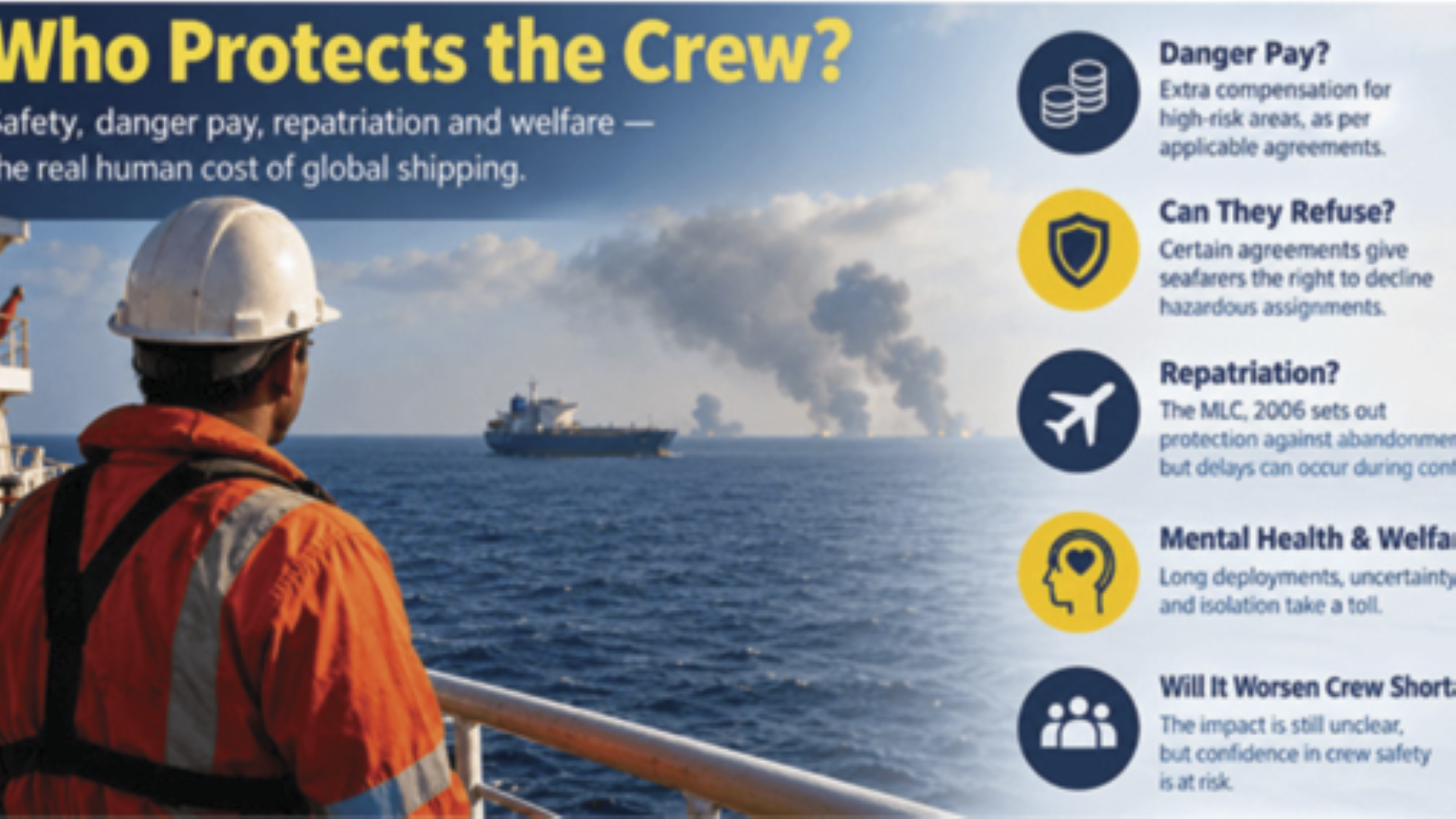
SEAFARERS sign a contract and are told the voyage is Mediterranean or West Africa; weeks later, their ship is rerouted through a High Risk Area (HRA) without their consent.
They also take up a six-month contract at sea and later end up nine months away from family, sometimes without receiving salaries on time, while facing the additional threat of piracy, missile and drone attacks in conflict-affected waters.
The ITF coordinator said such circumstances heightened the psychological pressure on seafarers, particularly those working in dangerous maritime environments.
Altaf cited a study conducted by Yale University in the United States, which disclosed that 25 per cent of seafarers suffer from depression, while 17 per cent experience anxiety disorders and 20 per cent have suicidal thoughts, underscoring the need for stronger mental health support in the maritime industry.
Executive Director, Maritime Labour and Cabotage Services, Nigerian Maritime Administration and Safety Agency (NIMASA), Jibril Abba, said life at sea entails distinct pressures, including extended working hours, irregular sleep patterns, prolonged periods away from family, multicultural crews, and, at times, challenging working conditions.
He said if left unaddressed, these pressures may develop into chronic stress, anxiety, depression, burnout, and substance misuse, and, in the most tragic cases, loss of life.
While seafarers demonstrate extraordinary personal and professional resilience, the shore-based and operational systems supporting them are failing to keep pace, according to the Mission to Seafarers (MTS).
The Seafarers Happiness Index (SHI) fell for the third consecutive quarter in 2026, highlighting a growing dissatisfaction with connectivity, wages, and shore leave.
The index, based on a seafarer survey and seafarer testaments, fell to 6.81 in Q3 from 6.87 in Q2, and 7.18 in Q1, continuing a decline from 7.26 in the last quarter of 2025.
Of the 10 areas of happiness measured by the index, six declined, with the sharpest drop recorded in connectivity, from 7.46 in Q2 to 6.89 in Q3, while wages recorded the second-largest drop, falling from 6.86 in Q2 to 6.56 in Q3.
According to the report, seafarers lamented: “Salary is the same for many years and not enough. We are working on an LNG tanker, which is high risk and with more responsibilities, but no extra allowance.”
General happiness fell from 7.11 in Q2 to 7.02 in Q3, Shore leave down from 5.72 in Q2 to 5.46 in Q3, food quality onboard vessels fell from 7.14 in Q2 to 7.12 in Q3, while welfare facilities ashore declined from 6.56 to 6.47.
Weak global policies
DESPITE the 6,000 seafarers currently stranded and unable to leave the conflict zones, countries of these seafarers are slow to initiate an evacuation system to bring them home safely.
Rather, they are interested in how commodity prices have risen, while only the Philippines, India and Iran have issued press statements indicating that their seafarers were among the victims. Other countries, including Nigeria, whose seafarers are trapped and affected, have yet to comment on the situation.
With their families wailing and seeking help to save their trapped relatives, the calls by the IMO to the maritime community on the whereabouts of the seafarers seemed to fall on deaf ears. Some of the seafarers are not even included in the estimated figures provided.
Head of Research, Sea Empowerment and Research Centre (SEREC), Eugene Nweke, cited the ITF’s figure of 6,223 seafarers abandoned aboard 410 vessels in 2025, with approximately $25.8 million in unpaid wages. He noted that these figures illustrated the scale of the challenges.
He also cited the IMO’s June announcement of a plan to evacuate more than 11,000 of the 20,000 seafarers stranded in the Strait of Hormuz, noting that the operation had commenced but was suspended on June 25 following another vessel attack while the necessary safety guarantees were being reassessed.
He said this episode demonstrated that coordination mechanisms are valuable but cannot independently guarantee safe passage through an active conflict zone.
SEREC recommended stronger operational coordination among the IMO, relevant United Nations bodies, flag states, coastal States, diplomatic missions, shipowners and seafarers’ countries of nationality.
Nweke said International maritime guidance should establish clearer expectations for risk assessment, voyage planning, emergency communication, medical assistance and evacuation arrangements for vessels entering conflict-affected waters.
He further stated that governments should strengthen the implementation of applicable MLC provisions, including requirements concerning wages, repatriation and financial security against abandonment.
Nweke added that seafarers should have accessible mechanisms to recover unpaid wages and obtain assistance.
Director of International Trade at the Maritime Researchers and Authors Association of Nigeria (MARASSON), Sunday Ademuyiwa, said seafarers are civilians under international humanitarian law on paper, but are treated as expendable logistics.in practice.
He argued that although international maritime frameworks are in place, their fragmentation and weak enforcement have left significant gaps in seafarer safety.
According to him, existing safety frameworks, including the International Convention for the Safety of Life at Sea (SOLAS) and the International Ship and Port Facility Security (ISPS) Code, focus more on vessel safety and security than on the welfare of the people working aboard them.
Ademuyiwa noted that the International Safety Management (ISM) Code does not provide seafarers with a clear, enforceable right to refuse to sail into war zones.
Similarly, BIMCO’s War Risks Clauses allow shipowners to divert vessels away from dangerous areas, but decisions on whether to proceed or reroute can be driven by commercial interests rather than the safety of crew members.
The maritime expert further noted that some vessels engaged in trade involving countries in the Global South lacked Starlink connectivity and adequate cybersecurity systems, potentially leaving crew members unable to communicate with shore-based authorities or call for help during attacks.
Ademuyiwa also questioned the extent to which international maritime security operations prioritised seafarers’ safety, arguing that their mandates do not necessarily guarantee the evacuation or rescue of seafarers caught in conflict zones.
Ademuyiwa also highlighted the absence of a comprehensive global database tracking seafarers who suffer post-traumatic stress disorder (PTSD), injuries or deaths resulting from geopolitical violence.
Economic implications
The global seafaring market is generating billions of dollars in remittances to several maritime nations, boosting their gross domestic product (GDP) and public revenue.
Countries such as the Philippines, India, Indonesia, and Ghana, among others, export thousands of seafarers annually, earning billions of dollars in remittances and strengthening their influence on the global maritime workforce.
The Philippines alone earned an estimated $6 billion to $7 billion yearly from its remittances. However, with seafarers trapped in attacks, countries may lose out on their remittances.
Nweke said seafarers are an important component of the maritime human capital economy, noting that the issue also affects countries that supply skilled personnel to international shipping, especially since their employment can generate foreign-exchange inflows, household income, professional development, and wider economic benefits.
Nweke said remittances may support education, housing, healthcare, small businesses and household consumption.
He said consequently, the loss of a seafarer’s life, prolonged confinement, injury or disruption of employment can have implications extending beyond the individual worker.
He said at the household level, families may lose a major source of income or incur additional expenses associated with medical care and emergency travel, while at the national level, governments may face increased demands for consular assistance, emergency repatriation and welfare support.
According to him, the shipping industry also incurs substantial costs when vessels are attacked or immobilised, including additional insurance premiums, security expenditures, longer voyages, higher fuel consumption, delayed deliveries, and increased operating costs.
He said such disruptions can affect importers, exporters and consumers, particularly in economies dependent on imported energy, food, fertilisers and industrial inputs.