 Follow Us on Google News
 Follow Us on Google Discover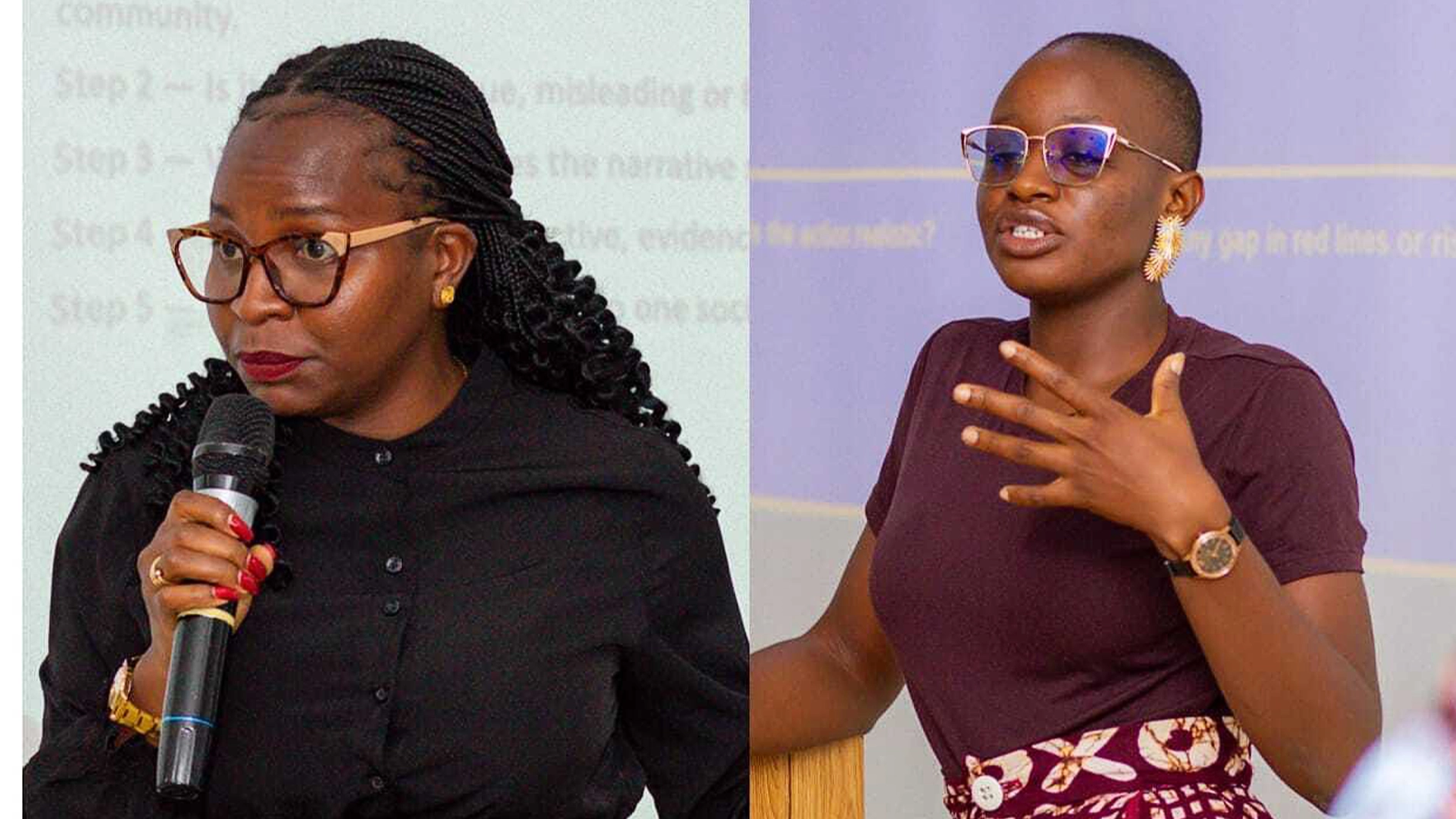
Young women participating in politics have identified patriarchy, limited access to mentorship, political networks and unsafe political environments as major barriers preventing them from translating their growing participation into leadership and decision-making positions.
The young women made the observations during an online dialogue titled “How Patriarchy and Political Networks Shape Young Women’s Political Participation,” organised by Nenkus Tongs and Peace Dukas following their participation in a youth-led social media advocacy campaign on women’s electoral participation.
The dialogue, which provided a platform for young women to share their experiences of political participation, was organised against the backdrop of a training by the Fundación para la Internacionalización de las Administraciones Públicas (FIAP, F.S.P.), in collaboration with FactCheckAfrica, under the European Union Support to ECOWAS in Peace, Security and Governance (EPSG) Project.
The discussion challenged the perception that young women are disengaged from politics, with participants highlighting their roles in political campaigns, advocacy, community mobilisation and civic activities, while pointing to the difficulties of gaining access to spaces where political decisions are made.
According to data presented from the online engagement, women accounted for 96.7 per cent of participants, while 73.3 per cent were aged between 18 and 35. Also, 73.3 per cent said they were already involved in politics, governance, advocacy or community leadership, while another 23.3 per cent expressed interest in becoming involved.
Patriarchal beliefs and social expectations emerged as the most frequently identified barrier, accounting for 33.3 per cent, followed by limited access to mentorship at 23.3 per cent.

For Nenkus Tongs, the figures demonstrate that the challenge is not a lack of interest among young women but the structures that determine who gets access to political power.
Tongs said, “Young women are already participating in politics in different ways. They are mobilising communities, supporting campaigns, advocating on issues and engaging citizens. The problem is that participation does not always translate into access to leadership, nominations or decision-making spaces.”
She argued that political parties needed to move beyond using young women primarily for mobilisation and create deliberate pathways through which their contributions could translate into leadership opportunities.
“Women should not only be seen as people who mobilise supporters during elections. If a young woman has demonstrated commitment and leadership within her community or political structure, there should be a transparent pathway for her to progress into decision-making positions,” she said.
Participants also highlighted the influence of social expectations on women’s political careers, particularly the expectation that women should prioritise caregiving and family responsibilities while political leadership remains largely associated with men.
Some participants said young women who contribute significantly to political campaigns are sometimes asked to “wait for their turn”, despite having acquired experience and demonstrated leadership capacity.
They argued that campaign mobilisation, attendance at rallies and support for political structures should not become the end point of young women’s political participation.
For Peace Dukas, the political system must recognise the contributions of young women beyond election periods and provide opportunities for them to develop into political leaders.
“Participation must mean more than showing up during elections. Young women need access to mentorship, political education, networks and decision-making spaces throughout the political cycle,” Dukas said.
She added that political parties had a responsibility to make their internal structures more accessible to young women, particularly those who were already active at the grassroots.
“We need to create political spaces where young women can ask questions, build networks, contest fairly and be taken seriously. They should not have to prove themselves repeatedly while being told they are not ready simply because they are young or female,” she said.
The participants also raised concerns about political violence, intimidation and online harassment, which they said could discourage women from speaking publicly or becoming more visible in political spaces.
The growing use of manipulated digital content, including deepfakes, was identified as another emerging threat, particularly for women whose public profiles make them vulnerable to online attacks and gendered misinformation.
The dialogue further highlighted concerns about the exclusion of women from nominations for elective and appointive positions, despite their contributions to political movements and grassroots mobilisation.
Participants called on political parties to introduce regular political education and mentorship programmes for young women, including practical knowledge of party structures, nomination processes and political leadership.
They also advocated internal mechanisms and targets to increase young women’s participation in party leadership and decision-making, as well as stronger networks connecting aspiring young women with experienced political mentors.
They urged political parties and political leaders to establish clearer and more transparent pathways to elective and appointive positions, based on fair processes that allow qualified women to compete.
The participants further called for stronger measures against online harassment, intimidation and gender-based violence in politics, stressing that women’s participation cannot be meaningful where political spaces are unsafe.
The dialogue ultimately underscored a gap between political participation and political power.
While young women are increasingly visible in campaigns, community mobilisation, advocacy and civic engagement, participants said their visibility must translate into greater representation in party structures, nominations, appointments and decision-making.
As preparations for future elections continue, the young women called for political structures that recognise their contributions not only as voters and mobilisers but also as leaders capable of shaping policies and decisions affecting their communities and the country

