 Follow Us on Google News


 Follow Us on Google Discover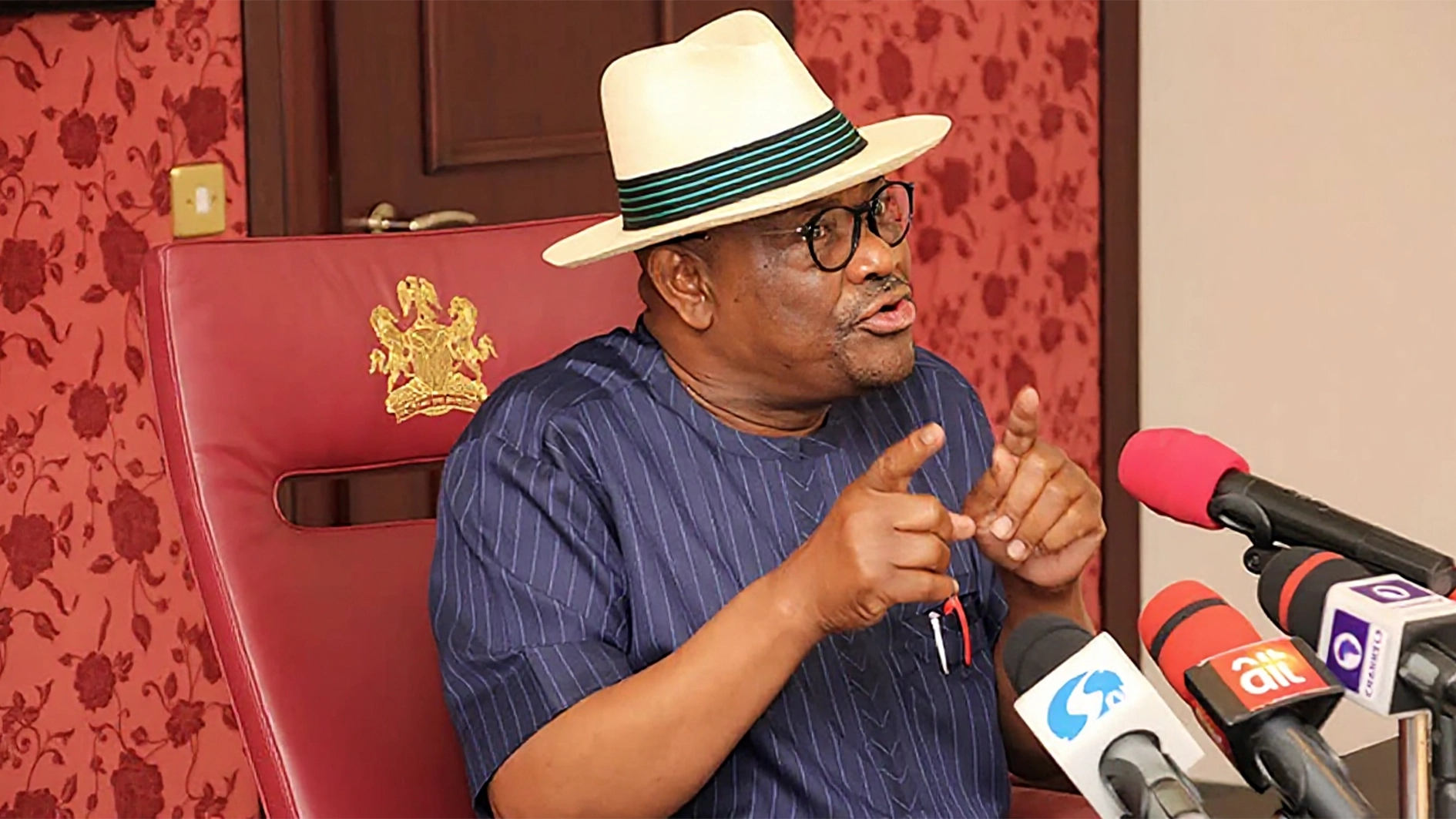
In his monthly media interaction, Minister of the Federal Capital Territory (FCT), Nyesom Wike, explains the rationale behind the Rainbow Coalition supporting President Bola Tinubu across party lines, while challenging the record and public claims of ADC vice-presidential candidate, Rotimi Amaechi. LEO SOBECHI was there.
You are in the Peoples Democratic Party (PDP), mobilising support for President Bola Tinubu of the All Progressives Congress (APC). How do you reconcile this with concerns raised by APC governors?
IT started when various stakeholders resolved to support Mr President and APC candidates for the National Assembly. PDP candidates also said they would support him. Why should anybody see a problem with that?
There are peculiarities in some states. Take Anambra, for example. Governor Charles Soludo supports the President. Does that mean his party will not field candidates for the House of Representatives? There is no confusion here. It shows that if you are a leader and your people believe in you, they are likely to listen when you speak. That is leadership capacity.
For us, whoever has an idea or anything to contribute to the success of Mr President is welcome. The fact that you are not in the APC should not matter. Anybody who thinks otherwise is a non-starter in politics.
Is President Tinubu the originator of a political arrangement in which opposition parties support a sitting president? Having silenced your critics, particularly APC governors, do you now consider yourself his political godson?

I don’t know where you are getting all this from. You are among those who think this is a problem when it is not. I would not call it a novelty. People have supported candidates across party lines before, although perhaps not so formally. Sometimes, people support you at the national level but insist on controlling their states. They want you to win the presidency but will not relinquish their political interests at the subnational level.
This time, the arrangement has become more visible because of the period we are in. Many people have been making noise about the 2027 election, claiming that the President has done nothing and should leave office.
But the governor of Bauchi State, who belongs to the Allied Peoples Movement (APM), a party with its own presidential candidate, appeared on television to say that Mr President had performed well. Speaking from his experience in Bauchi, he compared the state of the economy before and after Tinubu assumed office.
You cannot simply say that because you belong to an opposition party, the man managing the country’s affairs has done nothing. That is unfair. Politics should not be a do-or-die affair.
We believe Mr President has done well, although the opposition wants to take over power. Even if a government has done things to satisfy some Nigerians, the opposition will still argue that it has achieved nothing. We believe Nigerians should hear the truth, including from those of us who belong to other political parties.
As for being called Tinubu’s godson, I am not concerned about that. When you see someone doing something good for the country, you should acknowledge it, regardless of party affiliation.
You have recently criticised your predecessor in Rivers State, Rotimi Amaechi, who is now the vice-presidential candidate of the African Democratic Congress (ADC). Is this about political power, the forthcoming election or personal animosity?
I don’t understand what you mean by being hard on him. I am not criticising him for the sake of it. Nigerians like to play to the gallery.
Here is somebody aspiring to become the country’s vice-president. If anything happens to the president and he succeeds him, he could become president. Such a person should be properly scrutinised.
Amaechi has criticised Mr President, questioning his capacity. That is not a problem, but some of his comments have become personal. We accuse the media of bias because issues raised against certain politicians receive little attention.
I challenge journalists to invite him and ask questions about the issues I have raised. Instead, some people publish whatever they want. A television presenter accused me of bragging about being in charge of the FCT and Rivers State. Where is the bragging? Some journalists have their political preferences, and it shows in their coverage.
You cannot aspire to high public office and expect Nigerians not to examine your record. Let the electorate decide whether the allegations against you are true and whether you deserve their votes.
When somebody calls the President a thief and says only thieves will vote for him, should we ignore that? You must respect the office of the President, irrespective of your opinion of the individual. If Amaechi makes such allegations, he should also be prepared to answer questions about his own record.
What specific questions do you want Amaechi to answer?
First, when he was governor of Rivers State, he said he would fumigate the state to eliminate mosquitoes and reduce malaria. He reportedly paid $10 million to a Cuban company for the project. Nigerians should ask him how the project was executed and what results it achieved.
Rivers State shares boundaries with Imo, Abia and Bayelsa states. How would the fumigation have worked without addressing the possibility of mosquitoes coming in from neighbouring states?
If he wants to become vice-president, he should explain what happened to the money and how effective the project was. Malaria remains a major public health problem. Nigerians deserve to know what the expenditure achieved.
Second, he demolished a teaching hospital and announced plans to build a 1,000-bed facility named Karibi Whyte Hospital, in partnership with a Canadian company, Cleotect. He said the Rivers State Government had paid its counterpart contribution of $39 million.
I was Chief of Staff at the time, and I knew that the money was paid. At today’s exchange rate, that amount represents a substantial sum of public money. Where is the hospital? Was it completed? What became of the project?
I challenge Nigerians to examine the project and its outcome before deciding whether to support the ADC candidates. Public funds are not private or family money. Citizens have every right to ask how they were spent and what benefits they delivered.
You have also questioned the monorail project and the sale of the gas turbine. What are your concerns?
There were heated debates in the Executive Council about the monorail. What purpose would it serve, and where would it take people?
Amaechi travelled to Dubai, saw a monorail and returned with the idea that it would transform the city and reduce traffic. The state reportedly spent N68 billion on the project. Nigerians should ask what was delivered for that expenditure.
On the gas turbine, former governor Peter Odili built the facility. Amaechi later sold it to Sahara Energy for 308 million dollars, according to the account I have given. My concern is that due process was not followed. Where was the advertisement? Who carried out the valuation, and where is the valuation report?
The payment was made in December 2014. I became governor in May 2015. By May 29, 2015, I found that only 308,000 dollars remained from the 308 million dollars
A judicial panel of inquiry was established, and Amaechi was invited to explain the transaction. He did not appear, according to my account. The panel subsequently indicted him.
He challenged the findings in court. The matter went through the courts, including the Court of Appeal and the Supreme Court, which ruled against him on the issues before them.
My point is that Nigerians should examine the record. These are allegations and public expenditures that require answers. A person seeking the vice-presidency should be willing to explain decisions taken while in office.
Why are these matters receiving renewed attention during the electioneering period, when Amaechi has previously served as governor and minister?
I raised these issues when I was governor. People who say I am only bringing them up now should check the records.
At that time, Amaechi was a powerful minister. But once you leave office and seek another public position, you must expect scrutiny of your record. You cannot tell Nigerians that you want to lead them and then refuse to answer questions about how you spent public funds.
I have said that he should explain the $10 million fumigation project, the $39 million hospital contribution and the sale of the gas turbine for $308 million . These are legitimate questions about public expenditure.
There is also the issue of our political relationship. We worked together, and I was involved in the process that led to his emergence as governor. I believed that his relationship with former governor Peter Odili would make it easier for Odili to accept him as his successor.
Amaechi later accused me of insubordination. That is his position, but Nigerians can ask questions about how we worked together and what happened afterwards.
The important point is not our personal disagreement. It is whether people seeking public office can account for their records.
Are you suggesting that Amaechi should face prosecution over the allegations? Some people believe your actions are driven by personal animosity or hostility towards Atiku Abubakar?
I have already told you that there was an attempt to prosecute him. After I left office, the political atmosphere changed. People were aligning against me, and there were efforts to resolve the matter.
As I understand it, the charges were eventually withdrawn through the Ministry of Justice. I cannot tell you that the decision was taken on a particular person’s instruction, but that was what happened.
If you call it animosity because I am asking what happened to 10 million dollars, 39 million dollars or 308 million dollars in public funds, that is not a convincing argument. Even if I had personal differences with him, would that justify misappropriating public money, if that were established?
The question is whether he can explain these transactions. Nigerians should not be distracted by arguments about whether
I like him or whether we once worked together.
Given your influence in government, should the Economic and Financial Crimes Commission (EFCC) and the Independent Corrupt Practices and Other Related Offences Commission (ICPC) not investigate the allegations?
There are legal issues surrounding the EFCC’s involvement in the matter. Rivers State went to court, and the EFCC lost at the Court of Appeal. The judgment and its implications must be respected.
There may be a route through the state legislature, depending on the applicable legal position, but I am not asking anybody to disregard a court judgment.
My point is that, whether or not a person has been prosecuted, the public deserves explanations about major projects and the expenditure of public funds. Amaechi should answer the questions instead of dismissing them as personal attacks.
I am also concerned about the closure of the courts during his administration. The judiciary is the third arm of government. When courts are shut, citizens lose access to justice.
I believe the courts remained closed for almost two years during the dispute involving the Rivers judiciary. If you prevent people from accessing the courts, you deny them an important avenue for resolving disputes and seeking justice.
The legal proceedings concerning the panel’s findings went through several courts. The judgments should be examined on their terms, and the allegations should not be treated as proven criminal guilt merely because a panel made findings against him.
But these matters deserve public scrutiny. I question why organisations such as the Nigerian Bar Association would invite a politician to speak without adequately examining his record on the judiciary.
Why should these questions not have received greater attention before the current electioneering period?
I have been raising them since I was governor. The records are available, and journalists should examine them.
When a person seeks public office, the media should ask questions about previous projects and public expenditure. If somebody says he spent 10 million dollars on fumigation, contributed 39 million dollars towards a hospital that was not completed, or sold a public asset for $308 million, those claims should be investigated and put to him for a response.
It is not enough for him to say that I was his subordinate or that we have personal differences. The public deserves answers about the projects and transactions.
My concern is that the media sometimes treats similar allegations differently depending on the person involved. If these allegations were against me or President Tinubu, would they receive the same attention? Journalists should apply the same standards to everyone.
Ultimately, Nigerians must be able to scrutinise those seeking to lead them. Public office carries responsibility, and candidates should be prepared to explain their decisions, their records and the use of public funds.

