 Follow Us on Google News


 Follow Us on Google Discover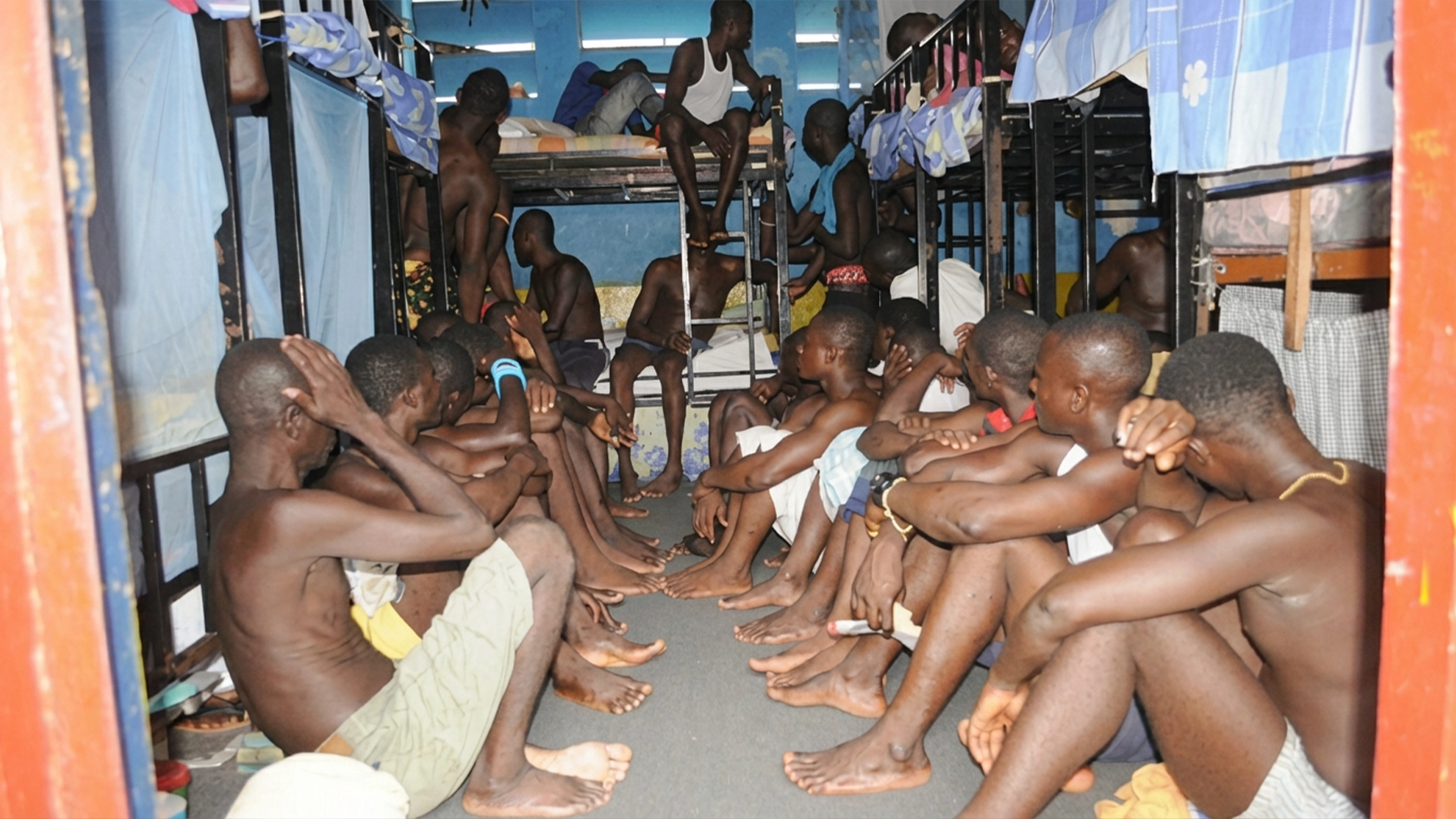
‘Nigeria Should Introduce National Custodial Death, Detention Safeguards Framework’
Across Nigeria, people taken into state custody spend weeks, months or even years waiting for the chance to go back home. For some, the wait has ended in permanent illness. For many others, it is death; like the case of the 37 persons who died in a custody in Niger State recently. GBENGA SALAU reports on why the investigation into the recent case must ensure that steps are taken to avoid reccurence in the future.
Patrick Okoroafor was 14 when he was arrested in 1995. He was sentenced to death at 16. Amnesty International said his trial was grossly unfair and documented how his sentence moved from death to life imprisonment and eventually to a reduced term before he was released in April 2012. He had spent 17 years in custody.
There was also the case of Moses Akatugba, who was arrested as a teenager and spent about a decade in prison, including on death row, before receiving a pardon in 2015. Amnesty International documented his release and described him as a torture survivor.
For some detainees, the physical consequences are even more immediate. In June 2025, the Oyo State Chief Judge freed 77 inmates from Abolongo Correctional Facility after reviewing their cases.
Some of those awaiting trial were suffering from tuberculosis and kidney problems and were released partly on health grounds.

In February 2026, Amnesty International published an investigation into the Anti-Kidnapping Unit of the Imo State Police Command, popularly known as Tiger Base. The organisation reported prolonged arbitrary detention, overcrowding, poor ventilation and unsanitary conditions, alleging that detainees suffered severe health complications and that some people died in detention.
One documented case by Amnesty concerned Okechukwu Ogbedagu, who was handed over to the Tiger Base unit in 2022 and died about three months later.
Amnesty said it had reviewed an autopsy report, which recorded asphyxiation as the cause of death.
Another detainee, Japhet Njoku, died in May 2025; Amnesty reported that police officials told his family he had been beaten to death and that attempts to conduct a court-ordered autopsy had repeatedly failed.
The allegations have not been adjudicated in court.
For a family whose relative has been arrested, the first hours are filled with frantic phone calls and unanswered questions. Where was he taken to? Which security agency arrested him? What is he accused of? Has he seen a lawyer? When will he appear in court? Is he being fed? Is he sick? Is anyone looking after him? Then the waiting begins.
Yet, a person may enter a police cell accused of stealing, mining illegally, protesting, belonging to a banned group or committing a far more serious offence.
The allegation may ultimately be proved or dismissed. A court may convict or acquit. A prosecutor may withdraw the case. Bail may be granted. A judge may discover that the accused has already spent longer time behind the bars than the sentence the law permits. But none of those possibilities matters once the cell door is slammed against a detainee.
That is the grim reality behind Nigeria’s continuing struggle with prolonged detention, deteriorating health in custody and deaths involving people under the control of security and law-enforcement agencies.
The reported deaths of 37 people in the custody of the Nigeria Security and Civil Defence Corps in Niger State on September 17, 2026, have brought into painful focus, what many Nigerians go through while in detention or what a family member goes through when a relative is in detention.
The men and boys had been arrested during operations against suspected illegal mining around the Wushishi-Lukoto area of Minna.
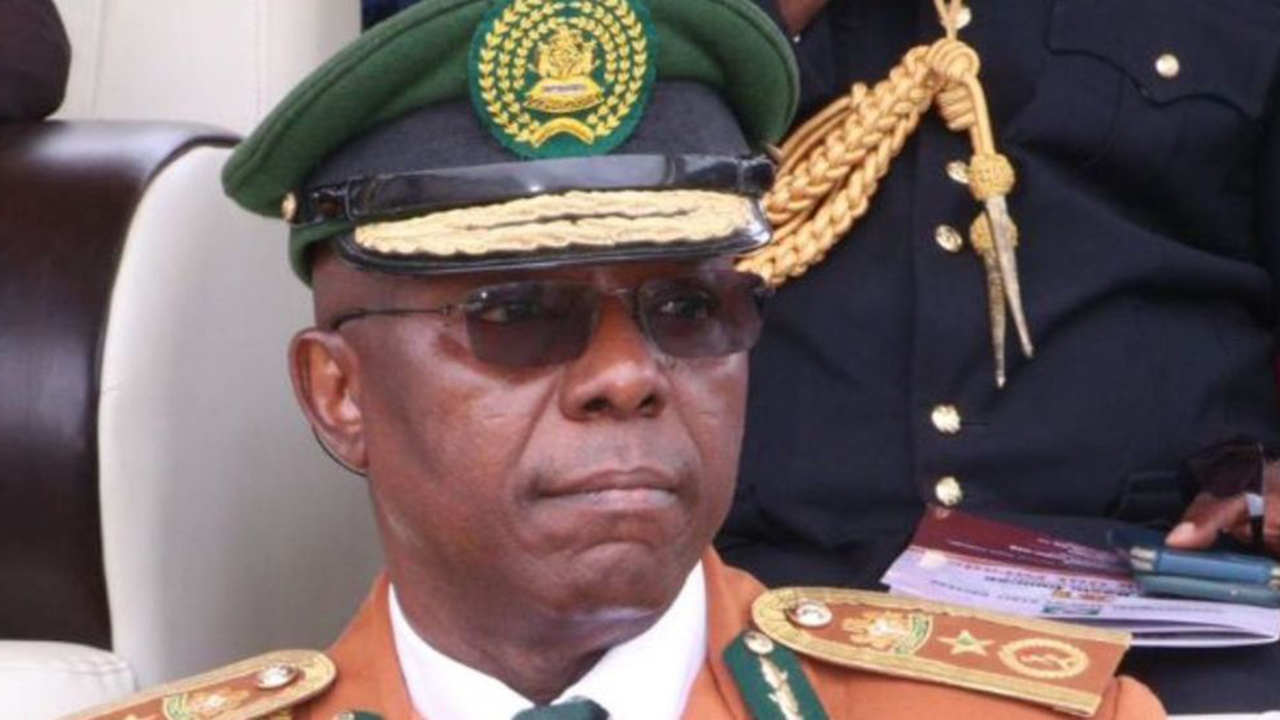
Within days, 37 were dead. The government has not yet established the cause of death, and an independent federal committee is investigating the arrests, detention conditions and circumstances surrounding the deaths.
Commenting on the incident, the Executive Director of CISLAC, Auwal Musa Rafsanjani, observed that the reported deaths of 37 people in NSCDC custody represent a grave human-rights crisis and a serious test of state accountability.
He maintained that: “Whatever allegations may have been made against the deceased, they were under the control and protection of the Nigerian State. Their rights to life, dignity, humane treatment and due process did not disappear because they were detained.”
President, Prisoners’ Rehabilitation and Welfare Action (PRAWA), Professor UjuAgomoh, noted that it is important to state that the deaths of 37 people in NSCDC custody must not be treated solely as an isolated tragedy or as a question of individual misconduct because it raises a fundamental question about whether Nigeria has an effective system for protecting the lives and dignity of every person deprived of liberty, regardless of which government agency holds them.
“The 37 deaths, therefore, provide an opportunity to answer a much larger question: Can Nigeria guarantee that every person taken into state custody can be accounted for, medically cared for, protected from torture and ill-treatment, brought before lawful authority within the prescribed period, and, if that person dies, have their death independently investigated, and their family receive the truth? If the answer is not yet demonstrably yes, the appropriate response is not another isolated investigation. It is a national reform of the detention architecture itself.”
The World Prison Brief recorded 81,902 people in Nigeria’s correctional facilities as of June 22, 2026. Of that number, 53,428, or 65.2 per cent, were pre-trial or remand prisoners. The system was operating at 125.6 per cent of its official capacity. The history of Nigerian detention contains cases in which temporary detention became a substantial part of a person’s life.
Sharing his experience in a chat with The Guardian, a Lagos-based estate agent, Mr. Qamar Oduga, narrated how his brother was allegedly tortured to death by the Police.
He said his brother, Abdulmojeed, was arrested by the police at Ikota Police Post on February 11, 2025. He claimed his brother was arrested after his neighbour, a certain MsStasia Nora, reported him of drawing her hand while he and her boyfriend were walking on a staircase, which led to the nails she fixed falling off in the process.
Oduga said: “Nobody informed the family about his arrest. We learnt of his death on Wednesday, which was the day after his arrest. On that Tuesday, as usual, his wife was expecting his call, but he didn’t call.
When she didn’t receive the call, she decided to call him, but unfortunately, his number was ringing, yet there was no response from the other end. His wife, who was heavily pregnant, became worried. She was not on the Island when the incident happened at Ajah.
“My brother’s wife was with my mum, receiving antenatal care at a hospital in Ikorodu. She kept calling her husband that Tuesday night, but no one picked up the call. The same thing happened on Wednesday morning, February 12, 2025.
“At this point, she was worried and called their estate manager, Mr Jacob. The man said he had been trying to reach her too. It was Mr Jacob who informed my brother’s wife that her husband had been arrested by the police. When my sister-in-law asked for the cause of his arrest, the estate manager said it was because his neighbour, Ms Nora, accused him of drawing her hand on the staircase.
“That was when Abdulmojeed’s wife informed the family. My elder sister, my brother (the youngest son of the family), and my sister-in-law gathered and went to the Ikota Police Post to see our brother. The plan was to go there and possibly bail him.”
He continued, “On getting to the police station, my elder sister asked for Abdulmojeed Oduga, but they said there was nobody by that name in their custody. However, the estate manager insisted that my brother was being held there. My family started raising the alarm that they would not leave the police station until the officers produced my brother.
“They didn’t tell us immediately. They claimed that he had been transferred to Ajah Police Station. We had to move to Ajah Police Station. When we got there, they started denying that they had my brother in their custody.
“It was only when my sister and brother started raising their voices that the officer in charge of the post, AlhajaModinatAlaka, came out. She was the one overseeing the operation of the Investigating Police Officer, MrsAzeezat, who had arrested my brother. So, it was MrsAlaka who addressed my family.
“She started saying that we should take heart. My family members were shocked and asked what she meant by “take heart.” Meanwhile, MrsAlaka was well-known to our family. It was my family that supported her to go to the police academy.
“We lived together in Isale-Eko, Lagos Island. She begged my family to remain calm. My sister had sensed that tragic news was about to be broken and led my sister-in-law outside. They moved her away from the police station and drove her back to Ikorodu. They didn’t want her to know about the situation owing to her condition. I received a call after the police told my family that my younger brother had died in detention. They had to call me to come to the police station as the first son of the family,”Oduga said.
Expressing how he felt about what his brother went through and the trauma it has inflicted on the family, Oduga said: “It is deeply saddening and we can never recover from the loss as a family because the trauma will remain forever. I am still chasing the case with my lawyer till date as we are expecting the corona inquest registrar to give us a date to commence the inquest but it seems some set of people are working against the corona inquest secretly not to commence for some months now. But our lawyer and I decided two weeks ago that it’s better we take the case to high court because the registrar seems to be delaying the case intentionally in order not to fix a date to start the corona inquest for months and deceiving us that she will get back to us and we are following the lawful process. It’s deep sadness and forever in our memories.”
Similarly, Sunday Ifedi was detained alongside his wife, Callista, by the DSS in November 2021 over an alleged link to IPOB. He said they were initially released but were later detained after being summoned to sign a document. After four years without prosecution, Ifedi was released without explanation, but authorities did not disclose his wife’s whereabouts. He later learnt through an activist that Callista had reportedly died in custody about two years earlier. Ifedi said the ordeal caused him severe emotional distress and high blood pressure.
This is why the recent tragedy in a custody in Nigeria is not only about what happened in one cell, on one night. It is also about what happens when the state takes control of a human being and the ordinary safeguards surrounding that person become difficult to see. This is more so that many security agencies operate detention facilities.
Agomoh stated that Nigeria has detention facilities operated by the Nigeria Police Force, NSCDC, DSS, military authorities, NDLEA and other enforcement bodies, in addition to the Nigeria Correctional Service.
“A Prisoners’ Rehabilitation and Welfare Action (PRAWA) mapping of detention centres in Nigeria shows that over 12 agencies operate detention centres. Cumulatively, the country is estimated to have thousands of detention centres.
For example, the Nigeria Police Force operates approximately 2000 police stations and roughly 1,537 divisional police headquarters nationwide. This is just one agency. The issue of having different agencies with multiple detention facilities creates several risks.
“A person can effectively ‘disappear’ (unaccounted for) because no centralised database tracks all persons in detention across all facilities, and because detention facilities do not use a tamper-proof register to document detainees, as recommended to Nigeria during the country’s universal periodic review (UPR). This is particularly dangerous when families cannot establish: where someone is; who is holding them; when they were arrested;when they will be released; whether they have been transferred; and whether
they are alive.”
She also stated that in 2018, the NHRC nationwide police detention audit covered 188 police detention facilities across 26 states and the FCT. “Earlier, NHRC work also audited detention facilities operated by the Nigeria Police Force, the Department of State Security (DSS), the Economic and Financial Crimes Commission (EFCC), the Nigerian Customs Service, the Nigerian Army, the National Drug Law Enforcement Agency (NDLEA), and the NSCDC.
“The Commission reported worsening conditions in some facilities, particularly SARS facilities, and identified the problem of increasing un-gazetted detention locations. The 2018 audit and subsequent reporting identified recurring structural problems including: overcrowding; inadequate health facilities and personnel; inadequate infrastructure; difficulties transporting detainees to court; weaknesses in case-file management; barriers to legal representation; problems concerning bail and payment of fines/bail; and the need to renovate facilities.”
Rafsanjani stated that Nigeria must also end the practice of detention facilities operating beyond meaningful independent scrutiny.
“The National Human Rights Commission and authorised judicial officers should have unhindered and unannounced access to every detention facility operated by the Police, NSCDC, military, intelligence agencies and other enforcement bodies. There should be no secret, unregistered or unmonitored detention facility in a democratic society governed by law.”
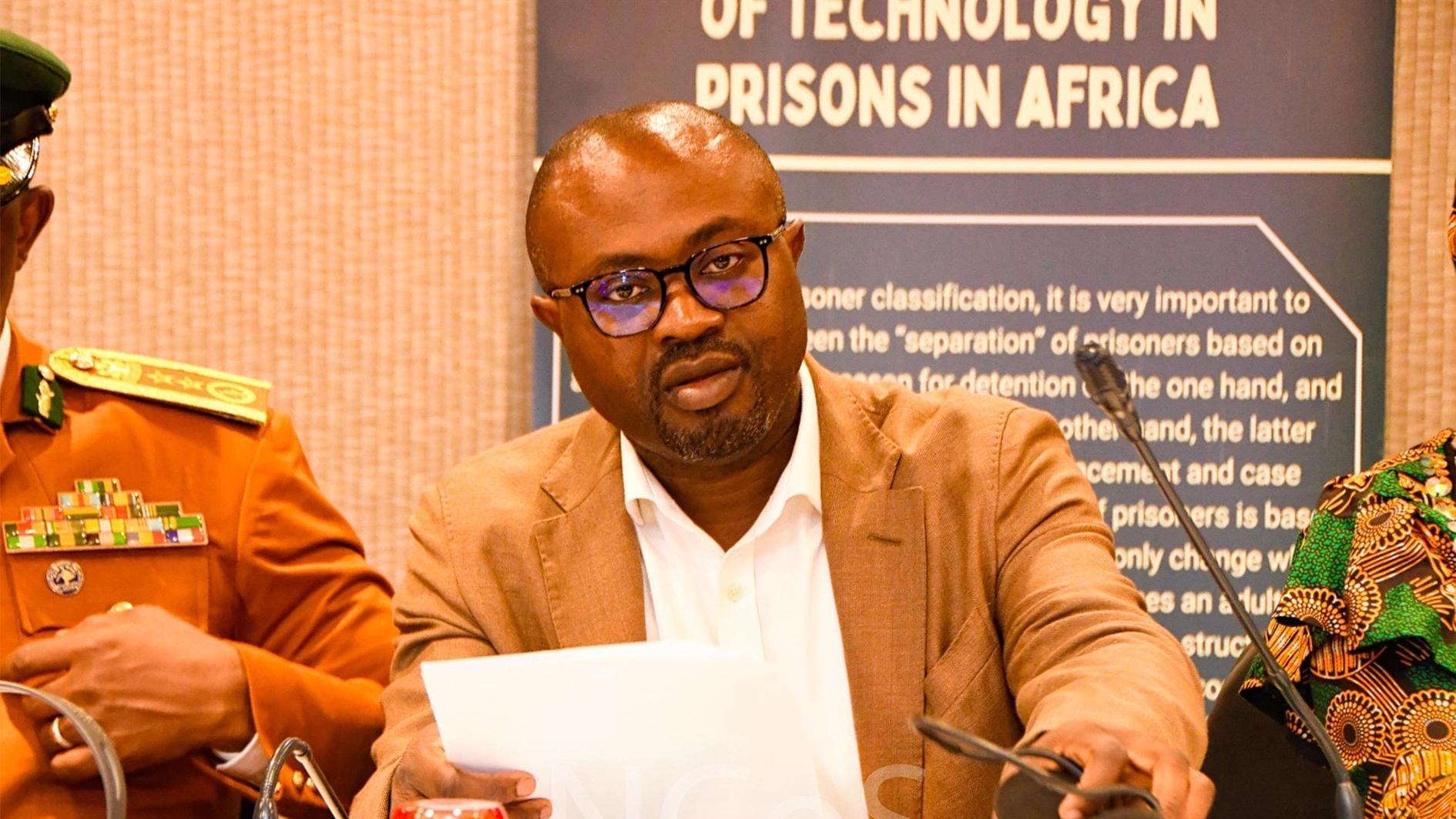
He further called for the immediate establishment of a National Electronic Custody Register showing who has been arrested, where they are held, the legal basis and duration of detention, transfers, access to lawyers and families, serious injuries, releases and deaths. Every deprivation of liberty must leave an auditable institutional record.
On her part, Agomoh stated that there is no publicly verifiable evidence that shows a single, comprehensive, continuously updated national register covering every government detention facility and every person held in government custody.
“That is a significant accountability problem. In fact, Nigeria’s Human Rights Committee review in 2019 called for an effective national system of statistical data and specifically noted the need for a central detention register covering persons at all stages of deprivation of liberty. The same UN review raised concerns about detention conditions in police cells, military facilities and other places of detention, including overcrowding and inadequate access to medical care. The implication is profound. Accountability becomes reactive rather than preventive.
“The state discovers the problem only when a crisis hits. The 37 deaths demonstrate why a national detention database should not be regarded as an administrative convenience. It is a life-protection mechanism. There is an urgent need for a National Detention Register, containing information on all detention facilities, the agency responsible for it, their location, designated capacity, current population, name/ID of every detainee, date/time of admission, legal basis for detention, date of court appearance, date of release/transfer, medical assessment, serious injury, death in custody, cause/manner of death, and autopsy/forensic report.”
On the reforms that should be undertaken, Agomoh suggested that the Federal Government should introduce a National Custodial Death and Detention Safeguards Framework, applicable to every government agency that arrests or detains people.
“Every government detention facility should have a unique registration number. The central database should record: facility name; responsible agency; lawful capacity; current population; each detainee’s name/identifier; date/time of admission; arresting authority; legal basis; charge; court date; medical screening; transfers; release; and death, if applicable.
“Every death should automatically generate a record containing: identity; age; facility;date/time of admission; date/time of death; apparent cause; forensic cause; whether an autopsy occurred; investigating authority; investigation status; prosecution; disciplinary outcome; and compensation/reparation.This directly responds to the long-standing UN concern about incomplete Nigerian data on deaths in custody.”
She also suggested making every death in government custody an automatic trigger for independent investigation; forensic examination; preservation of evidence; notification of independent oversight bodies; notification of family; and review of medical records. “There should be no discretion based on whether officials initially describe the death as “natural”, “disease-related” or “unexpected.”
“Every detainee should receive medical screening:on admission;after any use of force;whenever illness is reported;after transfer; and before prolonged detention. Medical personnel must be able to report injuries or suspected ill-treatment independently of custodial officers.
“Every detention facility should have a legally enforceable maximum occupancy. No government agency should be permitted to place more people in a cell simply because there is nowhere else to put them.If a facility reaches capacity, the agency must use alternatives rather than create conditions that endanger life, as provided under section 12(4-12) of the Nigerian Correctional Service Act (2019).
“All oversight bodies/mechanisms should have unrestricted access; unannounced inspection powers; access to registers; access to medical records subject to appropriate confidentiality; private interviews with detainees; authority to photograph/document conditions; and mandatory government response to recommendations.
“Every detention facility should have: trained first responders; emergency medication; first-aid equipment; functioning communication systems; emergency transport; referral arrangements with hospitals; protocols for mass illness; protocols for suspected poisoning/chemical exposure; and protocols for respiratory emergencies.
“Where appropriate, cameras should cover entrances; corridors; custody areas; interrogation areas; and cell approaches. Officers implicated in an incident should not be able to delete or control relevant recordings. The Federal Government should immediately conduct a national mapping exercise covering all detention facilities operated by: Police, NSCDC, DSS, military, NDLEA, Customs, Immigration, EFCC, ICPC, other federal enforcement bodies, and state enforcement agencies.
“The objective should be to identify every place where the state deprives a person of liberty,not simply places officially designated as Nigerian Correctional Service Custodial/Correctional Centres.”
Rafsanjani stated that every death in government custody should automatically trigger a prompt, independent, impartial and transparent investigation and the agency in whose custody a person dies must never be allowed to investigate itself as the sole authority.
“Beyond this incident, the Federal Government should order an independent nationwide audit of all detention facilities operated by security and law-enforcement agencies, covering overcrowding, legality of detention, ventilation, sanitation, food, water, medical care, access to lawyers and families, and compliance with human-rights standards.
“Accountability must extend to the chain of command. Any commander or senior official who authorised dangerous conditions, knew or should reasonably have known about serious abuses and failed to act, concealed evidence, obstructed investigations or shielded responsible officers must also face investigation and appropriate disciplinary or criminal consequences.”
On the ongoing investigation, Rafsanjani stated that government must preserve the evidence, protect witnesses, conduct independent autopsies, suspend implicated officers from sensitive duties, publish the investigation timetable, release the findings, prosecute where evidence establishes criminal responsibility, sanction institutional failures, compensate affected families where state responsibility is established, and implement reforms to prevent recurrence.
In a phone chat with The Guardian, on if the committee report would ever be fully implemented considering there have been several committees on prolonged detention in the past with not positive change around illegal detention, the Special Adviser to the Minister of Interior, Yemi Salako, maintained that things would be different as the minister is not someone that do things in half measures. He added that the minister stated this why inaugurating the committee to probe the incident and it was also why the minister demanded a thorough probe from the committee.
While inaugurating the committee to probe the death in the custody of the NSCDC Niger State Command, the Minister of Interior, Olubunmi Tunji-Ojo, who promised justice would be done, said: “Examine individual or institutional compatibility. Also, recommend appropriate disciplinary, administrative, or legal action against any persons found guilty. Recommend compensation or other remedial measures for the families of the deceased where applicable. Any attempt by anybody to destroy or conceal evidence, intimidate witnesses, or obstruct this investigation will be treated as a serious offence against the nation, and it will not be tolerated.”
The minister further said: “We owe you the truth. This committee will give you the truth. No officer, no matter how highly placed, or any individual, not just an officer, will be shielded if found culpable.
Justice will be done. This report will not be swept under the carpet. We will call a meeting like this to present the report. And whoever needs to be prosecuted will be prosecuted.”

