 Follow Us on Google News


 Follow Us on Google Discover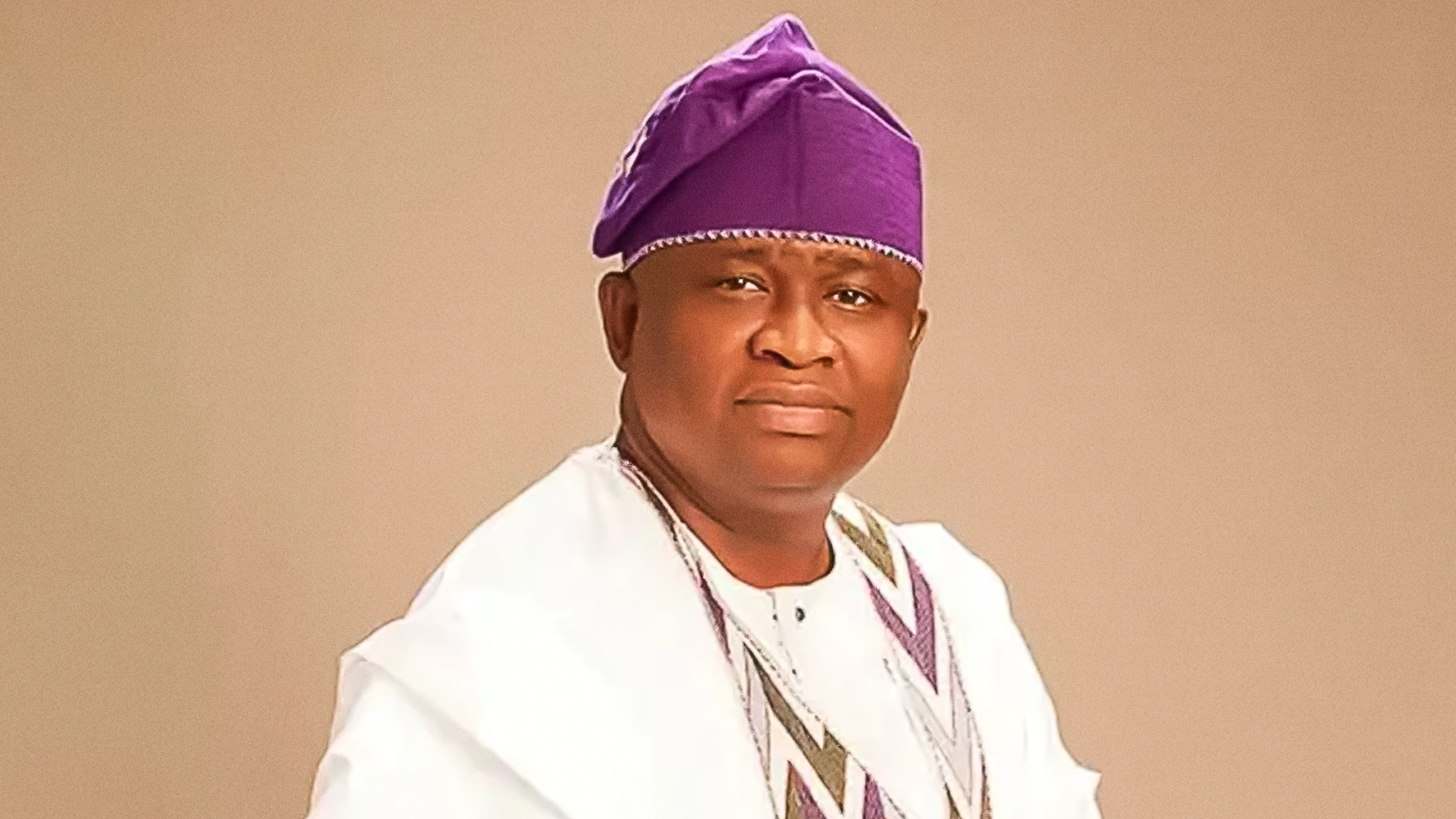
As the race for the Ogun State governorship gathers momentum ahead of the February 6, 2027 election, the conversation is increasingly shifting from political ambition to questions of identity, experience, governance and the future of the state. Senator Solomon Olamilekan Adeola, popularly called Yayi, is the All Progressives Congress (APC) governorship candidate and a politician whose legislative career spans the Lagos State House of Assembly, the House of Representatives and the Senate. He had an engagement with the media recently where he addressed the controversy surrounding his indigeneship and change of name, reflected on his political journey from Lagos to Ogun, and outlined his vision for the Gateway State under his proposed ITESIWAJU development agenda. SEYE OLUMIDE and GBENGA SALAU were there.
Journey into politics
My sojourn into politics has not been an easy road, but at least, I managed to find my level. It dates back to the June 12, 1993 struggle. Along the line, I lost my immediate younger brother to the June 12 riot, which got me discouraged. But God has a way of directing one’s path. In 2002, I found my way back into politics and contested to be elected a member representing Alimosho Constituency in theLagos State House of Assembly. I won and was in the House of Assembly for eight years.
As a result of my performance, I was encouraged to go to the Federal House of Representatives to represent Alimosho Federal Constituency, where I served for four years. Within the four years, I was able to convince my constituents and, by extension, the leadership of the state and the current President of the Federal Republic of Nigeria, my father, my leader and my mentor, that I was ripe enough to represent the Lagos West Senatorial District in the Senate. By God’s grace and with the support of my constituents, I represented Lagos West for eight years.
Before then, I knew that I was not from Lagos; I am from Ogun State. That was evident in all my documents and forms that I filled. So, I attempted to return home for the first time, but it met some resistance. So, I returned to Lagos since things were working for me in Lagos, and it was easy to return and contest the Senate seat there, which I did successfully. For the second time, I attempted to return home to contest for the governorship of Ogun State. That was also met with some resistance, and I returned again to the Senate from Lagos West. I am giving you this history so that you will understand how I eventually found myself in Ogun State.
Identity issue
I can’t be running for an exalted office and I will not be confronted with some challenges. People who are doing this know they are doing it to discredit and destroy my person. But I have no fears. People can investigate me and my stories. Where my father was buried is 30 minutes away from here (Ikeja), go and investigate. It is in Alimosho, number 3, Ogunsola Street, Alagutan Bus Stop, and that’s where he was buried.
My mother was buried at Vaults and Gardens, Ikoyi. My grandmother, the mother of my mother, was buried at Ikeja, the burial ground is there. My great-grandfather was buried at Ishaga. So, how can I be running to be governor, and I’ll be having such a big skeleton in my cupboard, and I’ll be comfortable?

Before coming into politics, I also served at The Guardian, and I resigned to pursue other things. And somebody said, “He did change his name.” after leaving The Guardian. Yes, I did change of name, and I did it in The Guardian Newspaper. I advertised it in The Guardian. They don’t understand, because they have nothing to fight with.
So, they have to say something to discredit me, because I am the candidate to beat. They cannot match me. I do not want to join issues with them. They have nothing to offer. They know Yayi is from Ogun State. What they can do is to destroy Yayi, and those who are from Ogun State have responded, “Let him come from Afghanistan”. We will vote for him.
His continuity philosophy for Ogun
I make bold to say that, under the administration of Governor Dapo Abiodun, Ogun State has done exceedingly well. I can testify to that. Of course, people will ask: if the government has done well, why are there complaints about certain things? I understand that. No government can completely address all the challenges confronting a state within a limited period in office. Governance is about the seen and the unseen. The seen are the physical structures we see; the roads, hospitals, rail transport and other infrastructure. The unseen are the policies, economic foundations and other things that, when put together and properly implemented, eventually give birth to the visible development.
Under Governor Abiodun, we have been able to establish a strong economic foundation. For example, we have the proposed $7 billion deep seaport project in Ogun State, with groundbreaking expected in November. If that proj]ect becomes fully operational in the next few years, you can imagine the multiplier effect it will have on the state’s economy.
There is also the dry port at Kajola and the proposed rail connection from Apapa to Kajola. The biggest dairy farm in Nigeria is also coming up in my local government area, starting with about 5,000 cattle and eventually increasing to a minimum of 15,000 cattle to produce dairy products from Ogun State. A major furniture manufacturing company is also coming up. As we speak, Ogun State is the most industrialised state in Nigeria.
When Governor Abiodun came on board, our internally generated revenue was less than N100 billion annually. Today, we are talking about around N300 billion a year. There has also been oil exploration activity. We may, in the near future, be referred to as an oil-producing state. All these things are part of the foundation that has been laid. My responsibility, if elected, will be to consolidate on these gains and ensure that the multiplier effects are properly harnessed for the benefit of the people.
A breakdown of his agenda, ITESIWAJU
ITESIWAJU is the framework for my development agenda for the state. The “I” stands for Infrastructure. The “T” stands for Tourism and Culture. The “E” stands for Education and Environment. The “S” stands for Security and Law Enforcement. The second “I” stands for Inclusive Growth and Well-being. The “W” stands for Women and Youth Development. The “A” stands for Agriculture. The “J” stands for Job Creation and Industrialisation. The “U” stands for Urban Physical Planning and Environment. All these nine pillars are critical to Ogun State. None of them can be treated in isolation.
When you talk about tourism and culture, for instance, you cannot compare Ogun with Lagos because we are more of a rural setting and our culture is well appreciated. There are many activities and festivals that take place in Ogun every year.
The question is: Are we deriving the maximum economic benefit from them for the state and its people? That is an area we want to focus on. We want to turn our cultural and tourism assets into economic opportunities.
Infrastructure includes roads, rail, housing and transportation. On transport connectivity, we want to deal first and foremost with interstate connectivity, and subsequently intra-state connectivity. I want a situation where I can conveniently stay in a corner of my house in Ilaro, get to the bus terminal and take a vehicle straight to Abeokuta. From Abeokuta, I should be able to take another vehicle to Sagamu, from Sagamu to Ijebu and then back to other parts of the state. When you look at the geographical location of Ogun State, you will understand the challenge. Lagos is different. In Lagos, you can move from one part of the state to another within a relatively short period.
In Ogun, you can spend two hours travelling to the next town. You can travel for one hour and 40 minutes to get to certain parts of the state. If you are coming from Ilaro, you can spend several hours getting to another part of Ogun. That is how dispersed Ogun State is geographically. So, we need to have an effective transport system that connects all these areas within the shortest possible time. The road network is one area in which a lot of people residing in Ogun are challenged.
I don’t want to embark on any road project that will not lead us anywhere. Yes, there are roads that need to be fixed along the way, but we want to focus on roads that will unlock economic opportunities. For instance, from Ijoko in Ota, we can put in a road that will lead straight to the Lagos-Ibadan Expressway, with three bridges and about one kilometre of road. You can imagine what that means to us as a state. Not only will we open up that corridor, but economic activities will spring up around it. You will not believe the impact that a single intervention of that nature can have. There are many other examples like that.
The border communities are another area of interest. Presently, Lagos has an upper hand in many of the border areas. When you look at the Ojodu axis and some of the surrounding areas, you will see that there is a lot of development on the Lagos side. But on our own side of the divide, we are not competing effectively. If I intend to increase the value of the state and work on the economy of the state, I must work on the border towns. That is why I refer to urban development, physical planning and the environment. I can create a new Magodo in those border towns that belong to Ogun. The land is there. What is required is the development. It is possible. I intend to give attention to the border communities and ensure that Ogun gives Lagos a run for its money in terms of development. You can imagine travelling from the Lagos side towards Ogun. Once you approach the border and get to certain points, the standard of infrastructure changes. That has to change, and it has to change immediately.

